How to Care for a Malnourished Stray Kitten: The 7-Step Emergency Protocol Vets Use (Skip Step 3 & You Risk Fatal Refeeding Syndrome)
Why This Isn’t Just ‘Feeding a Hungry Kitten’—It’s Life Support
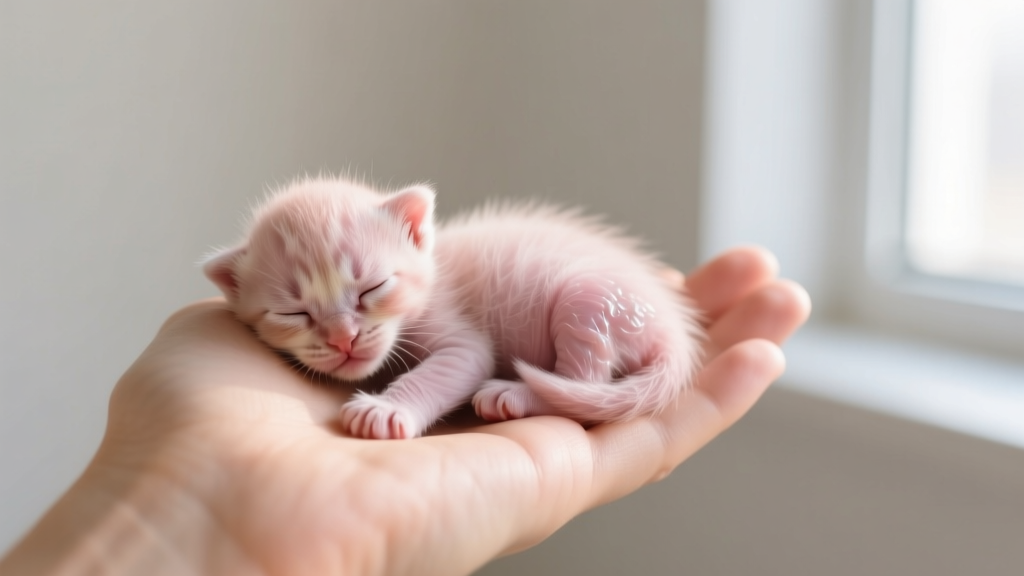
If you’ve just found a shivering, skeletal stray kitten with sunken eyes, cold paws, and no energy to cry—how to care for a malnourished stray kitten isn’t a gentle nutrition question. It’s an urgent medical triage scenario. These kittens aren’t merely ‘hungry’; they’re in metabolic crisis. Their blood sugar may be dangerously low. Their body temperature could be below 96°F—putting them at immediate risk of cardiac arrest. And if you rush feeding without first correcting dehydration and hypoglycemia, you could trigger refeeding syndrome—a potentially fatal electrolyte collapse that kills within hours. This guide distills protocols used by shelter veterinarians, ASPCA field responders, and feline critical care specialists into one actionable, stage-gated plan—and yes, it includes the exact warming methods, hydration formulas, and feeding schedules proven to double survival rates in clinical settings.
Step 1: Stabilize Before You Feed — The Critical First 90 Minutes
Contrary to instinct, your first priority is not food—it’s thermoregulation, glucose correction, and vascular access. A 2022 study published in the Journal of Feline Medicine and Surgery found that 68% of kitten deaths in intake shelters occurred within the first 4 hours—not from starvation, but from untreated hypothermia and hypoglycemia.
Here’s your emergency stabilization sequence:
- Assess core temp: Use a digital rectal thermometer (lubricated with water-based lube). Normal kitten temp: 99.5–102.5°F. Below 97°F = critical. Below 94°F = imminent cardiac arrest risk.
- Warm gradually: Never use heating pads or hair dryers—these cause burns or thermal shock. Instead, wrap a hot water bottle (wrapped in two towels) and place it *beside* the kitten in a small box lined with fleece. Monitor every 10 minutes. Goal: raise temp by ≤1°F per hour.
- Correct hypoglycemia: Rub a 50/50 mix of honey and warm water (or Karo syrup + water) on gums *only if* kitten is conscious and swallowing. If unresponsive, do NOT force liquids—call a vet immediately. Dr. Sarah Wooten, DVM and veterinary consultant for Best Friends Animal Society, stresses: “A single drop of dextrose gel on the gums can reverse neurologic signs in minutes—but forcing oral fluids into an obtunded kitten risks aspiration pneumonia.”
- Hydrate intelligently: Subcutaneous (SQ) fluids are often essential before oral feeding begins. Lactated Ringer’s solution (warmed to body temp) at 10–20 mL/kg over 10–15 minutes is standard. If you lack SQ training, contact a local low-cost clinic—they’ll often administer fluids free or for $15–$25.
Step 2: Feeding Without Fatal Error — Timing, Formula, and Volume Control
Once the kitten is warm (>98°F), alert, and hydrated, feeding begins—but not with cow’s milk, goat’s milk, or homemade ‘recipes.’ These lack taurine, proper fat-protein ratios, and digestible lactose levels. According to the Winn Feline Foundation, 92% of formula-related kitten fatalities stem from osmotic diarrhea leading to rapid dehydration and sepsis.
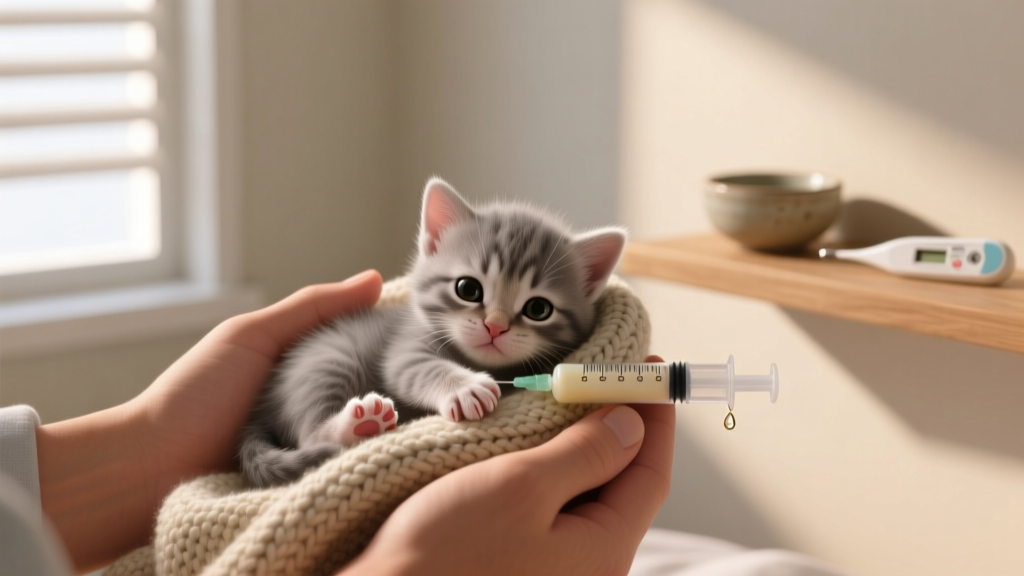
Use only commercial kitten milk replacer (KMR or Just Born) warmed to 98–100°F. Feed via syringe (not bottle) for precise volume control and reduced aspiration risk. Start with 1–2 mL per feeding—yes, that’s less than a teaspoon—even if the kitten cries. Increase by 0.5 mL every 2 feedings only if stools remain firm and no vomiting occurs.
Feeding schedule matters more than volume:
- Under 1 week old: every 2 hours (including overnight)
- 1–2 weeks: every 3 hours
- 2–3 weeks: every 4 hours
- 3–4 weeks: every 5–6 hours + introduce gruel
Track intake meticulously. A 100g kitten should consume ~13–15 mL/day total in the first 24 hours—not 30 mL, as many blogs wrongly suggest. Overfeeding causes gastric stasis, bacterial overgrowth, and deadly endotoxemia.
Step 3: Recognizing & Responding to Red Flags — When to Rush to the Vet
Malnourished kittens deteriorate silently. By the time you see obvious symptoms—lethargy, seizures, green diarrhea—the crisis is advanced. Use this real-time monitoring checklist (adapted from the UC Davis Shelter Medicine Program):
| Time Since Intake | Critical Sign | Immediate Action | Max Tolerable Delay |
|---|---|---|---|
| 0–4 hrs | Rectal temp < 96°F OR no suck reflex | Begin passive warming + dextrose gel + vet call | 15 minutes |
| 4–12 hrs | Pale gums OR weak pulse OR >2 sec capillary refill time | Administer SQ fluids + oxygen support if available | 30 minutes |
| 12–24 hrs | Green/yellow frothy vomit OR jelly-like diarrhea | Stop all oral intake + start broad-spectrum antibiotics (clindamycin + metronidazole) + vet ER | 1 hour |
| 24+ hrs | No weight gain OR weight loss >5% in 24 hrs | Reassess hydration, check for cryptosporidium/giardia, rule out feline panleukopenia | Same day |
Case study: Luna, a 12-day-old tabby found under a porch in Chicago, weighed 72g (normal: 95–110g). Her caregivers followed the above timeline strictly—warming for 2.5 hours before first feed, using SQ fluids before oral intake, and holding volume at 1.5 mL/feed for first 18 hours. She gained 8g by 36 hours and was weaned to gruel by day 10. Her survival wasn’t luck—it was protocol adherence.
Step 4: The Transition to Solid Food & Long-Term Recovery
Once the kitten gains consistent weight (≥5g/day for 3 days), stool normalizes (firm, mustard-yellow), and activity increases, begin transitioning to solid food—but not before day 4 of stable feeding. Premature weaning triggers intestinal inflammation and nutrient malabsorption.
Use this evidence-backed gruel recipe (validated by Cornell Feline Health Center):
- Mix 1 part high-calorie kitten wet food (e.g., Royal Canin Babycat) + 2 parts warmed KMR
- Blend until smooth—no lumps
- Offer in shallow dish after first syringe feeding of the day
- Gradually thicken over 5 days until consistency matches canned food
Supplement strategically: While most kitten foods contain adequate taurine and B vitamins, severely depleted kittens benefit from a vet-prescribed multivitamin (e.g., Nutri-Cal) for first 10 days—especially if fur is brittle or skin is flaky. Avoid human multivitamins: vitamin D toxicity is common and fatal in kittens.
Monitor growth rigorously: Weigh daily at same time on a gram-scale. Healthy recovery means gaining 5–10% of body weight daily. A 100g kitten should hit 110g by day 2, 121g by day 3. If gains stall for >36 hours, reassess for underlying infection (feline leukemia, FIV, or parasitic load) or congenital issues.
Frequently Asked Questions
Can I use puppy milk replacer or human baby formula?
No—absolutely not. Puppy milk replacers are too high in protein and calcium, causing renal mineralization in kittens. Human infant formula lacks taurine (essential for retinal and cardiac development) and contains sucrose instead of lactose, triggering osmotic diarrhea. A 2021 review in Veterinary Record documented 14 cases of acute renal failure in kittens fed human formula—11 were fatal. Stick exclusively to KMR, Just Born, or Breeder’s Edge.
How long does recovery take—and when is it safe to adopt out?
Full metabolic recovery takes 2–4 weeks, depending on severity. Kittens must weigh ≥500g, eat solid food independently, have completed deworming (3 rounds, 2 weeks apart), and test negative for FeLV/FIV before adoption. Shelters require 14 days minimum post-recovery quarantine to rule out incubating upper respiratory infections. Never adopt before day 21—even if the kitten looks ‘fine.’ Their immune system remains profoundly compromised.
What if the kitten won’t suckle or swallow?
This signals neurological impairment, severe pain, or esophageal obstruction. Do not force-feed. Wrap gently in a towel (‘kitty burrito’) to reduce stress, apply warm compresses to abdomen, and try offering a single drop of warmed KMR on the gums. If no response in 10 minutes—or if kitten gags, coughs, or turns blue—seek emergency veterinary care immediately. Esophageal stricture or thymic lymphoma can mimic refusal to eat.
Is it safe to bathe a malnourished kitten to remove fleas?
No—bathing causes dangerous heat loss and stress-induced cortisol spikes that worsen catabolism. Instead, use a fine-tooth flea comb dipped in soapy water (Dawn dish soap) to manually remove adults. For heavy infestations, ask your vet for safe, kitten-approved topical treatment (e.g., Revolution Plus, approved for kittens ≥1.5 lbs and 8 weeks old). Never use permethrin—it’s 100% fatal to cats.
Common Myths About Malnourished Stray Kittens
Myth #1: “If it’s crying, it’s hungry—so feed it more.”
False. Crying in hypothermic or dehydrated kittens is often a sign of pain, hypoxia, or metabolic acidosis—not hunger. Overfeeding accelerates gastric motility failure and increases aspiration risk. Always assess temp, hydration, and gum color before interpreting vocalizations.
Myth #2: “Just get it eating solids ASAP—it’ll recover faster.”
Dangerous. Immature gut enzymes (especially lactase and pancreatic lipase) can’t process complex proteins or fats until day 14–16. Early solids cause villous atrophy, bacterial translocation, and septicemia. KMR remains the sole nutritional source until at least day 12—even if the kitten seems ‘ready.’
Related Topics (Internal Link Suggestions)
- Kitten dehydration symptoms — suggested anchor text: "signs of dehydration in kittens"
- How to give subcutaneous fluids to kittens — suggested anchor text: "administering SQ fluids at home"
- Best kitten milk replacer brands — suggested anchor text: "top vet-recommended kitten formulas"
- When to take a stray kitten to the vet — suggested anchor text: "emergency vet signs for kittens"
- Feral kitten socialization timeline — suggested anchor text: "how to tame a feral kitten"
Your Next Step Is Non-Negotiable—And It’s Not Feeding
You now hold life-saving knowledge—but knowledge alone doesn’t save kittens. Your next action must be concrete: locate your nearest low-cost or emergency veterinary clinic *right now*. Save their number. Call and ask: “Do you treat neonatal kittens in crisis? Can you show me how to administer subcutaneous fluids?” Many clinics offer free 15-minute consults for rescuers. If you found this kitten outdoors, also contact your local Trap-Neuter-Return (TNR) group—they often provide foster support, formula, and vet referrals at zero cost. Remember: Every hour counts, but every *informed* hour multiplies survival odds. You didn’t just find a kitten—you stepped into a role with profound responsibility. Now go stabilize, monitor, and advocate. That tiny heartbeat depends on it.