Feline Osteochondromatosis: Bone Cartilage Growth Tumors
1. Introduction: Why This Topic Matters to Cat Owners
If your cat suddenly seems stiff, reluctant to jump, or painful when you touch certain areas, it’s natural to worry about arthritis or an injury. Sometimes, though, the cause can be less common—like feline osteochondromatosis, a condition involving abnormal growths of bone and cartilage. While it’s uncommon, it can significantly affect comfort and mobility, especially as cats age.
Understanding what osteochondromatosis is, what signs to watch for, and how veterinarians diagnose and manage it can help you act quickly and make thoughtful choices. The goal is not to panic—it’s to be prepared and to protect your cat’s quality of life with timely veterinary care.
2. Overview: What Is Feline Osteochondromatosis?
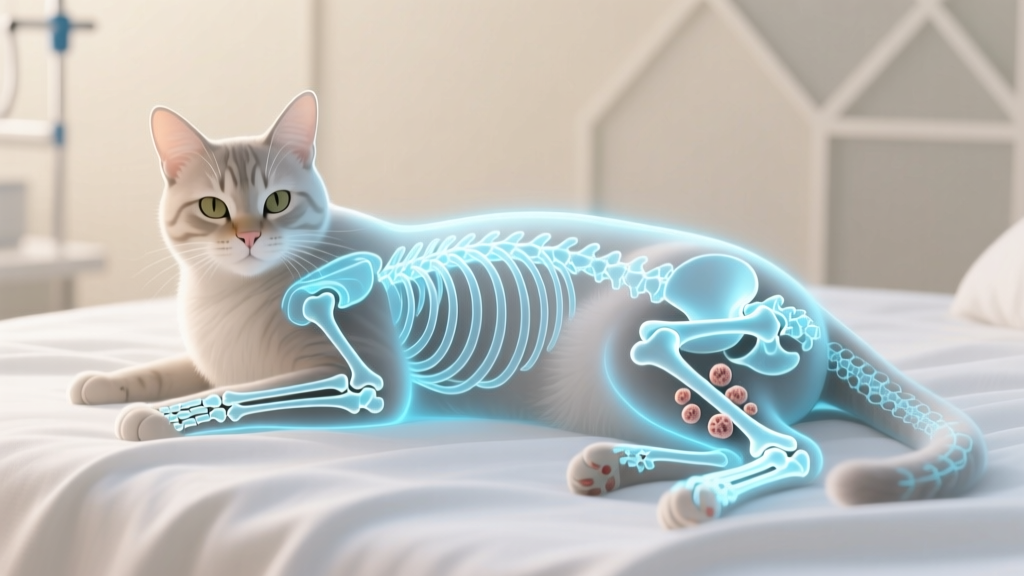
Feline osteochondromatosis is a disorder where cats develop multiple benign (non-cancerous) growths made of bone and cartilage. These growths are often called osteochondromas or “bone-cartilage tumors,” though they are typically not malignant.
These growths tend to form on the surface of bones, often near joints or along flat bones such as:
- Shoulder blades (scapula)
- Ribs
- Spine (vertebrae)
- Pelvis
- Long bones of the limbs
The growths can cause problems because of where they are located rather than because they “spread” like cancer. As they enlarge, they may:
- Press on muscles, tendons, and joint structures
- Limit joint range of motion
- Cause chronic pain or inflammation
- Compress nerves (leading to weakness or altered gait)
- Occasionally affect breathing if ribs or the chest wall are involved
In cats, osteochondromatosis has been associated with feline leukemia virus (FeLV) infection in many reported cases. Not every cat with osteochondromatosis is FeLV-positive, and not every FeLV-positive cat will develop bone growths, but the link is important for risk assessment and prevention planning.
3. Symptoms and Warning Signs to Watch For
Signs can be subtle at first. Many cats compensate well until movement becomes uncomfortable. Contact your veterinarian if you notice persistent changes, especially if they last more than a day or two.
Common signs include:
- Limping or favoring a leg
- Stiffness, especially after rest
- Reluctance to jump up or down (bed, couch, cat tree)
- Reduced activity or hiding more than usual
- Pain when touched in a specific area (flinching, growling, moving away)
- Swelling or firm lumps along bones or near joints
- Changes in posture or gait (walking “robotically,” shorter steps)
Less common but important signs (depending on location):
- Weakness in a limb or dragging a paw (possible nerve involvement)
- Trouble grooming due to reduced flexibility
- Difficulty breathing or rapid breathing (if chest wall/ribs are affected)
- Constipation or difficulty using the litter box (painful posture changes)
Practical at-home check today: Gently observe your cat’s movement—can they jump to their favorite spot, climb stairs, and squat in the litter box without hesitation? Note any “workarounds” like pulling up with front legs, avoiding heights, or choosing lower resting places.
4. Causes and Risk Factors
Osteochondromatosis is still considered uncommon in cats, and the exact cause isn’t fully understood. Veterinary researchers have identified patterns and associations.
Known and suspected factors include:
- FeLV infection: Many affected cats test positive. The virus may influence abnormal bone/cartilage growth in some individuals.
- Age: Often diagnosed in adult to middle-aged cats, though it can vary.
- Sex and breed: No strong, consistent breed predisposition has been proven. Any cat can be affected.
- Prior trauma or chronic inflammation: Not a primary cause, but discomfort may first be noticed after a minor injury draws attention to an existing growth.
What cat owners can act on immediately: If your cat’s FeLV status is unknown, schedule a test—especially for cats who go outdoors, were adopted with an unknown history, or live with other cats that may have been exposed.
5. Diagnosis Methods and What to Expect at the Vet
Because the symptoms can mimic arthritis, soft tissue injuries, or even bone cancer, diagnosis requires imaging and a thorough exam.
Your veterinarian may perform:
- History and physical exam: Discussion of mobility changes, pain points, activity level, appetite, and any lumps you’ve noticed.
- Orthopedic and neurologic assessment: Checking joint range of motion, muscle mass, reflexes, and gait.
- X-rays (radiographs): Often the first and most helpful test. Osteochondromas frequently appear as bony protrusions arising from the bone surface.
- CT scan: Recommended when growths are near the spine, ribs, or complex joints. CT provides more detail than X-ray and can support surgical planning.
- Biopsy or tissue sampling: Sometimes needed to confirm the diagnosis and rule out malignant tumors, especially if the appearance is atypical or aggressive.
- FeLV/FIV testing: Particularly important because of the association with FeLV.
- Bloodwork: Helps assess overall health before surgery or long-term medications.
What to bring to the appointment:
- A short timeline of when signs started and whether they’re worsening
- Videos of your cat walking, jumping, or using stairs (very helpful)
- A list of current medications/supplements
6. Treatment Options (Medical, Surgical, Home Care)
Treatment depends on where the growths are, how painful they are, and whether they’re interfering with movement or nerve function. Some cats can be managed comfortably for long periods; others may need surgical intervention.
Medical management (pain control and comfort)
For many cats, the first step is improving comfort and mobility.
- Pain relief medications: Your veterinarian may prescribe cat-safe pain medications. Never give human pain relievers—many are toxic to cats.
- Anti-inflammatory therapy: Used carefully and only under veterinary guidance.
- Nerve pain medications: If nerve compression is suspected, specific medications may be recommended.
- Weight management: Even small reductions in body weight can reduce stress on joints and improve mobility.
Surgical treatment
Surgery may be recommended when growths cause significant pain, limit movement, compress nerves, or interfere with breathing. The goal is removal of problematic growths.
- Excision (removal) of accessible masses: Can improve comfort and function, especially if a single growth is driving symptoms.
- Limitations: When growths are multiple or located in difficult areas (spine, ribs), complete removal may not be possible.
- Recurrence/progression: Some cats develop new growths over time, so ongoing monitoring is common.
Home care and supportive strategies
These changes can make a meaningful difference right away, alongside veterinary treatment.
- Set up “low-jump” living: Use pet stairs/ramps to beds and couches; move favorite resting spots lower.
- Litter box modifications: Offer a low-entry box to reduce painful stepping and squatting.
- Soft bedding with traction: Provide padded beds; add rugs/yoga mats on slippery floors to prevent slips.
- Gentle play: Short, low-impact play sessions keep muscles engaged without overloading joints.
- Heat therapy: With veterinary approval, a warm (not hot) compress can ease stiffness in some cats.
- Medication routine: Use reminders and consistent timing; ask your vet about flavored compounds or alternative forms if pilling is stressful.
Supplements: Joint supplements (like omega-3 fatty acids or veterinary joint products) may be suggested for overall joint health. They don’t remove bone growths, but they may support comfort. Always confirm safety and dosing with your veterinarian.
7. Prevention Strategies and Early Detection Tips
Because the precise trigger isn’t fully understood, prevention focuses on reducing known risks and catching problems early.
Steps that can help:
- FeLV prevention: Keep cats indoors when possible, prevent fighting/roaming, and discuss FeLV vaccination if your cat has exposure risk.
- FeLV testing: Test new cats before introducing them to your home; retest if exposure occurs.
- Regular wellness exams: Yearly exams (and twice-yearly for seniors) help detect subtle orthopedic changes and lumps.
- Track mobility changes: Write down changes in jumping, grooming, litter box posture, and play behavior.
- Maintain a lean body condition: Extra weight increases strain and can make pain worse.
Early detection tip: Once a month, do a calm “hands-on check” during cuddle time. Gently run your hands along shoulders, ribs, spine, hips, and limbs. If you find a new firm bump, or your cat reacts like it hurts, schedule a veterinary visit.
8. Prognosis and Quality of Life Considerations
The outlook varies. Many cats can have a good quality of life with appropriate pain control, environmental changes, and monitoring. Factors that influence prognosis include:
- Location of the growths: Growths near joints may restrict movement; those near the spine can cause neurologic issues.
- Number and rate of growth: Multiple or rapidly enlarging growths can be more challenging.
- FeLV status and overall health: FeLV-positive cats may face additional health concerns that affect long-term planning.
- Response to treatment: Some cats do very well with medical management; others need surgery for meaningful relief.
Quality of life signs to monitor at home:
- Appetite and hydration
- Comfort while resting and sleeping (restlessness can mean pain)
- Willingness to move around the home
- Grooming and social behavior
- Litter box habits and posture
If you’re unsure how your cat is doing, ask your veterinarian for a simple pain/mobility scoring checklist and bring updates to rechecks.
9. When to Seek Emergency Veterinary Care
Osteochondromatosis usually progresses over time, but certain signs should be treated as urgent. Seek emergency veterinary care right away if your cat has:
- Sudden inability to walk or collapse
- Severe, unrelenting pain (crying out, panting, hiding and refusing to move)
- Labored breathing, open-mouth breathing, or rapid breathing at rest
- Loss of bladder/bowel control or inability to urinate
- Rapidly worsening weakness, especially in the back legs
- Refusal to eat for 24 hours or signs of dehydration
These can indicate serious complications such as nerve compression, trauma, or other urgent conditions that need immediate assessment.
10. FAQ: Common Questions Cat Owners Ask
Is osteochondromatosis cancer?
Most osteochondromas are benign. They can still cause significant pain or functional problems depending on location. Rarely, bone/cartilage growths can undergo malignant transformation, which is one reason your veterinarian may recommend imaging follow-up or biopsy in certain cases.
Is osteochondromatosis linked to FeLV?
Many feline cases have been associated with FeLV infection. If your cat is diagnosed, your veterinarian will likely recommend FeLV testing (if it hasn’t been done already) and discuss what a positive or negative result means for management and household cats.
Can my cat live comfortably with this condition?
Yes, many cats can. Comfort-focused care—appropriate pain control, weight management, and an arthritis-friendly home setup—can make daily life much easier. Some cats also benefit from surgery when a specific growth is causing major issues.
Will the growths go away on their own?
These growths typically do not disappear without treatment. Some may remain stable for a period, while others enlarge or new ones develop. Monitoring with your veterinarian helps guide decisions and maintain quality of life.
What should I do if I find a hard lump on my cat?
Schedule a veterinary visit. Many lumps are not osteochondromas (and not all are dangerous), but a firm mass attached to bone needs professional evaluation. Avoid pressing on it repeatedly, and don’t try to “treat” it at home.
How can I help my cat right now while waiting for the appointment?
- Limit jumping by providing steps/ramps
- Keep essentials (food, water, litter box) on one level
- Use a low-entry litter box
- Keep your cat warm and comfortable with soft bedding
- Do not give over-the-counter human pain medications
If you suspect your cat is in pain, call your veterinarian promptly—cats are very good at hiding discomfort, and earlier care often means better comfort.
For more caring, practical cat health guidance, visit catloversbase.com and explore our growing library of feline wellness resources.