Feline Ciliary Body Tumors: Intraocular Mass Detection
1. Why this topic matters for cat owners
Your cat’s eyes do more than help them navigate the world—they also provide clues about overall health. An intraocular mass (a growth inside the eye) can be easy to miss at first, especially if it’s hidden behind the iris. Tumors of the ciliary body are uncommon, but when they do occur, early detection can protect comfort, preserve vision when possible, and prevent painful complications like glaucoma. Because cats are masters at hiding discomfort, knowing the subtle warning signs and seeking prompt veterinary care can make a meaningful difference.
2. Overview: What are ciliary body tumors?
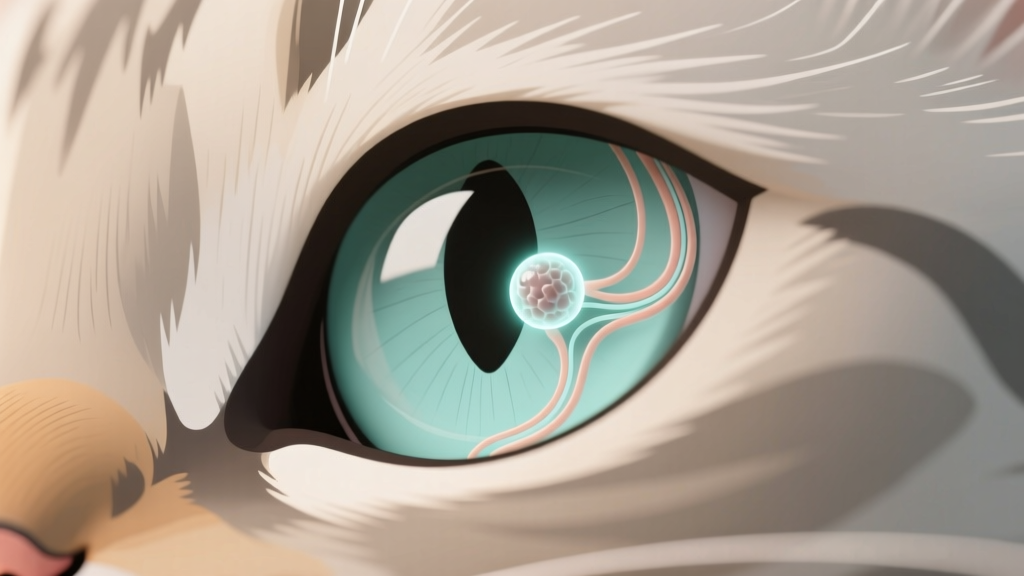
The ciliary body is a ring of tissue inside the eye, located just behind the iris (the colored part). It has two major jobs:
- Producing aqueous humor (the clear fluid in the front part of the eye) to maintain eye pressure and nourish tissues.
- Helping focus by controlling the lens through small muscles and fibers.
A ciliary body tumor is an abnormal growth arising from this tissue. Because the ciliary body sits inside the eye, these tumors are considered intraocular. The term “intraocular mass” may be used until testing clarifies whether the mass is a tumor, inflammation, bleeding, a cyst, or another condition.
Types of intraocular tumors near/at the ciliary body your veterinarian may discuss include:
- Melanocytic tumors (melanoma/melanocytoma): Originating from pigment-producing cells. These can range from less aggressive to malignant forms.
- Adenoma/adenocarcinoma: Tumors from gland-like tissue of the ciliary body; some may behave more aggressively.
- Iridociliary epithelial tumors: Tumors derived from the tissue lining the ciliary body; may be benign or malignant.
- Secondary (metastatic) tumors: Cancer elsewhere in the body spreading to the eye, less common but possible.
Even when a tumor is slow-growing, it can still cause problems by disrupting fluid drainage and normal eye function. The eye is a closed, delicate space—small changes can have big effects.
3. Symptoms and warning signs to watch for
Early signs can be subtle. Some cats show no obvious symptoms until the eye becomes painful or vision is affected. Contact your veterinarian if you notice any of the following, especially if it persists for more than 24 hours or worsens:
- Visible color change inside the eye (new brown/black spot, darkening behind the iris, or uneven pigmentation)
- A misshapen pupil or pupil that doesn’t respond normally to light
- Cloudiness (blue/white haze), especially if it develops quickly
- Redness of the white of the eye or inflamed tissues
- Squinting, blinking more than usual, or holding the eye closed
- Tearing or discharge
- Behavior changes suggesting pain: hiding, decreased appetite, less grooming, irritability
- Vision changes: bumping into objects, hesitating on stairs, startling easily, not tracking toys
- One eye looks “larger” or appears to bulge (can be associated with glaucoma)
- Different pupil sizes between eyes
- Blood in the front chamber of the eye (may look like a reddish tinge)
Practical at-home check you can do today: In a well-lit room, look at both eyes from the front and from the side. Compare symmetry, pupil shape, and clarity. If you see a new spot, a change in color, or cloudiness, take a clear photo (no flash if it reflects too much) to show your veterinarian and to help track changes over time.
4. Causes and risk factors
For many cats, the exact cause of a ciliary body tumor isn’t known. Tumors can arise due to genetic changes in cells over time. That said, several factors can increase the likelihood of eye problems that may reveal or mimic an intraocular mass:
- Age: Many tumors are more common in middle-aged to older cats.
- Chronic inflammation (uveitis): Long-standing inflammation can damage tissues and complicate the picture.
- Underlying systemic disease: Some infections, immune-mediated conditions, or cancers elsewhere in the body can affect the eye.
- Prior eye trauma: Injury can lead to bleeding or inflammation that may resemble a mass, and can also contribute to secondary complications.
- High blood pressure: More often linked to retinal issues, but can contribute to ocular bleeding and changes that require investigation.
Most cat owners don’t “cause” this problem. The best focus is on noticing changes early and getting a proper veterinary eye exam.
5. Diagnosis: What to expect at the vet
If your veterinarian suspects an intraocular mass, they will aim to answer three key questions:
- Is there truly a mass, or could it be inflammation, bleeding, or a cyst?
- Is the eye painful or at risk for serious complications (like glaucoma)?
- Is this likely primary to the eye, or part of a whole-body condition?
Common diagnostic steps include:
- Complete eye exam: Using magnification and bright light to examine the cornea, anterior chamber, iris, and lens.
- Tonometry: Measures eye pressure to check for glaucoma (high pressure) or low pressure (sometimes associated with uveitis).
- Fluorescein stain: Looks for corneal ulcers, which can occur alongside eye irritation and change treatment choices.
- Ophthalmoscopy: Examines deeper structures like the retina and optic nerve when visibility allows.
- Ocular ultrasound: Very helpful when the inside of the eye can’t be seen clearly due to cloudiness, bleeding, or cataract. Ultrasound can identify masses, retinal detachment, and structural changes.
- Gonioscopy (in some cases): Evaluates the drainage angle of the eye, relevant for glaucoma risk.
Whole-body testing may be recommended to check for underlying disease or spread:
- Bloodwork and urinalysis
- Blood pressure measurement
- FeLV/FIV testing (as appropriate)
- Chest X-rays and abdominal imaging if metastasis or systemic cancer is a concern
Will my cat need a veterinary ophthalmologist? Not always, but referral is common. Eye specialists have advanced tools (high-resolution ultrasound, detailed imaging, specialized scopes) and extensive experience distinguishing tumor types and planning eye-specific treatments.
6. Treatment options (medical, surgical, home care)
Treatment depends on the suspected tumor type, whether it’s causing pain, whether vision can be preserved, and whether there is concern for malignancy or spread. Your veterinarian will tailor a plan to your cat’s needs.
Medical management
Medications don’t usually “cure” an intraocular tumor, but they can control inflammation and pain and manage complications.
- Anti-inflammatory eye drops: Often used if uveitis is present. These may include steroid or non-steroidal drops depending on the situation (ulcers must be ruled out first).
- Pain control: Oral pain medications may be prescribed; never give human pain relievers.
- Glaucoma medications: Drops to reduce eye pressure and improve comfort if glaucoma develops.
- Antibiotics/antivirals: Only if infection is suspected or confirmed.
Surgical options
Surgery is considered when the eye is painful, glaucoma cannot be controlled, the mass is growing, or malignancy is suspected.
- Enucleation (eye removal): Sounds scary, but it is often the most humane option for a painful, blind eye or when a tumor is suspected. Cats usually adapt extremely well to one-eyed life.
- Biopsy and histopathology: If an eye is removed, it is commonly sent to a lab to identify the tumor type and guide next steps.
- Advanced specialty procedures: In select cases, an ophthalmologist may discuss eye-sparing procedures. These depend on tumor type, size, location, and available equipment, and are not appropriate for every case.
Home care and daily support
What you do at home can improve comfort and help your veterinarian adjust treatment promptly:
- Give medications exactly as directed and ask for a demonstration if eye drops feel tricky.
- Use an e-collar if your cat rubs the eye—rubbing can worsen inflammation or cause ulcers.
- Track changes: Take a weekly photo of the affected eye in similar lighting. Note squinting, appetite, and activity.
- Reduce stress: Keep litter box, food, and water easy to access; maintain routine.
- Keep follow-up appointments: Eye pressure and internal changes can shift quickly.
7. Prevention strategies and early detection tips
There’s no guaranteed way to prevent ciliary body tumors, but early detection is very realistic—and that’s where cat owners have real power.
- Schedule routine veterinary exams: Yearly for adult cats; every 6 months for seniors or cats with chronic conditions.
- Watch for subtle eye changes: New spots, shape changes, cloudiness, or redness deserve a check.
- Know your cat’s baseline: A quick “eye look” during calm moments (treat time or cuddles) helps you notice change early.
- Manage chronic illnesses: Conditions like hypertension, kidney disease, and inflammatory disorders can impact eye health—keeping them controlled supports the eyes too.
- Seek care early for uveitis: Persistent inflammation can cause pain and complications and may obscure a developing mass.
Actionable tip: If your cat is hard to handle, ask your vet about “happy visits,” gabapentin pre-visit calming (only if prescribed), and low-stress handling. A better exam often means earlier detection.
8. Prognosis and quality of life
Prognosis depends on:
- Whether the tumor is benign or malignant
- How early it’s detected
- Whether glaucoma or severe uveitis is present
- If there is evidence of spread
Many cats do very well with appropriate management. If the eye becomes painful or vision is lost, removing the eye can provide excellent quality of life—cats rely heavily on hearing, smell, and whisker sensation, and most adjust quickly after recovery.
If histopathology confirms a malignant tumor, your veterinarian may recommend additional staging tests and, in some cases, oncology consultation. Even then, the goal remains the same: keep your cat comfortable, eating, interacting, and enjoying daily life.
9. When to seek emergency veterinary care
Eye issues can progress quickly. Seek urgent or emergency care if you notice:
- Sudden severe squinting or the eye is held shut
- A rapidly cloudy or blue-looking eye
- A sudden change in eye size (enlargement can indicate glaucoma)
- Obvious pain: yowling, hiding, aggression when touched, not eating
- Blood in the eye or sudden blindness signs
- Trauma: scratches, puncture wounds, or a fight injury near the eye
If you’re unsure whether it’s an emergency, call your veterinarian or an emergency clinic. Eye pain is significant, and quick treatment can prevent lasting damage.
10. FAQ: Common questions from cat owners
Can I see a ciliary body tumor at home?
Sometimes you can see secondary changes (a dark spot, pupil shape change, cloudiness), but many ciliary body tumors are hidden behind the iris. That’s why an internal eye exam and often ultrasound are needed. If you see anything new or asymmetrical, schedule a veterinary visit.
Is an intraocular mass always cancer?
No. “Mass” is a description, not a diagnosis. Inflammation, cysts, bleeding, and other conditions can mimic a tumor. Testing helps determine what it is and how to treat it.
Will my cat go blind?
Not always. Some cats maintain vision for a time, especially if complications like uveitis and glaucoma are controlled early. If the eye becomes blind and painful, treatment focuses on comfort—often with excellent results.
If my cat needs an eye removed, will they still have a good life?
Yes. Most cats adapt very well to one eye after a short adjustment period. Many owners are surprised at how quickly their cat returns to normal routines once pain is gone.
Are there warning signs of glaucoma related to intraocular tumors?
Yes. Glaucoma can develop when normal fluid drainage is blocked. Signs can include a suddenly cloudy eye, a larger-looking eye, a dilated pupil, head shyness, and clear pain behaviors like squinting and hiding. Glaucoma is an urgent problem—contact your veterinarian promptly.
What should I do if my cat won’t let me apply eye drops?
Tell your veterinarian right away. They can demonstrate technique, recommend a different drop schedule, prescribe easier-to-administer medications, or discuss short-term calming options. Struggling at home can stress both you and your cat, and there are usually workable alternatives.
If you’re worried about any change in your cat’s eye—no matter how small—schedule a veterinary exam. Early evaluation is the safest, kindest step. For more supportive, vet-informed cat health guidance, visit catloversbase.com and explore our growing library of feline wellness resources.