Cat Luxating Patella: Kneecap Slipping Out of Place
1. Introduction: Why Luxating Patella Matters for Cat Owners
Cats are experts at hiding discomfort, especially when it involves joints. A knee problem may show up as a brief “skip” in the walk, a reluctance to jump, or a cat who seems a little less playful than usual. Luxating patella—when the kneecap slips out of its normal position—can cause intermittent pain, limping, and long-term joint changes if it’s not addressed. The good news is that many cats do very well with appropriate care, and there are practical steps you can take at home to support comfort and mobility.
If you notice any changes in your cat’s gait, activity level, or willingness to jump, it’s worth scheduling a veterinary visit. A quick orthopedic exam can often provide clarity and a plan.
2. Overview: What a Luxating Patella Is (Plain-Language Medical Explanation)
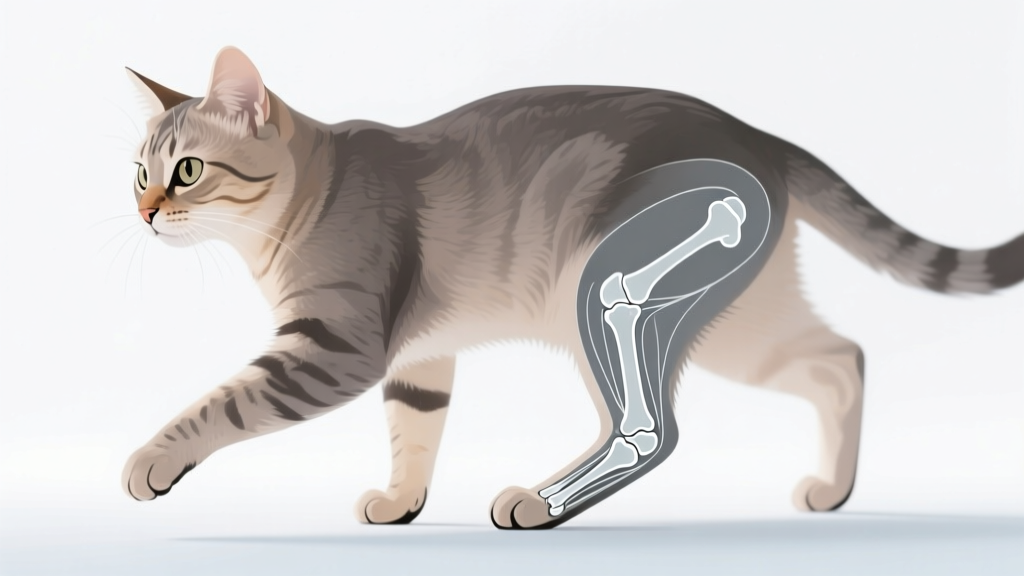
The patella is the kneecap. In a healthy knee, the patella glides smoothly in a groove at the end of the femur (thigh bone) called the trochlear groove. It’s held in place by the surrounding muscles, ligaments, and the patellar tendon.
With a luxating patella, the kneecap slips out of that groove—most commonly toward the inside of the leg (medial luxation), though it can also slip outward (lateral luxation). When the patella is out of place, the knee can feel unstable and uncomfortable. Some cats will briefly hold up the leg or “hop” for a few steps until the kneecap slides back into position.
Luxating patella is more commonly discussed in dogs, but cats can absolutely develop it. In cats, it may be discovered incidentally during an exam or show up as subtle mobility changes over time.
Veterinarians often describe luxation severity in grades. Exact grading varies slightly by clinician, but in general:
- Mild: kneecap slips out occasionally and returns on its own.
- Moderate: kneecap luxates more easily and may stay out longer; arthritis may start to develop.
- Severe: kneecap is frequently or permanently out of place, and limb alignment/joint wear can become significant.
3. Symptoms and Warning Signs to Watch For
Signs can be intermittent, especially in mild cases. Many cats compensate so well that symptoms are easy to miss until you look closely or compare to their “normal.” Watch for:
- Skipping or hopping gait (briefly holding a hind leg up, then walking normally again)
- Intermittent lameness that comes and goes
- Stiffness after rest or after vigorous play
- Reluctance to jump up to favorite spots, or hesitation before jumping down
- Decreased activity, less running/zooming, or shorter play sessions
- Change in posture (shifting weight forward, sitting differently)
- Grooming changes—over-grooming a knee/leg or reduced grooming overall due to discomfort
- Behavior changes such as irritability when handled, hiding more, or avoiding stairs
Action tip: If you can safely do so, take a short video of your cat walking from the side and from behind when symptoms occur. Intermittent limping is notoriously hard to catch in the exam room, and videos help your veterinarian a lot.
4. Causes and Risk Factors
Luxating patella typically involves a combination of anatomy and biomechanics—how the bones line up and how the muscles pull on the knee.
Common causes and contributors include:
- Congenital or developmental anatomy: Some cats are born with or develop a shallower groove, mild limb alignment changes, or soft-tissue differences that make luxation more likely.
- Trauma: A fall, awkward landing, or injury can disrupt normal knee alignment or supporting structures.
- Body weight: Extra weight increases stress on joints and can worsen discomfort and progression.
- Muscle weakness or imbalance: Reduced conditioning (especially after illness or prolonged inactivity) can contribute to joint instability.
- Underlying orthopedic issues: Hip problems or other limb alignment issues can change how forces travel through the knee.
Note on breeds: Luxating patella can occur in any cat. If your veterinarian mentions a suspected hereditary component, they may discuss whether breeding should be avoided to reduce passing on orthopedic tendencies.
5. Diagnosis: What to Expect at the Vet
Diagnosis is usually straightforward, but determining severity and the best plan may take a few steps.
Your veterinary visit may include:
- History: When symptoms started, how often limping occurs, any falls or injuries, activity level changes.
- Physical and orthopedic exam: The veterinarian will palpate (gently manipulate) the knee to feel whether the patella moves out of the groove and how easily it returns. They’ll also assess pain, muscle mass, and overall limb alignment.
- Gait assessment: Watching your cat walk can reveal subtle skipping or weight shifting.
- X-rays (radiographs): Helpful to evaluate bone alignment, look for arthritis, and rule out other causes of limping (like fractures). X-rays don’t always “show” a patella out of place if it’s intermittent, but they provide important context.
- Sedation: Some cats need light sedation for accurate knee assessment and good-quality X-rays. This is common and helps reduce stress and discomfort.
Be ready to discuss: indoor/outdoor status, jumping habits (high shelves, cat trees), weight trends, and any supplements or medications your cat is already taking.
6. Treatment Options (Medical, Surgical, and Home Care)
Treatment depends on severity, frequency of symptoms, pain level, and whether arthritis or limb alignment changes are present. Your veterinarian will recommend a plan tailored to your cat.
Medical Management (Conservative Care)
Mild cases or cats with infrequent symptoms may do well with non-surgical management, especially if discomfort is minimal.
- Veterinary-prescribed pain control: Cats are sensitive to many medications. Only use pain relief prescribed by your veterinarian. Human medications (including ibuprofen, naproxen, and acetaminophen) can be dangerous or fatal to cats.
- Anti-inflammatory strategies: If arthritis is present, your vet may recommend long-term joint-friendly medications or injections and periodic monitoring.
- Weight management: If your cat is overweight, even modest weight loss can reduce joint strain and improve mobility.
- Joint supplements: Your veterinarian may suggest evidence-informed options (often containing omega-3 fatty acids, glucosamine/chondroitin, or other joint-support ingredients). Response varies by cat, and supplements should complement—not replace—medical care.
Surgical Treatment
Surgery is considered when luxation is frequent, painful, worsening, or causing functional limitations. In severe cases, surgery can help restore alignment, improve stability, and slow joint damage.
Common surgical goals include:
- Deepening the trochlear groove so the kneecap sits more securely
- Realigning the patellar tendon attachment to improve tracking
- Balancing soft tissues (tightening on one side, releasing on the other) to keep the kneecap centered
Your veterinarian may refer you to a board-certified veterinary surgeon for evaluation, especially for moderate to severe cases.
Home Care and Recovery Support
Whether your cat is managed medically or surgically, home setup matters.
Practical steps you can do right away:
- Create easy access: Use pet stairs/ramps or place sturdy “step” furniture to favorite resting spots.
- Improve footing: Add rugs or yoga mats on slippery floors to prevent slipping.
- Modify the litter box: Choose a low-entry box to reduce knee strain.
- Encourage gentle movement: Short, calm play sessions can maintain muscle without overloading joints. Avoid intense jumping games if limping is present.
- Follow activity restriction if prescribed: After surgery, strict rest is often the difference between a smooth recovery and a setback. Use a confined room or large crate setup if recommended.
- Use only vet-approved therapies: Cold/heat packs, stretching, and rehab exercises should be guided by your vet or a rehabilitation professional to avoid injury.
7. Prevention Strategies and Early Detection Tips
Not every case of luxating patella can be prevented, especially if anatomy plays a role, but you can reduce joint stress and catch problems early.
- Keep your cat lean: Ask your veterinarian for your cat’s ideal weight and a realistic feeding plan.
- Schedule regular wellness exams: Many orthopedic issues are detected early during routine checks.
- Support safe exercise: Encourage daily play but avoid repeated high-impact jumps for cats already showing stiffness or limping.
- Maintain nail care: Overgrown nails can change footing and increase slipping risk.
- Home safety: Secure wobbly cat trees, add traction to slick window perches, and block access to unsafe high ledges if your cat is unsteady.
- Track subtle changes: Note jumping frequency, “hesitation” before jumping, and changes in play style—these are early clues.
Early detection tip: Weigh your cat monthly (a baby scale works well). Weight creep is common and directly affects joint load.
8. Prognosis and Quality of Life Considerations
Many cats with luxating patella live comfortable, active lives. Prognosis depends on severity, whether arthritis is present, and how consistently the care plan is followed.
- Mild cases: Often managed successfully with weight control, joint support, and periodic monitoring.
- Moderate cases: May need a combination of medical management and, in some cats, surgical correction for best comfort and stability.
- Severe cases: Surgery is more commonly recommended; with proper treatment and rehab, many cats regain good function.
Quality of life signs to monitor at home:
- Ability and willingness to jump (or use steps) without hesitation
- Comfort getting in/out of the litter box
- Normal grooming and social behavior
- Stable appetite and sleep patterns
- Less limping over time (or at least not worsening)
If you’re seeing a gradual decline, it doesn’t mean you’ve failed—it means it’s time to reassess with your veterinarian and adjust the plan.
9. When to Seek Emergency Veterinary Care
Luxating patella is often non-emergent, but certain signs warrant urgent evaluation.
Seek emergency care promptly if your cat:
- Cannot bear weight on a leg or is dragging it
- Cries out in pain, pants, or seems suddenly distressed after a jump or fall
- Has significant swelling of the knee or limb
- Shows an open wound or you suspect a fracture
- Is lethargic, won’t eat, or is hiding and acting “not themselves” along with lameness
- Has a cold paw, pale paw pads, or signs of poor circulation (rare, but serious)
If you’re unsure whether it’s an emergency, call your veterinary clinic or an emergency hospital for guidance. It’s always appropriate to ask.
10. FAQ: Common Questions About Luxating Patella in Cats
Can a luxating patella heal on its own?
The underlying anatomy that allows the kneecap to slip usually doesn’t “fix itself.” Mild cases may remain stable for years with good weight control and joint support, but the tendency to luxate can persist. A veterinarian should assess the knee so you know whether monitoring or active treatment is best.
Is luxating patella painful for cats?
It can be. Some cats show very little outward sign, while others experience discomfort during luxation events or develop arthritis over time. Subtle pain signs include reduced jumping, shorter play sessions, and irritability when touched.
Will my cat need surgery?
Not always. Cats with mild, infrequent symptoms may do well with conservative management. Surgery is more likely if luxation is frequent, the kneecap is often out of place, pain is significant, or arthritis and alignment issues are progressing. Your veterinarian (and sometimes a surgical specialist) can help you weigh benefits and risks.
What can I do at home to help right now?
- Reduce jumping demands with steps/ramps.
- Add traction on slippery floors.
- Switch to a low-entry litter box.
- Schedule a vet exam and bring a video of the limp/skip if possible.
- Do not give human pain medications.
How is luxating patella different from a torn ACL/CCL?
Luxating patella involves the kneecap slipping out of its groove. A cruciate ligament injury involves a stabilizing ligament inside the knee. Both can cause limping and arthritis, and occasionally they can occur together. Your veterinarian will differentiate them through an exam and imaging.
Can weight loss really make a difference?
Yes. Less weight means less stress on the knee with every step and jump. For many cats, reaching a healthy body condition noticeably improves comfort and mobility and supports better long-term joint health.
If your cat may have a luxating patella, partner with your veterinarian for an accurate diagnosis and a personalized treatment plan. With thoughtful care and a cat-friendly home setup, many cats stay active, comfortable, and confident on their feet.
For more caring, practical cat health guidance, visit catloversbase.com and explore our growing library of resources designed to help you support your cat at every life stage.