Cat Cryptorchidism: Undescended Testicle Health Risk
1. Why this topic matters to cat owners
If you have a male kitten or adult tomcat, you may expect to see (and feel) two testicles in the scrotum. When one or both testicles don’t show up where they should, it can feel confusing or worrying. Cat cryptorchidism—also called an undescended testicle—often doesn’t cause obvious day-to-day illness, which is exactly why it matters. Left unaddressed, an undescended testicle can carry real health risks over time, including a higher chance of testicular cancer and painful twisting of the testicle (torsion).
The good news: cryptorchidism is a condition veterinarians diagnose and treat routinely. With timely surgical care, most cats go on to live normal, comfortable lives. This guide explains what to watch for, what your veterinarian will do, and how you can protect your cat’s long-term health.
2. Overview: What cryptorchidism is (plain-language medical explanation)
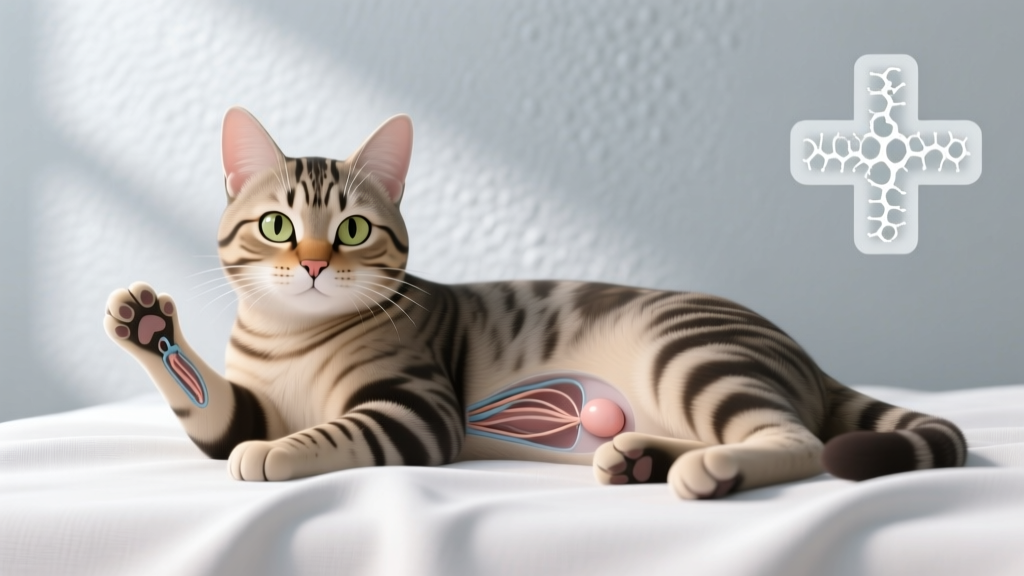
Male kittens are born with testicles that develop near the kidneys in the abdomen. As the kitten grows, each testicle normally travels down through a pathway called the inguinal canal and settles into the scrotum. In most kittens, both testicles are usually palpable in the scrotum by a few months of age.
Cryptorchidism means one or both testicles did not move into the scrotum. The testicle may be:
- Inguinal (stuck in the groin area near the inguinal canal)
- Abdominal (retained in the abdomen)
- Rarely, ectopic (outside the normal pathway)
Cryptorchidism can be:
- Unilateral (one testicle undescended; the other is in the scrotum)
- Bilateral (both testicles undescended)
A key detail for cat owners: an undescended testicle still produces hormones. That means a cryptorchid cat may still show intact-male behaviors (spraying, roaming, yowling, aggression) even if he appears “half neutered” or seems to have only one visible testicle.
3. Symptoms and warning signs to watch for
Many cats with cryptorchidism look completely healthy. Often, the “symptom” is simply noticing one testicle is missing. Still, there are signs that should prompt a veterinary visit.
Common signs (often subtle)
- Only one testicle visible or palpable in the scrotum after the expected age for descent
- Small or uneven scrotum compared to other male cats
- Intact male behaviors despite being thought to be neutered:
- Urine spraying
- Strong tomcat odor
- Roaming/escape attempts
- Vocalizing and restlessness
- Increased fighting or aggression toward other cats
Warning signs of complications (needs prompt veterinary evaluation)
- Sudden abdominal pain (hunched posture, crying out, guarding the belly)
- Vomiting along with abdominal discomfort
- Lethargy, hiding, reduced appetite
- Swelling in the groin area (possible inguinal retained testicle or hernia)
These signs don’t automatically mean cryptorchidism is causing an emergency, but they are reasons to call your veterinarian the same day.
4. Causes and risk factors
Cryptorchidism is most commonly a developmental condition with a genetic component. In other words, some cats are predisposed to it due to inherited traits affecting normal testicular descent.
Risk factors
- Genetics/family history (cryptorchidism can run in lines)
- Purebred status may be associated in some species; in cats, it can occur in any breed or mix
- Congenital abnormalities that affect the inguinal canal or surrounding tissues
What doesn’t typically cause cryptorchidism: Routine handling, normal play, minor falls, or typical kitten activities do not cause a testicle to “go back up.” If a testicle truly descended into the scrotum, it usually stays there.
5. Diagnosis methods and what to expect at the vet
Your veterinarian will focus on confirming whether one or both testicles are undescended and where the retained testicle is located. Diagnosis is generally straightforward.
At the appointment, expect:
- History questions:
- Your cat’s age and whether he has been neutered
- Any spraying, roaming, or aggression
- Any abdominal discomfort or vomiting
- Physical exam:
- Scrotal exam to confirm how many testicles are present
- Palpation of the groin/inguinal area for a retained testicle
- Abdominal palpation (limited usefulness in some cats, especially if tense or overweight)
Additional testing your veterinarian may recommend
- Ultrasound: Often used to locate an abdominal testicle and plan surgery
- Bloodwork (pre-anesthetic screening): Helps ensure the liver, kidneys, and blood counts are appropriate for anesthesia
- Hormone testing (less common): In rare cases, used to confirm testicular tissue if history is unclear
If your cat was adopted as “neutered” but still acts intact, your veterinarian may discuss possibilities such as cryptorchidism, incomplete neutering, or very rarely adrenal-related hormone issues. A hands-on exam and appropriate testing can clarify the cause.
6. Treatment options (medical, surgical, home care)
Effective treatment for cryptorchidism is surgical. There is no reliable, safe “medication” that will make a retained testicle descend in a cat. The goal is to remove both testicles: the one in the scrotum (if present) and the retained one.
Surgical treatment: cryptorchid neuter
- Unilateral cryptorchid: The descended testicle is removed through a typical neuter incision; the retained testicle is removed through an inguinal incision or abdominal approach, depending on location.
- Abdominal retained testicle: Surgery is more like a “spay-style” abdominal procedure or may be performed laparoscopically in some clinics.
Why remove both? Even with one testicle retained, the cat still produces testosterone and can remain fertile if one testicle is normal. Keeping any testicular tissue also maintains long-term risks.
What about “waiting to see if it drops”?
Some veterinarians may monitor very young kittens briefly, but if a testicle hasn’t descended by the age your veterinarian considers appropriate for normal development, it’s unlikely to descend later. Your vet will guide timing based on your cat’s age, size, and overall health.
Home care after surgery (practical steps)
- Use the e-collar or recovery suit exactly as directed to prevent licking (a common cause of infection and incision opening).
- Restrict activity for the recommended period:
- Keep jumping and rough play to a minimum
- Use a small room or large crate if needed for high-energy cats
- Check incisions daily:
- A small amount of swelling is common early on
- Call your vet if you see discharge, gaping, worsening redness, or a foul smell
- Give pain medication only as prescribed. Never give human pain meds (like ibuprofen, acetaminophen, or naproxen), which can be dangerous to cats.
- Keep the litter box clean and consider dust-free litter temporarily if your veterinarian recommends it.
7. Prevention strategies and early detection tips
You can’t prevent cryptorchidism from occurring in an individual kitten, but you can prevent complications and reduce the chance of passing on genetic risk.
Actionable prevention and early detection
- Schedule a kitten wellness exam and ask your veterinarian to confirm two descended testicles during physical exams.
- Before neutering, ask: “Are both testicles present in the scrotum?” If not, discuss a surgical plan.
- Don’t breed cryptorchid cats. Because genetics may play a role, breeding increases the chance of the condition in offspring.
- Watch for intact behaviors in a cat believed to be neutered and schedule an exam if they appear.
- Know your cat’s baseline: Appetite, energy, and comfort with handling. Changes make it easier to spot pain early.
8. Prognosis and quality of life considerations
With appropriate surgery, the prognosis for cryptorchid cats is generally excellent. Most cats recover quickly and live normal lives.
Quality-of-life benefits after treatment
- Reduced cancer risk associated with retained testicles
- Prevention of testicular torsion (a painful, urgent condition)
- Lower testosterone-driven behaviors:
- Less spraying and odor
- Less roaming and frustration
- Often improved harmony in multi-cat homes
If surgery is delayed, the retained testicle remains exposed to higher temperatures (especially in the abdomen), which is one reason it has a higher risk of abnormal changes over time. Early surgical correction is typically simpler and reduces risk.
9. When to seek emergency veterinary care
Cryptorchidism itself is usually not an emergency, but complications can be. Seek urgent veterinary care (same day or emergency clinic) if your cat shows:
- Sudden, severe abdominal pain or crying out when picked up
- Repeated vomiting, especially with belly pain or lethargy
- Marked lethargy, collapse, pale gums, or trouble breathing
- Rapidly enlarging groin swelling, or a painful lump in the groin
- Post-surgical concerns:
- Bleeding that doesn’t stop
- Incision opening
- Swelling that is rapidly worsening
- Your cat seems painful despite prescribed medication
If you’re unsure, call your veterinary clinic or an emergency hospital for guidance. It’s always appropriate to ask—especially when pain or vomiting is involved.
10. FAQ: Common questions from cat owners
How old should my kitten be before both testicles are down?
Many kittens have both testicles palpable by a few months of age, but timing can vary. If your kitten is approaching neuter age and you can’t find two testicles in the scrotum, schedule a veterinary exam. Your veterinarian can confirm whether one is retained and recommend the right timing for surgery.
Can my cat still get another cat pregnant if only one testicle is down?
Yes. A cat with one normal descended testicle can still be fertile. Even with one retained testicle, testosterone is still produced, and breeding behaviors can continue. This is one reason veterinarians recommend removing both testicles.
Is cryptorchidism painful for my cat?
Most cats with an undescended testicle are not obviously painful day to day. Pain can occur if complications develop, such as testicular torsion or inflammation. Any signs of abdominal pain, vomiting, or sudden lethargy warrant a prompt veterinary visit.
Why is surgery more involved for cryptorchid cats?
A typical neuter removes testicles that are easy to access in the scrotum. When a testicle is in the groin or abdomen, the veterinarian has to locate it and remove it through a different incision, which can take more time and planning. Your vet may recommend ultrasound and pre-anesthetic bloodwork for safety.
Will neutering fix spraying and aggressive behavior in a cryptorchid cat?
Removing all testicular tissue often reduces testosterone-driven behaviors significantly, though behavior is also influenced by habits, stress, other cats, and the environment. Many owners see improvement over weeks as hormone levels drop. If spraying continues, your veterinarian can help rule out urinary issues and discuss behavior support.
Can a retained testicle turn cancerous?
Retained testicles have a higher risk of developing tumors compared with normally descended testicles. Not every retained testicle becomes cancerous, but the risk is high enough that surgical removal is the standard recommendation. Your veterinarian can discuss your cat’s individual risk based on age and findings.
If you suspect your cat has an undescended testicle, schedule a veterinary appointment for confirmation and a treatment plan. Early care is the best way to prevent future problems and keep your cat comfortable.
For more practical, vet-informed cat health guides and wellness tips, visit catloversbase.com.