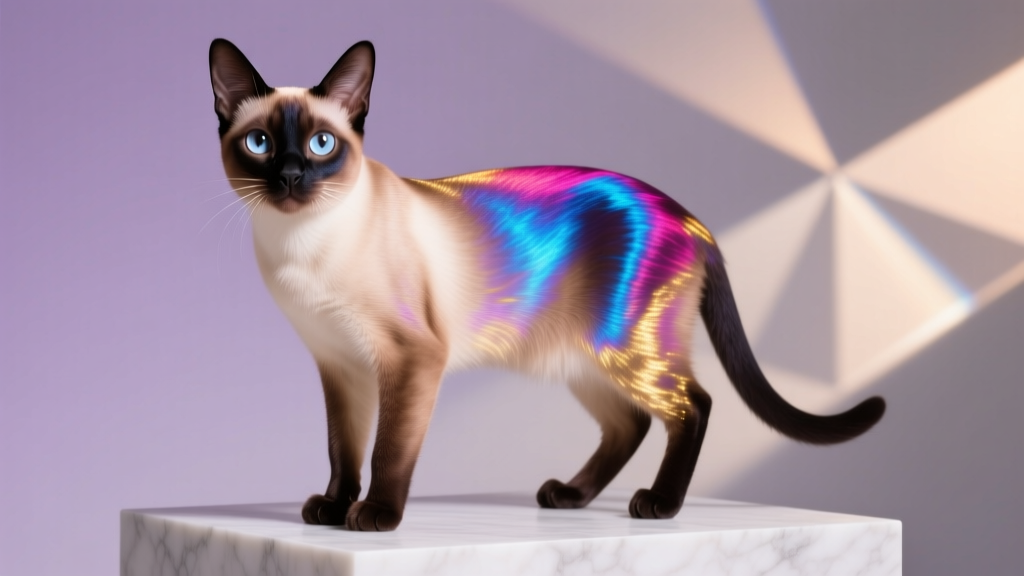
Prism Cat: Multi-Color Pattern Breeding
If you’ve ever wished a cat could look like sunlight passing through a crystal—splashes of color that seem to shift as they move—meet the Prism Cat. This rare, still-developing breed concept is best known for its multi-color pattern breeding goals: a mosaic-like coat with crisp transitions, layered tones, and “prismatic” visual depth. Prism Cats turn heads, but what keeps people obsessed is how many of them pair that show-stopping coat with a people-oriented, playful nature.
Before we get carried away by the rainbow coat photos, there’s a responsible-breeder reality check worth sharing: “Prism Cat” is not currently recognized as an official breed by major registries like CFA (Cat Fanciers’ Association), TICA (The International Cat Association), GCCF, or FIFe. You’ll see the term used by a small number of breeders and enthusiasts to describe a selectively bred type emphasizing multi-color pattern clarity and contrast. That means standards can vary widely from cattery to cattery, and careful research matters even more than usual.
If you’re a cat enthusiast who loves coat genetics, a potential owner drawn to one-of-a-kind markings, or a breed researcher watching new lines develop, this profile will walk you through what “Prism Cat” typically means in practice—history, look, temperament, care, health, and the big questions to ask before bringing one home.
Breed History and Origin
The Prism Cat “breed” is best described as a modern breeding project rather than an established pedigree. The name gained traction in online breeder circles in the last couple of decades as interest grew in high-contrast, multi-color coats that appear more layered than classic calico or tortoiseshell patterns. Prism-focused programs often aim for:
- Clear color separation (less muddling than traditional tortoiseshell)
- Multiple distinct hues across the body, not just small patches
- Pattern “flow” that looks intentional rather than random
- Balanced distribution of light and dark areas for a dimensional effect
Because Prism Cats aren’t standardized by a registry, origins vary by line. Many Prism-type cats appear to descend from carefully selected domestic shorthairs and domestic longhairs, sometimes incorporating recognized breeds known for pattern or coat quality. Depending on the breeder, you may hear mentions of lines influenced by:
- Oriental-type cats for sleek structure and short, glossy coats
- British-type cats for dense plush coats
- Ragdoll/Birman-type ancestry in longhair Prism lines (especially where white spotting and softer expression are desired)
Responsible breeders who use the Prism label usually emphasize health screening and predictable temperament as much as aesthetics. Less responsible sellers may use “Prism” as marketing for any colorful kitten. Your best protection is documentation, transparency, and a willingness to walk away if things don’t feel right.
Physical Characteristics
Prism Cats can look quite different depending on the line, but most share a few visual themes: medium build, athletic balance, expressive eyes, and—of course—a coat designed to look like a multi-hued mosaic. Some are shorthaired with a glassy shine; others are semi-longhaired with a soft, feathered look that makes the colors appear airbrushed.
| Feature | Typical Prism Cat Range |
|---|---|
| Size | Medium (some lines trend small-medium or medium-large) |
| Weight | Usually 7–12 lbs (3.2–5.4 kg); larger males may reach 13–15 lbs (5.9–6.8 kg) depending on lineage |
| Body Type | Athletic, balanced; not extreme |
| Coat Length | Short to semi-longhair, depending on the program |
| Coat Texture | Shorthaired lines: glossy and close-lying; longhaired lines: silky with light undercoat |
| Distinctive Look | High-contrast multi-color patterning with a “prismatic” or layered effect |
Coat Colors and Patterns (What “Prism” Usually Refers To)
Prism Cats are commonly described with coat language you might already know—tortoiseshell, calico, tabby, smoke, silver, shaded, bicolor—but selected for especially vivid, clean presentation. In practice, Prism-type coats often involve a combination of:
- Black-based and red-based pigments (the classic tortie/calico foundation)
- White spotting that creates crisp breaks and “canvas space” for color blocks
- Tabby patterning layered into patches (torbie/caliby effects)
- Silver or smoke genes in some lines, adding shimmer or a halo-like undercoat
Common Prism-style descriptions you may see in listings:
- High-contrast calico with tabby overlay (“caliby”)
- Tortoiseshell with defined patch edges and minimal brindling
- Silver torbie with white, especially bright facial markings
- Smoke tortie where the undercoat lightens each color area
Eye color varies widely (gold, green, hazel, copper). Some Prism lines favor bright, saturated eye tones that “pop” against the coat.
Personality and Temperament Traits
Temperament isn’t controlled by a single gene the way some coat traits are, but breeders who consistently select friendly cats can absolutely shape a line over time. Prism Cats are often promoted as:
- Social and people-focused (the “follow-you-to-the-kitchen” type)
- Playful into adulthood, with a love for interactive toys
- Curious and observant, especially in busy households
- Affectionate without being clingy (though some individuals are total lap connoisseurs)
Many Prism-type cats thrive on routine and attention. If you want a cat who feels like a colorful little roommate—present, engaged, and occasionally comedic—this type can be a wonderful match. If you prefer a very aloof, hands-off cat, you may find Prism lines (especially the highly social ones) a bit too involved.
Health Considerations and Common Issues
Because “Prism Cat” isn’t a registry-standardized breed, health risks depend heavily on which breeds and domestic lines were used and how carefully they’re managed. The good news: many Prism-type cats are built from hardy domestic stock. The caution: trendy breeding goals can tempt some sellers to prioritize color over health.
Potential health concerns to discuss with a breeder or veterinarian (not guaranteed—just worth screening for):
- Hypertrophic cardiomyopathy (HCM) in lines influenced by breeds where it’s more common; ask about echocardiogram screening in breeding cats
- Polycystic kidney disease (PKD) risk if Persian-related ancestry appears; DNA testing can help rule this out in breeding cats
- Dental crowding/gingivitis, which can occur in many cats—regular dental care helps
- Obesity in very food-motivated, indoor-only cats; prevention is easier than weight loss
- Skin sensitivity in cats with very fine coats; use gentle grooming tools and monitor for irritation
A note about coat genetics: Multi-color coats (tortoiseshell/calico) are usually linked to the X chromosome, which means the vast majority of tortie/calico patterned cats are female. Male tortie/calico cats are rare and may be associated with genetic conditions such as XXY (Klinefelter-type). A reputable breeder will be honest about rarity without using it as a price gimmick—and will encourage appropriate veterinary oversight.
Care Requirements (Grooming, Exercise, Diet)
Grooming
Grooming needs depend on coat length, but Prism Cats generally do best with light, consistent upkeep that keeps the coat glossy and reduces shedding.
- Shorthaired Prism cats: brush 1–2 times per week with a soft slicker or rubber curry brush
- Semi-longhaired Prism cats: brush 2–4 times per week; focus on armpits, belly, and behind the ears where tangles start
- Nails: trim every 2–4 weeks
- Ears: check weekly; clean only if needed with vet-approved cleaner
- Teeth: aim for brushing a few times a week (daily is dreamy if your cat tolerates it)
Exercise and Enrichment
Many Prism-type cats are bright and playful. A bored Prism Cat may invent games you didn’t approve—like “launch the sock” or “redecorate the countertop.”
- Two 10–15 minute interactive play sessions daily (wand toys, feathers, chase games)
- Climbing options: cat trees, wall shelves, window perches
- Food puzzles and treat balls to engage the brain
- Rotate toys weekly to keep novelty high
Diet
There’s no Prism-specific diet, but coat quality and muscle tone shine with solid nutrition.
- Choose a complete and balanced cat food (AAFCO/FEDIAF compliant)
- Prioritize animal-based protein and appropriate calories for indoor activity levels
- Consider a mix of wet and dry for hydration (many cats benefit from more wet food)
- Keep treats under ~10% of daily calories
- Weigh monthly at home to catch weight creep early
Compatibility with Families, Children, and Other Pets
Well-bred, well-socialized Prism Cats are often a joyful fit for family life. They tend to enjoy being where the action is—especially if they’re introduced to household bustle early.
- With children: Usually good with gentle, cat-savvy kids. Teach kids to avoid grabbing, chasing, or interrupting rest.
- With dogs: Can do well with calm, cat-friendly dogs. Use slow introductions, scent swapping, and safe vertical escape routes.
- With other cats: Often sociable, especially if raised with littermates. Provide multiple resources (litter boxes, bowls, beds) to prevent tension.
If you’re adopting a Prism-type kitten, ask how much early handling and socialization it gets. If you’re adopting an adult, temperament tends to be more visible immediately—an advantage for many households.
Pros and Cons of Owning a Prism Cat
| Pros | Cons |
|---|---|
| Stunning multi-color coat with unique, photo-worthy patterning | Not an officially recognized breed—standards and predictability vary |
| Often social, playful, and engaging with people | Some lines may be high-energy and require daily enrichment |
| Many come from hardy domestic-based lines | Health screening practices depend entirely on the breeder |
| Can fit well in families and multi-pet homes when socialized | “Prism” is sometimes used as a marketing label—buyer vigilance is essential |
| Wide variety of looks (shorthair to semi-longhair; many color combinations) | True multi-color patterns are more common in females; rare male color claims can be exploited for pricing |
FAQ: Prism Cat (Multi-Color Pattern Breeding)
Are Prism Cats a real, recognized cat breed?
Prism Cat is best understood as a breeding label or developing type focused on multi-color patterning. Major registries like CFA and TICA do not currently list “Prism Cat” as a standardized breed. Always evaluate the individual cat, health testing, and breeder practices rather than relying on the name alone.
Do Prism Cats shed a lot?
Shedding depends on coat length and the individual cat. Shorthaired Prism-type cats usually shed a moderate amount; semi-longhaired cats can shed more seasonally. Consistent brushing makes a noticeable difference.
Are Prism Cats hypoallergenic?
No cat is truly hypoallergenic, and Prism Cats are not known as a hypoallergenic type. Allergies are often triggered by proteins in saliva and skin oils. If allergies are a concern, spend time with the cat before committing and talk to an allergist.
How can I find a reputable Prism Cat breeder?
Look for transparency and proof of care. A reputable breeder (or ethical home-based program) should offer:
- Veterinary records and clear vaccination/deworming schedules
- Health screening appropriate to their lines (e.g., HCM/PKD discussions where relevant)
- In-home socialization and a clean environment
- A written contract, return policy, and spay/neuter terms for pets
Are Prism Cats good lap cats?
Many are affectionate and enjoy cuddles, but it varies. Some are “near you” cats who prefer to sit beside you rather than on you. Adult cats and older kittens give the best clue to cuddle preferences.
Why are most Prism-style multi-color cats female?
Multi-color coats like tortoiseshell and calico usually involve red/black color genetics linked to the X chromosome. Because females have two X chromosomes, they more commonly display the patchwork effect. Male tortie/calico cats are rare.
Warm Signoff
A Prism Cat can feel like living with a piece of art that purrs—bold color, expressive eyes, and a personality that often leans friendly and fun. If you’re drawn to multi-color pattern breeding, take your time, ask smart questions, and choose health and temperament over hype. The right Prism-type cat isn’t just beautiful; they’re a companion who will bring color to your everyday routines in the very best way.
Curious about more rare coat patterns, emerging types, and beloved classics? Explore more breed profiles right here on catloversbase.com.