Oriental Shorthair: Big Ears, Big Personality
If you’ve ever met a cat who seems to have opinions about everything—your schedule, your outfit, your dinner choices, and whether you’ve properly warmed the blanket—there’s a good chance you’ve encountered an Oriental Shorthair (or a close cousin). This breed is famous for its striking, oversized ears, sleek lines, and a personality that can fill an entire house. They don’t just live with you; they participate in your life.
Oriental Shorthairs are often described as “Siamese-like,” and that’s true in all the best ways: they’re people-focused, clever, vocal, and emotionally tuned-in. But they also bring their own flair—especially in the breathtaking range of colors and patterns. If you love an interactive cat who wants to be your sidekick (and your chatty roommate), the Oriental Shorthair may feel like a dream come true.
This guide covers the breed’s history, looks, temperament, care, and health—plus what daily life is really like with one of these big-eared charmers.
Breed History and Origin
The Oriental Shorthair has deep roots in the Siamese family tree. In the mid-20th century, breeders—particularly in the UK and later in the US—wanted to expand the Siamese look into a wider palette of colors and patterns. By crossing Siamese with other breeds (commonly including Russian Blue, British Shorthair, and domestic shorthairs), they developed cats with the same elegant “foreign” body type and lively personality, but in virtually every color imaginable.
Over time, these non-pointed Siamese-type cats became recognized as a distinct breed: the Oriental Shorthair. Most cat registries now consider them closely related to the Siamese and Oriental Longhair, often grouped within the “Oriental” family due to shared structure and temperament.
- Origin: Primarily developed in the United Kingdom; refined in the United States
- Related breeds: Siamese, Oriental Longhair; influenced by Russian Blue, British Shorthair, and domestic shorthairs
- Breed goal: Siamese-style body and personality in a huge range of colors/patterns
Physical Characteristics
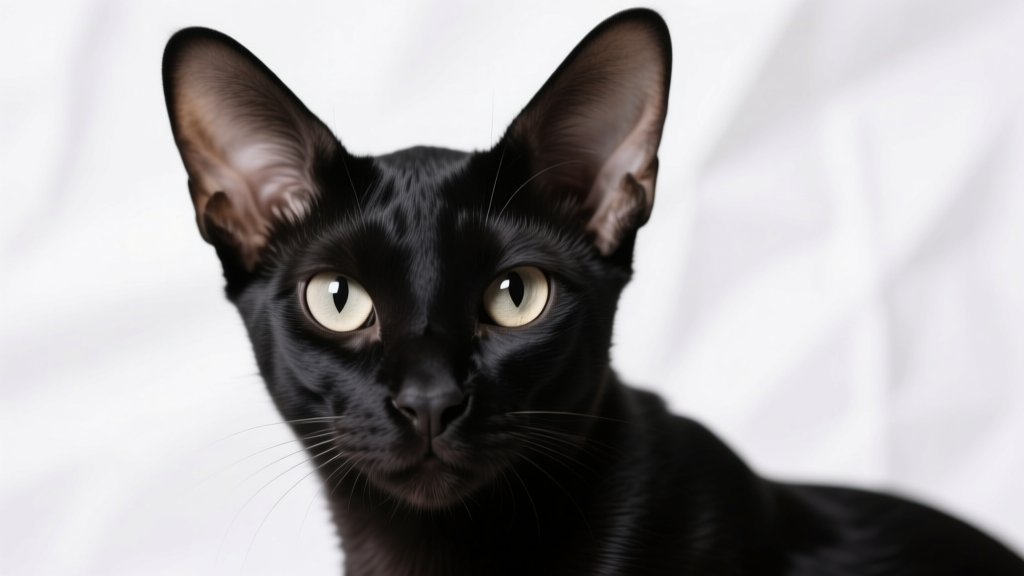
Oriental Shorthairs are sleek, athletic, and unmistakably elegant. They have long lines from nose to tail, with a refined, tubular body and a confident, graceful stance. Their head is wedge-shaped, their profile is clean, and those famous ears look like they’re always tuned in for gossip.
| Feature | Typical Oriental Shorthair Traits |
|---|---|
| Size | Medium |
| Weight | Usually 6–12 lbs (2.7–5.4 kg), with males often larger |
| Body Type | Long, lean, muscular “foreign type” |
| Head | Long wedge shape with a straight profile |
| Ears | Very large, wide-based, and set to continue the wedge shape |
| Eyes | Almond-shaped; commonly green (blue typically associated with pointed varieties) |
| Coat | Short, fine, glossy, close-lying |
| Tail | Long, thin, whip-like |
Coat Colors and Patterns
One of the biggest breed keywords you’ll see attached to the Oriental Shorthair is “many colors”—and it’s not an exaggeration. Depending on the registry, Orientals are recognized in a dazzling range of solid colors, tabbies, smokes, shaded varieties, bicolors, and more.
- Solid: black, white, blue, chocolate, lilac, red, cream, cinnamon, fawn (availability varies)
- Tabby patterns: classic, mackerel, spotted, ticked
- Other patterns: smoke, shaded, bicolor, tricolor/tortie and torbie variations
That short coat tends to show color with a polished, almost satin-like sheen—especially on darker solids and smokes.
Personality and Temperament Traits
If you want a cat who quietly decorates your couch and politely vanishes when company arrives, the Oriental Shorthair is not auditioning for that role. This breed is famously social, expressive, and engaged. Many Oriental Shorthair owners describe them as “dog-like” in their loyalty and curiosity, with a strong desire to be involved in every room you enter.
Common Oriental Shorthair personality traits include:
- Affectionate and people-oriented: they form tight bonds and often pick a favorite human (or two)
- Talkative: many are vocal and will “chat” back and forth with you
- Playful and energetic: they stay kittenish well into adulthood
- Intelligent: quick learners who enjoy puzzle toys and routines
- Emotionally intuitive: they notice your moods and often seek closeness
They do best in homes where someone is around often, or where they have another friendly pet companion. An Oriental Shorthair left alone with nothing to do can invent their own entertainment—sometimes involving cabinets, curtains, or your meticulously folded laundry.
Health Considerations and Common Issues
Oriental Shorthairs are generally healthy, athletic cats, but—like many purebred cats—there are some inherited risks to be aware of. Because the breed is closely related to Siamese lines, some health concerns overlap.
Potential health considerations seen in the Oriental Shorthair include:
- Dental disease: periodontal issues can occur; regular dental care helps
- Respiratory sensitivity: some lines may be more prone to upper respiratory issues
- Heart disease: hypertrophic cardiomyopathy (HCM) can appear in many breeds; reputable breeders prioritize screening
- Amyloidosis: historically reported in Siamese-related breeds; risk varies by lines
- Progressive retinal atrophy (PRA): genetic eye issues can exist; testing is valuable
Choose a breeder who can talk comfortably about health testing, family lines, and veterinary care. If you’re adopting, ask the rescue or shelter what they know about the cat’s background and any medical history. Either way, schedule regular wellness exams—Orientals are so spirited that they may hide discomfort until something is truly bothering them.
Care Requirements
The Oriental Shorthair is fairly easy to maintain in terms of grooming, but they’re high-maintenance in the best way emotionally: they crave interaction, play, and companionship.
Grooming
That sleek, short coat doesn’t mat easily and usually needs only light upkeep. A little routine grooming also helps reduce shedding and keeps that glossy coat looking show-ready.
- Brushing: once a week with a soft brush or grooming mitt
- Baths: occasional, if needed (some tolerate bathing surprisingly well)
- Nails: trim every 2–4 weeks
- Ears: check weekly; their large ears can collect debris
- Teeth: brush several times a week if possible (daily is ideal)
Exercise and Enrichment
Oriental Shorthairs thrive with structured play and vertical space. They love climbing, leaping, chasing, and solving. Boredom is the enemy.
- Daily interactive play: 15–30 minutes (split into sessions) with wand toys or fetch games
- Cat trees and shelves: give them height and vantage points
- Puzzle feeders: excellent for smart, food-motivated cats
- Clicker training: many learn tricks, sit, high-five, and recall
Diet
Feed a high-quality, complete and balanced diet appropriate for your cat’s life stage. Because Orientals are lean and active, they often do well on protein-forward nutrition, but portion control still matters—especially for indoor cats. Work with your veterinarian on calorie needs and ideal body condition.
- Meal style: scheduled meals can help manage weight and routine-loving personalities
- Hydration: many enjoy cat water fountains
- Treats: great for training, but keep them to a small portion of daily calories
Compatibility with Families, Children, and Other Pets
Oriental Shorthairs are often wonderful family cats for households that enjoy an interactive pet. They tend to be affectionate, engaged, and eager to join whatever is happening.
- With children: generally great with respectful kids; they love play and attention
- With other cats: often thrive with a feline friend, especially another playful, social cat
- With dogs: can do well with cat-friendly dogs and careful introductions
The biggest compatibility factor is time and engagement. If your home is quiet, empty most of the day, or you prefer a very independent cat, this breed may feel frustrated. But if you want a cat who greets you at the door, supervises your chores, and acts like a tiny roommate with strong feelings, you’ll likely adore them.
Pros and Cons of Owning an Oriental Shorthair
| Pros | Cons |
|---|---|
| Extremely affectionate and people-focused | Can become lonely or anxious if left alone too much |
| Smart, trainable, and playful | Needs daily enrichment; boredom can lead to mischief |
| Low-maintenance coat with a glossy look | Regular dental care is a must; some lines prone to dental issues |
| Huge variety of colors and patterns | Vocal nature may not suit noise-sensitive households |
| Often great with kids and other pets | May be too intense for people wanting a very independent cat |
FAQ: Oriental Shorthair Cats
Are Oriental Shorthair cats hypoallergenic?
No cat is truly hypoallergenic, and Oriental Shorthairs still produce allergens (like Fel d 1). Their short coat may shed a bit less than some fluffy breeds, but allergy-sensitive people should spend time with the breed before committing.
Do Oriental Shorthairs meow a lot?
Many do. They’re known for being talkative and expressive, often “conversing” with their humans throughout the day. If you enjoy a vocal, interactive cat, it’s a big plus.
How big do Oriental Shorthairs get?
They’re typically medium-sized, often around 6–12 lbs (2.7–5.4 kg). They look long and elegant, so they may seem larger than the scale suggests.
Are Oriental Shorthairs cuddly?
Yes—often very. Many Oriental Shorthairs love laps, blankets, and sleeping close to their people. They’re affectionate in a “I want to be involved” way, not a distant, occasional-snuggle way.
Do Oriental Shorthairs need a companion pet?
They don’t strictly require one, but many do best with companionship—another cat, a cat-friendly dog, or a human who’s home often. Their social nature makes long, lonely days hard on them.
How much grooming does an Oriental Shorthair need?
Usually minimal: a weekly brush or grooming mitt session plus routine nail trims, ear checks, and dental care. The coat is easy; the real “maintenance” is keeping their brains and hearts busy.
Warm Final Thoughts
The Oriental Shorthair is the kind of cat who turns everyday life into a relationship: they’ll greet you, follow you, comment on your decisions, and curl up close when the day winds down. With their sleek bodies, enormous ears, and endless range of coat colors, they’re eye-catching—but it’s their bright, affectionate personality that truly wins people over.
If you’re ready for a loyal, clever, chatty companion who wants to be part of everything, the Oriental Shorthair might just be your perfect match. Want to meet more amazing felines? Explore more breed profiles on catloversbase.com.