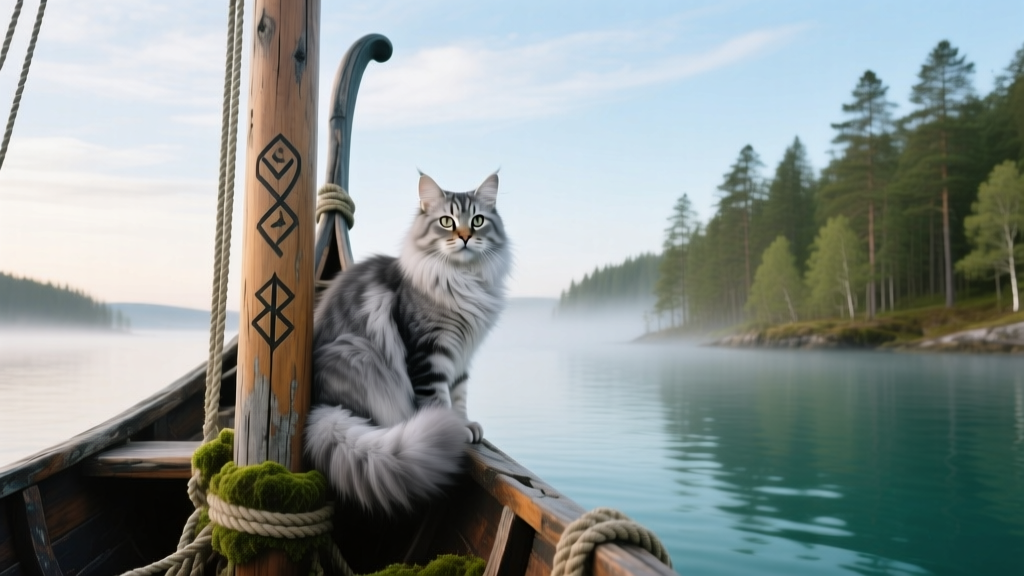
Norwegian Forest Cat: Viking Ship Stowaways
Picture a sturdy, longhaired cat perched on a frosty windowsill, eyes bright with curiosity, tail wrapped like a plume around their paws. Now picture that same cat centuries ago—tucked into the cargo hold of a Viking ship, watching the world rock and sway as the sea roared outside. The Norwegian Forest Cat (often called the Wegie) has that kind of storybook presence: a rugged natural breed shaped by Nordic winters, folklore, and real-life farm life.
For cat lovers, this breed hits a sweet spot. The Norwegian Forest Cat looks wild and majestic, yet tends to be affectionate, steady, and surprisingly adaptable. They’re climbers, explorers, and devoted companions—often happiest when they can follow you from room to room, supervise your day, then nap somewhere high enough to feel like the ruler of their realm.
If you’re researching the Norwegian Forest Cat breed, considering one as a family pet, or simply enchanted by cats with Viking vibes, you’re in for a treat. Let’s talk history, personality, care, and what it’s really like to share a home with this Nordic legend.
Breed History and Origin
The Norwegian Forest Cat is a natural breed from Norway—meaning it developed over time with minimal human “design,” shaped mostly by climate and survival. Norway’s long, cold winters favored cats with dense coats, strong bodies, and the athletic ability to climb through forests and rocky terrain.
These cats are wrapped in folklore. Norwegian fairy tales mention a large, longhaired “skogkatt” (forest cat) so skilled it could climb sheer rock faces. Whether those tales describe the modern breed exactly is hard to prove, but the resemblance is irresistible.
Now for the “Viking ship stowaways” part: many enthusiasts believe longhaired cats may have traveled with Vikings as working mousers, protecting food stores on ships and later on farms. While we can’t time-travel to confirm a specific Wegie on a longship, it’s historically plausible that cats with hardy coats and hunting talent accompanied seafarers across northern Europe.
The breed nearly disappeared in the early 1900s due to crossbreeding and changing lifestyles. Dedicated Norwegian fanciers began organized preservation efforts mid-century. The Norwegian Forest Cat was officially recognized in Norway in the 1970s, and later gained international recognition through major cat registries. Today, it’s cherished worldwide for its beauty, history, and balanced temperament.
Physical Characteristics
The Norwegian Forest Cat is built for the outdoors: powerful, athletic, and insulated like a tiny, elegant snow beast. They’re often compared to the Maine Coon, but Wegies typically have a more triangular head shape and a distinct profile.
| Feature | Typical Norwegian Forest Cat Traits |
|---|---|
| Size | Large, sturdy, athletic build |
| Weight | Males often 13–20+ lb; females often 9–16 lb (healthy range varies by frame and lineage) |
| Body | Long body, strong bones, muscular chest and hindquarters |
| Head | Triangular shape; straight nose profile; strong chin |
| Ears | Medium to large, often with lynx-like tufts; set wide apart |
| Eyes | Large, almond-shaped; expression alert and calm |
| Coat | Double coat: dense undercoat + long, water-resistant guard hairs; seasonal shedding can be dramatic |
| Tail | Long, full, and fluffy—often as long as the body |
Coat and Colors
The Norwegian Forest Cat coat is one of its biggest calling cards. It’s designed to handle wet, snowy weather: the topcoat tends to be glossy and water-shedding, while the undercoat provides insulation. Many have a noticeable “ruff” around the neck and “britches” (longer fur) on the hind legs.
Norwegian Forest Cats come in a wide range of colors and patterns. Common options include:
- Tabby (classic, mackerel, spotted) in brown, silver, red, and more
- Solid (such as black, blue, white)
- Tortoiseshell and calico variations
- Bi-color and other white-marked patterns
Some registries have restrictions on certain colorpoint patterns depending on standards, but overall the breed offers plenty of variety.
Distinctive Features
- Weatherproof double coat with a wild, “ready for winter” look
- Powerful climbing ability (many are famous for going up and down cat trees like pros)
- Slow maturity: many Norwegian Forest Cats take 3–5 years to fully develop in size and coat
Personality and Temperament Traits
Norwegian Forest Cats are often described as affectionate without being clingy. They tend to enjoy being near their people, but they also appreciate having options—like a tall perch, a quiet corner, or a sunny room where they can “check in” on household activity.
Many Wegies are:
- Gentle and steady — usually not prone to dramatic mood swings
- Confident explorers — curious about new rooms, visitors, and daily changes
- Playful hunters — they often love wand toys, chase games, and puzzle feeders
- Social on their terms — they may not be constant lap cats, but they’ll happily be your shadow
They’re also known for being smart. If you provide a routine and enrichment, you’ll likely see that clever Wegie brain at work—figuring out treat puzzles, learning household rhythms, and choosing strategic napping spots where they can monitor everything.
Health Considerations and Common Issues
The Norwegian Forest Cat is generally a robust breed, but like all purebred cats, there are health concerns to be aware of—especially when choosing a breeder. Responsible breeding and appropriate screening matter.
Commonly discussed health considerations include:
- Hypertrophic cardiomyopathy (HCM) — a heart condition seen in many cat breeds; screening via echocardiogram is ideal
- Hip dysplasia — can occur in larger cats; watch for stiffness, reduced jumping, or reluctance to play
- Glycogen storage disease type IV (GSD IV) — a rare inherited disorder historically associated with the breed; reputable breeders test lines and avoid producing affected kittens
- Dental disease — not unique to Wegies, but very common in cats overall
Keeping your Norwegian Forest Cat at a lean, athletic weight is one of the best ways to support joint and heart health. Regular veterinary checkups (including dental care) go a long way, too.
Care Requirements (Grooming, Exercise, Diet)
Grooming
That glamorous coat is more practical than it looks, but it still needs help—especially during seasonal shedding. Many Norwegian Forest Cats do fine with consistent, gentle grooming rather than constant fussing.
- Brushing: 1–2 times weekly most of the year; during spring/fall sheds, aim for 3–4 short sessions weekly
- Tools: a wide-tooth comb for the ruff and britches, plus a slicker brush for finishing
- Mats: watch behind the ears, under the arms, and around the belly—address tangles early
- Nails & ears: trim nails every 2–4 weeks; check ears and clean only if needed
Bathing is usually optional unless they get into something messy. Many Wegies keep themselves tidy, and over-bathing can dry out skin.
Exercise and Enrichment
Norwegian Forest Cats are athletic and built to climb. If you want a happy Wegie, think vertical space.
- Cat trees tall enough for real climbing and lounging
- Wall shelves/perches for a “forest canopy” vibe indoors
- Interactive play (10–15 minutes, once or twice daily): wand toys, feather toys, chase games
- Puzzle feeders to engage their hunting instincts
If you provide safe outdoor access (like a catio), many Norwegian Forest Cats adore fresh air and bird-watching. Always prioritize safety—this breed’s confidence can lead them into trouble if unsupervised outdoors.
Diet
A Norwegian Forest Cat’s diet should support muscle, coat health, and steady energy. Look for high-quality, meat-forward foods with appropriate calories for their size and activity level. Many do well with a mix of wet and dry food, with wet food helping hydration.
- Portion control: large frame doesn’t mean unlimited food—keep them trim
- Protein focus: supports their athletic build
- Omega-3s: can benefit coat and skin (ask your vet before supplementing)
- Fresh water: fountains are often a hit with curious Wegies
Compatibility with Families, Children, and Other Pets
Norwegian Forest Cats often make wonderful family companions. Their calm confidence and playful streak can be a great match for a lively home, as long as they’re treated with respect.
- With children: generally good with cat-savvy kids who don’t grab or chase; they prefer gentle handling
- With other cats: often social, especially with proper introductions; many enjoy a friendly feline companion
- With dogs: can do well with calm, respectful dogs; confident Wegies often stand their ground
- With small pets: caution—strong prey drive can make birds/rodents risky to keep in the same space
Because they like to observe from above, providing vertical retreats (cat trees, shelves) can reduce stress in multi-pet homes and help everyone coexist peacefully.
Pros and Cons of Owning a Norwegian Forest Cat
| Pros | Cons |
|---|---|
|
|
FAQ: Norwegian Forest Cat
Are Norwegian Forest Cats good indoor cats?
Yes—Norwegian Forest Cats can thrive indoors as long as they have enrichment. Prioritize tall cat trees, climbing shelves, window perches, and interactive play. Many also love a safe outdoor option like a catio.
Do Norwegian Forest Cats like to cuddle?
Many enjoy closeness, but they’re often more “next to you” than “on you.” Some become lap cats, while others prefer leaning against you, sleeping nearby, or supervising from a high perch.
How much do Norwegian Forest Cats shed?
They shed year-round, with big seasonal coat changes—often heaviest in spring. Regular brushing makes a huge difference, especially around the ruff, belly, and hindquarters.
What’s the difference between a Maine Coon and a Norwegian Forest Cat?
Both are large, longhaired cats, but Norwegian Forest Cats typically have a more triangular head, a straight nose profile, and a coat designed to be especially water-resistant. Temperament overlaps, though Wegies are often described as a touch more reserved and “observant.”
How long do Norwegian Forest Cats live?
Many live into their mid-teens with good care, and some go beyond. Genetics, weight management, dental care, and regular veterinary checkups all influence lifespan.
Is a Norwegian Forest Cat hypoallergenic?
No cat breed is truly hypoallergenic, and Norwegian Forest Cats have plenty of fur. Some allergy sufferers do better with certain individuals, but it’s best to spend time with the breed before committing.
A Warm Signoff for Future Wegie Families
The Norwegian Forest Cat is the kind of companion that makes ordinary life feel a little more legendary. With their Viking-worthy fluff, athletic grace, and calm, affectionate nature, they bring both beauty and heart to a home. Give them climbing space, brush through the seasonal coat changes, and meet their need for play and companionship—and you’ll be rewarded with a devoted friend who feels like part forest spirit, part family member.
Want to keep exploring? Browse more breed profiles, care guides, and cat-lover favorites right here on catloversbase.com.