Munchkin Cat: Short Legs, Big Personality
If you’ve ever seen a cat trot across the room on adorably short legs and thought, “How is that even real?”—you’ve likely met (or at least spotted) a Munchkin cat. The Munchkin breed looks like someone gently pressed the “shrink” button on a cat’s legs… and then left everything else delightfully normal. The result is a kitty that turns heads everywhere it goes.
But Munchkins aren’t just about the legs. They’re bright, playful, social little companions with a knack for getting into the fun—often with a surprising amount of speed and agility. If you’re researching the Munchkin cat breed because you’re considering adding one to your home (or you’re simply fascinated by unique breeds), you’re in the right place.
Let’s explore where Munchkins came from, what they’re like to live with, and what responsible owners should know about health, care, and everyday life with these pint-sized adventurers.
Breed History and Origin
The Munchkin cat’s story is fairly modern, but short-legged cats themselves have popped up throughout history. Documented reports of naturally occurring short-legged cats appeared in various places in the 20th century, including the United Kingdom, Russia, and the United States. These cats weren’t a “breed” yet—just occasional natural mutations showing up in regular cat populations.
The modern Munchkin breed traces back to the early 1980s in Louisiana, USA. A woman found a pregnant, short-legged stray cat and named her Blackberry. Blackberry’s kittens included both short- and normal-legged cats, and from those lines, breeders began developing the Munchkin as a recognized breed.
The short legs are caused by a naturally occurring genetic mutation that affects limb length. Munchkins are considered a “natural” breed because the trait wasn’t created through crossbreeding with another species or through deliberate manipulation—though the development of the breed has been controversial in some circles due to welfare concerns. Today, the Munchkin is recognized by some cat registries (such as TICA), while others do not recognize it.
Physical Characteristics
Munchkins are medium-small cats with a normal-sized body carried close to the ground. They’re not “miniature cats”—they’re regular cats with shortened limbs. Many people are surprised by how sturdy and well-muscled they feel in person.
| Feature | Typical Munchkin Traits |
|---|---|
| Size | Small to medium |
| Weight | About 5–9 lb (2.3–4.1 kg), varies by sex and build |
| Body | Moderate, solid, well-muscled; chest broad and sturdy |
| Legs | Distinctively short; front legs may appear slightly bowed in some cats |
| Head | Moderate wedge with rounded contours; expressive eyes |
| Coat | Short-haired or long-haired varieties; plush to silky depending on coat type |
| Colors/Patterns | Nearly all colors and patterns, including tabby, solid, bicolor, tortie, colorpoint, and more |
Coat Types: Shorthaired vs. Longhaired
- Shorthaired Munchkin: Typically plush, dense, and easy to maintain with light weekly grooming.
- Longhaired Munchkin: Soft, semi-long coat with more feathering; needs more frequent brushing to prevent tangles.
Distinctive Features
- Short legs: The signature look—often described as “dachshund-like,” though Munchkins are still very catlike in movement.
- Low-to-the-ground stance: Gives them an endearing, confident waddle—until they decide to sprint.
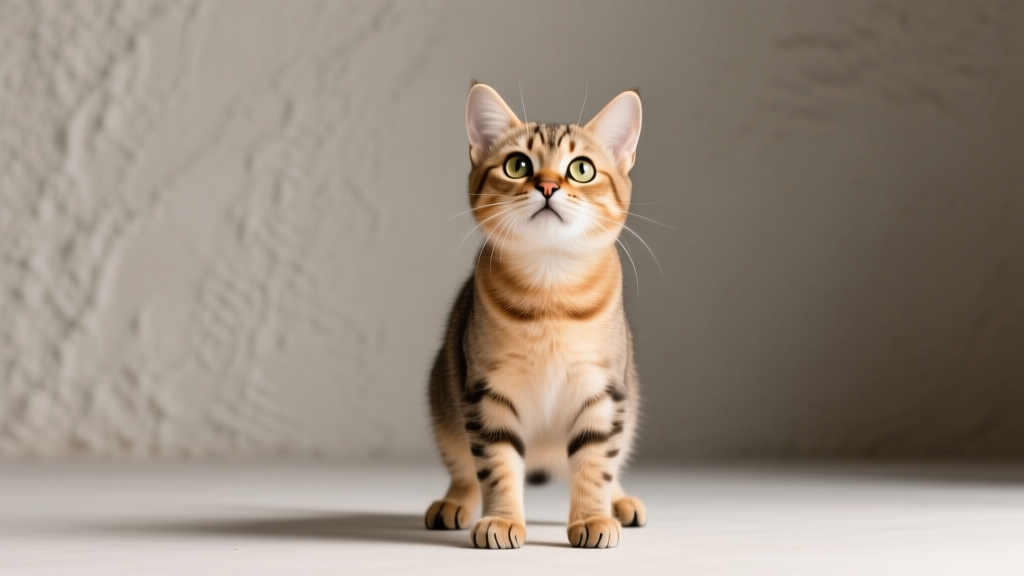
- “Meerkat sit” tendency: Many Munchkins sit upright on their hind legs to investigate what’s going on, using their tail for balance.
Personality and Temperament Traits
The Munchkin cat personality is one of the biggest reasons people fall in love with the breed. These cats tend to be outgoing, curious, and enthusiastic about play. They’re often described as “forever kittens” because they keep that playful spark well into adulthood.
- Playful and busy: They love toys, games, and interactive time with their humans.
- People-oriented: Many Munchkins enjoy being near you—following you from room to room and supervising daily life.
- Social: With proper introductions, they often do well with other cats and cat-friendly dogs.
- Smart and adaptable: Many learn routines quickly and can even pick up tricks with treats and patience.
- Confident: Despite their shorter legs, they typically don’t act fragile or timid.
Every cat is an individual, of course. A Munchkin’s temperament can vary based on upbringing, socialization, and the personality of its parents.
Health Considerations and Common Issues
Munchkin cats can live happy, active lives, but responsible ownership includes understanding the health questions that surround short-legged breeds. The gene that causes shortened legs is associated with a form of dwarfism (chondrodysplasia). Many Munchkins appear healthy and mobile, but the structure of the limbs and spine deserves thoughtful attention.
Potential Health Concerns
- Spinal issues (lordosis): An excessive inward curve of the spine that can range from mild to severe. Severe cases can affect organ function and quality of life.
- Chest formation issues (pectus excavatum): A chest wall deformity that can also vary in severity.
- Arthritis/joint strain: Not guaranteed, but any altered limb structure can influence long-term joint comfort, especially if the cat becomes overweight.
- Obesity risk: Like many indoor cats, Munchkins can gain weight easily if overfed or under-exercised, and extra weight may put more stress on joints.
Good breeders prioritize healthy, comfortable cats with excellent mobility and will screen for issues, provide veterinary records, and be transparent about lines. You’ll also want a vet who is comfortable evaluating conformation and mobility over time.
Breeding Note for Researchers
The short-legged trait is inherited. Ethical breeding programs avoid producing kittens with severe structural problems and focus on robust health and temperament. If you’re researching the Munchkin cat breed, look for breeders who openly discuss health, do regular vet checks, and will take back cats if owners can’t keep them.
Care Requirements (Grooming, Exercise, Diet)
Munchkins are generally easy companions day-to-day, but they thrive when their care is tailored to their body type and energetic personality.
Grooming
- Shorthaired Munchkin: Brush once a week to remove loose hair and keep the coat glossy.
- Longhaired Munchkin: Brush 2–4 times per week, paying attention to the belly, behind the legs, and under the collar area where tangles form.
- Nails: Trim every 2–4 weeks. Short legs don’t mean short claws, and regular trims protect your furniture and your lap.
- Teeth and ears: Dental care (even a few times weekly brushing) helps prevent gum issues; check ears for wax or debris.
Exercise and Enrichment
Munchkins love to play. Many can jump and climb, though some may not reach the same heights as long-legged cats. The best approach is to offer “accessible adventure.”
- Interactive play: Wand toys, feather toys, and chase games 10–15 minutes daily (or more if your cat begs for it).
- Puzzle feeders: Great for mental stimulation and slowing down speedy eaters.
- Cat trees with ramps/steps: Choose options that allow easy climbing in stages.
- Window perches: A favorite for birdwatching and sunshine naps.
Diet
There’s no single “Munchkin-only” diet, but weight management is especially valuable for this breed. A fit Munchkin is typically a happier, more comfortable mover.
- High-quality, protein-forward food: Look for a named animal protein as a primary ingredient.
- Portion control: Measure meals rather than free-feeding if your cat tends to gain weight.
- Wet food benefits: Helps support hydration and can be useful for weight management.
- Treat strategy: Keep treats small and count them as part of daily calories—Munchkins can be charming snack negotiators.
Compatibility with Families, Children, and Other Pets
The Munchkin cat is often a wonderful family companion. Their playful, social vibe makes them a great match for homes where they’ll get attention and interaction.
- With children: Usually very good, especially with respectful kids who know how to handle a cat gently. Teach children not to pick up cats improperly or force play.
- With other cats: Often friendly and playful. Provide enough litter boxes, vertical space, and separate resting areas to avoid tension.
- With dogs: Many do well with calm, cat-savvy dogs. Slow introductions and safe escape routes help everyone feel secure.
- For busy households: They may become bored if left alone without enrichment. A second pet or a robust toy rotation can help.
If you want a cat that’s affectionate, entertaining, and likes being part of the action, the Munchkin cat breed is frequently a strong contender.
Pros and Cons of Owning This Breed
Every breed has its bright spots and its “know before you commit” realities. Here’s a balanced look at Munchkin cat ownership.
| Pros | Cons |
|---|---|
| Adorable, distinctive short-legged appearance | Breed is controversial; responsible sourcing matters |
| Playful, social, and often very people-friendly | Potential structural health concerns (varies by individual and line) |
| Adapts well to apartment living with enrichment | May need ramps/step-friendly setups for easy access to favorite spots |
| Comes in many coat colors and patterns | Can gain weight if overfed or under-exercised |
| Often gets along with kids and other pets when socialized | Finding an ethical breeder can take time and careful research |
FAQ: Munchkin Cats
Are Munchkin cats in pain because of their short legs?
Many Munchkin cats live active, comfortable lives and don’t show signs of pain simply because their legs are short. That said, their structure can raise the risk of certain issues in some individuals. Choosing ethical breeding, keeping your cat lean, and doing regular vet checkups focused on mobility are smart ways to support long-term comfort.
Can Munchkin cats jump and climb like other cats?
They can jump and climb, but many don’t reach the same heights as long-legged cats. Lots of Munchkins are surprisingly quick and athletic; they simply benefit from cat trees with steps, ramps, or tiered platforms.
How big does a Munchkin cat get?
Most are small to medium in size, commonly around 5–9 pounds, though some may be a bit larger or smaller depending on genetics, sex, and overall build.
Do Munchkin cats shed a lot?
Shedding depends more on coat type than leg length. Shorthaired Munchkins usually shed moderately, while longhaired Munchkins can shed more and may need more frequent brushing—especially during seasonal coat changes.
Are Munchkin cats good for first-time cat owners?
Often, yes—if you’re prepared for playful energy and you’re committed to good nutrition and regular vet care. Their friendly personalities can make them approachable for new owners, and their grooming needs are manageable (especially in shorthaired cats).
How long do Munchkin cats live?
Lifespan varies, but many Munchkin cats live into their teens, similar to other domestic cats, especially with attentive preventive care, healthy weight management, and responsible breeding.
A Warm Goodbye (and a Little Munchkin Encouragement)
The Munchkin cat is a delightful mix of charming looks and lively companionship—short legs paired with a big, curious heart. For the right home, they can be affectionate sidekicks, playful comedians, and devoted little shadows who want to be wherever you are.
If you’re thinking about bringing a Munchkin home, take your time: meet adult cats if possible, ask thoughtful questions about health and mobility, and choose a source that puts the cat’s wellbeing first. Your reward is a bright, social companion who turns everyday life into a series of small adventures.
Want to keep exploring? Browse more breed profiles and cat care guides on catloversbase.com and find the perfect feline match for your home.