Indigo Cat: Deep-Blue Eye Color Selection
There’s something almost hypnotic about a cat with truly deep-blue eyes—the kind of rich, inky sapphire that makes you stop mid-scroll and stare. The idea of an “Indigo Cat” taps right into that fascination: a cat type defined not by a single famous registry label, but by a very specific look that many cat lovers adore—an intense blue gaze paired with a striking coat.
If you’ve seen “Indigo Cat” mentioned online, you may have noticed it isn’t listed as a standardized breed in major registries like CFA or TICA. That doesn’t make the topic any less exciting. It simply means the conversation is about blue-eye color selection—how breeders (and dedicated hobbyists) can increase the odds of deep-blue eyes through careful pairing, and which recognized breeds and bloodlines are most likely to produce that indigo-eyed magic.
This guide covers what people usually mean by “Indigo Cat,” the real genetics behind blue eyes, the recognized cat breeds most associated with deep-blue eye color, and what to expect if you’re hoping to welcome a blue-eyed beauty into your home.
Breed History and Origin (What “Indigo Cat” Really Means)
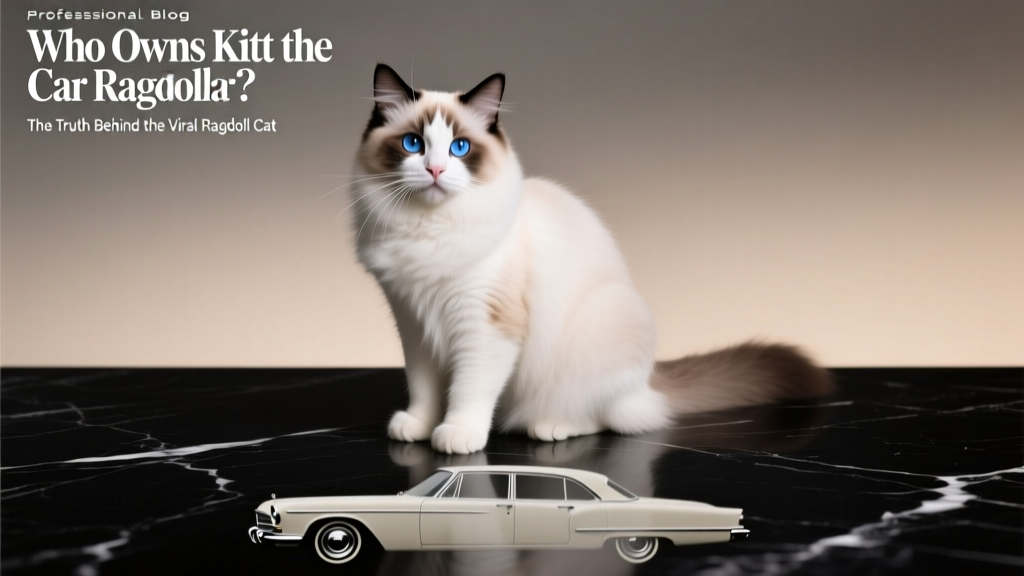
Unlike Siamese, Ragdoll, or Burmese, the Indigo Cat is best understood as a descriptive label used by cat lovers to refer to cats with unusually deep-blue eyes—often paired with colorpoint coats or specific white patterning.
Historically, the most famous blue-eyed cats came from colorpoint lineages—especially the Siamese family of breeds. Over time, breeders selectively emphasized not only point coloration but also eye intensity. The “indigo” effect is essentially the high end of that spectrum: deeper, darker blue rather than pale or watery blue.
Today, when someone searches “Indigo Cat deep-blue eyes,” they’re usually looking for one of these:
- Colorpoint cats (Siamese-type, Ragdoll, Birman, Himalayan/Persian colorpoints) known for reliably blue eyes
- White or high-white cats with blue eyes (sometimes odd-eyed), though eye color can vary widely
- Selective breeding programs (responsible, health-focused) aiming for intense blue eye color within recognized breeds
So while “Indigo Cat” isn’t a formal breed name, the look is very real—and it’s deeply rooted in established genetics and long-running breeding traditions.
Physical Characteristics
Because “Indigo Cat” refers to a look rather than a single standardized breed, physical traits vary based on the underlying breed. Still, most “indigo-eyed” cats share a few common patterns—especially if they come from colorpoint lines.
Typical Size and Weight
| Category | Typical Range | Notes |
|---|---|---|
| Weight | 6–15 lb (2.7–6.8 kg) | Depends heavily on breed (Siamese often lighter; Ragdolls heavier) |
| Height | 8–12 in (20–30 cm) | Most are medium-bodied; some are long and lanky |
| Build | Slender to sturdy | Siamese/Oriental: elegant; Ragdoll/Birman: plush and substantial |
Coat Type
- Short coat: Common in Siamese-type cats; sleek and low-shedding.
- Medium to long coat: Common in Ragdoll, Birman, and Himalayan/Persian colorpoints; softer, plush, and more maintenance.
Coat Colors and Patterns Seen with Deep-Blue Eyes
The strongest association with deep-blue eyes is the colorpoint pattern (darker “points” on face, ears, legs, and tail). You’ll often see:
- Seal point (dark brown/near-black points)
- Blue point (cool gray points)
- Chocolate point (warm milk-chocolate points)
- Lilac point (pale pinkish-gray points)
- Flame/Red point and Cream point (orange or cream points)
- Lynx point (tabby striping in the points)
- Mitted or bicolor patterns (common in Ragdolls; can make the eye color pop visually)
Distinctive Features
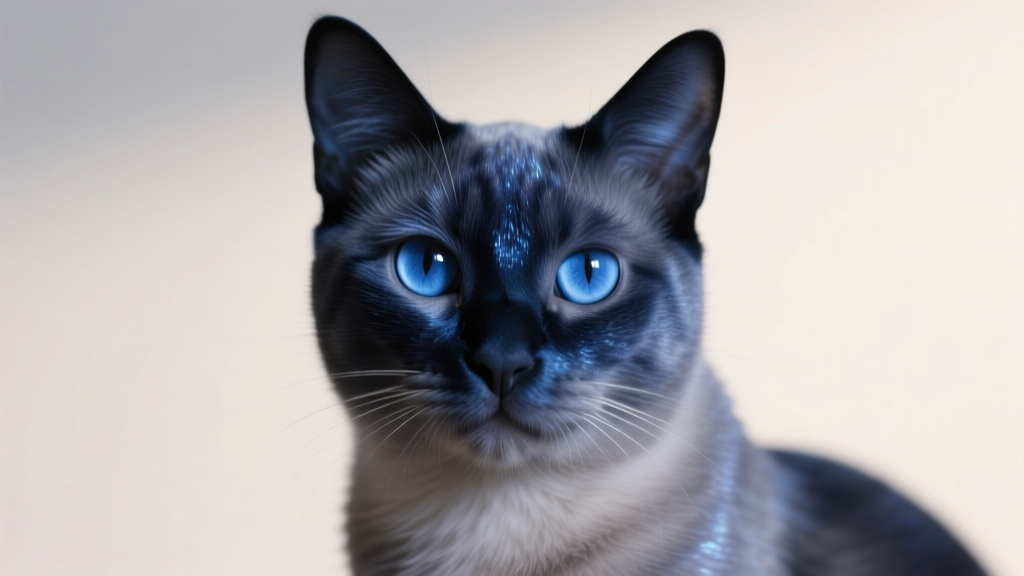
The “Indigo Cat” signature trait is the eyes. Here’s what to look for:
- Eye color: vivid to deep sapphire blue (intensity varies by genetics and individual)
- Eye shape: almond (Siamese-type) or large/oval (Ragdoll/Birman-type)
- Contrast: blue eyes appear most dramatic against darker points or a clean pale body coat
Personality and Temperament Traits
Temperament depends on breed background, but many deep-blue-eyed, colorpoint-related cats share a reputation for being people-centered. They often bond hard with their favorite humans and thrive on interaction.
Common “Indigo Cat” personality themes (especially in Siamese/Ragdoll/Birman lines):
- Affectionate and social: loves being near you—on your lap, beside your keyboard, or supervising chores
- Chatty (in some lines): Siamese-type cats can be famously vocal; Ragdolls tend to be gentler talkers
- Playful and smart: enjoys puzzle feeders, wand toys, and learning routines
- Routine-loving: many do best with predictable schedules and attention
- Gentle cuddler potential: especially true in Ragdoll/Birman-type cats with calmer energy
Health Considerations and Common Issues
Eye color itself isn’t automatically a health problem. The health picture depends on genetics behind the coat/eye traits and the breed(s) involved. Responsible breeding matters a lot when selecting for deep-blue eyes—because selecting only for looks can accidentally increase health risks if screening is ignored.
Potential health considerations in blue-eyed/colorpoint-associated breeds include:
- Progressive retinal atrophy (PRA): seen in some lines; genetic testing may be available depending on breed.
- Hypertrophic cardiomyopathy (HCM): a heart disease risk in several breeds; reputable breeders screen with echocardiograms.
- Polycystic kidney disease (PKD): more associated with Persian/Himalayan lines; DNA testing can reduce risk.
- Respiratory/tear issues: in brachycephalic (flat-faced) cats like Himalayan/Persian types.
- Dental disease: common across cats, sometimes more noticeable in narrower-faced breeds if dental alignment is tight.
- Hearing risk in white cats: blue-eyed white cats can have a higher risk of congenital deafness (this is tied to specific white pattern genetics, not colorpoint).
If deep-blue eyes are your priority, look for a breeder or rescue that prioritizes health testing, transparency, and temperament—not just “the bluest eyes.”
Care Requirements (Grooming, Exercise, Diet)
Grooming
Coat care depends on length:
- Short-haired blue-eyed cats: brush 1x weekly to reduce shedding and keep the coat glossy.
- Long-haired/plush coats: brush 3–5x weekly (or daily during seasonal shedding) to prevent mats, especially behind ears and in armpits.
Also plan for:
- Eye area checks: some lines (especially flatter-faced cats) can have more tear staining; wipe gently with a damp soft cloth.
- Nail trims: every 2–4 weeks.
- Dental care: brushing a few times per week is ideal; dental treats and vet cleanings help too.
Exercise and Enrichment
Many indigo-eyed cats (especially Siamese-type) are athletic and bright. They do best with daily play and vertical space.
- Play sessions: 15–30 minutes daily (split into 2–3 bursts for high-energy cats)
- Enrichment favorites: wand toys, kicker toys, clicker training, puzzle feeders, cat trees, window perches
- Companionship: if your cat is social, a second cat (carefully introduced) can reduce boredom
Diet
There’s no “blue-eye diet,” but good nutrition supports coat condition, weight management, and overall health—so those beautiful eyes sparkle in a healthy face.
- Prioritize protein: look for complete and balanced foods where animal protein is a main ingredient.
- Watch weight: heavier breeds (like Ragdoll-type cats) can gain weight easily; measure portions and encourage play.
- Hydration: wet food, fountains, and multiple water stations help kidney and urinary health.
- Life-stage appropriate: kitten, adult, and senior formulas matter—especially for large, slow-maturing cats.
Compatibility with Families, Children, and Other Pets
Most cats associated with deep-blue eyes—especially Ragdolls, Birmans, and many Siamese-type mixes—tend to be very people-oriented. With proper introductions and respectful handling, they can be wonderful family companions.
| Household Type | Typical Fit | Tips |
|---|---|---|
| Families with children | Often excellent | Teach gentle petting, no chasing; provide a quiet “cat-only” zone |
| Singles / couples | Excellent | Expect a loyal shadow-cat who wants to be involved |
| Multi-cat homes | Usually good | Slow introductions; match energy levels |
| Cat-friendly dogs | Often good | Supervised intros, safe vertical escapes, gradual scent swaps |
One caution: highly social, vocal Siamese-type cats may struggle if left alone for long workdays without enrichment. A companion pet or a very engaged human schedule can make a huge difference.
Pros and Cons of Owning an “Indigo Cat” (Deep-Blue Eyed Beauty)
| Pros | Cons |
|---|---|
| Striking deep-blue eyes that many people find unforgettable | “Indigo Cat” isn’t a standardized breed—temperament and care vary by lineage |
| Often affectionate, social, and people-focused | Some lines can be very vocal and demand attention |
| Colorpoint coats offer gorgeous contrast and variety (seal, blue, lilac, lynx, etc.) | Long-haired varieties require more frequent grooming |
| Common in several recognized breeds—many options for finding your match | Health screening is essential; avoid sellers focused only on “bluest eyes” marketing |
| Great potential for family-friendly, gentle companions (breed-dependent) | Some lines may be prone to breed-related issues (HCM, PKD, etc.) |
FAQ: Indigo Cat Deep-Blue Eyes
1) Is the Indigo Cat a real breed?
“Indigo Cat” is usually a descriptive term for cats with very deep-blue eyes, not an official breed recognized by major registries. Many cats that fit the look come from recognized blue-eyed lines like Siamese, Ragdoll, Birman, or Himalayan/Persian colorpoints.
2) What causes deep-blue eyes in cats?
The most reliable pathway is the colorpoint gene, which is linked to blue eyes in colorpoint cats. Some white-pattern genetics can also produce blue eyes, but intensity and consistency vary more widely.
3) Do all colorpoint cats have the same shade of blue?
No. Colorpoint cats typically have blue eyes, but the shade can range from pale sky-blue to intense sapphire/indigo. Eye depth is influenced by genetics, selective breeding, and individual variation.
4) Are blue-eyed cats more likely to be deaf?
Deafness risk is primarily associated with white cats with blue eyes due to specific white pattern genetics. Colorpoint cats (like Siamese or Ragdolls) are not typically associated with that same deafness risk.
5) What breeds should I look for if I want indigo-blue eyes?
Start with breeds where blue eyes are expected: Siamese, Ragdoll, Birman, and Himalayan (colorpoint Persian). Within any breed, ask about eye color in the parents and previous litters, and prioritize health-tested lines.
6) Can I find an “Indigo Cat” in a shelter or rescue?
Yes. Colorpoint mixes and blue-eyed cats do show up in rescues. Search for terms like colorpoint, Siamese mix, Ragdoll mix, blue-eyed cat, or specific point colors (seal point, blue point, lynx point).
Warm Signoff
If you’re enchanted by the idea of an Indigo Cat, the happiest path is to focus on the whole cat: healthy, well-socialized, and a great match for your home—then let those deep-blue eyes be the breathtaking bonus. Whether you choose a talkative Siamese-type companion, a plush Ragdoll cuddle buddy, or a rescue colorpoint with a mysterious past, a blue-eyed cat has a special way of turning ordinary moments into something memorable.
Want to compare other blue-eyed breeds and colorpoint favorites? Explore more cat breed profiles on catloversbase.com and find the feline that fits your life (and your heart).