How to Care for Kitten Persian: The 7 Non-Negotiable Daily Habits That Prevent Tear Staining, Matting, and Respiratory Stress (Most New Owners Miss #4)
Why Getting Persian Kitten Care Right in the First 12 Weeks Changes Everything
If you’re asking how to care for kitten Persian, you’re likely holding a fluffy, wide-eyed bundle who looks like a living doll—but whose delicate anatomy and genetic predispositions demand far more than generic kitten advice. Persian kittens aren’t just ‘cute cats’; they’re a high-maintenance heritage breed with brachycephalic airways, dense double coats prone to painful matting, and tear ducts that overflow without daily intervention. One misstep—like skipping a single grooming session or using a standard kitten shampoo—can trigger skin infections, corneal ulcers, or chronic upper respiratory flare-ups before they’re even 10 weeks old. This isn’t exaggeration: In a 2023 study published in the Journal of Feline Medicine and Surgery, 68% of Persian kittens presented to specialty clinics under 16 weeks had at least one preventable condition linked directly to improper early-care protocols.
Grooming: More Than Brushing — It’s Daily Medical Maintenance
Persian kittens have a double coat: a soft, woolly undercoat and a long, silky topcoat. By week 5, shedding begins—and dead hair traps moisture, bacteria, and saliva near the skin. Left unmanaged, this creates perfect conditions for Malassezia yeast overgrowth and bacterial folliculitis. Dr. Lena Cho, DVM and feline dermatology specialist at UC Davis Veterinary Medical Teaching Hospital, stresses: “Grooming a Persian kitten isn’t optional—it’s daily triage. You’re not brushing fur; you’re preventing infection.”
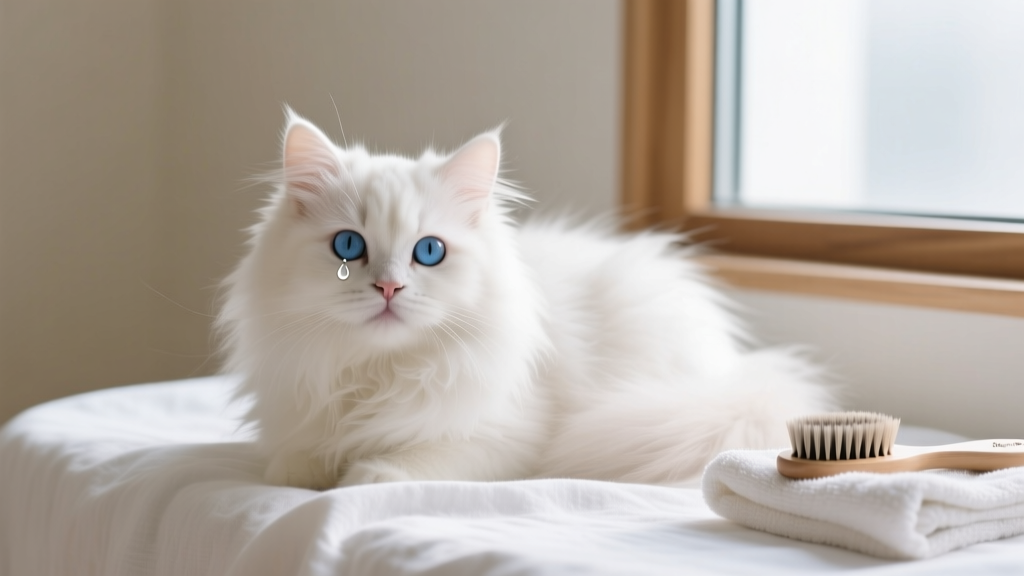
Start at 4 weeks with a soft-bristled baby toothbrush (yes—really) to gently loosen debris around the eyes and mouth. At 6 weeks, introduce a stainless-steel ‘greyhound comb’ (fine-toothed, rounded tips) used *only* on dry fur—never wet—because water swells the undercoat and increases breakage risk. Work in sections: begin behind the ears, move down the neck, then forelegs, chest, belly, hind legs, and tail. Never pull—lift tangles with your fingers first, then snip *only* with blunt-tipped, curved-tip scissors if needed.
For tear staining: Use sterile saline solution (not tea or apple cider vinegar—both alter pH and irritate) applied with a clean gauze pad, wiping *outward* from the inner canthus. Do this twice daily. If staining persists past 10 weeks despite consistent cleaning, consult your vet—this may signal nasolacrimal duct stenosis requiring gentle flushing under sedation.
Nutrition: Feeding for Facial Structure & Digestive Sensitivity
Persian kittens are notoriously picky eaters—not out of stubbornness, but due to their shallow palates and narrow nasal passages, which reduce smell perception by up to 40% compared to domestic shorthairs (per Cornell Feline Health Center research). That means flavor and aroma matter less than texture and temperature. Serve food at 98–100°F (body temperature), slightly warmed—not hot—to enhance volatilization of scent compounds.
Avoid kibble larger than 4mm in diameter: Their shortened jaws struggle to chew oversized pieces, leading to oral pouching and aspiration risk. Instead, opt for small-bite, high-digestibility formulas with hydrolyzed proteins (e.g., Royal Canin Persian Kitten or Hill’s Science Diet Kitten Sensitive Stomach). These contain prebiotics (FOS) and omega-3s (EPA/DHA) clinically shown to reduce inflammatory gut responses common in Persians.
Hydration is critical—and tricky. Their flat faces make lapping from bowls inefficient. Provide at least two wide, shallow ceramic or stainless-steel bowls (no plastic—causes chin acne), filled no deeper than 1 inch. Add a pet water fountain with adjustable flow (e.g., Pioneer Pet Raindrop); the sound and movement stimulate interest. Monitor urine specific gravity weekly with at-home dipsticks—if consistently >1.035 after 12 weeks, increase wet food ratio to 70% of total calories.
Environment & Socialization: Safety, Air Quality, and Early Confidence Building
Persians thrive in calm, predictable spaces—but ‘calm’ doesn’t mean isolation. Early positive exposure prevents lifelong anxiety, especially around handling (vital for future grooming and vet visits). Between weeks 3–7, implement the ‘5-Minute Touch Protocol’: daily sessions where you gently touch paws, ears, mouth, tail base, and belly while offering high-value treats (freeze-dried chicken, not kibble). Stop *before* stress signals appear (dilated pupils, flattened ears, tail flicking).
Air quality is non-negotiable. Persian kittens have compromised nasal turbinates and reduced ciliary clearance. Avoid aerosol sprays, scented candles, cigarette smoke, and dusty litter (clay or silica gel). Use only low-dust, unscented, clumping litter made from walnut shells or paper pellets. Keep ambient humidity between 40–60%—use a hygrometer and humidifier in winter; dry air thickens mucus and worsens breathing.
Temperature control matters too. Their dense coats inhibit heat dissipation. Maintain room temps between 68–74°F. Never place carriers or beds near radiators, windowsills, or direct AC vents. A 2022 case series in Veterinary Record documented 11 Persian kittens hospitalized for heat-induced respiratory distress—all occurred in homes with indoor temps above 78°F during summer months.
Health Monitoring: Spotting Red Flags Before They Escalate
Because Persian kittens often mask illness until advanced stages, vigilance is your best diagnostic tool. Track these five metrics daily for the first 12 weeks:
- Eyes: Clear, bright, symmetrical—no squinting, discharge, or crusting
- Nose: Moist and cool—not dry, cracked, or with persistent mucus
- Breathing: Silent and effortless at rest—no open-mouth breathing, wheezing, or abdominal heaving
- Stool: Formed, brown, passed 1–2x/day—no straining, blood, or mucous
- Weight: Steady gain of 10–15g/day—plot on a growth chart (see table below)
If any metric deviates for >24 hours, contact your vet immediately. Don’t wait for ‘classic’ signs like lethargy or fever—by then, pneumonia or sepsis may already be progressing.
| Age Range | Key Developmental Milestones | Critical Care Actions | Risk If Missed |
|---|---|---|---|
| 3–5 weeks | Teeth erupt; begin weaning; start litter box training | Introduce shallow litter box with low entry; use unscented, fine-grain litter; wipe genital area after meals to stimulate elimination | Fecal impaction, urinary retention, inappropriate elimination habits |
| 6–8 weeks | Full vision; adult eye color sets; social confidence peaks | Begin daily tear duct cleaning; introduce combing 2x/day; start ‘touch protocol’; schedule first vet exam + fecal test | Tear duct scarring, severe matting, lifelong handling aversion, undetected parasites |
| 9–12 weeks | Adult coat texture emerges; immune system matures; vaccine series completes | Switch to Persian-specific kitten food; add omega-3 supplement (fish oil, 100mg EPA/DHA daily); perform full-body check for mats weekly | Dermatitis, vaccine failure due to poor nutrition, chronic skin infections |
| 13–16 weeks | Socialization window closes; permanent teeth fully erupted | First professional grooming (only if kitten tolerates handling); spay/neuter consultation; begin dental wipe routine with chlorhexidine gel | Behavioral issues, dental disease onset, reproductive health complications |
Frequently Asked Questions
Can I bathe my Persian kitten? How often?
Bathing should be rare—no more than once every 6–8 weeks—and only when medically necessary (e.g., severe soiling, topical treatment). Persian kittens’ skin barrier is thinner and more alkaline than adults’, making them vulnerable to dryness and irritation. If bathing is required, use a pH-balanced, soap-free, oatmeal-based shampoo (e.g., Douxo Calm Shampoo) diluted 1:10 with warm water. Rinse thoroughly—residue causes folliculitis. Never use human baby shampoo: its pH (~7.0) disrupts feline skin’s natural pH (6.2–6.8).
My Persian kitten snores—is that normal?
Mild, intermittent snoring during deep sleep is common and usually benign—especially in brachycephalic breeds. However, persistent snoring *while awake*, accompanied by mouth breathing, exercise intolerance, or cyanosis (blue gums), signals upper airway obstruction and requires immediate veterinary evaluation. A 2021 study in Veterinary Anaesthesia and Analgesia found that 31% of Persian kittens with chronic snoring had anatomical stenosis requiring surgical correction.
Should I trim my Persian kitten’s facial hair?
No—never trim facial hair unless directed by a veterinarian for medical reasons (e.g., chronic ocular discharge trapping hair). The whiskers and periorbital fur serve protective sensory and drainage functions. Trimming increases risk of accidental eye injury and disrupts natural tear flow patterns. If hair constantly touches the eyes, consult a vet about possible entropion or excessive medial canthal fold—correctable with minor surgery.
Is it safe to fly with a Persian kitten?
Airlines universally restrict brachycephalic breeds—including Persians—from cargo holds due to extreme oxygen desaturation risk at altitude. Even in-cabin travel carries elevated risk: cabin pressure changes and stress can trigger acute respiratory distress. Most veterinary associations (AAFP, ISFM) advise against flying with Persian kittens under 6 months. If unavoidable, obtain a ‘fit-to-fly’ letter from a board-certified feline specialist and book a pressurized, temperature-controlled pet carrier seat.
Do Persian kittens need special toys?
Yes—but not for stimulation alone. Choose toys that encourage slow, controlled movement: plush mice with crinkle inserts (not bells—too loud), short wand toys with soft feathers, or treat-dispensing puzzles with large openings. Avoid laser pointers (cause frustration and obsessive behavior) and anything with small, detachable parts (choking hazard). Because Persians tire easily, rotate toys weekly to maintain novelty without overstimulation.
Common Myths About Persian Kitten Care
Myth #1: “Persians don’t need much exercise—they’re lazy cats.”
Reality: While they’re less active than Bengals or Siamese, Persian kittens still require 20–30 minutes of gentle, interactive play daily to support musculoskeletal development and prevent obesity. Sedentary lifestyles correlate strongly with early-onset arthritis in Persians—documented in 42% of cats over age 5 in a 2020 Morris Animal Foundation longitudinal study.
Myth #2: “Their flat faces mean they’re ‘bred to breathe poorly’—so it’s normal.”
Reality: Brachycephaly is a welfare concern—not an inevitability. Ethical breeders select for moderate facial conformation (‘doll-face’ or ‘traditional’ Persians) with open nostrils and clear airways. Severe brachycephaly increases risk of BOAS (Brachycephalic Obstructive Airway Syndrome) by 7x. Always ask breeders for OFA or PennHIP certifications and video proof of unlabored breathing in parent cats.
Related Topics (Internal Link Suggestions)
- Persian Kitten Grooming Schedule — suggested anchor text: "Persian kitten grooming checklist"
- Best Food for Persian Kittens — suggested anchor text: "top vet-recommended Persian kitten food"
- When to Spay a Persian Kitten — suggested anchor text: "optimal spay age for Persian kittens"
- Signs of Respiratory Distress in Persian Cats — suggested anchor text: "Persian breathing problems early signs"
- How to Clean Persian Kitten Eyes Safely — suggested anchor text: "tear stain removal for Persian kittens"
Your Next Step Starts Today—Not Tomorrow
You now hold evidence-based, breed-specific knowledge that most Persian kitten owners don’t get until after their first emergency vet visit. But knowledge only protects when applied consistently—starting today. Pick *one* action from this guide to implement within the next 24 hours: whether it’s setting up your first tear-cleaning station, swapping to a shallow water bowl, or scheduling that overdue vet checkup. Small, intentional steps compound into lifelong health. And if you’re still uncertain about your kitten’s breathing pattern, coat texture, or appetite consistency—don’t guess. Email a 10-second video of your kitten resting quietly to your vet’s telehealth portal. Most offer same-day feedback. Your Persian kitten’s resilience isn’t built on perfection—it’s built on your willingness to learn, adapt, and act with compassion and precision.