Donskoy: Russian Hairless Breed Origins
There’s something instantly magnetic about the Donskoy cat. Maybe it’s the velvety, warm-to-the-touch skin, the expressive “old-soul” face, or the way this Russian hairless breed looks straight into you like it already knows your secrets. The Donskoy doesn’t just share your home—it shares your life, following you from room to room with a curious, affectionate confidence that’s hard to resist.
If you’ve ever been intrigued by hairless cat breeds but want something with a distinct story and a personality that leans more “devoted companion” than “decorative oddity,” the Donskoy is worth your full attention. This breed has a fascinating origin, a unique type of hairlessness, and a temperament that wins over families, multi-pet households, and anyone craving a cat that truly bonds.
Let’s explore the Donskoy’s Russian roots, what makes its coat genetics different, and what living with this charming, social cat is really like.
Breed History and Origin
The Donskoy (also called the Don Sphynx or Russian Hairless) began in Russia—not through a long-planned breeding program, but from a natural genetic surprise.
In 1987, in the city of Rostov-on-Don, a woman named Elena Kovaleva reportedly rescued a kitten that had been mistreated. That kitten, named Varvara, began losing her coat as she matured. At first, people assumed it was illness or stress, but Varvara remained otherwise healthy. When Varvara later had kittens, some were born with reduced coat or became hairless, revealing that her hairlessness had a heritable cause.
Breeders took interest, and the Donskoy breed was developed from these early lines. The name “Donskoy” nods to the Don River region. The breed gained recognition in various cat registries over time; it is recognized by TICA (The International Cat Association). You may also see it referenced as “Don Sphynx,” though the Donskoy is genetically distinct from the better-known Sphynx.
Key historical detail cat researchers love: Donskoy hairlessness is generally associated with a dominant gene, whereas Sphynx hairlessness is associated with a recessive gene. That difference shapes breeding outcomes and is one reason the Donskoy occupies its own special place among hairless cat breeds.
Physical Characteristics
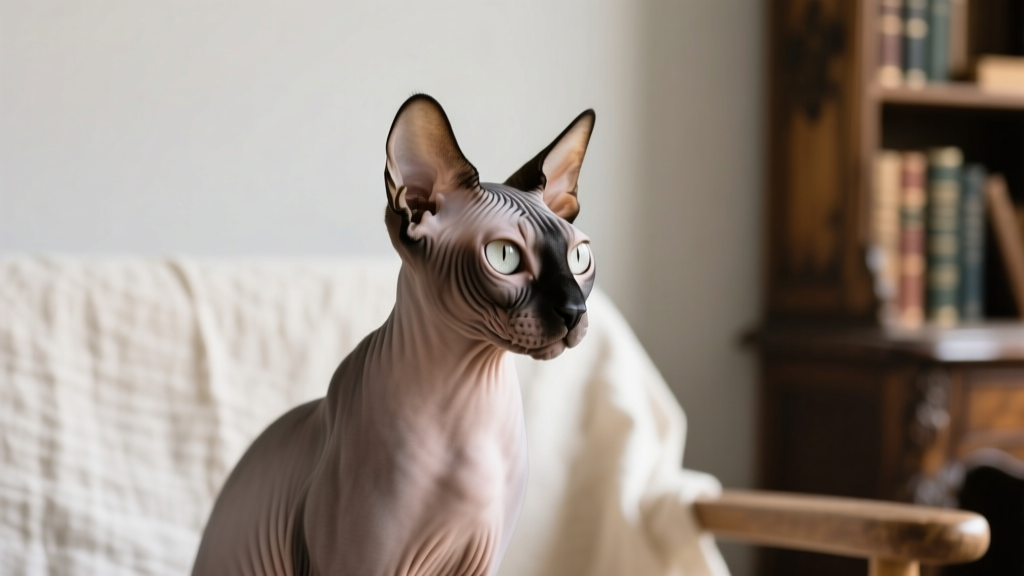
The Donskoy is a medium-sized, muscular cat with a surprisingly substantial feel when you pick one up. Under that bare-looking exterior is a sturdy frame built for climbing, playing, and cuddling.
| Trait | What to Expect |
|---|---|
| Size | Medium |
| Weight | Typically 6–12 lbs (2.7–5.4 kg); males often larger |
| Body type | Muscular, solid, athletic |
| Head | Wedge-shaped with strong cheekbones; distinctive, expressive look |
| Eyes | Medium to large, almond-shaped; can be many colors |
| Ears | Large, set wide, alert “radar dish” style |
| Tail | Long, tapering; may have a bit of fuzz on some cats |
Coat (or Lack of It) and Skin Types
Not every Donskoy is equally naked, and that’s part of what makes the breed so interesting. Donskoys can be born with different coat expressions, and some change as they mature.
- Rubber bald: Smooth, nearly hairless skin with a “rubbery” feel.
- Flocked: Very short, soft fuzz—often described as peach-fuzz or suede.
- Velour: Slightly longer, fine coat that may thin over time.
- Brush: Sparse, wiry coat in places; some brush-coated cats retain more hair throughout life.
Wrinkles are a signature feature—especially around the head, neck, and shoulders. Kittens tend to be extra wrinkly, and adults keep a charmingly crinkled look, though the amount varies. Whiskers and eyebrows may be short, broken, or absent.
Colors and Patterns
Because hairlessness doesn’t limit pigmentation, the Donskoy comes in a wide variety of colors and patterns. You’ll see solids, tabbies, tortoiseshell, bicolors, and more. With a hairless cat, color and pattern show up on the skin like a living watercolor—often more obvious than on coated breeds.
Personality and Temperament Traits
The Donskoy is famous for being affectionate, interactive, and people-oriented. Many owners describe them as “dog-like,” not because they act like dogs in every way, but because they love being involved: greeting you at the door, supervising chores, climbing onto your shoulder, and curling up under a blanket at bedtime.
Common Donskoy temperament traits include:
- Highly social: They crave companionship and may struggle if left alone for long hours every day.
- Affectionate and cuddly: They seek warmth and touch, often becoming expert lap cats.
- Playful and clever: Expect curiosity, puzzle-toy enthusiasm, and a talent for learning routines.
- Confident: Many Donskoys are outgoing and will investigate visitors rather than hiding.
- Chatty (varies): Some are talkers; others communicate more with body language and intense eye contact.
If you love a cat that feels like a true companion—one that bonds deeply and wants to participate—the Donskoy delivers in a big way.
Health Considerations and Common Issues
A well-bred Donskoy can be a robust, healthy cat, but hairless breeds have some predictable needs and a few concerns to be aware of. Working with an ethical breeder and keeping up with regular veterinary care go a long way.
Potential health considerations include:
- Skin issues: Oil buildup, clogged pores, acne (often on the chin), and occasional rashes. Gentle skin care and proper bathing help.
- Sunburn: Hairless cats can burn, especially on light-colored skin. Sun-safe habits matter.
- Temperature sensitivity: They can get chilled easily and may also overheat if sunbathing too long.
- Dental health: Like many breeds, they benefit from proactive dental care (brushing, dental treats, vet cleanings as recommended).
- General genetic stewardship: Because hairlessness is linked to specific genetics, responsible breeding practices are essential to support long-term breed health.
Vet note for researchers and serious owners: Always ask breeders about health screening practices, lineage transparency, and what they do to prioritize sound structure and overall vitality—not just “nakedness.”
Care Requirements (Grooming, Exercise, Diet)
The Donskoy may not need brushing, but this breed isn’t “maintenance-free.” Hairless cats shift the work from fur care to skin care, plus a bit of climate management.
Grooming and Skin Care
- Bathing: Typically every 1–2 weeks, depending on oil production. Use a gentle, cat-safe shampoo and rinse thoroughly.
- Wipe-downs: Between baths, a soft damp cloth can remove oils and prevent staining on bedding.
- Ear cleaning: Hairless cats can accumulate ear wax more quickly. Clean as needed with vet-approved ear cleaner.
- Nail care: Trim regularly. Check around nail beds—oil and debris can collect there.
- Eye care: With reduced lashes, some cats get mild eye discharge; gently wipe with a damp cotton pad if needed.
Exercise and Enrichment
Donskoys are active and inquisitive. A bored Donskoy will invent its own entertainment, which may involve opening cabinets or “redecorating” shelves.
- Provide cat trees, climbing shelves, and sturdy scratching posts.
- Use interactive toys (wand toys, balls, feather teasers) for daily play sessions.
- Puzzle feeders and treat games help satisfy their clever minds.
- Many Donskoys enjoy harness training if introduced slowly and positively.
Diet and Nutrition
Because they work hard to stay warm, some hairless cats seem to have hearty appetites. Individual needs vary, so focus on body condition rather than the size of the bowl.
- Choose high-quality protein: Look for named animal proteins as primary ingredients.
- Monitor calories: Active cats may need more; sedentary cats can still gain weight.
- Hydration matters: Wet food can support hydration; a cat fountain can encourage drinking.
- Skin support: Ask your vet about omega-3s if your cat has dry or sensitive skin (only supplement with guidance).
Compatibility with Families, Children, and Other Pets
The Donskoy is often a wonderful family cat, especially in homes that enjoy interactive pets. They tend to be tolerant, affectionate, and eager to participate in daily life.
- With children: Usually good with respectful kids. Teach children gentle handling and let the cat choose interaction—hairless skin can be more sensitive to rough petting.
- With other cats: Many Donskoys enjoy feline companionship, particularly if their humans are away during the day.
- With dogs: Often compatible with calm, cat-friendly dogs. Introductions should be slow and supervised.
- With busy households: They can thrive because they love activity—just make sure they have warm resting spots and quiet retreat options.
If you work long hours away from home, consider adopting two compatible pets (if your lifestyle and budget allow) to keep your Donskoy from feeling lonely.
Pros and Cons of Owning a Donskoy
| Pros | Cons |
|---|---|
|
|
FAQ: Donskoy Cat Breed
Are Donskoy cats truly hypoallergenic?
No cat breed is truly hypoallergenic. The Donskoy doesn’t shed fur the way coated cats do, but allergens (especially the Fel d 1 protein) are carried in saliva and skin oils. Some allergy sufferers do better with hairless cats, but it’s individual—spend time with the breed before committing.
How is the Donskoy different from the Sphynx?
They look similar at a glance, but they’re distinct breeds. The Donskoy’s hairlessness is typically linked to a dominant gene, while the Sphynx’s hairlessness is typically recessive. Many Donskoys also have more pronounced wrinkles and a slightly different head and body type, depending on lines.
Do Donskoy cats need sweaters?
Many do appreciate sweaters in cool homes, but it depends on the cat and the indoor temperature. Provide warm blankets, heated cat beds (pet-safe), and draft-free lounging spots. If you use clothing, ensure it’s soft, not tight, and kept clean to avoid skin irritation.
How often should I bathe a Donskoy?
Most Donskoy owners bathe every 1–2 weeks, with gentle wipe-downs as needed between baths. If you notice oily residue, clogged pores, or brownish staining on fabric, it’s a sign your cat may need more frequent cleaning.
Can a Donskoy go outdoors?
Unsupervised outdoor life isn’t recommended. Donskoys are more vulnerable to sunburn, cold, and skin injuries. If you want outdoor time, consider a secure catio or harness-and-leash walks with shade and careful temperature management.
What kind of home is best for a Donskoy?
A home where someone is around often (or where the cat has a friendly animal companion), with warm resting places and plenty of enrichment. If you love a clingy, people-focused cat that wants to be part of everything, the Donskoy will fit right in.
Warm Sendoff
The Donskoy is one of those breeds that turns curiosity into devotion. Behind the striking hairless look is a cuddly, social, bright-minded cat that thrives on connection and routine—warming your lap, shadowing your steps, and making even quiet evenings feel a little more special.
If you’re considering a Donskoy cat, take your time finding a responsible breeder or rescue, plan for skin care and warmth, and get ready for a companion that truly wants to share your world.
Want to keep exploring amazing cat breeds—hairless, fluffy, rare, and everything in between? Visit catloversbase.com for more breed profiles and cat-lover favorites.