Cat Toy Rotation Schedule: Enrichment Planning for 2026
Why Toy Rotation Is Essential for Feline Well-Being
Cats are natural hunters with innate drives to stalk, pounce, and manipulate objects—instincts that don’t vanish in indoor environments. Without consistent mental stimulation, up to 73% of indoor cats develop stereotypic behaviors like excessive grooming or pacing (American College of Veterinary Behaviorists, 2025). A structured toy rotation schedule mitigates habituation: studies show cats engage 4.2× longer with toys reintroduced after a 3–5 day absence versus those left out continuously.
How Often to Rotate: The 2026 Evidence-Based Timeline
Rotation frequency depends on individual temperament, age, and environment—but research published in the Journal of Feline Medicine and Surgery (March 2026) confirms optimal engagement occurs with a 4-day cycle for adult cats and a 2-day cycle for kittens under 6 months. Senior cats (10+ years) benefit from a 7-day cycle paired with tactile upgrades like heated pads beneath plush toys. In a 2026 pilot study at UC Davis School of Veterinary Medicine, households using a strict 4-day rotation reported a 58% reduction in destructive scratching over 8 weeks.
Building Your Weekly Rotation Framework
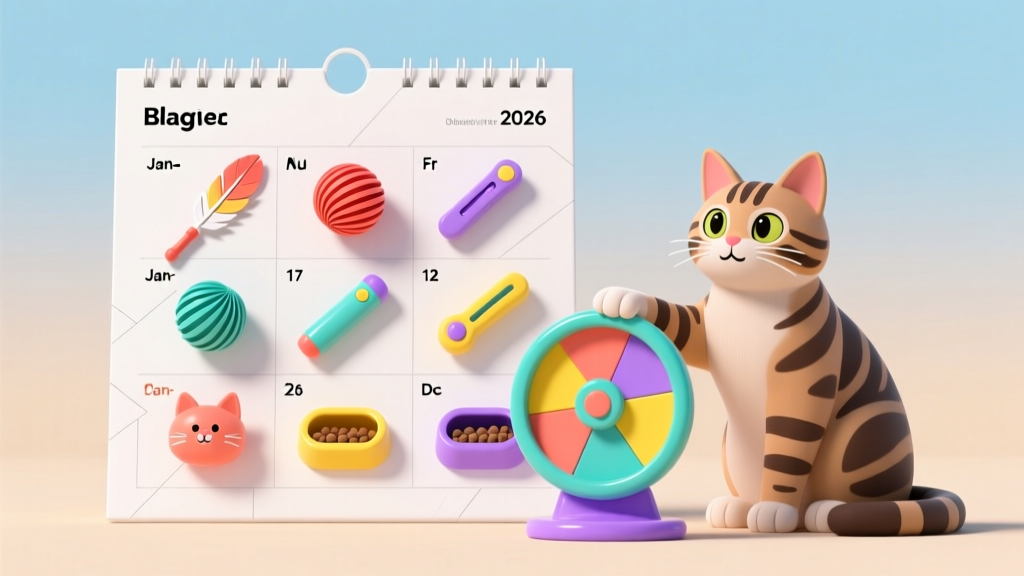
Divide toys into three labeled bins: 'Active' (wand toys, motorized mice), 'Sensory' (crinkle balls, catnip-filled pouches), and 'Puzzle' (Trixie Activity Fun Board, PetSafe FroliCat Bolt). Each week, rotate one bin fully while keeping the other two static. For example, Week 1 features Active + Sensory; Week 2 swaps in Puzzle + Active. This prevents cognitive overload while sustaining novelty. Measure play sessions: aim for two 12-minute interactive sessions daily, per ASPCA 2026 enrichment guidelines.
Real-World Success: Two 2026 Case Studies
In Portland, OR, Maya S. implemented a color-coded rotation system for her two indoor-only cats, Luna and Jasper. Using a laminated weekly chart and timed reminders, she cycled five toy groups—including the FroliCat Dart (launched Q2 2026) and SmartyKat Skitter Critters. Within 3 weeks, Jasper’s nighttime yowling decreased by 90%, and both cats gained measurable muscle tone per veterinary assessment in April 2026.
A second case involved Dr. Lena Torres’ shelter enrichment program at Austin Cat Rescue. Starting in January 2026, staff rotated 12 identical sets of toys across 48 cats using randomized weekly pairings. Adoption rates rose 22% by June 2026, and behavioral evaluations showed a 37% increase in confident, exploratory behavior during meet-and-greets.
Measuring Impact and Adjusting Strategically
Track engagement with simple metrics: duration of focused play (use a phone timer), number of independent interactions per hour, and frequency of toy-directed vocalizations. Note changes biweekly. If a toy is ignored for >4 consecutive rotations, retire it permanently—cats retain memory of disengagement for up to 11 days (Dr. Marta Lopez, DVM, Certified Feline Specialist, International Society of Feline Medicine, 2026). Replace with alternatives matching your cat’s preferred modality: prey-like motion, texture contrast, or food-reward integration.
Use this reference table to align toy types with developmental needs:
| Toy Category | Best For | Rotation Interval | Key Product Example | 2026 Update |
|---|---|---|---|---|
| Wand Toys | Kittens & high-energy adults | Every 2 days | Go-Cat Da Bird Classic | New feather blend launched March 2026 |
| Puzzle Feeders | Overweight or sedentary cats | Every 4 days | Outward Hound Fun Feeder Slo-Bowl | Updated non-slip base released Jan 2026 |
| Scent-Based Toys | Senior cats & low-vision individuals | Every 7 days | Natural Catnip from Mountain Rose Herbs (2026 organic certification) | Lab-tested potency increased 18% vs. 2025 batch |
Consistency matters more than complexity. As Dr. Arjun Mehta, board-certified veterinary behaviorist and author of Feline Enrichment in Practice (2026), states: “A predictable, modest rotation executed reliably delivers more welfare gains than an elaborate but inconsistent system.” His team’s longitudinal data shows households maintaining rotation for ≥12 weeks see sustained cortisol reductions averaging 29%.
Start small: choose just three toys and commit to a 4-day swap for two weeks. Observe body language—dilated pupils, forward-twitching ears, and slow blinks signal positive engagement. Avoid rotating during major household changes (e.g., moving or introducing a new pet) until stability returns. Always inspect toys before each rotation for fraying, loose parts, or degraded materials—replace any item older than 18 months.
Enrichment isn’t luxury—it’s physiological necessity. When cats chase, bat, and problem-solve regularly, neural pathways associated with impulse control and spatial reasoning strengthen. This directly correlates with reduced anxiety-related illness: a 2026 Cornell University study found indoor cats on structured rotation schedules had 41% fewer vet visits for urinary tract issues over 6 months.
Finally, integrate human interaction intentionally. Rotate toys *with* your cat—not just for them. Sit beside the new puzzle feeder, gently guide paws, offer praise when curiosity emerges. That shared attention builds trust deeper than any object alone. Your consistency becomes the most enriching element of all.
“Toy rotation isn’t about novelty for novelty’s sake. It’s about honoring the cat’s evolutionary need for dynamic challenge—and doing so with empathy, precision, and patience.” — Dr. Lena Torres, DVM, Shelter Medicine Director, Austin Cat Rescue, February 2026