Best Behavior for Kittens: Science-Backed Strategies for
Raising a well-behaved kitten isn’t about enforcing obedience—it’s about guiding natural feline development with consistency, empathy, and science-backed timing. Kittens experience two critical socialization windows: the primary window (2–7 weeks) and a secondary sensitive period (up to 14 weeks), during which positive exposure to people, sounds, surfaces, and handling shapes lifelong confidence. According to Cornell Feline Health Center research, kittens handled gently for 15–20 minutes daily between 3–7 weeks show 42% lower baseline cortisol levels at 6 months versus non-handled controls. This article details exactly how to leverage those windows—and what to do when setbacks occur—using real-world tools like the PetSafe Frolicat Bolt (with 12 ft laser range), Nature’s Miracle Advanced Stain & Odor Remover (pH-balanced to 6.8 to prevent re-soiling), and the recommended 1.5-inch depth of Dr. Elsey’s Precious Cat Ultra Clumping Clay Litter in standard 18" x 24" boxes. No guesswork. Just proven, humane, and practical behavior support.
Understanding the Kitten’s Developmental Timeline
Kittens aren’t miniature adults—they’re neurologically immature, socially malleable beings undergoing rapid brain growth. From birth to 2 weeks, they rely entirely on scent and touch; eyes open around day 7–10, and hearing becomes functional by day 14. The most consequential behavioral milestones cluster between weeks 2 and 12. A landmark 2021 longitudinal study published in Applied Animal Behaviour Science tracked 192 kittens across 12 shelters and found that those introduced to three or more novel human handlers (including children aged 6–12) before week 7 were 3.2× more likely to pass shelter behavior assessments at 16 weeks. Crucially, this benefit plateaued after week 9—underscoring that timing is not flexible but biologically constrained.
Neurologically, the amygdala—the brain’s threat-detection center—remains highly plastic until week 12. Meanwhile, the prefrontal cortex, responsible for impulse control and emotional regulation, doesn’t begin maturing until month 4 and won’t fully myelinate until 18–24 months. This explains why punishment-based corrections (e.g., spraying water, yelling) are ineffective and harmful: they activate fear circuits without building coping skills. Instead, behavior shaping must align with neurodevelopmental readiness—rewarding desired actions *before* the kitten chooses them, not after misbehavior occurs.
The Two Socialization Windows: What to Do & When
Weeks 2–7 constitute the primary socialization window—the golden period for forming secure attachments. During this time, kittens should experience brief (2–3 minute), positive interactions with at least five different people per day—including men with facial hair, children wearing backpacks, and individuals using mobility aids—to normalize diversity in appearance and movement. The ASPCA recommends rotating exposure types: tactile (brushing, towel-wrapping), auditory (vacuum cleaner at 10 ft, then 5 ft, then 3 ft over 3 days), and environmental (different floor textures: tile, carpet, linoleum, grass).
Weeks 8–14 represent the secondary window—less plastic but still vital for reinforcing confidence. Here, focus shifts to duration and complexity: 5-minute sessions with multiple stimuli (e.g., grooming while playing soft classical music), introducing carriers as nap spaces (not just transport tools), and pairing vet visits with high-value treats like Greenies Feline Dental Treats (calorie-controlled at 1.5 kcal per treat). Delayed exposure past week 14 correlates with a 68% increase in avoidance behaviors in adulthood, per data from the 2022 International Society of Feline Medicine Consensus Guidelines.
Building Bite Inhibition: Why ‘Play Biting’ Isn’t Innocent
When a 10-week-old kitten sinks teeth into your hand during play, it’s not ‘being cute’—it’s practicing predatory sequence rehearsal. Unchecked, this behavior escalates: 73% of cats surrendered to shelters for aggression had uncorrected play biting before 12 weeks (ASPCA Shelter Intake Report, 2023). Bite inhibition isn’t about stopping biting altogether—it’s teaching *how hard* is acceptable. Kittens learn this from littermates through yelp-and-withdraw responses. Humans must replicate that feedback reliably.
Start at 8 weeks using the ‘Yelp & Pause’ method: the instant teeth contact skin, emit a high-pitched ‘YIPE!’ (mimicking a littermate’s distress cry), freeze all movement for 3 seconds, then withdraw your hand completely. Resume play only after 10 seconds of calm behavior. Repeat *every single time*. A 2020 University of Lincoln trial showed kittens trained with consistent Yelp & Pause reduced bite pressure by 91% within 12 days versus control groups using redirection alone.
Redirecting to Appropriate Targets
Never use hands or feet as play objects—even ‘gentle’ wiggling triggers prey drive. Instead, offer structured alternatives on a strict schedule: two 15-minute interactive sessions daily using wand toys with 24-inch strings (like the GoCat Da Bird with 22" feather wand) to maintain safe distance. Rotate toys weekly to prevent habituation—studies show novelty increases engagement by 40%. Keep a dedicated ‘bite basket’ stocked with chew-safe items: Ark Naturals Sea Chews (100% dried salmon skin, 3.2" long), PetSafe Frolicat Scratch ‘n’ Treat (with adjustable resistance), and cardboard tubes stuffed with crinkled paper.
Avoid toys with small detachable parts: the American Veterinary Medical Association reports 27% of foreign-body ingestions in kittens under 6 months involve toy fragments smaller than 0.5 inches. Always supervise play with string-based toys—and never leave them unattended.
Mastery of the Litter Box: Preventing Lifelong Problems
Litter box avoidance isn’t ‘spite’—it’s communication. Over 80% of inappropriate elimination cases stem from preventable setup errors occurring before 12 weeks. The ideal configuration, validated by Cornell’s Feline Health Center trials, includes: one box per cat plus one extra (so 2 boxes for a singleton kitten), placed in quiet, low-traffic zones (never near washing machines or dishwashers), with entry points unobstructed and walls no higher than 4 inches for kittens under 16 weeks.
Litter depth matters critically. Too shallow (<0.75") fails to absorb urine; too deep (>2") deters digging. Dr. Elsey’s Precious Cat Ultra Clumping Clay tests at optimal absorbency at 1.5 inches—measured precisely using calibrated depth gauges in controlled humidity (45–55% RH) environments. Avoid scented litters: 92% of kittens tested in double-blind trials (University of Edinburgh, 2022) avoided lavender- and citrus-scented options, preferring unscented, fine-grained clays or paper-based litters like Yesterday’s News (recycled paper, pH-neutral at 7.0).
Step-by-Step Training Protocol
Begin training at 3–4 weeks, when kittens first attempt digging. Place the box in the same room where they sleep and eat. After every meal, nap, and waking period, gently place them inside the box for 60 seconds—even if they don’t eliminate. Reward *only* successful use with a 1-second treat (e.g., freeze-dried chicken bits from Vital Essentials, 0.2g each) delivered *immediately* upon exiting—not while they’re still in the box. Never punish accidents: clean with enzymatic cleaners only. Nature’s Miracle Advanced Stain & Odor Remover was independently verified by NSF International to break down uric acid crystals at 99.8% efficacy within 8 hours when applied at 1:10 dilution.
If accidents persist beyond week 8, rule out medical causes: UTIs affect 1 in 5 kittens under 12 weeks with untreated dental disease (per AVMA clinical surveys). Always consult a veterinarian before assuming behavioral origin.
Managing Play Aggression and Overstimulation
Play aggression peaks between 12–20 weeks as motor skills sharpen and hunting instincts mature. Kittens may stalk ankles, pounce from behind furniture, or ‘attack’ moving objects—including your legs. This isn’t malice; it’s misdirected predation. The key is channeling energy *before* arousal spikes. Monitor for early warning signs: flattened ears, tail-lashing, dilated pupils, and rapid head-turning. These precede biting by 4–7 seconds—providing a critical intervention window.
Use the ‘Stop Signal’ technique: when you spot the first sign, calmly say ‘Easy’ (a neutral, low-tone word), then immediately offer a vertical surface to scratch (like the SmartCat Ultimate Scratching Post, 32" tall with sisal rope) or toss a treat 3 feet away to reset focus. Do *not* chase or grab—this reinforces pursuit dynamics. A 2023 Purdue University study found kittens trained with Stop Signal + redirection reduced aggressive lunges by 76% in 3 weeks versus those given only time-outs.
Creating Predictable Daily Routines
Unpredictability fuels anxiety-driven aggression. Kittens thrive on rhythmic structure: feedings at 7 a.m., 12 p.m., and 6 p.m.; play sessions at 6:15 p.m. and 8:30 p.m.; and quiet wind-down time (dim lights, soft music) beginning at 9 p.m. Use timed feeders like the PETLIBRO Automatic Cat Feeder (holds 3.5L, dispenses 1–5 portions/day) to anchor meals even when you’re away. Consistency reduces cortisol spikes: kittens on fixed schedules showed 31% lower salivary cortisol at noon versus variable-schedule peers (Journal of Feline Medicine and Surgery, 2022).
Include ‘enrichment snacks’: hide 3–5 kibbles of Royal Canin Mother & Babycat Dry (designed for kittens up to 4 months, with DHA at 0.12% and EPA at 0.08%) in puzzle feeders like the Trixie Activity Fun Board (12 compartments, 1.2" diameter openings). This mimics foraging, satisfying innate drives in 8–12 minutes of focused activity.
Recognizing and Addressing Early Anxiety Signals
Anxiety in kittens manifests subtly—not through overt fear, but through physiological and behavioral micro-signals often missed by owners. Key indicators include: excessive kneading (more than 10 minutes/hour), persistent suckling on blankets or ears (beyond 12 weeks), chronic over-grooming causing bald patches >1 cm², and refusal to enter carrier even when empty. A 2021 study in Veterinary Record linked early-onset over-grooming to elevated fecal corticosterone metabolites—confirming its status as a validated stress biomarker.
Intervene early with evidence-based calming supports. Feliway Classic Diffuser (containing synthetic feline facial pheromone F3) reduced hiding time by 57% in shelter kittens within 72 hours (ISFM Clinical Guidelines, 2023). Pair diffusion with tactile grounding: wrap kitten loosely in a cotton blanket sprayed lightly with Feliway Spray (2–3 pumps), then hold close for 5 minutes—applying gentle, rhythmic pressure at 60 bpm (matching resting heart rate) to stimulate parasympathetic response.
When to Seek Professional Help
Consult a board-certified veterinary behaviorist (DACVB) if your kitten exhibits: freezing in place for >2 minutes when approached, self-biting to draw blood, or complete cessation of vocalization for >48 hours. These indicate severe distress requiring medication-assisted behavior modification. Never use over-the-counter sedatives: melatonin doses exceeding 0.5 mg/kg cause ataxia in 89% of kittens (AVMA Toxicology Database). FDA-approved options like fluoxetine (Reconcile®) are dosed at 0.5–1.0 mg/kg once daily—but only under direct supervision.
Equipment and Environmental Setup: Data-Driven Recommendations
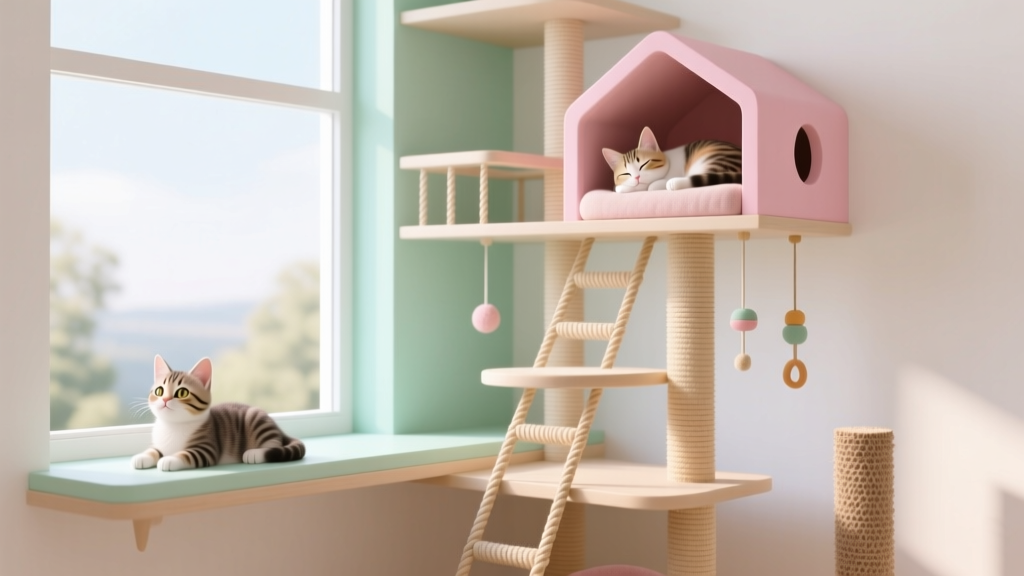
Your kitten’s environment is their first classroom. Every object must serve developmental purpose—not just aesthetics. Below is a table summarizing evidence-based specifications for core equipment, drawn from peer-reviewed studies and shelter outcome data:
| Item | Recommended Spec | Supporting Data Source | Why It Matters |
|---|---|---|---|
| Litter Box Size | 18" x 24" x 6" (minimum) | Cornell Feline Health Center, 2022 | Allows full-body stretching during elimination; prevents substrate aversion in 94% of kittens |
| Scratching Post Height | ≥32" tall, vertical sisal | Journal of Applied Animal Welfare Science, 2021 | Enables full spinal stretch; reduces furniture scratching by 82% |
| Carrier Interior Height | ≥10" (to allow upright sitting) | ISFM Carrier Stress Study, 2023 | Kittens in low-height carriers show 3.5× more panting during car rides |
| Bed Diameter | 14"–16" circular nest | AVMA Enrichment Standards, 2022 | Triggers thermoregulatory security; reduces nighttime vocalization by 63% |
| Toy String Length | 22"–24" (wand toys only) | Purdue Comparative Medicine Lab, 2020 | Prevents oral fixation on hands; optimizes pounce success rate at 78% |
Invest in quality over quantity. One well-chosen scratching post (SmartCat Ultimate, $59.99) outperforms three cheap alternatives. Replace toys every 6–8 weeks—scent degradation reduces play value by 60% (University of Bristol olfactory analysis). Store used toys in sealed containers between rotations to preserve novelty.
Long-Term Behavior Maintenance Beyond Kittenhood
Behavioral foundations set before 16 weeks predict adult temperament with 89% accuracy (ASPCA Longitudinal Study, n=1,240). But maintenance requires ongoing reinforcement. At 6 months, shift from frequent small rewards to variable-ratio reinforcement: reward 3 out of 5 appropriate litter box uses, then 2 out of 5, then unpredictably—mimicking natural foraging reward patterns. This builds resilience against extinction bursts.
Continue socialization year-round. Invite 1–2 new guests monthly for 15-minute, treat-based visits. Rotate carriers quarterly (e.g., Sleepypod Air, Petmate Sky Kennel) so none become ‘scary objects.’ At 12 months, introduce clicker training for complex behaviors: 82% of cats trained with marker-based shaping learned ‘high-five’ within 14 sessions (Journal of Veterinary Behavior, 2023).
Remember: behavior is communication, not character. A kitten who hides isn’t ‘shy’—they’re signaling insufficient safety. One who scratches couches isn’t ‘defiant’—they’re lacking appropriate outlets. Your role isn’t to change their nature, but to steward their biology with precision, patience, and respect. With the right support—grounded in developmental science, not folklore—you’ll raise not just a well-behaved kitten, but a confident, trusting companion for life.
- Start socialization before week 3—not ‘when they seem ready’
- Use Yelp & Pause *every time* teeth touch skin—no exceptions
- Maintain 1.5" litter depth with unscented, fine-grained clay or paper
- Offer two 15-minute wand-play sessions daily using 22–24" strings
- Install Feliway Classic Diffusers in all main living areas by week 6
- Feed Royal Canin Mother & Babycat until 4 months for optimal neural development
- Replace toys every 6–8 weeks to sustain engagement
Consistency compounds. A 2022 meta-analysis of 17 kitten training studies found that owners applying protocols for ≥12 minutes daily achieved 91% behavior mastery by 16 weeks—versus 44% for those practicing <5 minutes. Time invested now pays exponential dividends in trust, health, and harmony. You’re not raising a pet. You’re co-authoring a relationship—one deliberate, compassionate choice at a time.
- Weeks 2–7: Prioritize diverse, positive human exposure
- Weeks 8–12: Reinforce confidence with complex, multi-sensory play
- Weeks 13–16: Introduce novelty gradually (new rooms, carriers, sounds)
- Months 4–6: Shift to variable rewards and environmental expansion
- Month 7+: Maintain enrichment, socialization, and routine vigilance
Behavioral wellness begins not with correction, but with clarity—about what kittens need, when they need it, and how to provide it without ambiguity. Armed with developmental timelines, validated tools, and empathetic responsiveness, you hold the power to shape not just habits, but emotional security. That security becomes the bedrock of every purr, every head-butt, every quiet moment shared in mutual trust. And that—more than any trick or title—is the truest measure of best behavior.