Why Is My Cat Having Behavior Problems? 7 Hidden Causes...
When Your Cat’s Behavior Suddenly Changes—It’s Not ‘Just Being a Cat’
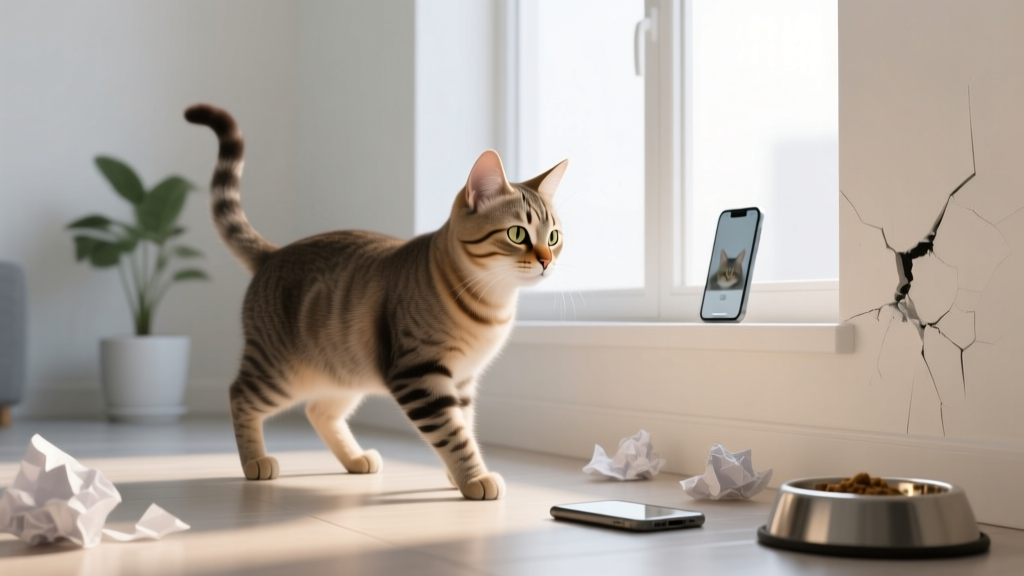
If you’ve recently asked yourself, why is my cat having behavior problems, you’re not alone—and you’re right to be concerned. Cats are masters of masking distress: a sudden bout of urinating outside the litter box, obsessive grooming, nighttime yowling, or uncharacteristic aggression isn’t ‘bad behavior’—it’s a distress signal. In fact, a landmark 2022 study published in the Journal of Feline Medicine and Surgery found that over 83% of cats referred for ‘behavioral issues’ had at least one underlying medical condition contributing to their actions. Ignoring these signals doesn’t make them go away—it often makes them escalate. The good news? Most behavior problems are solvable when you understand what’s really driving them.
1. Medical Issues Are the Silent Trigger—Rule These Out First
Before assuming your cat is ‘acting out,’ treat behavior change as a potential red flag for pain or illness. Dr. Sarah Wooten, DVM and certified feline practitioner, emphasizes: ‘Cats don’t misbehave—they communicate discomfort nonverbally. A cat who starts avoiding the litter box may have urinary tract pain; one who hides constantly could be suffering from undiagnosed arthritis or dental disease.’ Common culprits include:
- Urinary tract infections or FLUTD — causes painful urination, leading to litter box aversion
- Osteoarthritis — especially in senior cats, making jumping or digging uncomfortable
- Dental disease — inflamed gums or tooth resorption cause irritability and reduced appetite
- Hypertension or hyperthyroidism — can trigger restlessness, vocalization, and anxiety
- Cognitive dysfunction syndrome (feline dementia) — seen in cats over age 15, causing disorientation and inappropriate elimination
Your first move should always be a full veterinary exam—including bloodwork, urinalysis, and orthopedic assessment. Don’t skip the senior wellness panel if your cat is 10+. Many vets now offer ‘behavioral triage exams’ that combine physical diagnostics with environmental history-taking.
2. Environmental Stressors: The Invisible Pressure Cooker
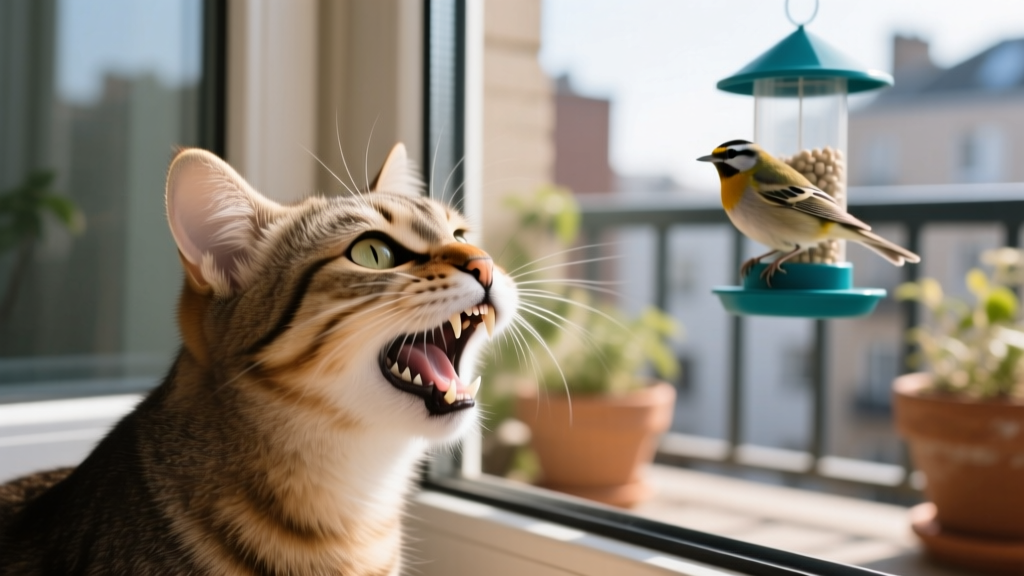
Cats are exquisitely sensitive to subtle shifts in their world—even ones we barely notice. A new scent on your clothes, rearranged furniture, construction noise next door, or even the neighbor’s cat visible through a window can spike cortisol levels and trigger stress-related behaviors. According to the American Association of Feline Practitioners (AAFP), environmental enrichment deficits are the #1 non-medical contributor to behavior problems in indoor cats.
Here’s how to audit your home like a feline behaviorist:
- Vertical space: Does your cat have access to at least three elevated perches (shelves, cat trees, window sills) at varying heights?
- Resource separation: Are food bowls, water stations, and litter boxes spaced far apart? (The ‘one per cat plus one’ rule applies—but they must also be in low-traffic, quiet zones.)
- Safe retreats: Does your cat have at least two enclosed hiding spots (covered beds, cardboard boxes, tunnels) where they won’t be disturbed?
- Sensory overload: Are there loud appliances, flickering lights, or strong-smelling cleaners near resting areas?
A real-world case: Luna, a 4-year-old domestic shorthair, began spraying walls after her owner installed smart-home LED bulbs with motion-triggered brightness changes. Switching to warm-dim LEDs and adding blackout curtains reduced spraying by 90% in 10 days—no medication, no punishment.
3. Unmet Behavioral Needs: Boredom Isn’t Just a Human Problem
Cats evolved to hunt 10–20 times per day. Even well-fed indoor cats retain this drive—and when it goes unfulfilled, frustration manifests as redirected aggression, destructive scratching, or compulsive licking. This isn’t ‘naughtiness’—it’s instinctual energy with nowhere to go.
The solution isn’t just more toys—it’s structured engagement. Veterinary behaviorist Dr. Karen Overall recommends the ‘3x5 Rule’: three 5-minute interactive play sessions daily using wand toys that mimic prey movement (zig-zag, pause-and-flick, hide-and-pounce). Each session should end with a ‘kill’—letting your cat ‘catch’ the toy and deliver a few gentle bites, followed by a high-value treat (like freeze-dried chicken) to complete the predatory sequence.
Also critical: rotate toys weekly and avoid overstimulation. A 2023 Cornell Feline Health Center study found cats exposed to constant novelty showed higher stress markers than those with predictable, rotating enrichment. Simplicity + consistency > chaos + clutter.
4. Human Habits That Accidentally Reinforce Problems
We often worsen behavior without realizing it. Scolding a cat for scratching the couch teaches them only that *you* appear when they scratch—not that scratching is wrong. In fact, punishment increases fear-based aggression and damages trust. Similarly, rushing to comfort a fearful cat during thunderstorms can unintentionally reward panic.
Instead, use positive reinforcement and classical conditioning:
- For litter box avoidance: Clean accidents with enzymatic cleaner (never ammonia-based), then place a second litter box beside the soiled spot for 3 days before gradually moving it to the desired location.
- For attention-seeking meowing: Ignore vocalizations at night—but reward silence with treats during calm daytime hours.
- For biting during petting: Learn your cat’s ‘tail flick’ or ‘ear flattening’ early warning signs, stop contact *before* biting occurs, and redirect to a toy.
Remember: behavior change takes time. Neuroscientists estimate it takes an average of 21–28 days for a cat to form a new association. Consistency beats intensity every time.
| Cause Category | Top 3 Signs | First Action Step | Expected Timeline for Improvement |
|---|---|---|---|
| Medical | Urinating outside box, excessive grooming, lethargy | Schedule full vet exam + urinalysis & blood panel | Days to weeks (depends on diagnosis & treatment) |
| Environmental Stress | Hiding, dilated pupils, flattened ears, urine marking | Conduct home stress audit + add 2 safe retreats + separate resources | 1–3 weeks with consistent implementation |
| Unmet Hunting Drive | Stalking shadows, pouncing on feet, chewing cords | Start 3x5-minute wand-play sessions daily + food puzzle at breakfast | 10–14 days for noticeable reduction in redirected behaviors |
| Poor Human Response | Increased aggression after scolding, avoidance after handling | Remove punishment; use clicker training for alternative behaviors | 2–4 weeks to rebuild trust + retrain responses |
Frequently Asked Questions
Can behavior problems in cats be cured—or will they always come back?
Most behavior problems are fully resolvable when the root cause is identified and addressed. Recurrence usually means either an undiagnosed medical issue (e.g., recurring UTIs), incomplete environmental modification (e.g., only one litter box added instead of two), or inconsistent human response (e.g., rewarding meowing some nights but ignoring others). With proper maintenance—like annual vet checkups, quarterly home audits, and lifelong enrichment—relapse rates drop below 12%, according to data from the International Society of Feline Medicine.
Should I use pheromone diffusers like Feliway?
Feliway Classic (synthetic feline facial pheromone) has strong clinical support for reducing stress-related marking and hiding—especially when used alongside environmental changes. A 2021 randomized controlled trial showed 68% improvement in multi-cat households within 14 days. However, it’s not a standalone fix: think of it as ‘emotional background music,’ not a behavior cure. Avoid Feliway Multi-Cat unless you have ≥3 cats sharing space—the formulation differs significantly.
My cat suddenly started attacking me—is this aggression or play?
Sudden attacks are rarely ‘play’—especially if they involve growling, flattened ears, or targeting vulnerable areas (face, hands, ankles). True play aggression peaks between 2–6 months and includes inhibited bites, relaxed body posture, and chasing toys—not people. Adult-onset attacks warrant immediate vet evaluation for pain (e.g., arthritis flare-ups make handling painful) or neurological changes. If medically cleared, work with a certified cat behavior consultant (IAABC or ACVB credential) to assess triggers—often linked to overhandling, misread body language, or resource guarding.
Will getting another cat help my lonely, bored cat?
Not necessarily—and often, it makes things worse. Introducing a second cat without proper, slow integration (6–8 weeks minimum) frequently triggers territorial stress, redirected aggression, and litter box avoidance in both cats. A 2020 study in Applied Animal Behaviour Science found that 74% of owners who added a second cat to ‘fix’ behavior problems reported increased conflict within 3 months. Instead, invest in human-led enrichment first. Only consider adoption after your current cat shows stable, confident behavior for ≥8 weeks—and consult a feline behavior specialist before introduction.
Are anti-anxiety medications safe for cats?
Yes—when prescribed and monitored by a veterinarian or veterinary behaviorist. Medications like fluoxetine (Reconcile) or gabapentin are FDA-approved or widely accepted off-label for severe anxiety, OCD-like behaviors, or aggression. They’re never first-line treatment but serve as vital tools alongside behavior modification—like ‘training wheels’ for the nervous system. Side effects are rare but require baseline bloodwork and follow-up monitoring. Never use human anxiety meds or CBD products without veterinary guidance: many contain xylitol or THC derivatives toxic to cats.
Common Myths About Cat Behavior Problems
Myth #1: “Cats misbehave to get revenge or teach you a lesson.”
Cats lack the cognitive capacity for vengeful intent. Their brains process emotion and consequence differently than humans. What looks like ‘revenge peeing’ is almost always stress-induced marking triggered by changes like a new baby, vacation, or even your perfume. Focus on the environment—not the motive.
Myth #2: “If my cat was socialized as a kitten, they’ll never develop behavior issues.”
Early socialization reduces risk—but doesn’t eliminate it. Lifelong stressors (moving, aging, chronic illness, household changes) can trigger new behaviors at any life stage. A well-socialized 12-year-old cat can develop anxiety just as easily as a poorly handled kitten. Prevention is ongoing, not one-time.
Related Topics (Internal Link Suggestions)
- How to introduce a new cat safely — suggested anchor text: "step-by-step guide to introducing cats without fighting"
- Best litter boxes for anxious cats — suggested anchor text: "quiet, covered, low-entry litter boxes for stressed cats"
- Feline hyperesthesia syndrome explained — suggested anchor text: "what is rippling skin syndrome in cats"
- Senior cat behavior changes checklist — suggested anchor text: "normal vs. concerning behavior in older cats"
- DIY cat enrichment ideas on a budget — suggested anchor text: "12 free or $5-and-under cat enrichment activities"
Next Steps: Your 72-Hour Behavior Reset Plan
You now know why is my cat having behavior problems—and more importantly, you hold the roadmap to resolution. Don’t try to fix everything at once. Start with the 72-hour reset: Day 1—schedule the vet visit and gather baseline notes (when/where/what happens); Day 2—complete your home stress audit and add two safe hiding spots; Day 3—launch your first three 5-minute play sessions and replace one scolding moment with silent redirection. Small, consistent actions compound faster than grand gestures. And remember: your cat isn’t broken. They’re communicating. You just needed the translation key—and now you have it. Ready to begin? Download our free Feline Behavior Audit Checklist—a printable, vet-reviewed tool to track progress week by week.