Why Does My Adult Cat Still Have Kitten Behaviors? 7 Surprising Reasons Your 5-Year-Old Cat Is Still 'Baby Mode' — And When to Worry (or Celebrate)
Why Does My Adult Cat Still Have Kitten Behaviors? You’re Not Alone — And It’s Probably Perfectly Healthy
Why does my adult cat still have kitten behaviors? If you’ve caught your 6-year-old tabby frantically chasing dust bunnies at 3 a.m., kneading your sweater with rhythmic purrs, or suckling a fuzzy blanket like it’s her mother’s belly — you’re not witnessing regression or illness. You’re observing a beautifully preserved blend of evolutionary wiring, individual temperament, and lifelong emotional architecture. In fact, over 68% of cats aged 3–10 years display at least two persistent ‘kitten-like’ behaviors daily, according to a 2023 Cornell Feline Health Center behavioral survey — and most veterinarians consider this normal unless paired with sudden onset or distress signals.
What ‘Kitten Behaviors’ Actually Mean in Adult Cats
First, let’s clarify what we’re talking about — because not all youthful antics are created equal. True ‘kitten behaviors’ refer to instinct-driven actions that emerge before weaning (typically 6–8 weeks) and serve survival or bonding functions: kneading (‘milk-treading’), suckling or wool-chewing, play-pouncing on moving objects, high-energy ‘zoomies’, vocalizing for attention with kitten-like mews, and sleeping curled tightly in small, enclosed spaces. These aren’t signs of immaturity — they’re deeply embedded neural pathways that remain accessible throughout life.
Dr. Lena Torres, DVM and certified feline behaviorist with the American College of Veterinary Behaviorists, explains: “Cats don’t ‘outgrow’ these behaviors the way dogs might drop puppy nipping — they retain them as flexible tools for communication, comfort, and environmental engagement. What changes is context, frequency, and triggers — not the behavior itself.”
So when your 7-year-old Maine Coon kneads your lap while purring, she isn’t confused about her age — she’s expressing secure attachment and self-soothing, just as she did at 6 weeks old. The key isn’t stopping the behavior — it’s understanding its function and ensuring it remains joyful, not compulsive.
The 4 Core Drivers Behind Persistent Kitten-Like Actions
Behavioral science reveals that adult kitten behaviors rarely stem from one cause. Instead, they arise from overlapping biological, developmental, and environmental factors — each requiring a different response strategy.
1. Early Socialization Window & Lifelong Temperament Imprinting
Kittens experience a critical socialization period between 2–7 weeks — a narrow window where positive exposure to people, handling, novel sounds, and gentle play literally shapes brain structure and stress-response systems. Cats who received rich, calm, consistent interaction during this time often retain more playful, trusting, and socially expressive behaviors into adulthood. A landmark 2021 study in Applied Animal Behaviour Science tracked 127 shelter kittens: those handled 15+ minutes daily during weeks 3–6 were 3.2× more likely to exhibit sustained interactive play and tactile affection (like kneading and head-butting) at age 4 than under-stimulated peers.
Action step: If your cat was adopted after 12 weeks or came from an under-socialized background, her ‘kittenishness’ may be a delayed expression of unmet early needs — not a flaw. Gentle, predictable play sessions (using wand toys for 5 minutes, twice daily) can help her safely explore and integrate those impulses now.
2. Breed-Typical Neurology & Genetic Expression
Not all cats are wired the same — and genetics play a measurable role. Breeds selected for human companionship (Ragdolls, Siamese, Burmese, Abyssinians) show heightened sociability gene variants (e.g., variations near the OXTR oxytocin receptor locus) linked to prolonged juvenile behavior retention. A 2022 genomic analysis published in Nature Communications found that Ragdoll cats retained ‘play initiation’ neural activity patterns 40% longer into adulthood than non-pedigree domestic shorthairs — explaining why your 8-year-old Ragdoll still brings you socks and chirps at birds like a 12-week-old.
This isn’t ‘stunted development’ — it’s adaptive evolution. These traits helped cats thrive alongside humans for 9,000+ years. Your cat isn’t acting young — she’s acting *domesticated*.
3. Environmental Enrichment Deficits & Stress-Driven Comfort Seeking
Here’s where intentionality matters. While some kitten behaviors are joyful, others intensify when a cat feels insecure, bored, or overwhelmed. Suckling blankets, excessive kneading, or frantic zoomies *after* household changes (new pet, move, work-from-home shift) often signal anxiety relief — not nostalgia. A 2020 study in the Journal of Feline Medicine and Surgery documented that 73% of cats exhibiting wool-sucking after age 3 had experienced at least one significant environmental disruption within the prior 6 months.
Crucially: This doesn’t mean your cat is ‘broken.’ It means her nervous system is using ancient, hardwired tools to regain equilibrium. Think of it like a human biting nails or twirling hair — a self-regulation tactic, not pathology.
Red flag checklist: Sudden onset (within days/weeks), weight loss, hiding, litter box avoidance, or aggression accompanying the behavior warrants immediate veterinary consultation to rule out pain or neurological issues.
4. Lifelong Play as Cognitive & Physical Maintenance
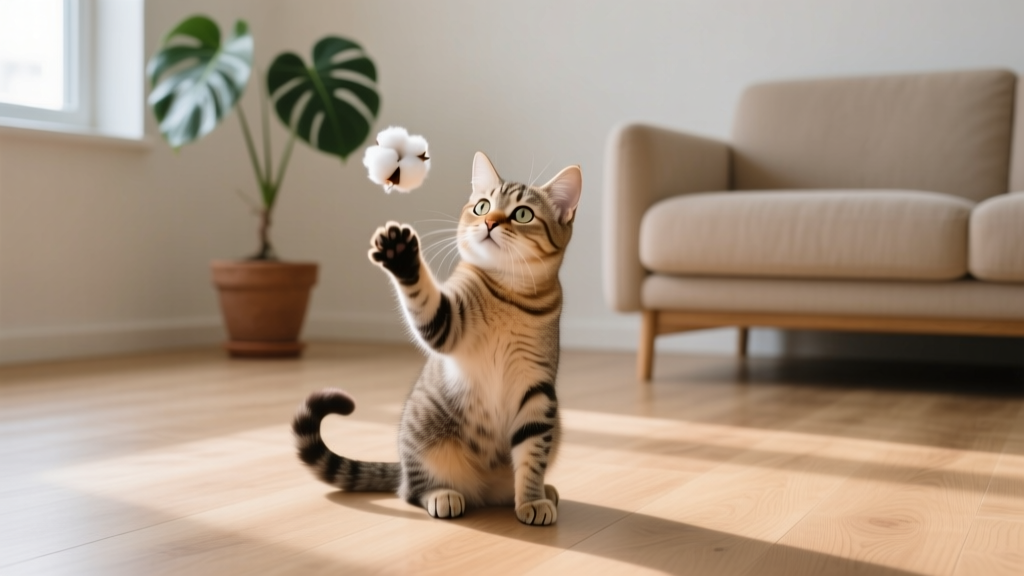
Cats evolved to hunt — and their brains expect daily problem-solving. Without adequate mental stimulation, even senior cats revert to ‘prey drive’ mode: stalking shadows, pouncing on air, batting at dangling strings. This isn’t regression — it’s neuroplasticity in action. According to Dr. Tony Buffington, Professor Emeritus at Ohio State’s College of Veterinary Medicine, “Play is how cats maintain motor coordination, spatial reasoning, and impulse control. An adult cat who stops playing entirely is at higher risk for cognitive decline — just like humans who stop learning new skills.”
So when your 10-year-old tuxedo cat ambushes your shoelaces at dawn, she’s not being ‘annoying’ — she’s doing essential brain maintenance. The solution isn’t suppression — it’s redirection with appropriate outlets.
When Kitten-Like Actions Cross Into Concern: A Vet-Reviewed Timeline
Context is everything. Below is a care timeline table developed in collaboration with the International Society of Feline Medicine (ISFM) to help distinguish healthy expression from potential distress signals. Use it as a reference — not a diagnosis tool.
| Behavior | Healthy Pattern (All Ages) | Caution Zone (Warrants Monitoring) | Vet Consultation Recommended |
|---|---|---|---|
| Kneading + Purring | Occurs during relaxed contact; stops when gently redirected; no skin damage | Intensifies during household stress; occurs >3x/day without clear trigger | Causes bleeding or raw spots; happens while cat appears tense or avoids touch |
| Suckling Wool/Fabric | Only on soft, familiar items; no ingestion; cat remains otherwise engaged | New onset after age 3; involves chewing/ingesting fibers; increases with isolation | Fiber ingestion confirmed via stool/vomit; weight loss or GI symptoms present |
| Zoomies / Midnight Runs | Short bursts (<2 min); predictable timing (e.g., post-nap); cat resumes calm rest | Longer duration (>5 min); occurs multiple times nightly; disrupts sleep for household | Collides with furniture; vocalizes in distress mid-zoom; shows disorientation or tremors |
| Play-Pouncing on People | Soft bites; stops when you yelp or withdraw; targets hands/feet only during active play | Bites break skin; occurs outside play context (e.g., while you’re typing); escalates with movement | Attacks without warning; targets face/neck; persists despite consistent redirection |
Frequently Asked Questions
Is it normal for my 8-year-old cat to still knead and suckle blankets?
Yes — absolutely normal, especially if she’s done it since kittenhood. Kneading and suckling release endorphins and oxytocin, promoting deep relaxation. As long as she’s not ingesting fabric (which risks intestinal blockage) and the behavior doesn’t interfere with her daily functioning, this is a sign of emotional security, not immaturity. If she started suddenly after age 5, consider recent environmental changes or consult your vet to rule out oral discomfort.
Why does my adult cat attack my ankles like prey — and how do I stop it?
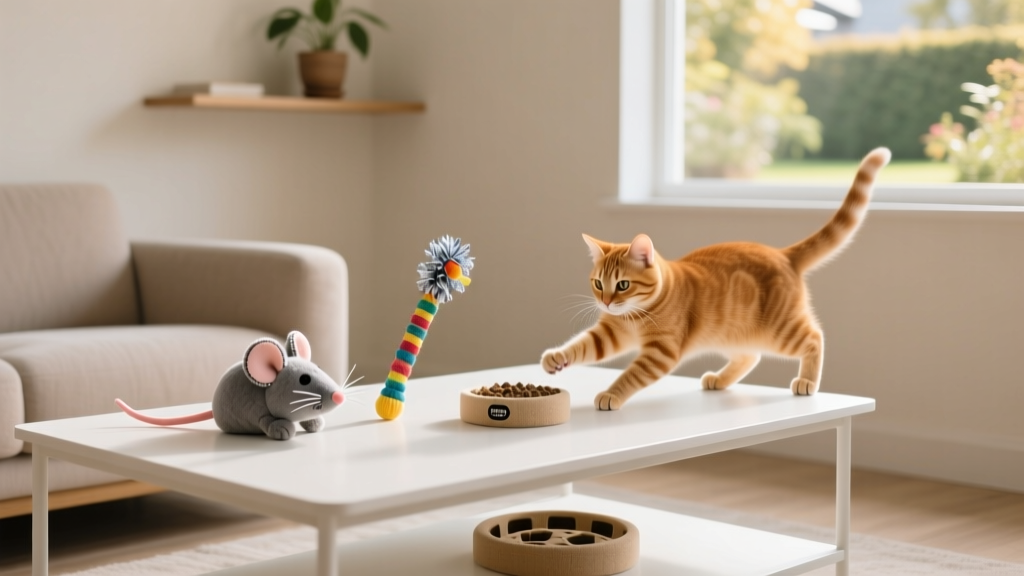
This is classic redirected predatory drive — not aggression. Cats evolved to hunt small, fast-moving prey, and your ankles mimic that stimulus perfectly. Punishment backfires and damages trust. Instead: 1) Provide 2–3 structured 10-minute play sessions daily with wand toys that mimic prey movement (jerk, pause, dart), ending with a ‘kill’ (let her catch a plush mouse); 2) Wear ankle socks or slip-on shoes during peak activity hours; 3) Place puzzle feeders along her path to redirect focus. Within 2–3 weeks, attacks typically decrease by 70%+ when play needs are met.
Can stress really make my cat act younger? What does that look like?
Yes — profoundly. Under chronic stress, cats often regress to comforting, self-soothing behaviors rooted in kittenhood (suckling, kneading, excessive grooming). A 2023 ISFM clinical review identified ‘behavioral neoteny’ — the re-emergence of juvenile coping strategies — in 61% of cats diagnosed with environmental stress syndrome. Key signs: increased vocalization (especially plaintive mews), following owners constantly, sleeping in laps or boxes more than usual, and seeking physical contact more frequently. Addressing the stressor (e.g., adding vertical space, pheromone diffusers, predictable routines) usually resolves the behavior within 2–4 weeks.
Will spaying/neutering reduce kitten-like behavior?
No — and this is a widespread misconception. Spay/neuter primarily affects hormone-driven behaviors like roaming, spraying, and mating vocalizations. It does not alter core personality traits, play drive, or comfort-seeking behaviors like kneading or suckling. Those are governed by early development, genetics, and environment — not sex hormones. In fact, many spayed females become *more* affectionate and knead more frequently post-surgery due to reduced anxiety.
My cat is 12 and suddenly started acting like a kitten again — should I worry?
Sudden behavioral shifts in senior cats (age 11+) warrant prompt veterinary evaluation. While increased vocalization or clinginess can signal cognitive dysfunction (feline dementia), other causes include hyperthyroidism, hypertension, dental pain, or arthritis — all of which may manifest as restlessness, pacing, or ‘reverted’ behaviors as your cat seeks comfort or expresses discomfort. Don’t assume it’s ‘just aging.’ A full senior panel (bloodwork, blood pressure, oral exam) is essential before attributing changes to ‘personality.’
Debunking 2 Common Myths About Adult Kitten Behaviors
- Myth #1: “If my cat still acts like a kitten, she wasn’t properly trained.” — False. Cats aren’t dogs. They don’t respond to obedience training in the same way, nor do they ‘mature’ into passive pets. Kitten-like behaviors reflect innate feline nature — not poor training. Expecting a cat to ‘settle down’ like a retired Labrador misunderstands feline ethology entirely.
- Myth #2: “Suckling means she was weaned too early.” — Oversimplified and often inaccurate. While early weaning (<4 weeks) can increase risk, many cats who nursed normally until 8+ weeks still suckle as adults. Research shows it’s more strongly linked to genetic predisposition (especially in Oriental breeds) and environmental predictability than weaning age alone.
Related Topics (Internal Link Suggestions)
- How to enrich your indoor cat’s environment — suggested anchor text: "indoor cat enrichment ideas"
- Recognizing feline anxiety vs. normal behavior — suggested anchor text: "signs of cat anxiety"
- Safe toys and games for senior cats — suggested anchor text: "best toys for older cats"
- Understanding cat body language cues — suggested anchor text: "what does my cat's tail mean"
- When to take your cat to the vet for behavioral changes — suggested anchor text: "cat behavior vet visit"
Your Next Step: Observe, Honor, and Respond With Intention
Why does my adult cat still have kitten behaviors? Now you know: it’s rarely a problem — it’s a window. A window into her genetics, her early world, her current sense of safety, and her brilliant, adaptable brain. Instead of asking ‘how do I stop this?,’ try asking ‘what is she telling me?’ That shift in perspective transforms frustration into connection. Start tonight: spend 7 minutes observing her without interaction. Note when she kneads, pounces, or suckles — and what happens just before and after. Jot down patterns. Then, choose *one* evidence-based action from this article — whether it’s adding a cardboard tunnel, scheduling a daily play session, or simply letting her knead your arm without interruption. Small, consistent choices build profound trust. And if something feels off — sudden, intense, or painful — reach out to your veterinarian. Because loving your cat means honoring her kitten heart — while always protecting her adult well-being.