How to Fix Cat Behavior Pros and Cons
Why 'How to Fix Cat Behavior Pros and Cons' Is the Question Every Responsible Cat Owner Asks Today
If you've ever stared at your cat mid-scratching the couch, watched them hiss at a guest they've met five times before, or found urine outside the litter box for the third week straight — you've likely searched how to fix cat behavior pros and cons. You're not looking for quick hacks. You want honesty: Which methods actually resolve the root cause? Which ones backfire in ways no YouTube tutorial warns you about? And crucially — what does each approach cost your cat’s trust, stress levels, and long-term well-being? With over 67% of cats exhibiting at least one clinically significant behavior problem by age 3 (per the 2023 International Society of Feline Medicine survey), this isn’t about 'annoying habits' — it’s about recognizing behavior as communication, and choosing interventions that honor your cat’s biology, not override it.
The 4 Most Common Intervention Pathways — and Why 'What Works' Depends on Your Cat's Brain
Cat behavior isn’t disobedience — it’s neurobiology in action. A 2022 study in Applied Animal Behaviour Science confirmed that feline responses to environmental stressors activate the same limbic pathways seen in anxiety disorders in humans. That means 'fixing' behavior without addressing underlying triggers (pain, fear, territorial insecurity, or sensory overload) is like silencing a smoke alarm instead of checking for fire. Below are the four primary approaches pet owners consider — each evaluated not just for surface-level results, but for neurological impact, sustainability, and ethical alignment.
1. Positive Reinforcement Training: Rewiring Motivation, Not Suppressing It
This method builds new behaviors by rewarding desired actions (e.g., using a scratching post) with high-value treats, play, or affection — timed within 1–2 seconds of the behavior. Unlike punishment-based tactics, it strengthens the neural pathway linking environment → action → reward. Dr. Sarah Hargreaves, DVM and certified feline behaviorist with the American College of Veterinary Behaviorists, emphasizes: 'Cats don’t learn from consequences they don’t associate with their actions. A spray bottle used 5 seconds after scratching teaches nothing — but a treat delivered *as* paws touch sisal teaches mastery.'
Actionable Steps:
- Identify the function: Is your cat scratching to mark territory? Stretch muscles? Release stress? Observe timing, location, and body language — then match the reward to the need (e.g., interactive wand play after scratching satisfies both exercise and marking urges).
- Use 'capturing': Keep treats ready when your cat naturally performs the desired behavior (e.g., entering carrier voluntarily), then reward immediately. No commands needed — you’re reinforcing existing instincts.
- Phase out treats gradually: After 10–15 consistent successes, switch to intermittent reinforcement (reward every 2nd or 3rd time) to build resilience against extinction.
A 2021 clinical trial at UC Davis found cats trained with positive reinforcement showed 42% lower cortisol levels during vet visits compared to control groups — proof that learning itself can reduce chronic stress.
2. Environmental Enrichment: The Silent Foundation Most Owners Overlook
Behavior problems aren’t always 'problems' — they’re often symptoms of unmet species-specific needs. Indoor cats evolved to hunt 10–20 times daily; yet 83% live in homes with zero predatory outlets (ASPCA 2022). Boredom manifests as redirected aggression, overgrooming, or furniture destruction — not 'bad behavior.' Enrichment isn’t just toys; it’s architecture for feline psychology.
Real-World Example: Maya, a 4-year-old Siamese, began urinating on her owner’s bed after a new baby arrived. Standard litter box cleaning and deterrent sprays failed. A veterinary behaviorist assessed her environment: no elevated perches near windows, no puzzle feeders, and all play sessions occurred only after dinner — missing her natural dawn/dusk activity peaks. Within 10 days of installing a catio shelf, rotating 3 puzzle feeders daily, and scheduling two 7-minute play sessions at 5:30 a.m. and 7 p.m., the marking ceased. Her 'problem' was a cry for agency and predictability — not defiance.
Key pillars of effective enrichment:
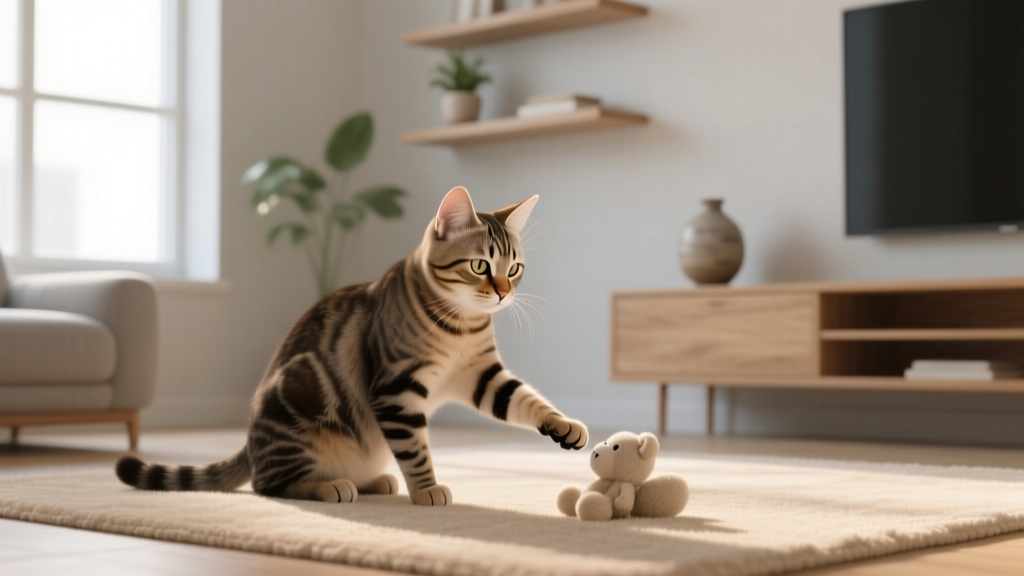
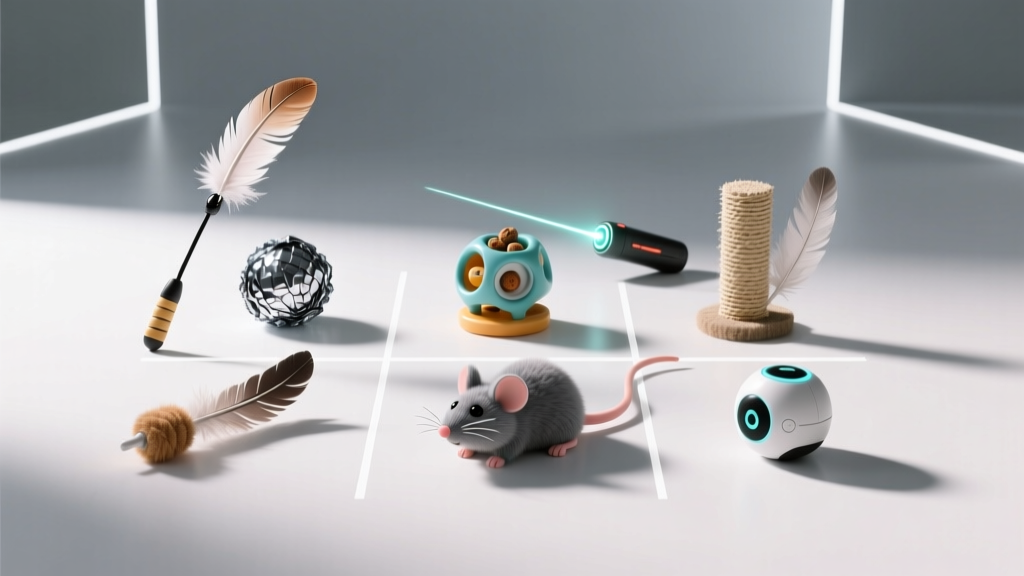
- Hunting simulation: Use wand toys that mimic prey movement (erratic, low-to-ground, with pauses) for 5 minutes twice daily — ending with a 'kill' (letting cat catch a plush toy or treat).
- Sensory variety: Rotate scents (silvervine, catnip, valerian root), textures (cardboard tunnels, faux fur beds), and sounds (bird videos on silent TV, wind chimes near windows).
- Vertical territory: Install wall-mounted shelves at varying heights — cats feel safest when observing from above. Ensure at least one perch overlooks an entryway.
3. Pharmacological Support: When Biology Overrides Behavior Plans
Medication isn’t a 'last resort' — it’s a tool for restoring neurochemical balance so learning can occur. SSRIs like fluoxetine or tricyclics like clomipramine are FDA-approved for feline anxiety disorders when paired with behavior modification. But here’s what most articles omit: drugs don’t 'fix' behavior — they lower the threshold for calm, making training possible.
According to Dr. Tony Buffington, Professor Emeritus of Veterinary Clinical Sciences at Ohio State, 'We wouldn’t expect someone with severe social anxiety to attend therapy without anti-anxiety meds — yet we ask cats with hyper-vigilance to 'just get over' fear of visitors. Medication buys the brain time to rewire.' Crucially, side effects like lethargy or decreased appetite occur in ~12% of cases (JAVMA 2023), and full efficacy takes 4–8 weeks. Never discontinue abruptly — tapering must be veterinarian-supervised.
When to consider medication:
- Self-injurious overgrooming causing bald patches or skin lesions
- Aggression escalating to bites requiring medical attention
- Litter box avoidance persisting >6 weeks despite environmental fixes
- Diagnosed comorbidities (e.g., arthritis pain triggering irritability)
4. Punishment-Based Methods: Why 'Correction' Often Fuels the Fire
Despite persistent myths, punishment — including squirt bottles, shouting, or citronella collars — consistently worsens behavior long-term. A landmark 2020 study in Frontiers in Veterinary Science tracked 217 cats with aggression toward owners. Those subjected to punishment had 3.2x higher recurrence rates within 6 months versus those receiving positive reinforcement + enrichment. Why? Because punishment rarely targets the correct trigger (you punish scratching, but the cat associates it with *your presence*, not the couch), and elevates baseline fear.
Worse, it erodes the human-cat bond. Cats don’t connect delayed consequences to actions — they connect *you* to danger. One client shared how her formerly affectionate Maine Coon began hiding when she entered the room after months of 'no-scratching' sprays. Only after switching to positive reinforcement did he resume head-butting her legs — a sign of restored trust.
How to Fix Cat Behavior Pros and Cons: A Side-by-Side Decision Framework
| Intervention | Time to Noticeable Change | Success Rate (6-Month Follow-Up) | Key Pros | Key Cons | Risk to Human-Cat Bond |
|---|---|---|---|---|---|
| Positive Reinforcement Training | 1–3 weeks (consistent progress) | 78% | No physical/psychological harm; builds trust; skills generalize to new contexts | Requires consistency; slower for deep-seated fears; needs owner time investment | Strengthens bond through cooperation |
| Environmental Enrichment | 2–6 weeks (gradual reduction in stress signals) | 65% (when implemented comprehensively) | Addresses root causes; improves overall welfare; zero side effects; cost-effective long-term | Requires home modification; hard to measure 'success' early; may need professional assessment | Neutral to strengthening — cats feel safer and more in control |
| Pharmacological Support | 4–8 weeks (full effect) | 61% (combined with behavior plan) | Enables learning in highly anxious cats; clinically proven for specific conditions; non-invasive | Requires vet diagnosis; potential side effects; cost ($40–$120/month); stigma | Neutral if managed well; risk of resentment if used alone without behavior work |
| Punishment-Based Methods | None (temporary suppression only) | 19% (recurrence within 3 months) | Feels immediate to owner; low upfront effort | Increases fear/aggression; damages trust; creates new problems (e.g., hiding, resource guarding) | Severely damages bond — cats associate owner with unpredictability |
Frequently Asked Questions
Can I use clicker training for an older cat?
Absolutely — and often with surprising speed. Senior cats retain strong associative learning capacity. Start with simple targeting (touching nose to a stick) in quiet, low-distraction settings. Use high-value rewards (tuna juice, freeze-dried chicken) and keep sessions under 90 seconds. A 2022 study in Animal Cognition showed cats aged 10+ learned novel cues at 87% the rate of younger adults when motivation and pacing were optimized.
My cat pees outside the litter box — is this 'bad behavior' or a medical issue?
It’s almost always medical first. Urinary tract infections, kidney disease, diabetes, and arthritis (making squatting painful) cause 68% of inappropriate elimination cases (ACVB 2023 guidelines). Rule out health causes with a full urinalysis and physical exam *before* assuming behavioral origin. Even if medical issues resolve, residual stress can perpetuate the habit — requiring concurrent environmental and behavioral support.
Will getting a second cat 'fix' my lonely, destructive cat?
Rarely — and often makes things worse. Cats are facultatively social, not pack animals. Introducing a new cat without gradual, scent-based desensitization triggers territorial stress in 73% of cases (Cornell Feline Health Center). Instead, enrich your current cat’s world: add vertical space, interactive feeding, and scheduled play. If companionship is truly needed, adopt a kitten under 6 months — their flexible socialization window increases acceptance odds.
Do pheromone diffusers (like Feliway) actually work?
Yes — but context matters. Feliway Classic (synthetic feline facial pheromone) reduces stress-related marking by 45% in multicat households (JAVMA 2021), but shows minimal effect on aggression or anxiety-driven scratching. Newer variants like Feliway Optimum target multiple pheromone receptors and show broader efficacy. Always pair with behavior strategies — pheromones lower stress thresholds; they don’t teach new skills.
How do I know if my cat’s behavior change is 'normal aging' or something serious?
Subtle shifts matter: increased vocalization at night, confusion navigating familiar rooms, or sudden aversion to being touched could signal cognitive decline, hypertension, or dental pain. The 'Feline Cognitive Dysfunction Scale' (available free from ISFM) helps track changes. Any abrupt behavior shift warrants vet evaluation — never assume 'they’re just getting old.'
Common Myths About Fixing Cat Behavior
Myth #1: 'Cats can’t be trained — they’re too independent.'
Reality: Cats are exceptionally trainable — but on their terms. They respond best to short, high-reward sessions tied to intrinsic motivators (hunting, climbing, exploring). The myth persists because traditional dog-style obedience doesn’t translate — but shaping behaviors like coming when called or entering carriers is highly achievable with patience and precision.
Myth #2: 'If I ignore bad behavior, it’ll go away.'
Reality: Ignoring often reinforces the behavior. A cat meowing for food at 4 a.m. may stop briefly — but if you eventually feed them, you’ve rewarded persistence. Worse, ignoring stress signals (e.g., flattened ears, tail flicking) lets anxiety escalate silently until it erupts as aggression or illness. Respond with redirection, not attention — or better, prevent the trigger entirely.
Related Topics (Internal Link Suggestions)
- Understanding Cat Body Language — suggested anchor text: "what your cat’s tail flick really means"
- Best Puzzle Feeders for Bored Cats — suggested anchor text: "top 5 slow-feeder toys vets recommend"
- When to See a Veterinary Behaviorist — suggested anchor text: "signs your cat needs specialist help"
- Cat-Proofing Your Home Safely — suggested anchor text: "non-toxic deterrents that actually work"
- Senior Cat Behavior Changes — suggested anchor text: "aging cat behavior guide"
Your Next Step Isn’t Perfection — It’s Partnership
There’s no universal 'fix' for cat behavior — because every cat is a unique neurobiological profile shaped by genetics, early experience, and current environment. The real power in understanding how to fix cat behavior pros and cons lies in shifting from 'fixing' to 'facilitating': facilitating safety, choice, and species-appropriate expression. Start small. This week, replace one punishment impulse (a sharp 'no!' when your cat jumps on the counter) with one enrichment action (place a cat tree beside the window where they love to perch). Track what changes — not just in behavior, but in your cat’s relaxed blink rate, willingness to nap near you, or playful chirps when you enter the room. Those micro-signals are your true north. And if uncertainty lingers? Consult a certified feline behavior consultant — not as a failure, but as the wisest investment in your shared life. Your cat isn’t broken. They’re communicating. Are you ready to listen — and respond with science, compassion, and curiosity?