Why Do Cats Behavior Change for Anxiety? 7 Subtle Shifts...
Why This Matters More Than Ever Right Now
\nWhy do cats behavior change for anxiety? It’s not just about hissing or hiding—it’s about silent suffering disguised as 'just being a cat.' With shelter intakes up 34% post-pandemic and vet visits for stress-related conditions rising sharply (AVMA, 2023), more cat owners are noticing sudden litter box avoidance, nighttime yowling, or obsessive grooming—but misattributing them to 'personality' or 'aging.' In reality, these are urgent behavioral signals your cat is overwhelmed, and ignoring them can trigger chronic urinary issues, GI disorders, or irreversible trust erosion. The good news? Anxiety-driven behavior changes are highly treatable—if you recognize the patterns early and respond with species-appropriate support.
\n\nWhat Anxiety *Actually* Looks Like in Cats (Not Just ‘Grumpy’)
\nCats evolved as both predator and prey—so their anxiety rarely manifests as trembling or panting like dogs. Instead, they deploy subtle, energy-conserving survival strategies: freezing, displacement behaviors (like excessive licking), or territorial re-mapping. Dr. Sarah Wooten, DVM and certified feline behavior consultant, explains: 'A cat doesn’t have a panic attack; they have a perception shift. What was safe yesterday feels threatening today—and their behavior recalibrates instantly to preserve control.'
\nHere are the top 5 anxiety-linked behavior changes, ranked by how often they’re misread:
\n- \n
- Subtle withdrawal: Not just hiding—but choosing new, inaccessible spots (top of bookshelves, inside laundry baskets), avoiding eye contact even during feeding, or sleeping with ears flattened against the head. \n
- Litter box aversion with no medical cause: 68% of cats referred to veterinary behaviorists for inappropriate elimination test negative for UTIs or crystals (Journal of Feline Medicine & Surgery, 2022). Instead, they associate the box with fear—perhaps from a noisy washer nearby or competition with another cat. \n
- Overgrooming leading to bald patches: Not boredom—this is neurochemical self-soothing. Cortisol spikes trigger endorphin release during licking, creating a harmful but reinforcing loop. \n
- Redirected aggression: Sudden swats at your hand after seeing a bird outside—or attacking the dog who walked past 10 minutes earlier. This isn’t ‘random’; it’s delayed threat response. \n
- Vocalization shifts: Increased yowling at dawn/dusk (when wild cats are most alert) or high-pitched, plaintive cries—not meows—often signal acute distress, especially in senior cats with cognitive decline. \n
Crucially, these changes rarely appear in isolation. A 2021 Cornell Feline Health Center study found that 92% of anxious cats displayed ≥3 concurrent behavioral shifts—yet owners typically noticed only one.
\n\nThe Hidden Triggers: It’s Rarely ‘Just Stress’
\nWhile moving houses or introducing a new pet are obvious stressors, anxiety in cats is often rooted in invisible environmental mismatches. Veterinarian Dr. Tony Buffington, pioneer of the ‘Indoor Cat Initiative,’ identifies three under-recognized triggers:
\n- \n
- Sensory overload: Humans tolerate constant background noise (HVAC hum, Wi-Fi routers, LED light flicker), but cats hear frequencies up to 64 kHz and detect electromagnetic fields. A ‘quiet’ home may be a sensory assault zone for them. \n
- Resource insecurity: Even in multi-cat homes with ‘enough’ bowls/litter boxes, cats require separate, non-visual access points. If two cats must pass each other to reach food, one perceives scarcity—even if bowls are full. \n
- Loss of predictability: Cats thrive on micro-routines: the exact time you open the treat drawer, the path you take to the kitchen, the sound of your keys before leaving. A single week of altered work hours can spike cortisol levels by 40%, per a 2020 University of Lincoln cortisol saliva study. \n
Case in point: Luna, a 4-year-old Siamese, began urinating on her owner’s yoga mat after her human started working remotely. Vet workup ruled out infection. The real trigger? Luna associated the mat’s texture and scent with ‘safe territory’—but when her human sat on it all day, it became a contested space. Solution: Adding a second, identical mat in a quiet corner reduced incidents by 90% in 3 days.
\n\nYour 72-Hour Action Plan: Evidence-Based Interventions That Work
\nForget waiting for ‘it to pass.’ Anxiety compounds neurologically—each unaddressed episode strengthens fear pathways. Here’s what veterinary behaviorists recommend doing within the first 72 hours:
\n- \n
- Rule out pain FIRST: 30% of ‘anxiety behaviors’ stem from undiagnosed arthritis or dental disease. Schedule a vet visit with a focus on orthopedic and oral exams—even if your cat seems ‘fine.’ \n
- Implement vertical space immediately: Add 2–3 elevated perches (cat trees, wall-mounted shelves) near windows or quiet corners. Height = control. Studies show cats using vertical space 3x/day reduce stress markers by 52% (Frontiers in Veterinary Science, 2023). \n
- Introduce pheromone support strategically: Feliway Classic diffusers work best when placed where anxiety peaks (e.g., near litter boxes or entryways)—not just in living rooms. Replace refills every 4 weeks; efficacy drops sharply after that. \n
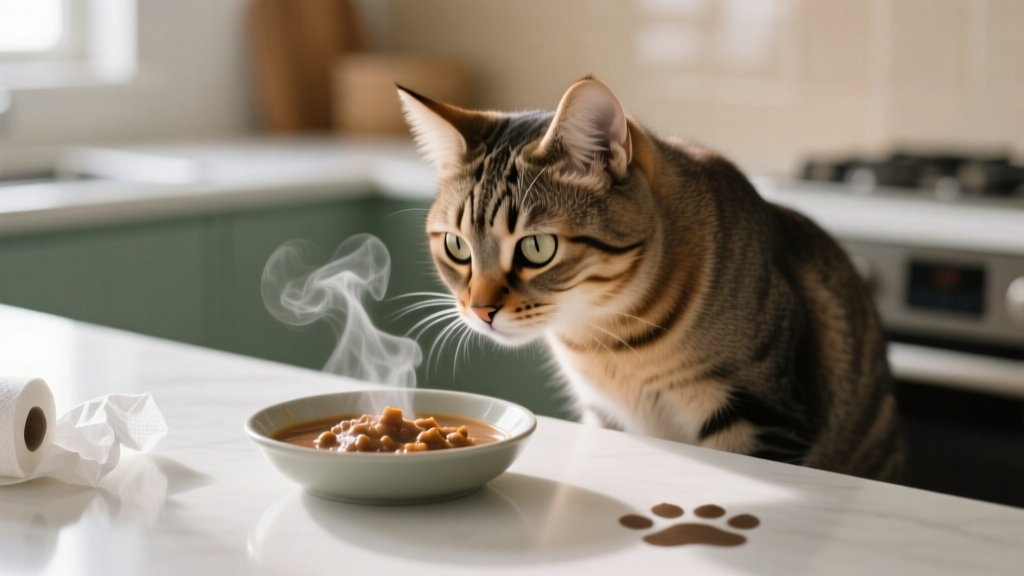
- Reset feeding routines using food puzzles: Free-feeding increases vigilance; scheduled meals + puzzle feeders engage natural hunting instincts and lower cortisol. Start with level-1 puzzles (rolling balls with holes) for 5 minutes before each meal. \n
Important: Avoid punishment, forced handling, or ‘tough love.’ These escalate amygdala activation, making future anxiety responses faster and more severe.
\n\nAnxiety Behavior Changes: What They Mean & How to Respond
\n| Behavior Change | \nWhat It Signals | \nImmediate Action (First 24 Hours) | \nLong-Term Strategy | \n
|---|---|---|---|
| Sudden litter box avoidance | \nFear association with location, texture, or timing (e.g., box near washing machine) | \nPlace a new, uncovered box in a quiet, low-traffic area with preferred litter type. Remove the old box temporarily. | \nGradually reintroduce original box with positive reinforcement (treats placed beside it daily). Add privacy hood only after consistent use. | \n
| Excessive grooming/bald patches | \nSelf-soothing attempt masking underlying pain or environmental stress | \nBlock access to affected area with soft e-collar; photograph pattern for vet. Rule out fleas, allergies, or skin infection. | \nIntroduce daily interactive play (5-min wand sessions at dawn/dusk) to redirect energy. Add omega-3 supplements (vet-approved dose) to support skin barrier and neural calm. | \n
| Aggression toward family members | \nRedirected fear or resource guarding—not dominance | \nStop all physical interaction. Use treats to create positive associations from a distance (toss treats when person enters room). | \nImplement ‘consent-based handling’: let cat initiate contact. Train ‘touch’ cues with clicker + treats to rebuild trust over 2–3 weeks. | \n
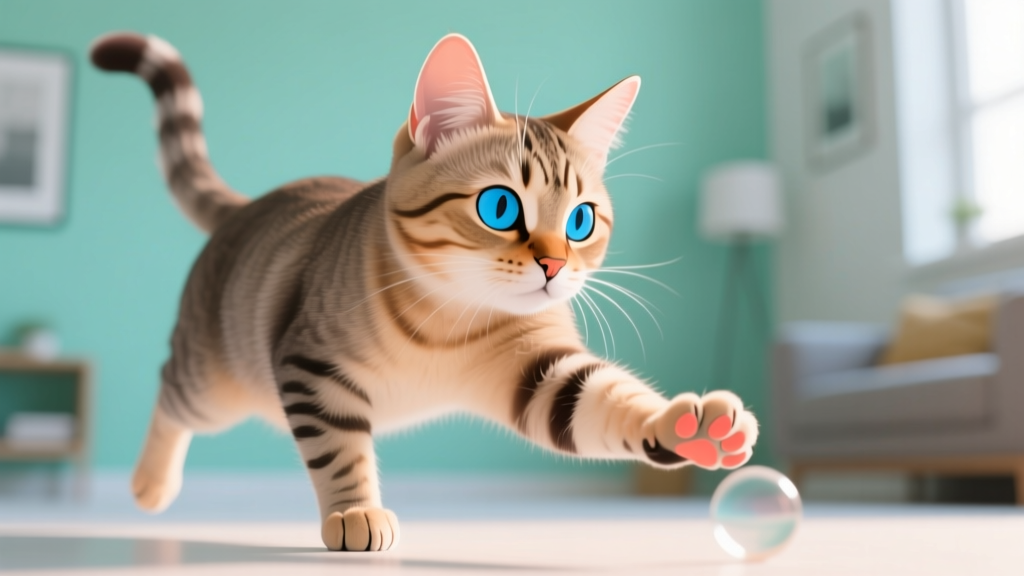
| Nighttime vocalization | \nDisrupted circadian rhythm or separation anxiety (especially in seniors) | \nProvide pre-bedtime enrichment: 10-min play session + puzzle feeder with meal. Block outside stimuli (close blinds, cover windows). | \nInstall automatic feeder dispensing small meals at 3 a.m. to reset hunger cues. For seniors, discuss melatonin or gabapentin (off-label, vet-supervised) to regulate sleep cycles. | \n
Frequently Asked Questions
\nCan anxiety in cats cause physical illness?
\nAbsolutely—and it’s well-documented. Chronic anxiety suppresses immune function and triggers feline idiopathic cystitis (FIC), a painful bladder condition affecting up to 65% of stressed cats (ACVIM Consensus Statement, 2021). It also exacerbates asthma, IBD, and diabetes management. That’s why behavioral assessment is now standard in feline wellness exams.
\nHow long does it take for anxiety behavior changes to improve?
\nWith consistent intervention, most cats show measurable improvement in 10–14 days—especially with environmental adjustments. However, full neural recalibration takes 6–8 weeks. Patience is critical: rushing reintroductions or skipping steps often resets progress. Track changes using a simple log: note frequency/duration of target behaviors daily.
\nIs medication ever necessary for cat anxiety?
\nYes—but only after thorough behavior modification and environmental work. FDA-approved options are limited (only fluoxetine is labeled for cats), so vets often prescribe off-label medications like gabapentin (for situational anxiety) or trazodone (for travel or vet visits). Always combine with behavioral support—meds alone don’t teach coping skills.
\nWill getting a second cat help my anxious cat?
\nRarely—and often worsens it. Cats are facultatively social, not pack animals. Introducing another cat without slow, scent-based desensitization (6+ weeks minimum) is the #1 cause of inter-cat aggression referrals. Focus on enriching your current cat’s environment first. Only consider a companion if your cat already shows active interest in other cats (e.g., chirping at windows, seeking out neighbors’ cats).
\nDo calming collars or sprays really work?
\nEvidence is mixed. Calming collars (e.g., Sentry or Beaphar) show modest efficacy for mild, situational stress (car rides) in ~40% of cats—but lack peer-reviewed validation for chronic anxiety. Spray formulations (like Feliway) have stronger data: 71% of cats in controlled trials showed reduced hiding and increased exploration when used consistently for 2+ weeks (JFMS, 2020). Key: they’re tools, not cures—and must be paired with root-cause fixes.
\nCommon Myths About Cat Anxiety
\n- \n
- Myth #1: “Cats don’t get anxiety—they’re just independent.”
This confuses temperament with pathology. Independence is a trait; anxiety is a physiological stress response involving HPA-axis dysregulation. Brain imaging confirms cats experience fear-based neural activation identical to humans—just expressed differently.
\n - Myth #2: “If my cat eats and purrs, they can’t be anxious.”
Purring occurs during pain, fear, and healing—not just contentment. A 2019 study in Applied Animal Behaviour Science recorded purring in 83% of hospitalized cats during procedures. It’s a self-regulation tool, not a happiness meter.
\n
Related Topics (Internal Link Suggestions)
\n- \n
- Understanding Feline Body Language — suggested anchor text: "how to read your cat's tail, ears, and eyes" \n
- Best Calming Products for Cats (Vet-Reviewed) — suggested anchor text: "top-rated anxiety relief for cats" \n
- Creating a Cat-Friendly Home Environment — suggested anchor text: "cat-safe enrichment ideas for apartments" \n
- When to See a Veterinary Behaviorist — suggested anchor text: "signs your cat needs a behavior specialist" \n
- Feline Idiopathic Cystitis (FIC) Explained — suggested anchor text: "stress-related bladder issues in cats" \n
Conclusion & Your Next Step
\nWhy do cats behavior change for anxiety? Because their survival wiring interprets uncertainty as danger—and they adapt silently, precisely, and relentlessly. But those changes aren’t setbacks; they’re data points pointing to unmet needs. You don’t need to be a behavior expert—just observant, compassionate, and willing to adjust your environment with feline logic in mind. Start today: pick one behavior from the table above, implement its ‘Immediate Action,’ and track changes for 48 hours. Small, consistent shifts compound into profound relief—for both of you. And if uncertainty lingers? Book a consult with a board-certified veterinary behaviorist. Your cat’s calm isn’t optional—it’s essential biology.