Why Cats Sit on Your Keyboard During Gaming
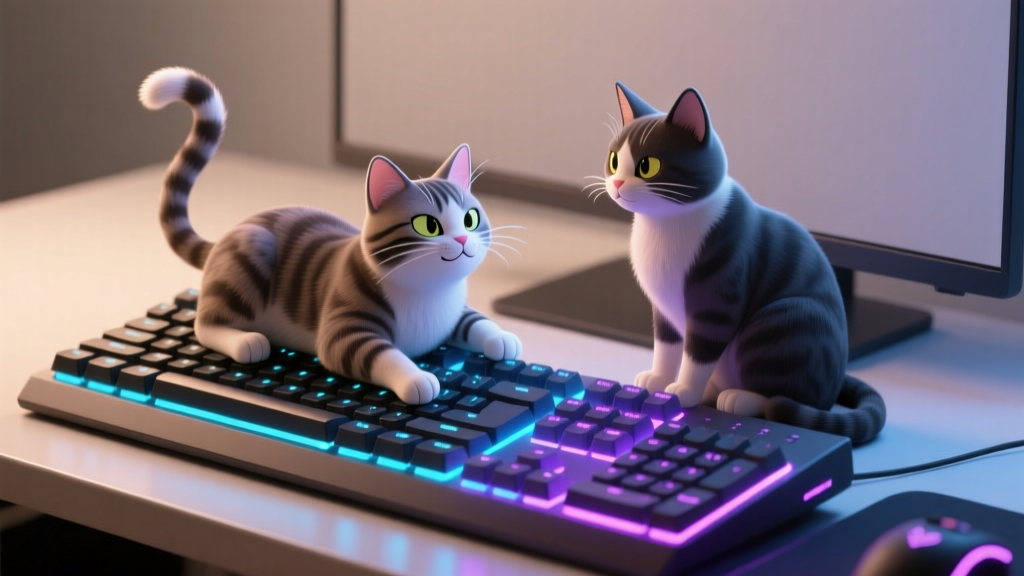
You’re mid-match. Heart pounding. Fingers flying. Your team needs you. And then—soft paws. A warm loaf settles right on your keyboard like it’s been reserved seating. Your screen fills with random inputs, your character spins in circles, and you hear yourself saying, “Really? Right now?”
If you live with a cat, you’ve probably experienced this exact brand of sabotage. The funny part is that your cat isn’t trying to ruin your game. From your cat’s perspective, they’re doing something perfectly logical: inserting themselves into the center of the most important activity in the room… which, conveniently, includes your hands, your attention, and a warm, interesting rectangle that smells like you.
So why do cats love keyboards so much—especially when you’re gaming? Cat behavior has a way of looking mischievous on the surface while being totally sensible underneath. Here’s what’s really going on.
1) The Scientific & Evolutionary “Why”: Warmth, Resources, and Attention
Cats are opportunists in the most adorable way. Their ancestors survived by paying close attention to valuable resources: warmth, safety, food, and social information. Your gaming setup accidentally checks multiple boxes.
- Warmth: Keyboards, laptops, and the area near your monitor often radiate mild heat. Cats are heat-seekers. In the wild, warmth conserves energy—so it’s always a win.
- Prime territory: Elevated, central spots with good sight lines are cat gold. Your desk is basically a watchtower with a view of the room (and you).
- Scent and familiarity: Cats find comfort in your smell. Your hands have been all over the keyboard and mouse. To your cat, that keyboard smells like “my person.”
- Social bonding: Cats are more social than many people give them credit for. They learn patterns: “When the glowing box is on, my human is absorbed.” Sitting on the keyboard is a very effective way to reconnect.
Evolution didn’t design cats to respect personal space. It designed them to pursue what works. And stepping on the thing that controls your attention works extremely well.
2) A Detailed Breakdown: Different Contexts, Different Motivations
“My cat sits on my keyboard” is one behavior that can mean several things depending on the situation. Here are the most common contexts I see as a behavior writer (and as someone who has been “helped” by many cats at inconvenient times).
They sit on the keyboard during intense, fast-paced gaming
This is classic “attention redirection.” Your cat sees your body language: forward posture, rapid hand movement, focused eyes, intense voice chat. To a cat, that’s high engagement. They want in.
What it looks like: Your cat hops up, walks directly between you and the screen, then plants themselves squarely on the keys. Bonus points if they make eye contact while doing it.
They sit on the keyboard when you’re calm or idle
This is often more about warmth, comfort, and routine. Some cats pair your gaming time with companionship time. If you usually pet them during loading screens, they’ll show up like clockwork.
What it looks like: A slow approach, a sniff of the keys, a little kneading, then a tidy loaf.
They only do it at night
Many cats become more socially active in the evening. Also, the room is quieter, you’re stationary, and your desk becomes the “gathering place.” If your cat has learned that nighttime gaming equals a predictable human who isn’t walking away, they’ll take advantage.
They sit on the keyboard specifically when you talk to teammates
Some cats react to your voice changes. Excited speech, laughter, or “clutch moment yelling” can draw them in. Your cat may be checking in or joining the “conversation” the only way they know how: by inserting their body into the situation.
They do it more when you’ve been busy lately
If your schedule has changed—more work, less play, less petting—keyboard sitting can be a protest… but not in a spiteful way. Think of it as a relationship bid: “Hey. I miss you. Notice me.”
3) What This Behavior Says About Your Cat’s Mood and Feelings
Keyboard-sitting is usually a sign your cat feels comfortable around you. Cats don’t casually sprawl in vulnerable positions in places they consider unsafe. But the details matter.
- Relaxed loaf, half-closed eyes: Contentment. Your cat is settling in and using your presence as background security.
- Kneading on the keyboard: Comfort and affection. Kneading is linked to kittenhood (nursing behavior) and often shows your cat feels safe and cozy.
- Tail flicking sharply while sitting there: Mixed feelings—interested but overstimulated or annoyed. This can happen if the game noise is intense or you keep moving them away.
- Head-butting your hands or rubbing their cheeks on the keys: Social bonding and scent marking. Cheek glands deposit friendly scent signals; it’s your cat’s way of saying, “This is part of our shared space.”
- Vocalizing, pawing at your hands, then flopping on the keyboard: Attention-seeking with a side of play energy. Your moving fingers look like prey to some cats.
In plain terms: your cat is either trying to be close to you, to get something they need (warmth/attention), or to participate in the action.
4) Related Behaviors You Might Also Notice
Keyboard sitting rarely happens in isolation. If your cat is a “desk helper,” you may recognize these familiar side quests:
- Walking across the keyboard slowly as if they’re typing an email to HR.
- Sitting on your mouse hand or wedging their body between your forearm and the desk.
- Blocking the monitor with a perfectly-timed yawn and butt presentation.
- Chewing headset cables (not ideal, but common—especially in young cats).
- Attacking the cursor or pouncing at moving images on the screen.
- Stealing your chair the second you stand up.
All of these behaviors share a theme: your cat is interacting with your habits, your movement, and your attention patterns.
5) When Keyboard Sitting Is Normal… and When It Might Be a Concern
Normal: Most of the time, this is typical cat behavior—affection, curiosity, warmth-seeking, and mild attention demands. If your cat is otherwise eating, drinking, using the litter box normally, and playing, you’re likely seeing a quirky bonding behavior.
Worth a closer look if:
- It’s a sudden change: A cat who never cared about your desk but suddenly becomes clingy may be responding to stress, routine changes, or feeling unwell.
- They seem restless and can’t settle: Repeatedly hopping up, meowing, and disrupting could signal boredom, anxiety, or unmet play needs.
- They’re vocalizing more than usual or acting “needy” in multiple settings: Consider whether something in the home changed (new pet, new work hours, construction noise) or if they need a vet check for pain or discomfort.
- They’re chewing cords obsessively: This can be dangerous and may reflect stress or insufficient enrichment. It also requires immediate management for safety.
If you’re ever unsure, a quick vet visit to rule out medical issues plus a behavior audit (routine, play, environment) is a smart one-two punch.
6) Tips for Responding (Without Rewarding the Chaos)
You don’t have to choose between having a cat and finishing a game. The goal is to meet your cat’s needs while protecting your hands, your gear, and your rank.
Create a “legal keyboard” next to yours
Many cats just want the spot. Try placing a decoy keyboard, a flat box lid, or a small mat beside your real keyboard. Add a pinch of catnip or a treat the first few times. Cats love a designated perch—especially if it comes with perks.
Offer warmth in the right place
A heated cat bed (low and safe), a fleece blanket on the desk corner, or a warm pad can compete with your device’s heat. Some cats are basically solar panels with fur.
Schedule a “pre-game hunt”
Ten minutes of interactive play before you log on can dramatically reduce interruptions. Use a wand toy to mimic prey: stalk → chase → pounce → reward with a small treat. You’re fulfilling a natural cycle, and a satisfied cat is more likely to nap than heckle you.
Reinforce calm alternatives
If your cat sits on the decoy spot or settles nearby, quietly reward them with gentle petting or a treat during safe moments (like loading screens). If they jump on the keyboard, calmly move them to the alternative spot without scolding. Consistency matters more than intensity.
Protect your setup
- Use a keyboard cover if your cat is a drooler or enthusiastic kneader.
- Manage cables with cord protectors or cable sleeves.
- Consider a desk-mounted cat shelf if your cat insists on being at your level.
Give them “together time” that isn’t disruptive
Some cats are simply social. If your cat wants closeness, try inviting them onto your lap with a blanket, or place a sturdy cat bed on a chair beside you. You’re saying: “Yes to closeness, no to key-mashing.”
7) Fun Facts & Research-Adjacent Nuggets
- Cats are drawn to rectangles. Many cats will sit in boxes, tape squares, and shallow trays. A keyboard is basically a textured rectangle that happens to be warm and important.
- Scent marking is social, not just territorial. When your cat rubs on your stuff, it’s often a bonding signal—mixing scents creates a “group smell,” which is comforting in multi-cat and human-cat households.
- Your attention is a powerful reinforcer. Even eye contact, talking, or pushing your cat away can reward the behavior if your cat’s goal is interaction. Cats are excellent at training humans with small, repeatable tactics.
- Cats learn routines fast. If you consistently pause to pet them when they appear at your desk, they’ll start timing their arrival with impressive accuracy—like furry little alarm clocks.
FAQ: Common Questions About Cats and Keyboards
Is my cat jealous of my video games?
Why does my cat only sit on the keyboard when I’m in a ranked match?
Because you’re extra focused and emotionally invested—your cat notices. Your posture, voice, and intensity make that moment “important,” so your cat chooses that time to engage. Cats are masters of timing, even when it’s wildly inconvenient.
Should I ignore my cat when they do this?
Ignoring can help if the behavior is purely attention-maintained, but many cats are also seeking warmth or closeness. A better plan is to calmly redirect them to a nearby approved spot and reward that choice.
Is it okay to let my cat sit on my keyboard sometimes?
If your cat is calm, your equipment is safe, and you don’t mind the interruption, it’s not harmful. Just be aware: allowing it sometimes can strengthen the habit. If you want fewer interruptions, consistency helps—“keyboard never,” “decoy spot yes.”
My cat bites or swats when I move them off the keyboard—what does that mean?
It can mean frustration, overstimulation, or that they’re guarding a valued spot. Move slowly, avoid grabbing, and lure them with a treat or toy to the alternative perch. If swatting escalates or happens in other contexts, consult a vet or a qualified behavior professional.
How can I stop my cat from chewing gaming cables?
Use cord protectors immediately (safety first), offer chew-appropriate alternatives (some cats like silvervine sticks), increase enrichment and play, and ensure your cat has enough outlets for energy. Persistent chewing can also be stress-related—worth discussing with your vet.
Final Thought
Your cat sitting on your keyboard during gaming isn’t a betrayal. It’s communication: “I like being near you,” “this spot is perfect,” or “I need something from you right now.” With a few small tweaks—warm alternative perches, a pre-game play session, and consistent redirection—you can keep your cat included without sacrificing your controls.
Does your cat have a signature move—keyboard loaf, mouse-hand hug, or dramatic monitor block? Share your funniest (and most relatable) gaming-with-cats stories with the Cat Lovers Base community at catloversbase.com.