Why Cats Sit on the Stove After Cooking
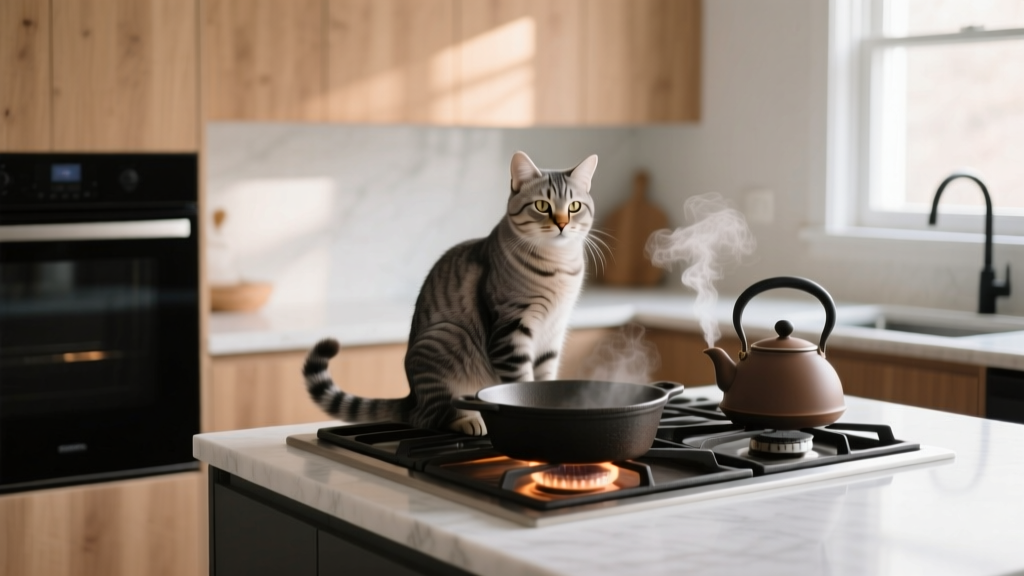
You turn off the burner, slide the pan into the sink, and feel that satisfying “dinner is done” calm. Then you hear it: the soft thump of paws on the stovetop. You spin around and—of course—your cat is perched right where you were just sautéing onions, looking pleased with themselves like they’ve claimed a prime piece of real estate.
If you’ve ever said, “Are you serious right now?” while doing a panicked stove-check, you’re not alone. Cats sitting on the stove after cooking is one of those behaviors that feels equal parts baffling, funny, and mildly terrifying. The good news: it makes a lot of sense from a cat’s point of view. The tricky part: it can also be dangerous.
1) The scientific (and evolutionary) reason: warm spots = survival
Cats are heat-seeking experts. Their wild ancestors didn’t have central heating, cozy fleece blankets, or sunlit window hammocks. They had to conserve energy, especially when resting between hunts. Choosing warm resting places is an efficient survival strategy.
Domestic cats still carry that “energy budget” mindset. Their normal body temperature runs higher than ours (generally around 100.5–102.5°F), and they prefer ambient temperatures warmer than most humans do—often around the low to mid 80s°F. That’s why a cat can look perfectly comfortable draped over a radiator while you’re reaching for a sweater.
A recently used stove is basically a short-lived heated bed. It’s large, flat, and holds warmth in a way that feels delicious to a cat’s heat-loving nervous system. From your cat’s perspective, it’s not “the place where danger happens.” It’s “the big warm rock that appeared after the human made interesting smells.”
2) What’s really going on: a breakdown of the behavior in different contexts
Not all “cat-on-stove” moments mean the same thing. Here are the most common contexts I see, and what they often indicate.
The Heat Hunter: “This is the warmest square in the kitchen.”
This is the classic scenario: you’ve just cooked, and within minutes your cat hops up to soak in leftover heat. They might loaf, sprawl, or rotate their body like a rotisserie chicken trying to warm all sides evenly.
What it usually means: Your cat is comfortable, relaxed, and following a strong preference for warmth.
The Scent Tourist: “I need to investigate whatever happened here.”
Cats use scent as a primary information system. After cooking, the stovetop is coated in a buffet of aromas—oil, meat, butter, spices, steam. Even if you wipe it down, the smell story lingers.
Some cats sit on the stove not only for heat but because it’s a hot spot of news. They may sniff, lick tiny residues, rub their cheeks, or roll to deposit their own scent.
What it usually means: Curiosity and a desire to participate in household “events.”
The Social Shadow: “You were here, so I want to be here.”
Cats often gravitate toward whatever you interact with most. If you spend time cooking, the stove becomes part of your cat’s map of “important human places.” This is especially true for cats that follow you room to room or insist on supervising tasks.
What it usually means: Attachment, interest in you, and gentle social bonding.
The Food Strategist: “Good things come from this surface.”
If your cat has ever been offered a taste of chicken, a drip of tuna juice, or even just attention during cooking, the stove can become associated with reward. Cats are excellent at noticing patterns. “Human cooks” can quickly turn into “human sometimes drops snacks.”
What it usually means: Learned association and hopeful anticipation.
The High Ground Enthusiast: “Up here I can see everything.”
Many cats love elevated surfaces because they provide safety and control. A stove is a central platform with good sightlines. In a multi-pet home, the stove can even function as a temporary “no-dog zone.”
What it usually means: A desire for security, observation, or personal space.
3) What sitting on the stove says about your cat’s mood
Body language is your best translator. The same location can mean “I’m blissed out” or “I’m on patrol.” Here’s what to look for.
- Loose loaf, half-closed eyes, slow blinks: Your cat feels safe and cozy. This is the “heated spa day” vibe.
- Paws tucked, ears neutral, gentle purring: Contentment. The stove is functioning like a warm bed.
- Tail flicking, ears swiveling, scanning the room: Alert curiosity. They may be monitoring movement or expecting food.
- Intense staring at you, vocalizing, pacing on the stovetop: They’re asking for something—attention, food, or access to whatever you’re doing.
- Startles easily when you approach: They might be unsure, conflicted, or guarding a valued warm spot.
A cat who chooses the stove and looks relaxed is usually simply enjoying a resource: warmth, height, or proximity to you. A cat who looks tense on the stove may be using it as a control point, especially in a busy household.
4) Related behaviors you might notice (and why they’re connected)
If your cat sits on the stove after cooking, you may also notice these familiar “heat + human” habits:
- Parking on your laptop keyboard: Warmth plus your attention plus a convenient “stop working and pet me” strategy.
- Sleeping on fresh laundry: Heat retention, soft texture, and your scent all in one.
- Claiming the sunny patch on the floor: A classic feline solar-charging station.
- Sitting near vents, radiators, or space heaters: Temperature preference in action.
- Hanging around the kitchen during meal prep: Curiosity, routine, and learned food associations.
- Rubbing cheeks on cabinets or appliance corners: Marking “important” household zones with friendly facial pheromones.
Seen together, these behaviors paint a consistent picture: cats build comfort maps that include warm surfaces, predictable routines, and areas that smell like their favorite humans.
5) When it’s normal… and when it’s a concern
In most homes, the motivation behind stove-sitting is normal. The risk is what can make it a problem.
Generally normal
- Your cat hops up after cooking when everything is off and cooling.
- They settle briefly, then move on.
- They’re otherwise healthy, eating well, and behaving normally.
Potential concerns (and what they might mean)
- Your cat jumps on the stove while you’re actively cooking: This is a safety issue and may indicate high food motivation, poor alternative perches, or a learned habit that accidentally got reinforced.
- Obsessive heat-seeking (constantly chasing warm spots): Could be simple preference, but if it’s new or extreme, consider discussing with your vet—especially for older cats. Some medical issues can change temperature comfort.
- Compulsive licking of greasy residue: Risk of ingesting harmful substances (onion/garlic, spices, cleaners) and indicates strong food-seeking behavior.
- Guarding the stove (hissing, swatting when approached): Resource guarding can happen, especially in multi-cat homes or if the cat feels insecure.
If the behavior is new, intense, or paired with other changes (weight loss, increased thirst, restlessness, hiding), that’s your cue to check in with a veterinarian to rule out medical contributors.
6) How to respond (and keep everyone safe)
You don’t have to choose between understanding your cat and setting boundaries. The best approach is to meet the underlying need—warmth, height, attention—without letting the stove become the solution.
Step 1: Make the stove boring and unavailable
- Use stove knob covers if your cat could accidentally turn a burner on.
- Cover the surface after cooking once it’s safe: a fitted stovetop cover, a large metal baking sheet (when cool), or a purpose-made “stove guard.” (Never place anything that could melt on a warm surface.)
- Clean promptly so food residue doesn’t reward exploration or licking.
Step 2: Offer a better “yes” nearby
Cats learn fastest when you give them an alternative that’s just as good (or better) than the forbidden option.
- Create a kitchen perch: A sturdy cat tree, wall shelf, or chair placed a few feet away lets your cat “help” safely.
- Use a heated bed or self-warming mat: Especially appealing in winter. Place it in a spot where your cat can still watch you cook.
- Try a window hammock near the kitchen: Sunshine plus a view can outcompete the stove’s appeal.
Step 3: Reinforce the behavior you want
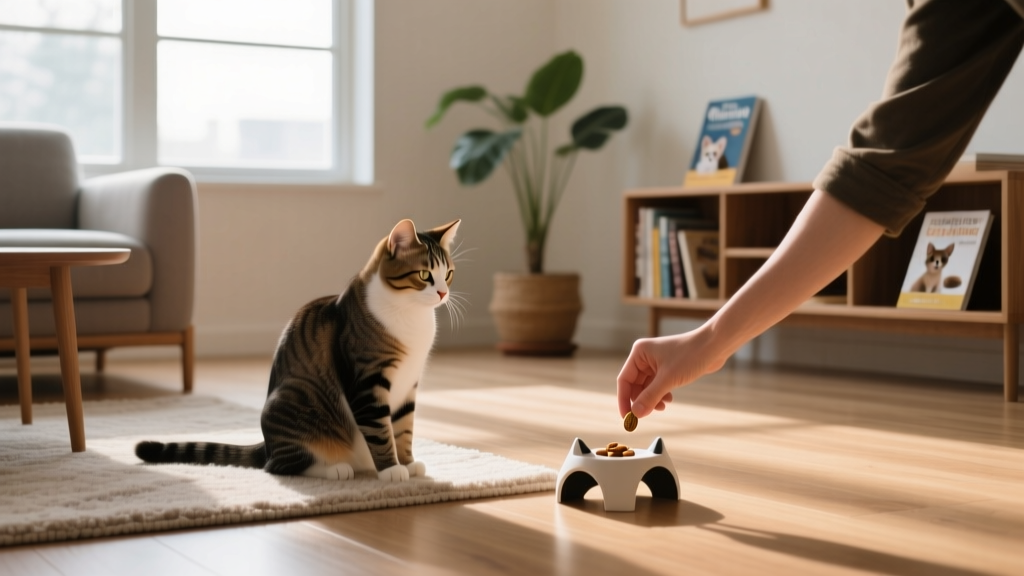
- Reward the perch: Toss a treat onto the approved spot when your cat chooses it.
- Teach a simple “place” cue: Guide your cat to the perch with a treat, then reward calm sitting. Over time, “go to your spot” becomes a useful kitchen skill.
- Avoid dramatic reactions: Yelling or frantic chasing can accidentally turn stove-jumping into a game or attention strategy.
What not to do
- Avoid foil, sticky tape, or scare tactics as a main plan. Some cats ignore them, some get stressed, and none of it teaches where you do want your cat to be.
- Never rely on “they’ll learn once it’s hot”—burns can happen quickly and can be serious.
7) Fun facts and research-y nuggets cat people love
- Cats are built for warmth: Their comfort temperature range tends to be higher than ours, which helps explain their devotion to sunbeams, radiators, and freshly used appliances.
- Heat can soothe achy joints: Older cats often seek warmth more intensely. Many veterinarians recommend gentle heat sources (used safely) to support comfort.
- Scent is part of the appeal: Cats have scent glands in their cheeks, paws, and body. When they rub or roll on “important” surfaces, they’re essentially adding their signature to the home’s scent landscape.
- Routines matter: Cats are surprisingly schedule-oriented. If “cooking time” reliably predicts attention, warmth, or snacks, your cat will show up like a tiny furry sous-chef.
FAQ: Common questions about cats and stoves
Why does my cat sit on the stove even when it’s cold?
It may still smell like cooking, and it’s also a central, elevated platform with good visibility. Some cats also prefer smooth, easy-to-clean surfaces. If the stove is a reliable “human hotspot,” your cat may hang out there simply to be near you.
Is it safe if the stove is off and cooled down?
Safer, yes—but “off” doesn’t always mean “risk-free.” A cat can step on knobs, knock things onto the surface, or jump up when a burner is still warm. Cleaning residue matters too; some foods and cleaning products are not safe to lick.
How do I stop my cat from jumping on the stove while I’m cooking?
Use a two-part strategy: prevent access in the moment (close the kitchen door, use a baby gate, or keep your cat occupied elsewhere), and train an appealing alternative (a nearby perch rewarded with treats). Consistency is what makes it stick.
Do cats sit on stoves because they’re anxious?
Sometimes, but not usually. Most stove-sitters are seeking warmth or proximity to you. Anxiety is more likely if you see tense body language, constant vigilance, hiding, startle reactions, or guarding behaviors—especially if something in the home has changed.
My cat licks the stovetop. Should I worry?
Yes, it’s worth addressing. Grease, onion/garlic residues, spices, and cleaning chemicals can all be problematic. Clean the surface promptly, block access during and after cooking, and offer enrichment or a food puzzle to satisfy the urge to “forage.”
Will a heated cat bed make the stove less interesting?
Often, yes—especially if you place it in a location that matches what your cat likes about the stove (near you, with a good view). Many cats happily choose a steady, safe heat source over a cooling stovetop once they learn it’s available.
The bottom line
Your cat isn’t trying to give you a heart attack (even if it feels personal). Sitting on the stove after cooking is usually a simple equation: warmth + interesting smells + a great vantage point + you nearby. When you meet those needs in safer ways—kitchen perches, cozy heated beds, and rewarding “approved” hangout spots—you’ll keep your cat happy and your cooking space safer.
Has your cat claimed the stove like it’s their personal throne? Share your funniest (or most nerve-wracking) kitchen supervision stories with the Cat Lovers Base community at catloversbase.com—we’d love to hear what your little chef’s assistant gets up to.