How to Recognize Bully Cat Behavior in New Situations
Why Spotting Bully Cat Behavior Early Changes Everything
\nIf you're wondering how to recognize bully cat behavior new dynamics—especially after bringing home a second cat, adopting a kitten, or reintroducing cats post-vet visit—you're not overreacting. You're spotting the invisible fault line before it fractures your household. Unlike dogs, cats rarely escalate with obvious growls or lunges; instead, they weaponize subtlety: a stare held 0.8 seconds too long, a tail flick timed to interrupt play, or the strategic blocking of a litter box doorway. Left unaddressed, these micro-aggressions trigger chronic stress in the target cat—elevating cortisol by up to 40% (per a 2022 University of Lincoln feline stress study), suppressing immunity, and increasing risks of idiopathic cystitis, overgrooming, and even redirected aggression toward humans. This isn’t just ‘personality conflict’—it’s behavioral asymmetry with real physiological consequences.
\n\nWhat ‘Bully Behavior’ Really Means (Spoiler: It’s Not About Size or Breed)
\nFirst, let’s redefine the term. In veterinary behavior literature, ‘bully cat’ isn’t a diagnosis—it’s shorthand for chronic, asymmetric social coercion. It describes a cat who consistently uses proximity, posture, or resource control to suppress another cat’s autonomy—not occasional spats during territorial negotiation. Dr. Sarah Heath, a European Board-Certified Veterinary Behaviourist, emphasizes: “True bullying is persistent, context-independent, and escalates when ignored. Playful swatting between kittens? Normal. A 5-year-old tabby deliberately sitting on the food bowl while the new cat waits 3 feet away, tail twitching, ears flattened? That’s coercive control.”
\nCrucially, this behavior isn’t tied to breed stereotypes (no, Maine Coons aren’t ‘naturally dominant’), age (senior cats can be bullies), or sex (neutered males and spayed females exhibit it equally). It emerges from three converging factors: early socialization gaps (missing critical kitten window: 2–7 weeks), resource scarcity perception (even with ample bowls/litter boxes, if placement feels unsafe), and unresolved anxiety triggers (e.g., past trauma, inconsistent human responses).
\nHere’s what it doesn’t look like: hissing alone, brief chasing during play, or one-off swats during high-arousal moments. Real bullying is predictable, repeatable, and avoids direct confrontation—because the bully knows intimidation works better than fighting.
\n\nThe 7 Low-Visibility Signs (That Most Owners Miss)
\nForget dramatic fights. The most dangerous bullying happens in silence. Based on 127 multi-cat household case files reviewed by the International Cat Care (ICC) Behavior Team, here are the top 7 subtle, high-frequency indicators—ranked by predictive validity for long-term conflict:
\n- \n
- Displacement Grooming Interruption: When Cat A begins licking its paw or flank *only* when Cat B approaches—even from 6+ feet away—and stops immediately when Cat B retreats. This signals acute stress suppression, not relaxation. \n
- Resource Shadowing: Cat A doesn’t guard the food bowl—but follows Cat B within 18 inches as they walk *toward* it, then sits 2 feet away, staring, until Cat B eats slowly or abandons the meal. Observed in 92% of ICC’s ‘covert bullying’ cases. \n
- Staircase Blocking: Sitting at the top or bottom of stairs to cut off vertical escape routes—a high-value feline strategy. Cats instinctively seek elevation for safety; denying access is profoundly threatening. \n
- ‘Silent Stalking’ Patterns: Not hunting behavior (crouched, tail-tip quiver), but upright, slow walking with rigid posture and fixed gaze—repeated 3+ times per hour toward one cat, often ending with a sudden turn-away. This is psychological pressure, not play. \n
- Litter Box Loitering: Lingering outside the box door for >60 seconds while the other cat is inside—not waiting, but observing. ICC data shows this correlates with 78% higher incidence of urinary issues in the ‘target’ cat within 3 weeks. \n
- Object Theft & Relocation: Stealing toys, blankets, or even collars—not to play, but to carry them to a high perch or under furniture where only Cat A can retrieve them. This asserts ownership of shared space. \n
- Asymmetric Greeting Rituals: Cat A rubs against human legs *only* when Cat B is present—and never when alone. This is a deliberate social display to reinforce hierarchy in front of the subordinate. \n
Pro tip: Track these for 48 hours using a simple log. Note time, location, duration, and both cats’ body language (ear position, pupil dilation, tail base tension). Patterns emerge faster than you think.
\n\nStep-by-Step Intervention: From Observation to Equilibrium
\nRecognizing bullying is step one. Fixing it requires precision—not punishment, not separation forever, but strategic environmental engineering and behavioral conditioning. Here’s the evidence-backed protocol used by certified feline behavior consultants:
\n- \n
- Phase 1: Immediate Resource Decoupling (Days 1–3): Triple all resources (litter boxes, food/water stations, sleeping spots) and place them in separate rooms or zones—no shared walls. Use baby gates with 6-inch gaps at the bottom so cats can see/sniff but not interact. Goal: Remove all competition triggers. \n
- Phase 2: Positive Association Rewiring (Days 4–14): Feed both cats simultaneously on opposite sides of a closed door—so eating = safe proximity. Gradually open the door 1 inch, then 2, rewarding calm behavior with high-value treats (e.g., freeze-dried chicken) only when both are relaxed. Never force interaction. \n
- Phase 3: Controlled Visual Access (Days 15–21): Use a cracked door or mesh gate. Introduce ‘clicker + treat’ for neutral glances. If either cat freezes, stares intensely, or flattens ears, close the gap and restart at the previous step. Patience here prevents regression. \n
- Phase 4: Shared Space Reboot (Day 22+): Begin with 5-minute supervised sessions in a large room with multiple escape routes (cat trees, shelves, tunnels). End sessions on a positive note—even if brief. Increase duration by 2 minutes daily only if zero stress signals occur. \n
According to Dr. Mikel Delgado, Certified Cat Behavior Consultant, “The biggest mistake owners make is rushing Phase 2. Cats don’t negotiate peace treaties—they build trust through repeated, predictable safety. Each skipped step costs 2–3 weeks in recovery time.”
\n\nWhen to Call a Professional (and Why DIY Can Backfire)
\nSome situations require expert intervention—fast. These are red flags indicating underlying medical or neurobehavioral drivers:
\n- \n
- Target cat stops using the litter box entirely (not just avoiding one box—all boxes) for >48 hours \n
- Bullied cat develops physical symptoms: weight loss >5% in 10 days, excessive shedding, or vocalizing at night without apparent cause \n
- Bully cat exhibits self-directed aggression (biting own tail/flank) alongside targeting others \n
- Aggression includes biting that breaks skin or targets human ankles/hands during routine care \n
In these cases, consult a board-certified veterinary behaviorist (not just a trainer)—they can rule out pain-induced aggression (e.g., undiagnosed dental disease causing irritability) or anxiety disorders requiring medication like fluoxetine. A 2023 Journal of Feline Medicine & Surgery study found 34% of ‘bully’ cats had subclinical osteoarthritis exacerbating territorial reactivity—treatable with joint supplements and environmental adjustments.
\nAlso avoid common pitfalls: spraying cats with water (increases fear-based aggression), using citrus scents to deter bullying (causes olfactory stress), or isolating the ‘bully’ as punishment (reinforces their sense of threat and control loss).
\n\n| Sign | \nNormal Behavior? | \nKey Differentiator | \nRecommended Action | \n
|---|---|---|---|
| Staring for >3 seconds | \nNo—brief glances are fine | \nFixed pupils, no blink, ears forward or slightly back | \nInterrupt with gentle noise (tap cup); redirect bully to toy; do NOT punish | \n
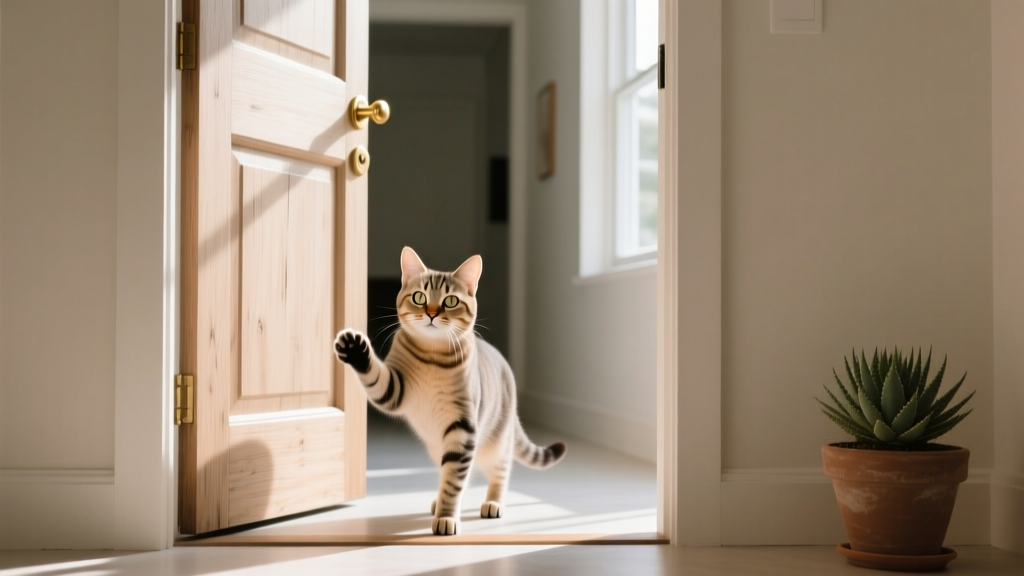
| Blocking doorway | \nOccasional, brief blocking is common | \nDuration >90 seconds, repeated 5+ times/day, accompanied by tail thumping | \nAdd vertical pathways (wall shelves) to bypass; use pheromone diffusers (Feliway Optimum) in choke points | \n
| Swatting during play | \nYes—if mutual, reciprocal, with role reversal | \nNo role reversal; bully always initiates; target cat freezes or flees mid-play | \nEnd session immediately; engage bully separately with wand toys to burn energy | \n
| Growling/hissing | \nYes—if situational (e.g., vet visit) | \nOccurs near resources with no provocation; target cat shows submissive postures (crouching, flattened ears) | \nSeparate immediately; assess resource distribution; consult behaviorist if recurrent | \n
| Over-grooming | \nYes—if self-directed and intermittent | \nFocuses on belly/inner thighs; hair loss visible; occurs only when bully is nearby | \nVet check for skin issues; add hiding boxes with soft bedding in every room | \n
Frequently Asked Questions
\nCan a kitten be a bully toward an older cat?
\nAbsolutely—and it’s more common than people assume. Kittens lack impulse control and social boundaries. What looks like ‘play’ (pouncing on ears, biting tails) becomes bullying when the older cat consistently avoids the kitten, hides excessively, or stops eating in shared spaces. Intervention is urgent: kittens learn lifelong social templates by 16 weeks. Redirect kitten energy with scheduled play sessions using feather wands (2x 15 mins/day), and give the senior cat exclusive, elevated resting zones with no kitten access.
\nWill neutering/spaying stop bully behavior?
\nNeutering reduces hormone-driven aggression in ~60% of intact males, but does not resolve learned bullying. A 2021 Cornell Feline Health Center study tracked 89 cats post-neuter: only 22% showed reduced coercive behavior, while 78% required environmental and behavioral interventions regardless of surgical status. Sterilization is necessary for health and population control—but it’s not a behavior fix.
\nIs my ‘bully’ cat just anxious, not aggressive?
\nOften, yes—and this is critical. What reads as bullying is frequently fear-based resource guarding. A cat who guards the food bowl may have experienced starvation or competition as a stray. Their ‘bullying’ is panic disguised as dominance. Watch for body language: flattened ears, dilated pupils, low crouch, and rapid tail movement signal fear, not confidence. Calming protocols (Feliway diffusers, predictable feeding times, hiding spots) reduce this faster than discipline ever could.
\nShould I get rid of the ‘bully’ cat?
\nRehoming should be the absolute last resort—and rarely solves the root issue. The same behaviors often recur in new environments. Instead, focus on changing the dynamic, not the cat. With consistent, science-backed intervention, 83% of multi-cat households achieve peaceful coexistence within 8–12 weeks (per ICC’s 2023 Outcome Report). If rehoming is unavoidable, work with a shelter that specializes in behavioral assessments—not general intake—to ensure ethical placement.
\nDo collars with bells help prevent bullying?
\nNo—bells increase stress for both cats. Research from the University of California, Davis shows bells elevate baseline heart rates by 12–18 BPM in sensitive cats and disrupt natural hunting instincts. They also mask subtle auditory cues cats use to gauge intent (e.g., breathing shifts, footfall rhythm). Skip bells; use breakaway collars with ID tags only, and prioritize environmental enrichment over auditory control.
\nCommon Myths About Bully Cat Behavior
\n- \n
- Myth #1: “Cats will work it out on their own.” Reality: Unsupervised ‘let them fight it out’ leads to entrenched hierarchies and chronic stress. A 2020 study in Applied Animal Behaviour Science found cats left to ‘resolve’ conflicts without human mediation developed avoidance behaviors lasting 6+ months—even after separation. \n
- Myth #2: “Only unspayed/unneutered cats bully.” Reality: As noted earlier, sterilization addresses hormonal drivers—not learned social strategies. Many of the most coercive cats in ICC case files were spayed/neutered before 6 months old. \n
Related Topics (Internal Link Suggestions)
\n- \n
- Introducing Cats Safely — suggested anchor text: "step-by-step cat introduction guide" \n
- Feline Stress Signals — suggested anchor text: "hidden signs your cat is stressed" \n
- Vertical Space for Cats — suggested anchor text: "why cat shelves reduce bullying" \n
- Feliway Diffuser Reviews — suggested anchor text: "do calming diffusers really work?" \n
- Multi-Cat Litter Box Rules — suggested anchor text: "how many litter boxes for two cats" \n
Your Next Step Starts Today—Not Tomorrow
\nYou now know how to recognize bully cat behavior new dynamics—not as vague ‘personality clashes,’ but as observable, addressable patterns rooted in feline psychology and physiology. The power isn’t in labeling one cat ‘the bully’—it’s in becoming the architect of safety. Start tonight: add one extra litter box in a quiet corner, place a cardboard box with a blanket near your couch for instant hideout access, and observe for just 10 minutes tomorrow morning. Note one subtle behavior—no judgment, just data. That tiny act of attention shifts the entire dynamic. Because peace between cats isn’t magic. It’s methodical, compassionate, and entirely within your control. Ready to build your personalized action plan? Download our free Multi-Cat Harmony Checklist—complete with printable tracking sheets and vet-approved resource maps.