Why Cats Sit on the Staircase Newel Post Base
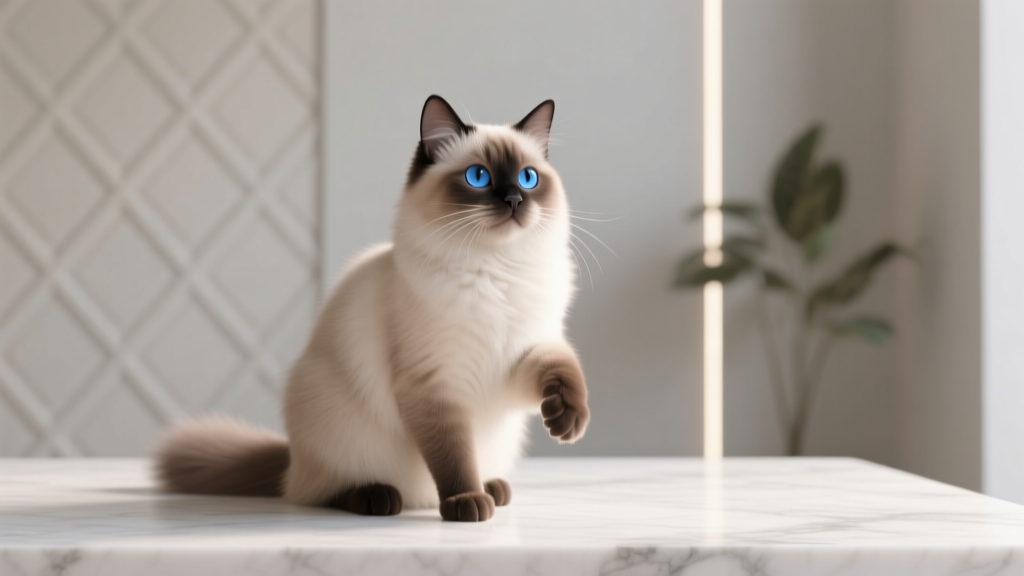
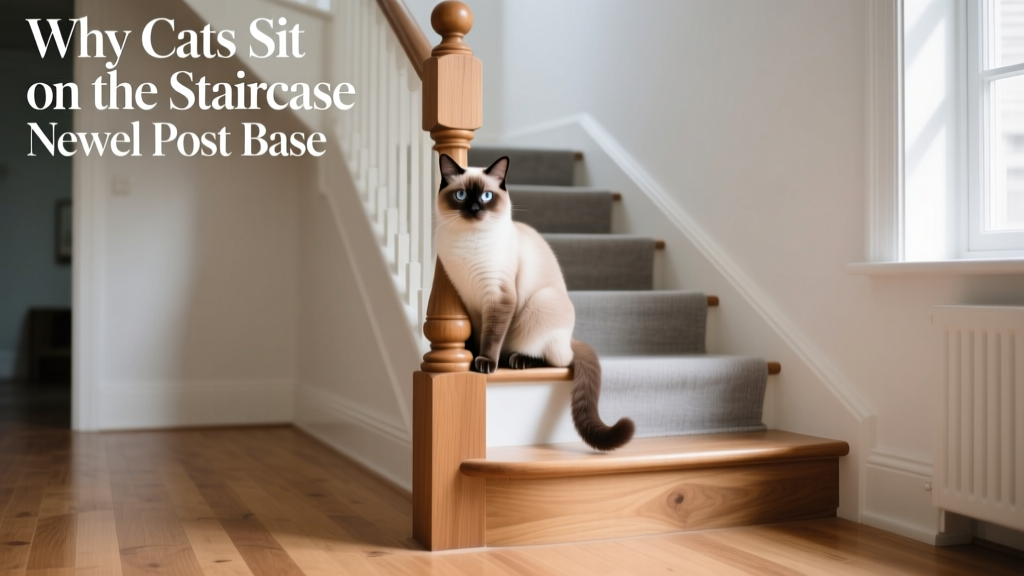
You’re headed upstairs with a laundry basket balanced on your hip, and there—like a tiny, furry statue—your cat is perched on the base of the staircase newel post. Not on the comfy bed. Not on the sunny window ledge. The newel post base, that oddly specific square of wood at the bottom (or top) of the stairs, as if they paid rent for that exact spot.
Maybe they blink at you slowly as you pass. Maybe they track every step you take like a security guard. Maybe they look mildly offended that you dared to use their staircase. If you’ve ever wondered why that spot is so magnetic, you’re not alone—and your cat isn’t being random. They’re being very cat.
1) The evolutionary and scientific “why”: height, safety, and surveillance
Cats are small predators with a prey animal’s caution. In the wild, that combination favors animals who can see threats coming, monitor movement, and retreat quickly. Stairs—and especially the newel post base—offer a mini version of a classic feline advantage: strategic positioning.
- Visibility and control: Stairs create a natural “funnel” in the home. People and pets pass through predictably. A cat sitting at the base of the newel post gets a wide view of the hallway, the stairwell, and often the main living area.
- Quick escape routes: Cats feel safer when they have options. From that spot, your cat can bolt up the stairs, slip behind the post, or dart into an adjacent room—without committing to a dead end.
- Vertical territory matters: Cats think in 3D. Even if the newel post base isn’t high, it’s connected to vertical space. It’s like sitting at the “entrance” to an elevated highway.
- Scent-marking and familiarity: Cats rely heavily on scent. The stair area holds dense household scent information—your footsteps, family traffic, possibly even the dog’s presence. That can be comforting or strategically important.
In other words: the newel post base is part lookout tower, part information hub, part comfort zone.
2) A detailed breakdown: different contexts that make the newel post base irresistible
Same perch, different motivations. Here are the most common scenarios I see as a behavior-focused cat writer (and long-time observer of cats doing inexplicable things with great confidence).
They’re “guarding the route” during busy household times
When your home is active—kids moving, dinner happening, packages arriving—cats often choose spots that let them watch without participating. The newel post base is perfect for this. Your cat can supervise, decide who’s safe, and keep tabs on exits.
What it looks like: Upright sitting, ears swiveling, eyes following movement, tail wrapped neatly or flicking occasionally.
They’re waiting for you (or someone else)
Cats learn patterns fast. If you typically come downstairs at 7:15 a.m., or a family member arrives at a certain time, the stair area becomes a “meeting point.” Your cat may post up there to intercept you for breakfast, attention, or a hallway escort.
What it looks like: Sitting and staring at the stairs, meowing when you appear, weaving around your ankles the moment you step down.
They’re claiming a social “checkpoint” in a multi-pet home
In cat politics, location is power. In homes with multiple cats (or a cat and dog), controlling a pathway can be a way to feel secure. Stairs are a major route. The newel post base can become a low-key “toll booth” where your cat watches who goes where.
What it looks like: One cat stationed there often, others hesitating or choosing alternate paths, subtle staring contests, occasional blocking.
They like the texture and temperature
Not glamorous, but real: cats are picky about surfaces. The base may be smooth, cool, slightly elevated, and stable. Some cats prefer hard surfaces when they’re warm; others like the way wood holds a certain temperature compared to carpet.
What it looks like: Loaf position, half-closed eyes, “do not disturb” vibe.
They enjoy the “corner advantage”
Cats often choose spots where they can keep their back protected. A newel post base offers a solid structure at their side or behind them. It reduces the number of directions they need to watch, which lowers stress.
What it looks like: Leaning slightly against the post, relaxed posture, slow blinking.
3) What it means about your cat’s mood and feelings
The posture tells the story. Here’s a quick translation guide for the most common “newel post sits.”
- Relaxed loaf (paws tucked, soft face): Your cat feels safe and comfortable there. It’s a trusted rest stop.
- Upright sit, calm tail: Quietly alert—curious, watching, but not worried. Think: “I’m monitoring my kingdom.”
- Tail tip twitching, ears rotating fast: Stimulated or mildly conflicted. They may be intrigued by movement, scents, or another pet.
- Stiff body, crouched posture, intense stare: Tension. This can show guarding behavior, fear, or brewing conflict with another animal.
- Meowing or chirping from the base: Social motivation. They’re calling you over, asking for something, or announcing, “I’m here.”
Most of the time, this is a sign your cat feels secure enough to “hang out” in a high-traffic spot. That’s actually a compliment.
4) Related behaviors you might also notice
If your cat loves the newel post base, you may also see other classic “strategic positioning” behaviors:
- Perching on stair landings like they’re a bouncer at an exclusive club.
- Sitting in doorways (especially partially in the way) to track who comes and goes.
- Following you to the stairs and stopping there, as if escorting you is their job but climbing is optional.
- Rubbing cheeks on the post to leave friendly facial pheromones—cat graffiti that says, “This is familiar and safe.”
- Zoomies that start on the stairs because stairs add traction, speed, and drama.
5) When sitting on the newel post base is normal vs. a concern
In most homes, this is harmless and adorable. Still, there are a few situations where it’s worth paying closer attention.
Normal (and very typical)
- Your cat sits there occasionally or at predictable times.
- They move easily when asked or when you approach.
- Body language is loose and calm.
- No signs of conflict with other pets.
Potential concern
- Resource guarding/path blocking: If your cat uses the spot to intimidate another cat (staring, blocking, swatting), it can increase stress and lead to litter box issues or fights.
- Sudden new behavior: If they never used to sit there and now they do it constantly—especially if paired with hiding or clinginess—consider stressors (new pet, construction noises, schedule changes).
- Signs of pain: If your cat sits at the base but avoids going up/down, hesitates, or seems stiff, it could be arthritis or injury. Stairs are revealing: cats may “camp” near them rather than navigate them if climbing hurts.
- Obsessive vigilance: A cat who appears constantly on-edge at that post may be responding to outdoor cats visible through windows, or to tension with another pet.
If you notice pain signs, a veterinary check is the right next step. If it looks like stress or conflict, a behavior plan can help—often with surprisingly small changes.
6) Tips for responding to (or encouraging) the behavior
You don’t need to “fix” this habit. But you can make it safer, more harmonious, and more enriching.
Make it safe for everyone’s ankles
- Teach a gentle “move” cue: Use a treat toss a few feet away so your cat learns stepping aside is rewarding, not a battle of wills.
- Mind the slip risk: If the area is slick wood and your cat launches into surprise figure-eights, consider a runner rug or grip-friendly mat near the base (cat-safe, no loose threads).
Offer alternative lookout spots
If the newel post base becomes a conflict zone, create “approved” observation stations:
- A cat tree positioned with a view of the stairs
- A wall shelf or window perch in the same general area
- A small bench or sturdy ottoman nearby
More vertical options often reduce tension because no single spot has to carry all the social power.
Support social comfort in multi-cat homes
- Add multiple routes: If possible, keep adjacent doors open so cats can bypass the stair “checkpoint.”
- Use scent to smooth edges: Regular gentle brushing and swapping bedding can help group scent feel more cohesive.
- Reward peaceful co-existence: If two cats pass without drama, quietly reinforce with treats or play later. Cats learn what “works” in a household.
Channel the “hall monitor” energy
If your cat sits there because it’s interesting, make it pleasantly interesting:
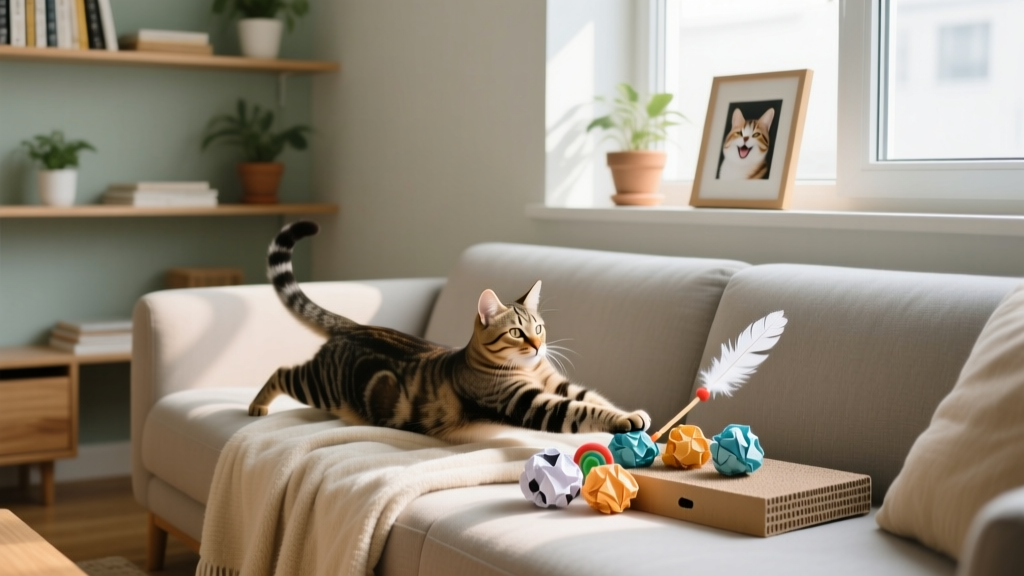
- A short wand-toy session at the base (then end with a treat)
- A treat puzzle placed a few feet away to prevent underfoot ambushes
- Scatter feeding up and down the first few steps (if safe) for mental stimulation
7) Fun facts and research-flavored nuggets
- Cats map territory by pathways: In many homes, cats develop “patrol routes” that include chokepoints like hallways and stairs. The newel post base is a natural waypoint.
- Facial rubbing is chemical communication: When your cat rubs the post, they’re depositing pheromones from glands around the cheeks and lips. It’s a calming, familiar “label.”
- Slow blinking is social bonding: If your cat slow-blinks at you from that spot, they’re signaling comfort and friendliness. You can slow-blink back—yes, it really can strengthen trust.
- Stairs amplify sound and scent: Air currents and acoustics around stairwells can make them information-rich. For a creature tuned into tiny noises, it’s like sitting next to a news station.
FAQ: Common questions about cats and the newel post base
1) Why does my cat sit there and stare at me?
Often they’re monitoring your movement (normal feline curiosity) or waiting for a routine event—breakfast, play, bedtime. If the stare is soft and their body is relaxed, it’s affectionate supervision. If it’s stiff and intense, check for tension with other pets or overstimulation.
2) Is my cat guarding the stairs?
Sometimes, yes—especially in multi-cat homes. Guarding looks like blocking, staring down another cat, swatting, or making the other pet take a longer route. If everyone still moves freely and there’s no intimidation, it’s likely just a favorite perch.
3) My cat meows from the newel post base. What are they asking for?
Common requests: attention, food, play, or for you to follow them somewhere. Cats also meow more in “high-traffic communication zones” because it works—they’ve learned you notice them there.
4) Why does my cat rub their face on the post?
That’s scent-marking with friendly facial pheromones. It’s usually a sign of comfort and ownership in a positive way: “This place is part of my safe home.”
5) Should I discourage my cat from sitting there because I might trip?
If your cat is underfoot, yes—manage it gently. Don’t scare them off. Instead, teach a treat-toss “move” routine and provide a nearby alternative perch. You want safety without turning the stairs into a stress zone.
6) My older cat sits at the bottom of the stairs and won’t go up anymore. Is that related?
It can be. Some cats camp near the stairs when they want to be close to family but climbing hurts. If you notice stiffness, hesitancy, or changes in jumping, schedule a vet visit to discuss arthritis or pain management options.
One last thought
That newel post base isn’t just a random square of wood to your cat. It’s a lookout, a meeting point, a scent bulletin board, and sometimes a tiny throne. When you start seeing your home the way your cat does—full of pathways, vantage points, and “important corners”—their quirky habits feel a lot more logical (and a lot more charming).
Does your cat have a favorite “weirdly specific” spot like the newel post base? Share your story (and your best stair-sitting photos) with the Cat Lovers Base community at catloversbase.com—we love comparing notes on our cats’ funniest household headquarters.