Why Cats Sit on the Stair Landing Window Seat
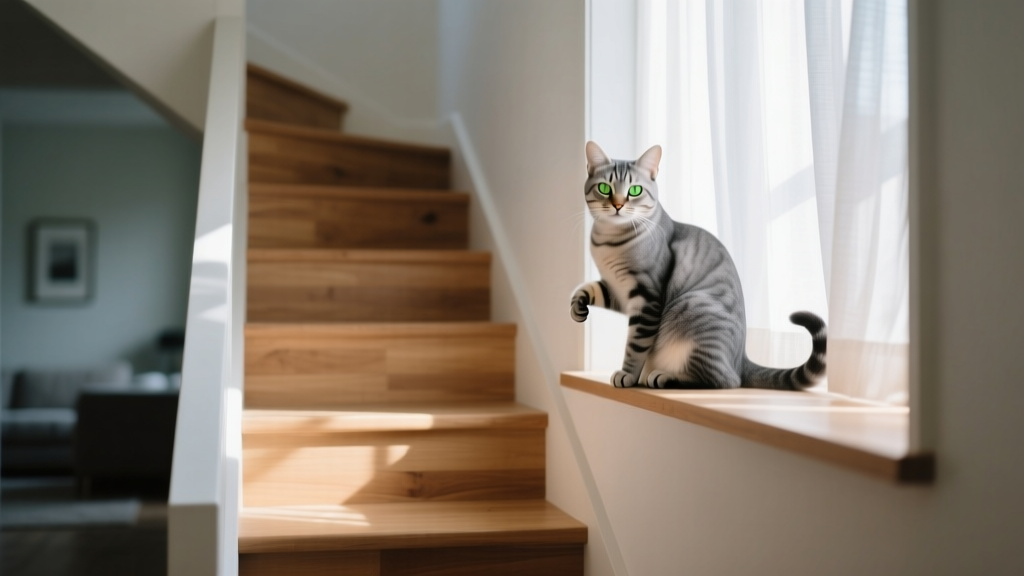
You’re carrying laundry up the stairs, half-distracted, when you notice your cat—again—perched on the stair landing window seat like a tiny, furry lighthouse keeper. They’re not exactly asleep, not exactly alert. Their eyes are half-lidded, ears swiveling like satellite dishes, tail tucked neatly around their paws. Every so often, they blink slowly at you as you pass… then return to watching the world as if they’re on official neighborhood patrol.
If your cat has claimed that awkward little mid-stair spot as their personal throne, you’re not alone. Stair landing window seats are prime feline real estate, and cats choose them for reasons that make perfect sense once you look at the world through cat eyes: safety, strategy, comfort, and a little bit of “I live here too.”
The Evolutionary Logic: Why That Spot Feels So Right
Cats are both predators and prey in evolutionary terms. Even the most pampered indoor cat still carries the instincts of a small hunter who needs to see threats, hear movement, and control access to their space. A stair landing window seat checks a surprising number of instinctual boxes:
- Height equals advantage. Elevation gives cats a better vantage point to scan for movement—birds outside, people inside, and anything that might surprise them. In nature, higher ground often means earlier warning and better escape options.
- One-way traffic control. Stairs naturally funnel movement. A cat sitting on a landing can monitor who is going up, who is going down, and whether a pesky dog (or sibling cat) is approaching.
- Light and warmth. Windows offer sunbeams and warmer air. Cats are heat-seeking creatures; their comfort zone often overlaps with “the warmest patch in the house.”
- Safety with visibility. That half-enclosed landing spot often has walls on two sides. Cats love to observe without feeling exposed—think “hidden lookout post.”
In other words: it’s not random. Your cat is choosing a location that combines surveillance, comfort, and control—three things cats value deeply.
What’s Really Going On? A Context-by-Context Breakdown
Not every stair landing sit is the same. The meaning shifts depending on what’s happening around them, what time it is, and who else lives in the home. Here are some common “versions” of the behavior.
1) The Neighborhood Watch Shift
If your cat sits facing the window, tracking squirrels like they’re starring in a nature documentary, they’re engaging in visual enrichment. Indoor cats need stimulation, and a window seat is essentially live TV.
What it looks like: Tail tip twitching, focused stare, occasional chirps or “ek-ek-ek” noises, ears forward.
What it means: Mentally engaged, mildly excited, often content.
2) The Household Traffic Controller
Some cats face inward, not outward—watching the stairs, the hallway, the kitchen doorway. This is about managing social space.
What it looks like: Upright posture, calm but attentive, ears rotating, head turning as people pass.
What it means: “I’m keeping tabs.” This can be confidence, curiosity, or sometimes mild insecurity (especially in multi-pet homes).
3) The Strategic Nap Spot
Many cats nap on the landing because it’s warm, quiet, and elevated. Cats prefer sleep locations where they won’t be startled easily—and where they can wake up and assess their surroundings quickly.
What it looks like: Loaf position, paws tucked, eyes closed but ears still responsive, slow breathing.
What it means: Relaxation with a built-in security system.
4) The “Greeting Station” (Yes, They’re Waiting for You)
If your cat regularly appears on the landing around the time you come home, or when you go upstairs at night, that spot may function as a predictable meeting point.
What it looks like: Perking up when they hear you, tail up, slow blinking, rubbing on your legs as you pass (careful on the stairs!).
What it means: Social connection. Cats often use routines and locations to create “safe interactions.”
5) The Multi-Cat Negotiation Zone
In homes with more than one cat, stair landings can become socially significant. It’s a narrow passage, a shared resource, and a place to negotiate who has right-of-way.
What it looks like: One cat “posts up” while another hesitates below, subtle staring, body angled sideways, occasional blocking without overt aggression.
What it means: Resource management. Sometimes it’s playful; sometimes it’s tension.
What It Says About Your Cat’s Mood and Feelings
The location is only half the story. Your cat’s body language tells you whether the stair landing window seat is a happy place, a watchful place, or a stressed place.
- Relaxed and content: Loose body, slow blinks, soft face, paws tucked, tail resting still.
- Curious and engaged: Ears forward, alert posture, tail tip twitching, tracking movement smoothly.
- On guard (mildly anxious): Stiff posture, ears swiveling fast, wide eyes, body pressed low, quick head turns at small sounds.
- Irritated or defensive: Tail flicking strongly, ears angled sideways or back, tense shoulders, hard stare when someone approaches.
Many cats pick that spot because it helps them feel in control. Control is comfort to a cat. If your cat has recently experienced changes—new pet, new baby, loud renovations, visitors—posting up at the stair landing may be their way of re-establishing predictability.
Related Behaviors You Might Also Notice
If your cat loves the stair landing window seat, you may see other “vantage point” behaviors that follow the same logic:
- Sitting on the back of the couch like a fuzzy gargoyle, watching the room.
- Perching on cat trees or high shelves (especially near doorways).
- Following you halfway up the stairs and stopping—monitoring without fully committing.
- Blocking hallways at pinch points (not always dominance; often simply a preferred observation spot).
- Window patrol routines—moving from one window to the next at certain times of day.
These behaviors are part of a cat’s natural “security and hunting circuit.” They check their territory and keep tabs on what changes.
When It’s Normal… and When It Might Be a Concern
In most homes, stair landing window sitting is perfectly normal and even healthy. It’s enrichment, routine, and relaxation. But there are a few scenarios where it’s worth looking closer.
Normal
- Your cat looks relaxed and moves easily when they choose to.
- They still eat, drink, play, and use the litter box normally.
- They alternate spots around the house and aren’t “stuck” there.
- They’re simply enjoying sun, views, and household activity.
Potential concerns
- Sudden fixation on the spot along with hiding more elsewhere—could indicate stress.
- Blocking behavior escalates (staring, swatting, ambushing) in multi-cat homes—could be resource tension.
- Your cat seems restless, hypervigilant, or startled at normal sounds—may point to anxiety.
- They avoid going up or down stairs or seem hesitant, stiff, or painful—consider arthritis or injury (especially in older cats).
- Increased vocalizing at the window with agitation—could be frustration or stress triggered by outdoor cats.
If you notice pain signs (reluctance to jump, stiffness, changes in grooming, litter box accidents), a vet check is a smart next step. Behavior and physical comfort are tightly linked.
How to Respond (and How to Encourage It in a Cat-Friendly Way)
If your cat loves that spot, you can use it to deepen trust and improve daily life—without accidentally turning it into a stress hotspot.
1) Make the seat comfortable and stable
Add a non-slip mat or a fitted cushion so the surface feels secure. Cats dislike wobble. If it’s a narrow ledge, consider a purpose-built window perch or a small shelf-style bed attached safely.
2) Respect the “lookout” function
If your cat is in watch mode, avoid looming over them or scooping them up. A gentle pass-by with a slow blink is often the most polite cat-to-human communication.
3) Reduce conflict at pinch points
In multi-cat homes, stair landings can become choke points. Provide alternate routes or additional perches so no one has to “run the gauntlet.” Even adding a cat tree in a different area can diffuse tension by increasing vertical territory.
4) Turn window sitting into enrichment
- Place a bird feeder outside (at a safe distance) for “cat TV.”
- Rotate toys nearby for quick play sessions when your cat is alert.
- Use occasional treat scatters on the seat to create positive associations—especially if the stairs have become stressful.
5) Keep it safe on the stairs
If your cat tends to sprawl where feet land, consider gently training a “station” slightly off the main step. Reward them for sitting on the window seat rather than the edge of a tread. Your shins will thank you.
Fun Facts and Research Nuggets
- Cats prefer elevated resting spots because height provides both safety and information. Studies on feline environmental preferences consistently show that vertical space reduces stress, especially in multi-cat settings.
- A cat’s territory is three-dimensional. When we think “floor plan,” cats think “climb plan.” A stair landing is valuable because it connects levels—like a natural observation deck.
- Windows are high-value enrichment. For indoor cats, watching outdoor activity can reduce boredom. (If it triggers frustration—like seeing outdoor cats—window film or controlled access can help.)
- Cats nap lightly in exposed areas. That half-awake posture you see on the landing is a normal feline sleep strategy: rest while staying ready to respond.
FAQ: Common Questions About Stair Landing Window Cats
1) Why does my cat sit there when I go up or down the stairs?
That spot is a natural checkpoint. Your cat may be greeting you, monitoring movement, or simply enjoying the predictability of your routine. If their body language is relaxed—tail up, slow blink—it’s often affectionate and social.
2) Is my cat guarding the stairs?
Sometimes. “Guarding” can mean calmly overseeing the household, or it can mean blocking in a tense way. If other pets hesitate, there’s staring, or swats happen, the landing may be a resource your cat is controlling. Adding more perches and improving resource distribution (multiple food/water/litter areas) often helps.
3) Why does my cat choose the stairs instead of a comfy bed?
Comfort isn’t just softness—it’s also security and visibility. Many cats prefer a firm, elevated place where they can watch and rest without being surprised.
4) My cat chirps at the window from the landing. What does that mean?
Chirping is common when cats watch birds or small animals. It’s usually excitement and hunting frustration mixed together—your cat’s predator brain is engaged, but they can’t chase.
5) Should I move my cat if they sit there?
If they’re in a dangerous spot where someone could trip, yes—gently. Lure them to the window seat with a treat or toy rather than pushing. If they’re safely perched on the landing seat, it’s usually best to let them enjoy their lookout.
6) My older cat suddenly started camping on the landing. Why now?
It could be a new preference (more sun, quieter space), but sudden behavior changes in senior cats can also relate to comfort, vision/hearing changes, or joint pain. If you also see stiffness, less jumping, or irritability, consider a vet visit and add softer, easier-access resting spots.
A Final Thought: Your Cat’s Stair Landing “Office”
When a cat chooses the stair landing window seat, they’re often doing something beautifully feline: combining rest with observation, comfort with control, and solitude with connection. It’s a tiny reminder that your home isn’t just a place to live—it’s a territory to understand, map, and peacefully manage.
Does your cat sit on the stair landing like they’re on duty? Tell us about their favorite lookout spot (and their funniest “window commentary”) over at catloversbase.com—we’d love to hear your cat’s quirks.