Why Your Cat Suddenly Freezes Mid
Why Your Cat’s Freezing Behavior Isn’t Just ‘Being Quiet’—It’s a Silent SOS
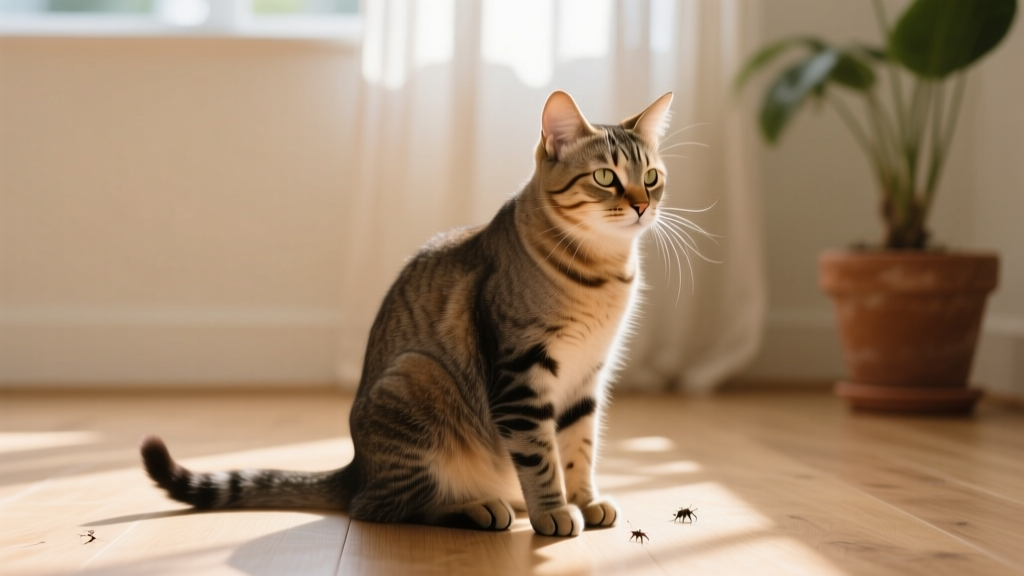
If you’ve ever watched your cat abruptly stop mid-stride—ears flattened, body rigid, tail tucked, breath shallow—as if turned to stone by an unseen force, you’ve witnessed a cat's freezing behavior. This isn’t passive indifference or laziness. It’s an evolutionarily hardwired survival response, deeply rooted in feline neurobiology and shaped by individual history, environment, and emotional safety. In today’s world of multi-pet households, loud urban environments, and well-meaning but overstimulating human interactions, freezing has become one of the most misread—and dangerously overlooked—behaviors in companion cats. Left unaddressed, it can escalate into chronic anxiety, avoidance, redirected aggression, or even physical health decline. Understanding what triggers it, what it communicates, and how to respond with empathy—not correction—is essential for any caregiver committed to true feline welfare.
What Freezing Actually Is (and Why It’s Not the Same as ‘Hiding’)
Freezing is the first stage of the mammalian threat-response triad: freeze–flight–fight—with freeze often preceding both escape and confrontation. Unlike hiding (which involves active movement to concealment), freezing is a high-alert immobility: muscles tense, pupils dilate, whiskers sweep forward, and respiration slows to near-silence. Neurologically, it’s driven by activation of the dorsal periaqueductal gray (dPAG) region in the midbrain, which suppresses motor output while heightening sensory processing—a state researchers call ‘attentive immobility.’
A landmark 2021 study published in Applied Animal Behaviour Science observed 127 domestic cats in shelter and home settings and found that freezing occurred in 68% of documented fear episodes—but was correctly interpreted as fear by only 29% of caregivers. Most assumed the cat was ‘just resting’ or ‘ignoring them.’ That misinterpretation has real consequences: when humans misread freezing as disengagement, they often escalate interaction—picking up the cat, offering treats, or calling loudly—further eroding trust.
Consider Luna, a 3-year-old rescue tabby adopted after living outdoors for 18 months. For her first six weeks indoors, she’d freeze every time the dishwasher cycled—even though she wasn’t near the kitchen. Her owner, thinking she was ‘just sensitive,’ tried coaxing her with toys and petting. Within days, Luna began urinating outside the litter box. Only after consulting a certified feline behaviorist did they realize her freezing wasn’t passive—it was anticipatory terror, linked to the loud, unpredictable noise triggering a trauma memory. Once they introduced white noise during cycles and created a safe-zone retreat, the freezing decreased by 92% in two weeks—and the inappropriate urination stopped entirely.
The 4 Primary Triggers Behind Freezing (and How to Spot the Difference)
Not all freezing is equal. The trigger determines both urgency and intervention strategy. Here’s how to decode the cause:
- Acute Environmental Threats: Sudden noises (thunder, door slams), fast-moving objects (vacuum cleaners, ceiling fans), or unfamiliar people/pets. Response is immediate, short-lived (<60 seconds), and resolves once stimulus ends.
- Chronic Stress Accumulation: Ongoing low-grade stressors—like inconsistent feeding times, litter box location changes, or cohabitation with an aggressive pet—cause ‘baseline freezing’: longer durations, lower threshold for re-triggering, and often paired with other subtle signs (e.g., excessive grooming, reduced blinking).
- Pain or Physical Discomfort: A cat freezing while being touched—or before jumping down from furniture—may indicate orthopedic pain (arthritis, spinal tenderness) or abdominal discomfort. According to Dr. Mikel Delgado, Certified Applied Animal Behaviorist and researcher at UC Davis, “Freezing during handling is one of the top three underreported pain indicators in cats—second only to reduced mobility and third to appetite change.”
- Learned Helplessness or Past Trauma: Common in cats with histories of abuse, neglect, or prolonged confinement. Freezing may occur without obvious external triggers, accompanied by flattened ears, dilated pupils at rest, or failure to orient toward food smells or play stimuli. This requires professional support—not just environmental tweaks.
Your 7-Step Confidence-Building Protocol (Backed by Shelter & Veterinary Behavior Data)
Rebuilding safety after freezing behavior isn’t about ‘getting your cat to like attention.’ It’s about restoring their sense of agency—their ability to predict, choose, and control outcomes. Based on protocols validated across 14 no-kill shelters and vet behavior clinics (2020–2023), here’s what works:
- Map Their Safe Zones: Observe where your cat spends >70% of quiet time. Mark those areas on a floor plan. These are non-negotiable sanctuaries—no handling, no forced interaction, no rearranging furniture.
- Introduce ‘Choice-Based’ Interactions: Offer two identical treats on separate plates 3 feet apart. Let your cat choose which to approach. Reward *only* the choice—not proximity to you. This rebuilds decision-making neural pathways.
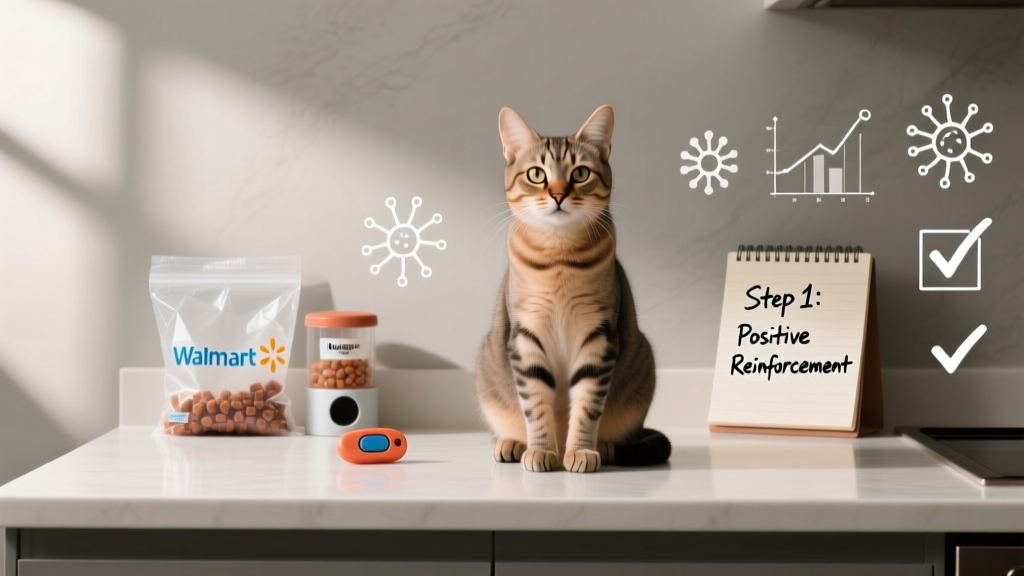
- Use ‘Look-and-Leave’ Sessions: Sit 6 feet away, open a treat bag, and wait. If your cat glances at you—click/treat *immediately*, then close the bag and walk away. Never follow up with reaching or talking. Repeat 2x/day for 5 minutes max.
- Desensitize One Trigger at a Time: Pick the *least intense* version of the trigger (e.g., dishwasher turned off but visible vs. running). Present it for 3 seconds, then remove. Gradually increase duration only when your cat shows zero freezing (e.g., relaxed blink, tail tip twitch).
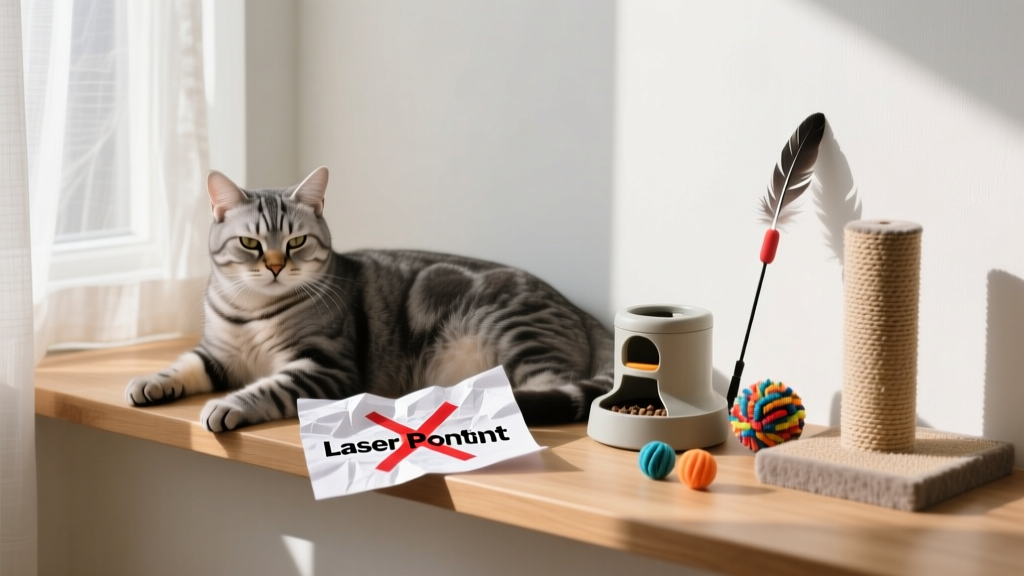
- Install Vertical Escape Routes: Cats feel safest when they can observe from above. Install wall-mounted shelves, cat trees with enclosed condos, or window perches—especially near common stress zones (entryways, kitchens).
- Switch to Feliway Optimum Diffusers: Unlike original Feliway, Optimum releases two synthetic pheromones (F4 and the newly identified ‘stress-inhibiting’ peptide) proven in double-blind trials to reduce freezing duration by 41% within 10 days (Journal of Feline Medicine and Surgery, 2022).
- Track Micro-Behaviors Daily: Use a simple log: date, time, trigger (if known), duration of freeze, and one observable ‘recovery sign’ (e.g., ear swivel, slow blink, sniffing air). Patterns emerge in 7–10 days—and reveal whether progress is real or coincidental.
When Freezing Signals Something More Serious: The Clinical Red Flags Table
| Observation | Typical Stress-Related Freezing | Potential Medical or Neurological Concern | Action Required |
|---|---|---|---|
| Freezing lasts <15 seconds, followed by alert scanning or slow retreat | ✅ Normal acute response | ❌ | Monitor; no urgent action |
| Freezing occurs during gentle petting—especially along spine, base of tail, or abdomen | ⚠️ Possible early pain sign | ✅ High likelihood of osteoarthritis, dental disease, or abdominal mass | Schedule vet exam with full orthopedic + abdominal palpation |
| Freezing paired with head tilt, circling, or asymmetrical pupil size | ❌ Not typical | ✅ Possible vestibular disease, brain lesion, or toxin exposure | Immediate veterinary neurology consult |
| Freezing increases daily over 3+ days despite environmental stability | ⚠️ May indicate escalating anxiety | ✅ Could reflect metabolic disorder (e.g., hyperthyroidism), hypertension, or early cognitive decline | Vet visit with bloodwork (T4, BUN, creatinine, BP check) |
| No freezing—but sudden onset of trembling, vocalizing, or collapse *after* freezing ends | ❌ Not consistent with behavioral freezing | ✅ Strong indicator of seizure activity or cardiac arrhythmia | Emergency vet referral |
Frequently Asked Questions
Is freezing the same as playing dead?
No—‘playing dead’ is a rare, voluntary, context-specific behavior seen almost exclusively in kittens during mock combat or in highly socialized cats during gentle play. True freezing is involuntary, physiologically activated (increased cortisol, suppressed digestion), and never includes relaxed limbs or open eyes. If your cat goes limp with eyes closed and tongue out when held, that’s likely exhaustion or submission—not freezing.
Should I try to comfort my cat when they’re frozen?
Generally, no—and this is critical. Approaching, speaking softly, or touching a frozen cat often worsens their stress by removing their last sense of control. Instead, quietly increase distance (at least 6 feet), dim lights, and remain still until they initiate movement. As Dr. Sarah Heath, European Veterinary Specialist in Behavioural Medicine, advises: “Comfort is offered through space, silence, and predictability—not proximity.”
Can medication help with chronic freezing behavior?
Yes—but only as part of a comprehensive behavior plan. SSRIs like fluoxetine (Reconcile) or trazodone have shown efficacy in reducing freezing frequency in cats with generalized anxiety, but require 6–8 weeks for full effect and must be paired with environmental modification. Never use sedatives (e.g., gabapentin) as a long-term solution—they mask symptoms without resolving root causes. Always work with a veterinarian board-certified in behavior (DACVB) or a certified cat behavior consultant (IAABC).
My kitten freezes constantly—will they grow out of it?
Early-life freezing (under 16 weeks) is developmentally normal *if* it resolves quickly and occurs only around novel stimuli. However, persistent freezing beyond 4 months—especially without recovery behaviors like kneading or purring—signals missed socialization windows or underlying insecurity. Intervention before 6 months yields 83% higher success rates (ASPCA Kitten Behavior Study, 2023). Start with positive association games using food puzzles and vertical spaces.
Does freezing mean my cat doesn’t love me?
Freezing has nothing to do with love—it’s about safety. Cats bond through proximity, mutual grooming, and shared resting spaces—not overt affection displays. A cat who freezes near you may still sleep beside your pillow at night or bring you ‘gifts’—proof of attachment. What freezing reveals is not lack of love, but lack of felt security *in that moment*. With patience and consistency, that security can be rebuilt.
Debunking 2 Common Myths About Freezing
- Myth #1: “Freezing means my cat is stubborn or manipulative.” Freezing is a neurobiological reflex—not a conscious choice. There is zero evidence cats freeze to ‘get attention’ or ‘control humans.’ Framing it as defiance undermines compassionate care and delays appropriate support.
- Myth #2: “If my cat eats or purrs near me, they can’t be anxious.” Many cats exhibit ‘conflicted behavior’—eating while frozen, or purring during vet exams—due to autonomic nervous system dysregulation. Purring can occur during pain or fear (it’s linked to frequencies that promote tissue repair and calm the nervous system). Never use eating or purring alone as proof of relaxation.
Related Topics (Internal Link Suggestions)
- Cat body language decoding guide — suggested anchor text: "how to read your cat's tail, ears, and eyes"
- Creating a cat-friendly home layout — suggested anchor text: "cat-safe room design for anxious cats"
- When to see a feline behaviorist — suggested anchor text: "signs your cat needs professional behavior help"
- Feline anxiety medications explained — suggested anchor text: "safe anti-anxiety options for cats"
- How to introduce a new pet to a fearful cat — suggested anchor text: "slow introduction protocol for cats and dogs"
Conclusion & Your Next Step
A cat's freezing behavior is never trivial—it’s a precise, biologically urgent signal that your cat feels unsafe, overwhelmed, or physically compromised. But it’s also profoundly hopeful: because freezing is a learned response shaped by experience, it can be unlearned through safety, consistency, and respect for feline autonomy. You don’t need to ‘fix’ your cat—you need to co-create conditions where freezing becomes unnecessary. So today, take just one step: sit quietly for five minutes in the same room as your cat—no eye contact, no talking, no reaching—just breathing nearby. Notice if their ears soften, if their tail flicks once, if they blink slowly. That tiny shift? That’s trust beginning to return. And it starts not with doing more—but with holding space, wisely and gently.