Why Cats Sit on the Patio Umbrella Base
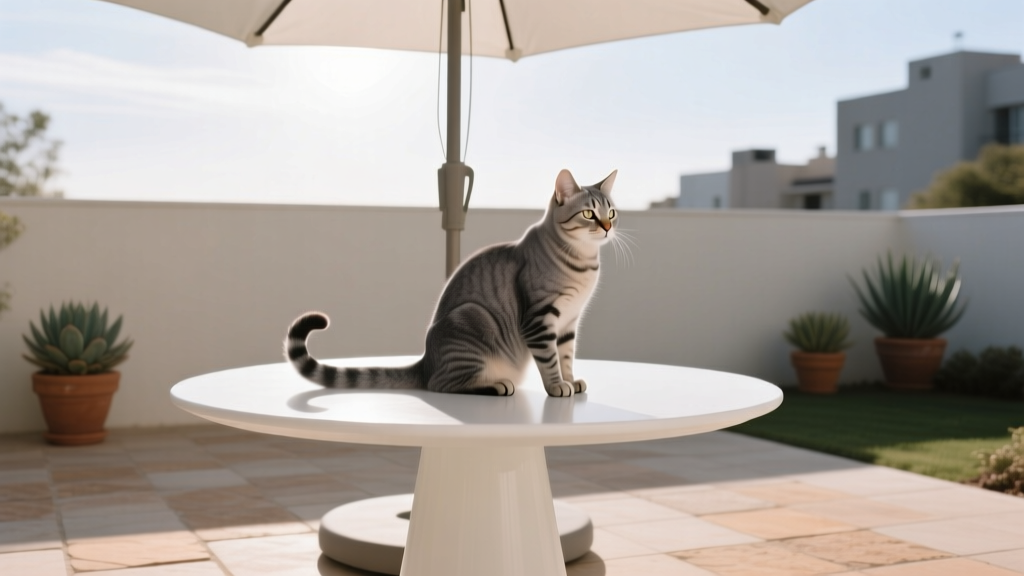
You step outside with your coffee, ready for a peaceful moment. The patio umbrella is already up, the chair cushions are in place… and your cat is perched like royalty on the heavy umbrella base. Not the chair. Not the sunny patch two feet away. The base. They’re loafed up, eyes half-closed, looking deeply satisfied—like they personally installed that thing.
If you’ve ever wondered why your cat chooses this oddly specific “seat,” you’re not alone. The umbrella base hits a surprising number of feline checkboxes: safety, scent, warmth, territory, and even social strategy. And once you understand what it offers your cat, the choice starts to look less random and more… brilliant.
The Scientific (and Evolutionary) Reasons Cats Love Umbrella Bases
Cats are small predators with a “dual identity”: they hunt, but they’re also prey-sized for larger animals. That creates a constant, low-level instinct to pick resting spots that balance comfort with security. In the wild, a smart resting location is:
- Stable and predictable (not wobbly, not moving)
- Defensible (hard for something to sneak up unnoticed)
- Strategically placed (good view, quick escape routes)
- Scent-friendly (a place they can “own” through smell)
A patio umbrella base checks these boxes better than many outdoor furniture options. It’s heavy, usually positioned in an open area with clear sightlines, and often close to human activity—meaning it’s also socially important. Add in the fact that many bases absorb heat and hold familiar scents, and you’ve got a prime feline lounge.
What Your Cat Is Getting Out of That Spot (Context Matters)
Not all umbrella-base sitting is the same. The “why” can change depending on weather, location, and what else is happening around them.
1) The “Warm Rock” Effect
If your umbrella base is metal, stone, or dark resin, it may act like a heat battery. In the sun, it warms up; later, it slowly releases that warmth. Cats are heat seekers by nature—many prefer ambient temperatures higher than humans do. Your cat may be using it like a heated bed you didn’t know you owned.
What it looks like: A relaxed loaf, paws tucked, slow blinks, maybe switching sides as the sun moves.
2) A Safe Vantage Point (Yes, Even If It’s Low)
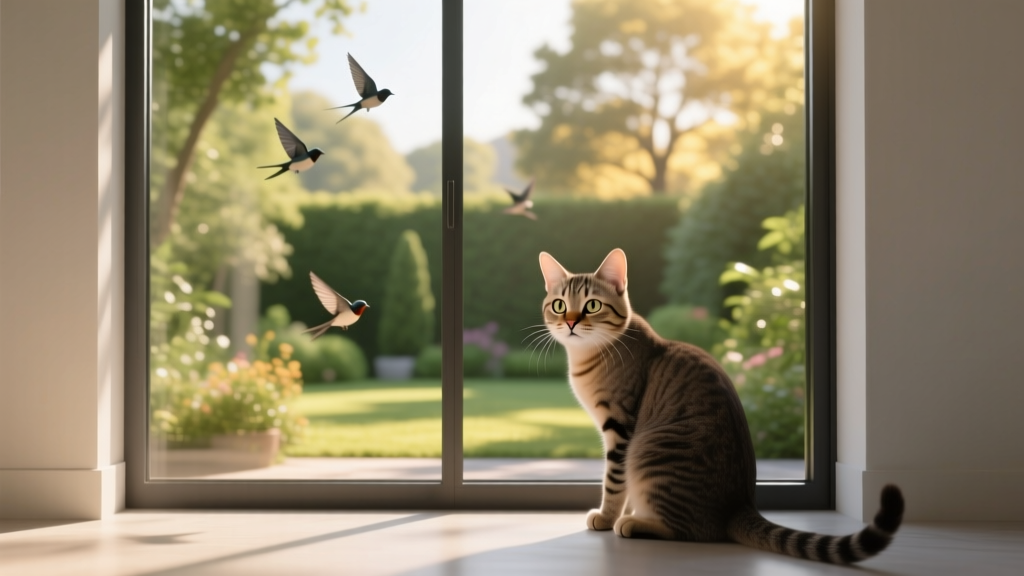
We tend to think cats want height. Often they do—but what they really want is a good lookout. The umbrella base is typically placed in an open, central spot where your cat can monitor the yard, the door, the bird feeder, and you. It’s like sitting in the middle of the “control room.”
What it looks like: Upright posture, ears swiveling, eyes tracking movement, tail neatly wrapped or gently flicking.
3) Territory Marking in a High-Traffic Zone
Cats communicate through scent far more than we realize. When your cat rubs their cheeks or flops against furniture, they’re depositing pheromones from facial glands—friendly “this is mine / this is safe” signals. The umbrella base is often a hub: people walk past it, chairs scrape near it, dogs sniff it, and outdoor air brings in new smells.
Sitting on it can be a form of “scent claiming” by sheer contact. It also places your cat right where they can intercept changes in the environment.
What it looks like: Cheek rubbing on the pole, slow rolling, chin pressing, or sitting after a rub session like they’ve “reset” the area.
4) A Social Anchor: “I’m With You, But Not On You”
Some cats want closeness without cuddling. The umbrella base is often near where you sit, eat, or chat outside. By choosing that spot, your cat can participate socially while maintaining personal space—very on-brand for cats.
What it looks like: They settle in shortly after you sit down, look at you periodically, and remain calm even if you’re talking.
5) The “Do Not Disturb” Boundary
If kids, guests, or other pets are around, the umbrella base can become a small “island” that others naturally avoid. People don’t usually step right on it, and dogs may circle it rather than climb it. A cat who feels slightly overwhelmed might choose it as a subtle boundary marker.
What it looks like: Tighter posture, faster tail flicks, ears partially sideways, scanning the environment more than usual.
What This Behavior Says About Your Cat’s Mood
Here’s a quick “cat body language translator” for umbrella-base lounging:
- Loaf position + soft eyes: Content, secure, and comfortable in the space.
- Side-lying sprawl + exposed belly (without asking for touch): Very relaxed; it’s often a heat-and-trust combo.
- Upright sit + alert ears + still body: Calm but monitoring—your cat is “on duty.”
- Tail flicking + tense shoulders: Mild irritation or overstimulation; they may be using the base as a buffer.
- Frequent repositioning: Temperature adjustment, insect avoidance, or feeling unsure about nearby activity.
If your cat chooses the umbrella base when you’re outside, it often means they enjoy your company and feel safe enough to relax—but still want control over their personal bubble.
Related Quirky Behaviors You Might Notice
Once you spot the “umbrella base logic,” other cat choices suddenly make sense:
- Sitting on doormats or thresholds: Monitoring a key entry point; scent mixing from indoors/outdoors.
- Parking on your shoes: Strong scent concentration + warm, enclosed shape + social comfort.
- Choosing the router, laptop, or game console area: Warmth and your attention/scent.
- Loafing on stepping stones or pavers: Heat retention and a predictable, stable platform.
- Sitting in the middle of the walkway: Social control—your cat is managing traffic patterns (and your compliance).
When Sitting on the Umbrella Base Is Normal… and When It Might Be a Concern
Most of the time, this is perfectly normal. Cats choose odd “furniture” constantly, and the umbrella base is simply a high-value spot in their outdoor map.
Normal signs:
- Your cat is eating, drinking, and using the litter box normally.
- They can be redirected without panic or aggression.
- They show relaxed body language and return to other favorite spots too.
Potential concern signs:
- Heat-related risk: On very hot days, a metal or dark base can get hot enough to be uncomfortable or cause paw pad irritation. If your cat seems restless, pants, or seeks shade urgently, bring them inside.
- Sudden clinginess or guarding: If they suddenly “own” the base and hiss at family members or other pets, it could signal stress, changes in the neighborhood (new cat outside), or a health issue lowering their tolerance.
- Stiff movement or difficulty jumping down: If they’re choosing the base because other spots are painful (arthritis, injury), you may see reluctance to move or changes in gait.
- Hiding in plain sight: A cat sitting rigidly for long periods, not responding normally, might be anxious or unwell—especially if this is new behavior.
If you notice major behavior changes, persistent tension, or physical discomfort, a vet check is worth it. Cats are experts at “looking fine” while feeling off.
How to Respond (and How to Encourage It Safely)
If your cat’s umbrella-base routine is harmless, you can treat it as a sweet outdoor ritual. A few small adjustments can make it safer and more enriching:
- Check the surface temperature. Place your hand on the base for a few seconds. If it’s too hot for you, it’s too hot for your cat. Offer shade or bring them inside during peak heat.
- Add a designated cat pad nearby. A small outdoor mat or folded towel next to the base can give them a softer option without “stealing” their chosen location.
- Create a scent-friendly zone. Let the pad absorb their scent (avoid strongly scented detergents). Familiar smell = more likely to use it.
- Reinforce calm lounging. If your cat settles peacefully, quietly praise them or drop a treat nearby. This builds positive associations with relaxed outdoor time.
- Prevent tipping hazards. Make sure the umbrella is secure, especially in wind. A startled cat plus a wobbling pole is nobody’s idea of a nice afternoon.
- Respect the “I’m observing” mood. If they’re upright and alert, avoid sudden reaches. Let them initiate contact—this keeps the base as a safe lookout rather than a “hands grab me here” zone.
If you’d rather they not sit there (for cleanliness or safety), don’t punish. Instead, make the base less attractive and a nearby spot more attractive: provide a shaded, elevated perch, or a warm outdoor bed in cooler weather.
Fun Facts and Research-Adjacent Nuggets
- Cats use facial pheromones like social “sticky notes.” When they rub objects, they’re often labeling the environment as familiar and safe, which can reduce stress.
- Heat is a powerful reinforcer. Cats will repeatedly choose locations that maintain a comfortable body temperature with minimal effort—especially older cats or thin-coated cats.
- Open visibility reduces startle risk. Many cats prefer resting where they can see approach paths rather than being surrounded on all sides, even if the spot isn’t high up.
- Outdoor scents are a form of enrichment. The umbrella base sits at “nose level” for passing smells—plants, insects, neighborhood animals—making it a sensory hotspot.
FAQ: Cats and Patio Umbrella Bases
Why does my cat sit on the umbrella base instead of the comfy chair?
Comfort for cats isn’t only softness. The base is stable, warm (often), and offers a better view of the yard and doorways. Chairs can wobble, smell like detergents, or be “too exposed” if the chair places them in a corner where something could sneak up.
Is my cat guarding the umbrella base?
Possibly, especially if they block other pets, swat when approached, or act tense. Guarding can be triggered by outdoor cats in the area, changes in your household, or simply the base becoming a prized resource. If it’s mild, add more appealing resting spots so they don’t feel they must “defend” one.
Can the umbrella base burn my cat?
It can get uncomfortably hot in direct sun, especially metal or dark bases. Most cats will move before injury, but it’s smart to check the temperature and provide shade. If your cat has reduced mobility, they may be slower to relocate.
Does this mean my cat wants to be outside more?
It can. The base may be part of their “outside routine” because it’s predictable and enriching. If your cat is safely supervised and enjoys it, you can build structured outdoor time—short sessions, shade, water access, and a calm exit plan back indoors.
Why does my cat rub their face on the umbrella pole and then sit on the base?
That’s classic scent marking followed by settling. They’re essentially making the area smell like “home,” then enjoying the calm that comes with familiarity. It’s the cat version of fluffing a pillow and getting comfy.
My cat suddenly started doing this every day—should I worry?
If they seem relaxed and everything else is normal, it’s likely a new preference (temperature changes, new neighborhood scents, or you spending more time outside). If it comes with clinginess, aggression, hiding behavior, appetite changes, or stiffness, consider stress triggers and check in with your vet.
The Takeaway
Your cat sitting on the patio umbrella base isn’t random—it’s a smart choice shaped by instincts that prize security, warmth, scent familiarity, and a good “command center” view. When you read it through that lens, the behavior becomes a little love letter to the environment you’ve built: your cat feels safe enough to claim a spot and keep you company in their own dignified way.
Does your cat have a strange favorite patio perch—a flowerpot, the grill cover, the welcome mat, the top step like a tiny bouncer? Share your cat’s quirks and outdoor lounging stories with the Cat Lovers Base community at catloversbase.com.