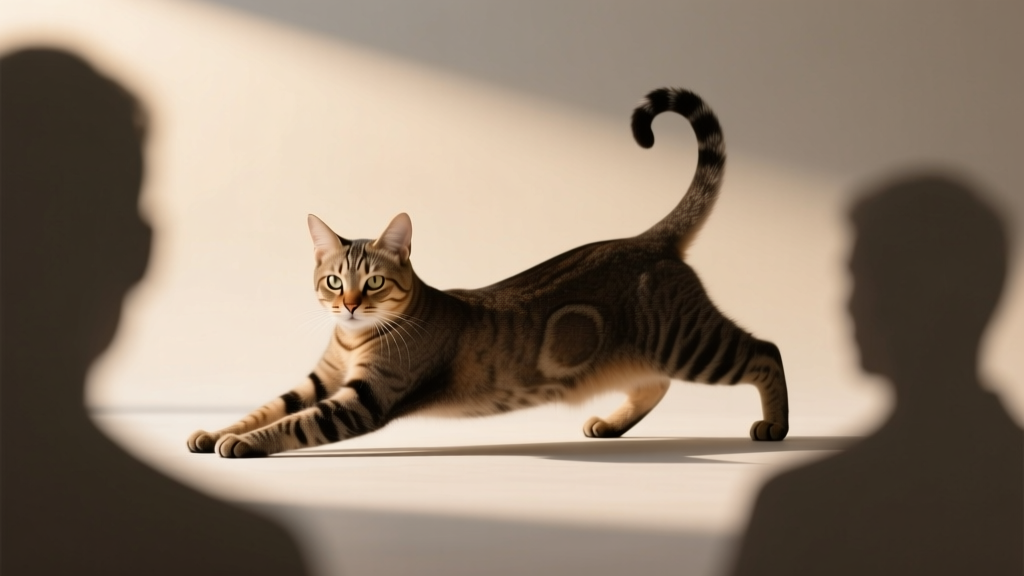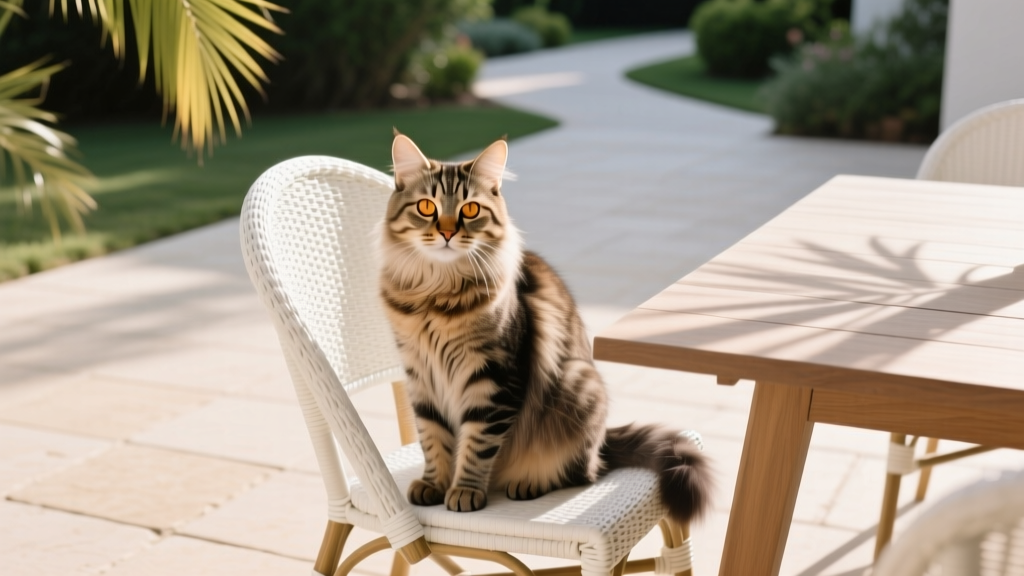
Why Cats Sit on the Patio Dining Chair
You step outside with your coffee, ready for that quiet, peaceful patio moment… and there it is again: your cat, perched like royalty on the patio dining chair. Not the comfy outdoor sofa. Not the cushion you specifically bought “for the cat.” The chair. Preferably the one you were about to sit in.
Maybe they’re loafed neatly in the center like a decorative throw pillow. Maybe they’re sprawled across it like they pay rent. Or maybe they’re sitting bolt upright, staring into the yard as if they’re monitoring the neighborhood for suspicious squirrels. If you’ve ever wondered, “Why this chair?” you’re in excellent company.
Cats don’t do random very often. Patio chair sitting is a mix of instinct, comfort, territory, and good old-fashioned feline preferences. Here’s what’s really going on.
1) The scientific (and evolutionary) reasons behind the patio chair obsession
Your cat’s love of the patio dining chair makes perfect sense when you look at cats through an evolutionary lens. Domestic cats are still deeply wired like small, solitary hunters—animals that survive by noticing details, controlling access to resources, and choosing the best “observation points.”
Height = safety and control
Even if the chair is only a foot or two off the ground, elevation matters. Being slightly higher gives your cat a better view of potential “threats” (other cats, dogs, noisy delivery people) and potential “prey” (birds, insects, leaves… yes, leaves). In the wild, choosing a raised resting spot helps a cat conserve energy while staying alert.
Surface comfort and temperature
Many patio chairs are made of materials that hold or release heat in interesting ways—wood warms in the sun, metal stays cool in shade, wicker has airflow, cushions can be insulating. Cats are tiny thermal engineers. They seek out microclimates that feel just right on their fur and skin.
Scent-marking and “ownership”
Cats communicate with scent more than we realize. When your cat rubs their cheeks on chair edges or kneads a cushion, they’re leaving pheromones from facial glands and paw pads. That chair becomes a familiar, comforting “scent anchor”—a piece of territory that smells like them (and often, like you).
A predictable “hub” spot
Patios are high-traffic transition zones: people come and go, doors open, smells drift through, birds land nearby. For a cat, that’s information central. A chair near the door is basically a front-row seat to everything important.
2) A detailed breakdown: what patio chair sitting can mean in different contexts
The same behavior—sitting on a patio dining chair—can have different motivations depending on what’s happening around it. Here are the most common “versions” of the behavior and what they usually indicate.
“The Sunbather”: stretched out in a sunny patch
If your cat drapes themselves across the chair like warm bread rising, they’re probably heat-soaking. Cats love warming their muscles; it’s energy-efficient and feels good. You’ll often see slow blinks, half-closed eyes, relaxed ears, and minimal tail movement.
Common scenario: You bring out lunch, and your cat doesn’t even glance at you because the sun has achieved the perfect temperature-to-breeze ratio on the seat.
“The Sentinel”: upright posture, scanning the yard
This is the neighborhood watch version. The chair offers a stable platform and good visibility. Cats are naturally vigilant, especially in semi-outdoor spaces where other animals might appear.
Common scenario: Your cat sits very still, ears rotating like radar. Suddenly they freeze, eyes locked on something you can’t see. Ten seconds later: a bird. Or a bug. Or absolutely nothing (that you noticed).
“The Doorman”: chair near the patio door
If the chair is close to the door, your cat may be using it as a staging area. Cats like to monitor entrances because entrances control access to resources—people, food smells, warmth, and social interaction.
Common scenario: You open the door and your cat is already there, seated on the chair like, “Oh good, you’re back. I’ve been managing things.”
“The Social Companion”: choosing the chair next to yours
Some cats use patio chairs to be near you without being on you. It’s a polite feline version of bonding: close enough for connection, far enough for autonomy.
Common scenario: You sit down and your cat hops onto the adjacent chair, facing the same direction as you—like a tiny friend joining you for an outdoor chat.
“The Claim Jumper”: your chair, every time
If your cat consistently takes the chair you’re about to sit on, it can be partly about warmth and scent (your body heat lingers) and partly about controlling valuable territory. It can also be attention-seeking if it reliably causes you to talk to them, pet them, or negotiate.
Common scenario: You pull out a chair, and your cat appears instantly as if summoned, stepping onto the seat with impeccable timing.
“The Cushion Connoisseur”: choosing fabric over furniture
Cushions can hold scents and offer traction. Some cats dislike slippery surfaces where they can’t grip well, especially older cats or those who feel insecure. A cushioned patio chair can feel stable, soft, and familiar.
3) What it says about your cat’s mood and feelings
Body language matters. Here’s how to read the “chair sit” more accurately.
- Relaxed and content: loose posture, slow blinking, paws tucked, tail still or gently wrapped, ears neutral.
- Curious and engaged: upright posture, forward ears, focused eyes, occasional tail tip twitch.
- On alert: body tall or tense, ears swiveling, wide pupils (especially in dim light), tail low and still, sudden freezing.
- Guarding or possessive: sitting squarely in the center, blocking access, swatting when approached, stiff body, direct stare.
- Seeking security: crouched posture, tucked paws but tense shoulders, looking toward escape routes, choosing the chair as a “safe base.”
One of the sweetest interpretations? If your cat chooses the patio chair when you’re outside, it often means they’ve learned that your outdoor time is calm, predictable, and safe. Cats love predictable.
4) Related behaviors you might also notice
Patio chair sitting rarely happens alone. If your cat is into patio furniture, you might also see:
- Cheek rubbing on chair legs: friendly scent-marking, often when they’re feeling confident.
- Kneading the cushion: comfort behavior that can also deposit paw-pad scent.
- Rolling on the chair or under it: happiness, scent mixing, or playful self-stimulation.
- Chattering at birds: high-arousal hunting excitement (and frustration).
- Scratching chair posts or wicker: claw maintenance and marking (annoying, but meaningful).
- Hovering near the door after sitting: “I’m monitoring the boundary. Also, I might want to go in. Or out. Or both.”
5) When patio chair sitting is normal vs. when it’s a concern
Most of the time, this behavior is completely normal—just a cat choosing a great spot. Still, context matters.
Normal
- Your cat sits on the chair briefly, then moves on.
- They appear relaxed or mildly curious.
- They still eat, drink, groom, and use the litter box normally.
- They use the chair as part of a broader routine (sun, watch birds, nap).
Potential concerns
- Sudden change: your cat never cared about the patio chair before, but now spends hours there, especially if paired with hiding, irritability, or decreased appetite.
- Obsessive guarding: growling, swatting, or intense tension when anyone approaches the chair—particularly if there’s a new pet, new neighbor cat, or recent household change.
- Avoiding indoors: if your cat seems reluctant to come inside, it could indicate stress indoors (new smells, conflict with another cat, noisy renovation) or a medical issue making stairs/litter access harder.
- Signs of pain: sitting stiffly, hesitating to jump down, limping, or not wanting to be touched.
- Heat risk: in hot weather, prolonged sunbathing can become dangerous. Panting, drooling, lethargy, or bright red gums are urgent signs to move them to a cool area and contact a vet.
If you’re seeing big behavior shifts or any pain signals, a veterinary check is a smart first step. Behavior and health are best friends—when one changes, the other often follows.
6) Tips for responding to (or encouraging) the behavior
If your cat’s patio chair habit is cute and harmless, you can absolutely lean into it—while keeping everyone safe and your furniture intact.
Make it a “yes spot”
- Add a washable cover or dedicated cushion that’s easy to clean and holds a familiar scent.
- Offer a second chair nearby if they always take yours. (Cats respect options more than rules.)
- Place the chair with intention: near a wall or corner can feel safer than out in the open.
Support your cat’s needs
- For sun lovers: provide shade access and fresh water; limit time in extreme heat.
- For sentinels: give them a stable perch and consider a bird feeder at a safe distance for enrichment.
- For anxious cats: keep patio time calm and predictable; avoid forced interaction when they’re watching or tense.
Redirect scratching without drama
- Offer an outdoor scratching post near the chair (close is key).
- Use texture preferences: some cats love sisal, others prefer cardboard or wood.
- Reward what you like: when they scratch the post, praise gently or toss a treat. Cats repeat what works.
Prevent escapes safely
If your cat uses the chair as a launchpad toward railings or fences, think safety first:
- Supervise patio time.
- Consider a catio, pet-safe screen, or harness training if appropriate for your cat.
- Move chairs away from “jump-off” points if your cat is a determined climber.
7) Fun facts and research-friendly insights
- Cats are scent strategists. Facial pheromones deposited by cheek rubbing are associated with familiarity and comfort. When your cat rubs the chair, they’re essentially tagging it as part of their safe map of the world.
- They’re microclimate experts. Cats prefer warm environments and will move between sun and shade to regulate body temperature—often more precisely than we do.
- Observation is enrichment. Watching outdoor activity (birds, people, breezes moving leaves) can be mentally stimulating, especially for indoor cats who get supervised patio access.
- Small height differences matter. Even modest elevation can make a cat feel more secure because it improves visibility and reduces surprise approaches from behind.
FAQ: Why cats sit on the patio dining chair
1) Why does my cat choose the patio chair instead of the cat bed I bought?
Patio chairs often win on location (better view, better breeze), scent (smells like the household), and temperature (sun-warmed or cool shade). Cat beds can be too enclosed, too hot, too soft, or simply in the “wrong” spot from your cat’s perspective.
2) Is my cat trying to dominate me by taking my chair?
Usually it’s not about dominating you—it’s about claiming a high-value spot that smells like you and feels good. If your cat also blocks you, swats, or growls, it may be resource guarding triggered by stress or competition, and it’s worth addressing with more resources and calmer routines.
3) Why does my cat sit on the chair and stare at me?
They may be waiting for interaction, food, or the door to open. Some cats also use stillness and eye contact to communicate interest. Look for slow blinks and relaxed ears (friendly) versus a stiff body and hard stare (tense or overstimulated).
4) Why does my cat only do this at night or early morning?
Cats are naturally crepuscular, meaning they’re most active around dawn and dusk. Cooler temperatures, quieter surroundings, and more wildlife activity can make those times especially appealing for patio “patrol duty.”
5) Should I let my cat sit on patio furniture?
If it’s safe (no toxic plants, no easy escape routes, weather is mild), it can be a great enrichment activity. Consider a washable cover, provide water, and supervise—especially if your cat is prone to jumping railings or chasing critters.
6) My cat suddenly started living on the patio chair—what changed?
Common triggers include new neighborhood cats, changes indoors (new pet, visitors, noise), seasonal temperature shifts, or discomfort that makes the chair feel like the easiest resting place. If the change is dramatic or paired with appetite/litter box changes, check with your vet.
That patio dining chair isn’t just furniture to your cat—it’s a warm lookout tower, a scented comfort zone, a boundary checkpoint, and sometimes a social seat right next to their favorite human. Once you start reading the context and body language, it becomes less “weird cat behavior” and more “a very logical cat choice.”
If your cat has a favorite patio chair (or a very specific routine involving it), share your story on catloversbase.com. The best part of living with cats is realizing we’re all just guests in their tiny, well-managed kingdom.