Why Cats Sit on the Kitchen Pantry Floor
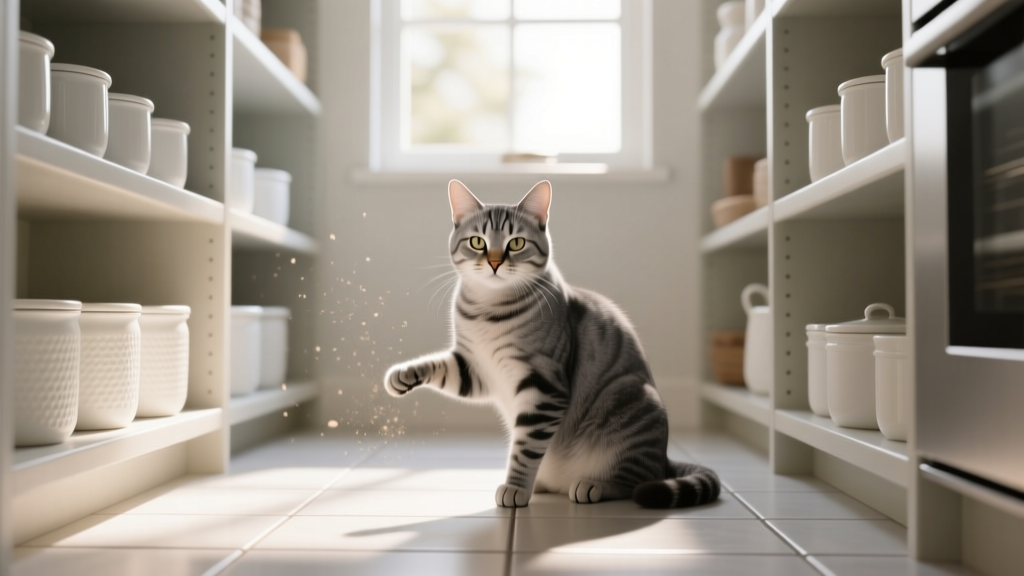
You’re making coffee, half-awake, and there’s your cat—planted like a tiny, fuzzy security guard on the kitchen pantry floor. Not begging exactly. Not hiding either. Just… sitting there. Watching. Maybe blinking slowly as you step around them like you’re the one who doesn’t know how kitchens work.
If you’ve ever found yourself asking, “Why that spot? Why now?” you’re not alone. The pantry floor is a surprisingly popular cat hangout, and it makes perfect sense once you look at it through a cat’s eyes: a mix of comfort, scent, sound, routine, and a little strategic people-management.
The evolutionary and scientific “why” behind the pantry floor
Cats are both predators and prey. That combo shaped a brain that’s always running a subtle safety-and-opportunity scan, even when they’re lounging. In the wild (and in our living rooms), cats seek locations that offer:
- Security: a protected place where they can see what’s coming
- Predictability: areas with reliable routines (food, human activity)
- Sensory value: interesting smells, sounds, and temperature zones
- Control of space: spots that let them observe and influence household traffic
The kitchen checks a lot of boxes. The pantry area in particular often has a “cave edge” vibe—walls, cabinets, corners, and a clear view of the room. Many cats prefer hanging out at the boundary of activity rather than in the center of it. It’s the feline equivalent of sitting at the edge of a party, watching everyone, knowing where the exits are, and still being close enough to snag snacks.
There’s also a learning component: cats repeat behaviors that “work.” If sitting on the pantry floor has ever resulted in attention, treats, a dropped crumb, a can opening, or you talking to them in your silly voice, that spot becomes even more rewarding.
A detailed breakdown: common pantry-floor situations (and what’s going on)
1) “This is where the food magic happens”
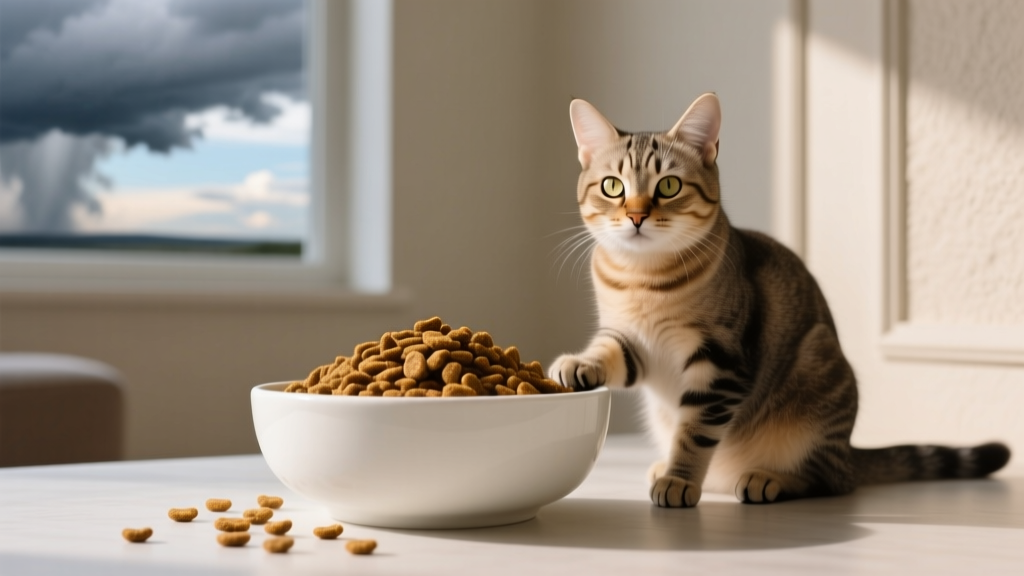
For many homes, the pantry is where kibble bags live, treat jars hide, and cans are stacked. Cats are masters at linking places with outcomes. If your cat has seen you grab food from the pantry, they may camp out there because it’s the most logical place to “place an order.”
What it looks like: sitting upright, tail wrapped, eyes tracking you; sometimes a small chirp; sometimes they lead you to the pantry and then sit like they’re clocking in for a shift.
2) “Cool tile, warm heart” (temperature and texture)
Many pantry floors are tile, linoleum, or sealed wood—surfaces that can feel pleasantly cool. Cats are heat-seekers, but they’re also comfort-seekers. In warm weather (or in a house that runs hot), a cooler floor is a simple way to regulate body temperature.
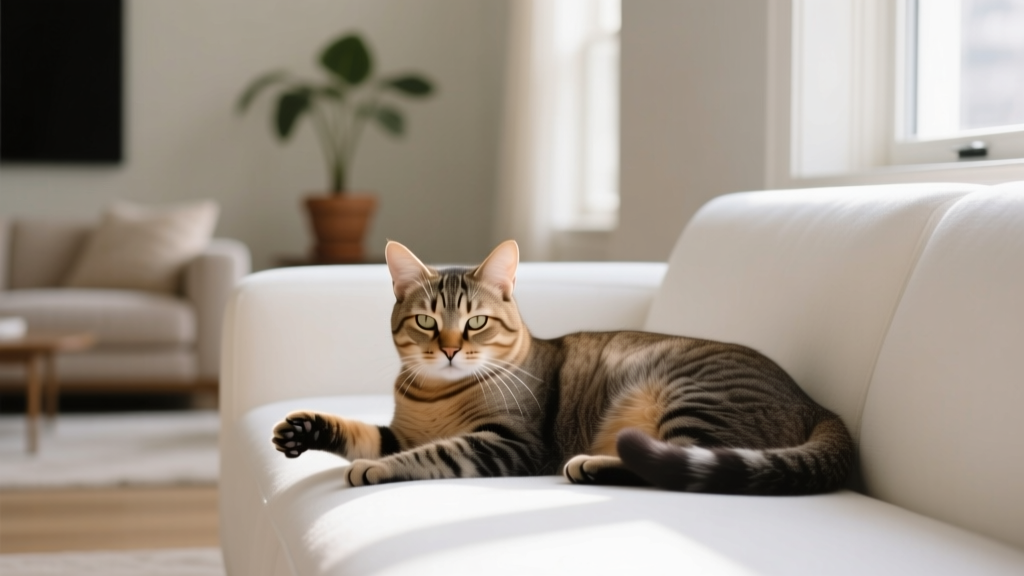
What it looks like: a more sprawled posture, side-lying or “loafing” with relaxed shoulders; they might choose the pantry floor more in summer or after zoomies.
3) “I can see everything from here” (a strategic lookout)
Pantry zones often sit at an intersection: kitchen to hallway, kitchen to living room, kitchen to laundry area. Cats love monitoring household movement. Sitting there lets them gather information—who’s awake, who’s cooking, who’s leaving, whether the dog is approaching, whether the door to the outside world might open.
What it looks like: alert ears swiveling, slow head turns, a still body; they may reposition slightly as you move around.
4) “This smells interesting” (scent and micro-scents)
Cats experience the world through scent like we experience it through sight. The pantry floor is a scent buffet: food aromas that seep from packages, the lingering smell of cardboard, plastic, grains, herbs, and whatever you dropped two days ago and wiped up “mostly.”
What it looks like: sniffing the floor, rubbing cheeks on cabinet corners (scent-marking), sitting with their nose slightly lifted, sometimes licking a spot.
5) “This is my safe corner” (comfort and boundaries)
Some cats find the kitchen busy, but not scary. A pantry-adjacent corner can feel like a “safe zone” where they can be near you without being in the middle of foot traffic. This is especially true for shy cats, new cats, or cats in multi-pet households.
What it looks like: tucked paws, slightly hunched posture, ears neutral; they may watch rather than solicit. If startled, they may dart behind something nearby.
6) “I’m training you” (attention and routine)
Cats are excellent at shaping human behavior. If your cat sits on the pantry floor at 6:00 p.m. every day, they may be anchoring your schedule. They’ve learned: “If I show up here and stare politely, dinner happens sooner.”
What it looks like: consistent timing, sitting in the same spot, intense staring, escalating to meows if you “miss the cue.”
What pantry-floor sitting says about your cat’s mood
Where your cat sits is one clue. How they sit is the real message. Here are common mood reads:
- Relaxed and content: loaf position, slow blinks, soft face, tail resting still or gently wrapped.
- Hopeful/anticipatory: upright posture, bright eyes, ears forward, watching your hands and the pantry door, occasional chirps.
- Insecure but curious: body slightly lowered, ears turning sideways at noises, staying close to a wall or cabinet edge.
- Bored and seeking interaction: sitting near you, then getting up to “check” you, then sitting again; may paw at cabinet doors.
- Stressed or hypervigilant: crouched posture, dilated pupils, tail tucked or twitching sharply, startled responses to normal movement.
Most pantry-floor sitting is normal—and often adorable. It’s your cat’s way of being close to you, tracking household life, and enjoying a spot that simply feels “right.”
Related behaviors you might notice (pantry-floor’s greatest hits)
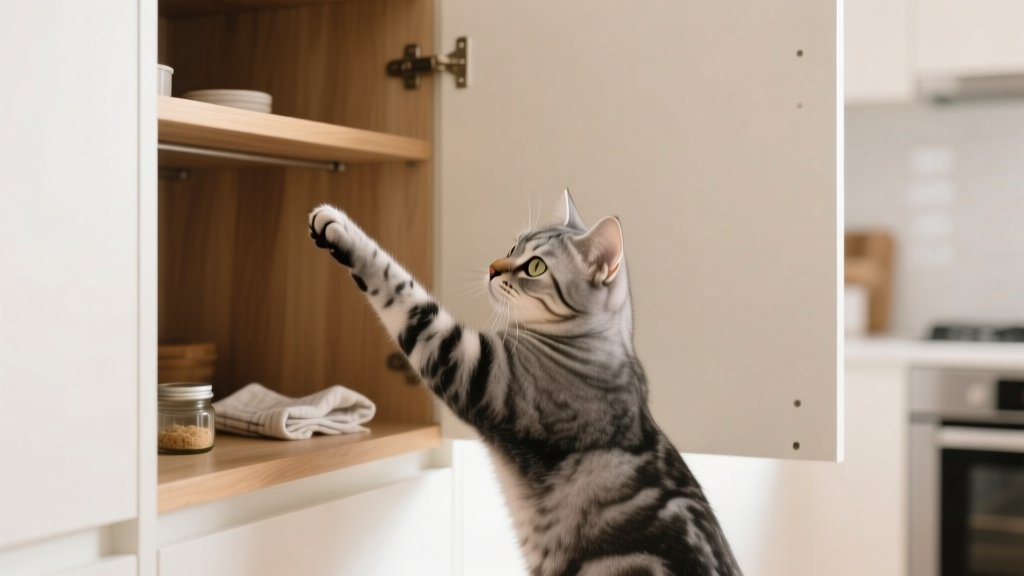
- Cabinet stalking: sitting in front of a cabinet they’ve learned contains treats, then lightly pawing it like a polite knock.
- Corner cheek rubs: face-rubbing on pantry edges to deposit friendly pheromones (“This is part of my home base”).
- Kitchen escorting: following you into the kitchen and stopping at the pantry floor as their “station.”
- Crumb patrol: slow sniff-walks along the baseboards where tiny food bits accumulate.
- “Supervising” chores: sitting nearby while you unload groceries, then investigating bags with serious detective energy.
When pantry-floor sitting is normal vs. when to pay attention
In most cases, it’s harmless. Still, any behavior can shift meaning if it changes suddenly or comes with other symptoms.
Usually normal
- Your cat sits there at predictable times (before meals, during cooking)
- They look relaxed and respond normally when you speak or move
- It’s one of several favorite spots around the house
Potentially concerning (consider a vet check or deeper look)
- Sudden new preference for cool floors paired with hiding more than usual (could indicate discomfort, fever, or pain)
- Restlessness or inability to settle plus pacing around the pantry area
- Increased vocalization at the pantry that seems distressed, not “asking”
- Appetite changes (either refusing food or acting ravenous)
- Signs of nausea or GI issues (lip-licking, drooling, vomiting) while hanging near food storage
- Mobility changes (hesitating to jump, stiffness) that make floor time more appealing than perches
If your cat’s pantry-floor habit is paired with weight loss, lethargy, hiding, litter box changes, or unusual aggression, it’s worth checking in with your veterinarian. Cats are experts at being subtle about pain.
How to respond (or encourage it) in a cat-friendly way
You don’t need to “fix” this behavior, but you can shape it so it’s comfortable and safe for both of you.
Make the spot more inviting
- Add a small mat or washable rug if the floor is slippery or cold in winter.
- Offer a designated kitchen perch (a stool, a cat tower near the doorway) so they can supervise without being underfoot.
- Use calm reinforcement: if you like the behavior, reward it with a gentle hello or a treat—but only when your cat is calm, not yelling.
Prevent accidental tripping (without banishing them)
- Teach a “station” cue by consistently tossing a treat onto a specific mat in the pantry area.
- Avoid stepping over them if possible; instead, pause and encourage them to move with a soft voice or a treat toss.
Reduce demand-meowing
If your cat has learned that sitting there = immediate snacks, you can keep the routine but lower the intensity:
- Feed on a schedule and stick to it.
- Reward quiet waiting, not escalating meows (even a few seconds of quiet is a start).
- Use puzzle feeders to meet food motivation in a more satisfying way.
Fun facts and research-y tidbits (for the cat-curious)
- Cats map your routines like tiny scientists. They’re excellent at associative learning—linking locations, sounds (like a pantry door), and timing to outcomes (food or attention).
- Kitchen acoustics can be surprisingly appealing. The subtle hum of appliances, the echo of a cabinet door, even the crinkle of packaging are “predictive” sounds that cats learn quickly.
- Scent-marking is social, not just territorial. When cats rub their cheeks on pantry corners, they’re depositing pheromones that can signal familiarity and comfort—like putting up a “this is home” sign.
- Floor spots can be “pressure relief” choices. Some cats choose firm, cool surfaces when they feel a little warm, overstimulated, or simply want a different body sensation than a soft bed provides.
FAQ: Common questions about cats and the pantry floor
Why does my cat sit on the pantry floor and stare at me?
Often it’s anticipation: your cat has learned that your presence near the pantry predicts food, treats, or interesting activity. Staring can also be social monitoring—cats watch the people they’re bonded to. If the body is relaxed, it’s usually friendly, not challenging.
My cat only does this at night. Why?
Nighttime can be quieter and cooler, and cats naturally have crepuscular energy (most active around dawn and dusk). If your cat associates the pantry with a late-night snack routine—or if they’re simply doing a “security sweep”—the pantry floor may be their checkpoint.
Is my cat hungry, or just being opportunistic?
Sometimes both. Cats can be genuinely hungry, but they can also be “motivated.” If your cat eats appropriate portions, maintains weight, and isn’t acting frantic, it may be routine-seeking rather than true hunger. If they seem insatiable or are losing weight, talk to your vet.
Why does my cat roll around on the pantry floor?
Rolling can mean comfort, playfulness, or scent-marking. Your cat may be blending their scent with the environment, enjoying a cool surface, or inviting interaction. If rolling is accompanied by intense scratching, hair loss, or skin irritation, check for allergies or parasites.
How do I stop my cat from sitting there because I trip over them?
Give them a better “station” nearby: place a mat or bed a few feet away (still within view of the pantry) and reward them for using it. Cats don’t love being excluded from important zones—so the goal is relocation, not banishment.
Could my cat be guarding the pantry?
In a sense, yes: they may be guarding access to a valuable resource (food) or simply choosing a spot that gives them control over movement. True resource-guarding is more likely if you have multiple cats and one blocks the other from entering the kitchen or approaching food.
A pantry floor is a front-row seat to your life
Your cat isn’t being weird for no reason. The pantry floor is a sweet spot: cool, scent-rich, routine-filled, and perfectly positioned for observing their favorite show—you. When you read the posture and context, you can tell whether your cat is relaxed, hopeful, curious, or asking for a little extra reassurance.
Have a cat who plants themselves in the pantry like they pay rent? Share your funniest “kitchen supervisor” stories with the Cat Lovers Base community at catloversbase.com—we’d love to hear where your cat’s chosen headquarters is.