How to Correct Cat Behavior the Right Way
Why \"How to Correct Cat Behavior\" Is the Wrong Question — And What to Ask Instead
\nIf you've ever typed how to correct cat behavior into Google at 3 a.m. after your cat shredded your favorite couch, knocked over your coffee, or yowled relentlessly at dawn — you're not failing as a cat parent. You're just asking the question in a way that sets both you and your cat up for frustration. Because here’s the truth: cats don’t misbehave — they communicate. What looks like 'bad behavior' is almost always unmet physical, emotional, or environmental needs. In this guide, we’ll move beyond outdated discipline myths and walk you through a compassionate, evidence-based framework used by certified feline behaviorists to resolve scratching, biting, litter box avoidance, aggression, and night-time chaos — without punishment, fear, or confusion.
\n\nStep 1: Rule Out Medical Causes — Before You Assume It’s ‘Just Behavior’
\nBefore adjusting routines or buying pheromone diffusers, rule out pain or illness. A 2022 study in the Journal of Feline Medicine and Surgery found that 34% of cats referred for 'aggression' or 'litter box avoidance' had underlying medical issues — including urinary tract infections, arthritis, dental disease, or hyperthyroidism. Senior cats especially may urinate outside the box not out of spite, but because climbing into a high-sided litter box hurts their hips.
\nLook for subtle red flags: increased vocalization, changes in grooming (over- or under-grooming), reluctance to jump, decreased appetite, or sudden clinginess or withdrawal. If your cat’s behavior shifted abruptly — especially after age 7 — schedule a full wellness exam with bloodwork, urinalysis, and orthopedic assessment. As Dr. Sarah Wooten, DVM and certified veterinary behaviorist, emphasizes: “There is no such thing as ‘behavioral’ until you’ve ruled out medical. Treating anxiety when it’s actually cystitis only delays healing — and damages trust.”
\n\nStep 2: Decode the Message Behind the Behavior
\nCats use behavior as language. The key isn’t correcting — it’s translating. Below are five common 'problem' behaviors, their likely meaning, and what your cat is really trying to tell you:
\n- \n
- Scratching furniture: Not destruction — territorial marking (via scent glands in paws) + nail maintenance + stretching. Punishing this is like scolding someone for brushing their teeth. \n
- Biting during petting: Overstimulation, not ingratitude. Cats have low sensory thresholds — a few strokes may feel like sandpaper. Watch for tail flicks, flattened ears, or skin twitching — these are polite 'stop now' signals. \n
- Litter box avoidance: Often a hygiene or safety issue. Is the box scooped daily? Is it near a noisy appliance or in a high-traffic hallway? Does your cat need privacy — or multiple options? \n
- Early-morning yowling: Frequently tied to circadian rhythm mismatch. Indoor cats often wake at dawn expecting prey — and get frustrated when none appears. \n
- Aggression toward other pets: Rarely dominance — usually resource guarding (food, sleeping spots, attention) or redirected stress from outdoor stimuli (e.g., seeing a stray cat through the window). \n
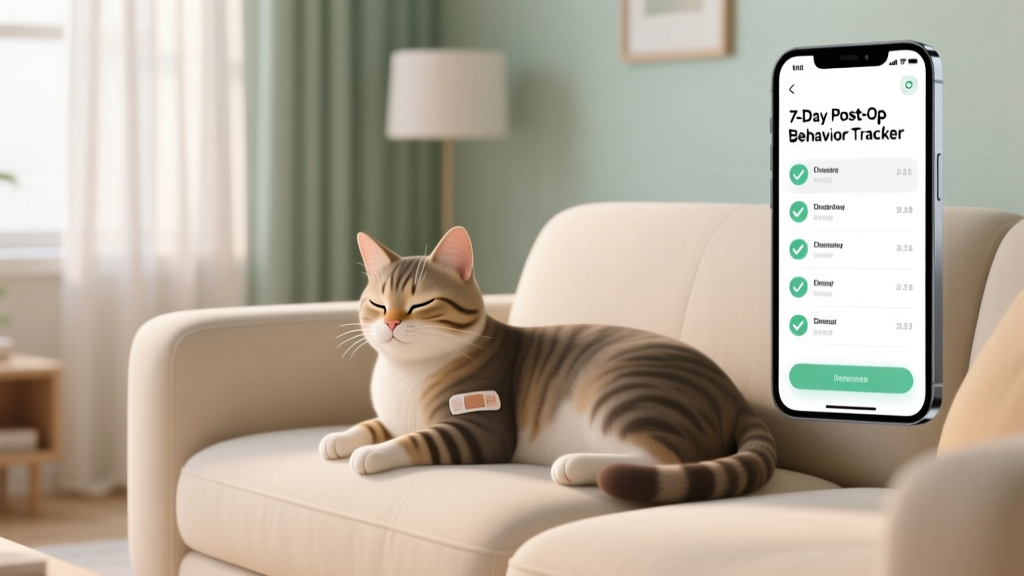
Keep a simple 7-day behavior journal: note time, location, trigger (if visible), your response, and your cat’s body language. Patterns emerge fast — and reveal whether the issue is anxiety-driven, boredom-related, or socially motivated.
\n\nStep 3: Redesign the Environment — Your Most Powerful Tool
\nBehavior modification starts where your cat lives — not in training sessions. According to the American Association of Feline Practitioners (AAFP), environmental enrichment reduces stress-related behaviors by up to 68% when implemented consistently. Think of your home as a cat’s habitat — not just a human residence.
\nKey pillars of feline-friendly design:
\n- \n
- Vertical space: Install wall-mounted shelves, cat trees, or window perches. Cats feel safest when elevated — it lowers cortisol and satisfies natural surveillance instincts. \n
- Hunting outlets: Replace passive toy-waving with structured play that mimics prey sequence: stalk → chase → pounce → kill → eat → groom. Use wand toys for 15 minutes twice daily — end with a meal (simulate post-hunt satiety). \n
- Safe zones: Designate quiet, low-traffic areas with soft bedding, hiding boxes, and calming pheromone diffusers (Feliway Optimum, clinically shown to reduce urine marking by 45% in multi-cat homes). \n
- Sensory variety: Rotate toys weekly, add crinkle balls, catnip-filled mice, and puzzle feeders. Boredom is a major driver of destructive behavior — and it’s easily preventable. \n
A real-world example: When Maya adopted two bonded kittens who chewed baseboards, her vet suggested rotating cardboard boxes with different textures (corrugated, smooth, scented with silvervine) and placing them near the chewed areas. Within 9 days, chewing dropped by 90% — not because she ‘corrected’ them, but because she gave them a more compelling alternative.
\n\nStep 4: Reinforce Desired Behavior — Not Just Suppress Unwanted Ones
\nPunishment doesn’t teach cats what to do — it teaches them to fear you or hide the behavior. Positive reinforcement, however, builds lasting neural pathways. The gold standard? Clicker training paired with high-value treats (freeze-dried chicken, tuna flakes, or FortiFlora probiotic sprinkles). Why clicker? It creates precise timing — marking *exactly* when the desired behavior occurs.
\nExample: Teaching a cat to use a scratching post instead of the sofa:
\n- \n
- Place the post beside the sofa (not across the room — proximity matters). \n
- Entice with catnip or silvervine spray. \n
- Click and treat the *instant* a paw touches the post — even if just resting. \n
- Gradually raise criteria: click for rubbing, then for scratching, then for sustained scratching. \n
- Pair with play: End each session with a 2-minute hunt game ending at the post. \n
Consistency beats intensity: 3 x 2-minute sessions daily work better than one 15-minute marathon. And crucially — never punish *after* the fact. Cats don’t connect delayed consequences to actions. If you catch them mid-scratching, calmly redirect — don’t yell or spray.
\n\n| Behavior Issue | \nFirst 72-Hour Action Plan | \nTools Needed | \nExpected Shift Timeline | \n
|---|---|---|---|
| Scratching furniture | \n1. Cover scratched area with double-sided tape or aluminum foil 2. Place 2+ vertical & horizontal posts within 3 ft of target surface 3. Spray posts with catnip/silvervine; click/treat for any interaction | \nCardboard scratchers, sisal posts, double-sided tape, catnip spray, clicker, treats | \nReduction in 3–5 days; full redirection in 10–14 days | \n
| Litter box avoidance | \n1. Add 1 extra box (N+1 rule) 2. Scoop all boxes ≥2x/day 3. Switch to unscented, fine-clumping litter; place boxes in quiet, low-traffic areas | \nExtra litter box, unscented clumping litter, odor-neutralizing enzymatic cleaner (for accidents) | \nImproved usage in 2–4 days; consistent use by Day 7–10 | \n
| Early-morning yowling | \n1. Shift feeding schedule: last meal at bedtime + automatic feeder set for 5:30 a.m. 2. Provide pre-bedtime interactive play (15 min) 3. Block window views of outdoor cats at night | \nAutomatic feeder, wand toy, blackout film or curtains | \nReduced vocalization in 4–6 days; silence by Day 10–12 | \n
| Overstimulation biting | \n1. Learn your cat’s tolerance threshold (count strokes before ear flattening) 2. End petting *before* warning signs appear 3. Redirect to toy play immediately after stopping | \nWand toy, treat pouch, behavior journal | \nFewer incidents in 3–5 days; improved tolerance in 2 weeks | \n
Frequently Asked Questions
\nCan I use a spray bottle to stop bad behavior?
\nNo — and here’s why it backfires. Spray bottles create fear-based associations: your cat doesn’t link the water to the scratching; they link *you* to unpredictability and threat. This erodes trust, increases anxiety, and often displaces the behavior (e.g., scratching moves to hidden areas — or escalates to aggression). Veterinary behaviorists universally recommend positive reinforcement over aversive methods. As the 2023 ISFM/AAFP Feline Environmental Needs Guidelines state: “Aversive techniques compromise welfare and are contraindicated in behavior modification.”
\nMy cat hisses when I pick them up — is this aggression or fear?
\nAlmost always fear — especially if accompanied by flattened ears, dilated pupils, or attempts to scramble away. Many cats dislike restraint due to lack of control or past negative experiences (e.g., painful vet visits). Instead of forcing lifts, practice ‘consent-based handling’: offer your hand for sniffing, reward calm approach, gently touch one paw → treat, then gradually build duration. Let your cat step onto your arm voluntarily. This rebuilds agency and safety — and reduces defensive hissing significantly within 1–2 weeks.
\nWill neutering/spaying fix behavior problems?
\nIt can reduce hormonally driven behaviors — like roaming, urine spraying in males, or yowling in heat cycles — but won’t resolve learned, anxiety-based, or environmental behaviors (e.g., scratching, litter box issues, play aggression). A 2021 Cornell Feline Health Center review found neutering reduced spraying in intact males by 85%, but had zero impact on scratching or inter-cat tension in established multi-cat households. Always address root causes first.
\nHow long does it take to see real change?
\nMost owners notice measurable improvement in 5–7 days with consistent environmental and reinforcement strategies. Full habit replacement typically takes 2–4 weeks — aligning with feline neuroplasticity research showing new neural pathways strengthen most rapidly between Days 10–21. Patience isn’t passive waiting — it’s daily, tiny, intentional repetitions. Track progress with notes: “Day 1: Scratched post once. Day 4: Rubbed post 3x. Day 9: Scratched 2 mins straight.” Small wins compound.
\nDo I need a behaviorist — or can I handle this myself?
\nYou can absolutely resolve most common issues solo — especially with this guide’s framework. But consult a board-certified veterinary behaviorist (DACVB) or IAABC-certified cat behavior consultant if: behavior appeared suddenly without obvious trigger; involves aggression that breaks skin; includes self-mutilation (excessive licking/chewing); or persists >4 weeks despite consistent effort. Early expert input prevents escalation and saves months of trial-and-error.
\nCommon Myths About Correcting Cat Behavior
\nMyth #1: “Cats can’t be trained — they’re too independent.”
False. Cats learn continuously — they simply respond best to reward-based, low-pressure methods. Studies show cats can learn complex tasks (like opening doors or turning on lights) using clicker training, with retention rates matching dogs when motivation is aligned. Independence ≠ untrainability — it means choosing *what* to engage with, not *whether*.
Myth #2: “If I ignore bad behavior, it will go away.”
Not necessarily — and sometimes, it worsens. Ignoring scratching won’t teach your cat where to scratch. Ignoring litter box issues won’t resolve urinary pain. Passive neglect allows underlying stressors to intensify. Effective intervention means replacing the unwanted behavior with something more fulfilling — not hoping it fades.
Related Topics (Internal Link Suggestions)
\n- \n
- Feline Stress Signs — suggested anchor text: "subtle signs your cat is stressed" \n
- Best Litter Box Setup for Multi-Cat Homes — suggested anchor text: "litter box rules for multiple cats" \n
- How to Introduce a New Cat Without Aggression — suggested anchor text: "stress-free cat introductions" \n
- Interactive Toys That Actually Engage Cats — suggested anchor text: "best hunting-style cat toys" \n
- When to See a Veterinary Behaviorist — suggested anchor text: "cat behaviorist vs. trainer" \n
Your Next Step Starts With One Observation
\nYou now know that how to correct cat behavior isn’t about control — it’s about clarity, compassion, and cohabitation designed for feline biology. The most powerful tool you have isn’t a spray bottle or a treat pouch — it’s your attention. So tonight, before bed, sit quietly for five minutes and watch your cat: Where do they choose to sleep? What do they sniff first when entering a room? When do their ears swivel — and toward what? That observation is your first data point in building a life where their needs are met — and your peace of mind is restored. Ready to go deeper? Download our free Feline Behavior Journal Template (with printable charts and vet-approved prompts) — and start decoding your cat’s language tomorrow.