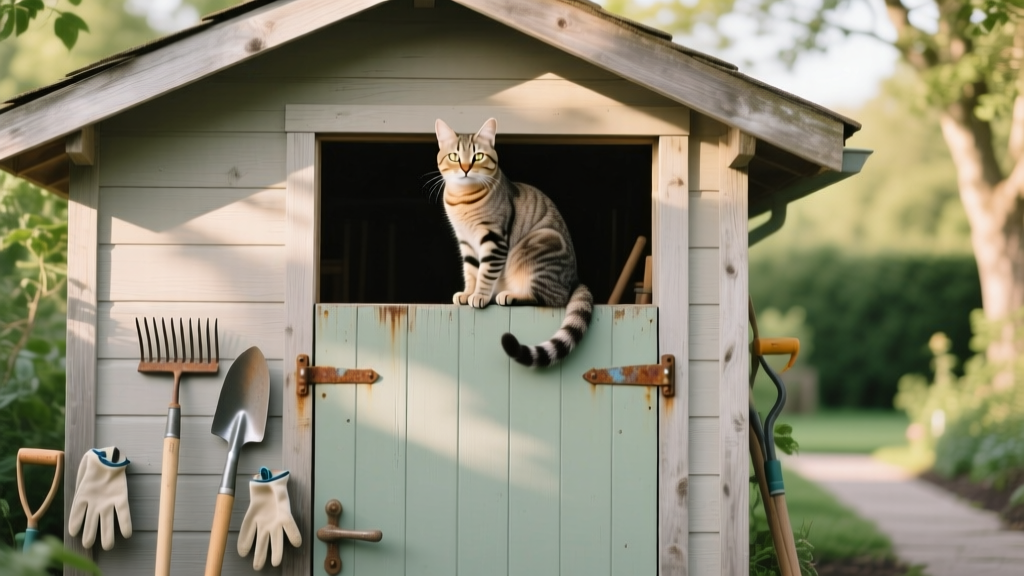
Why Cats Sit on the Garden Tool Shed Door
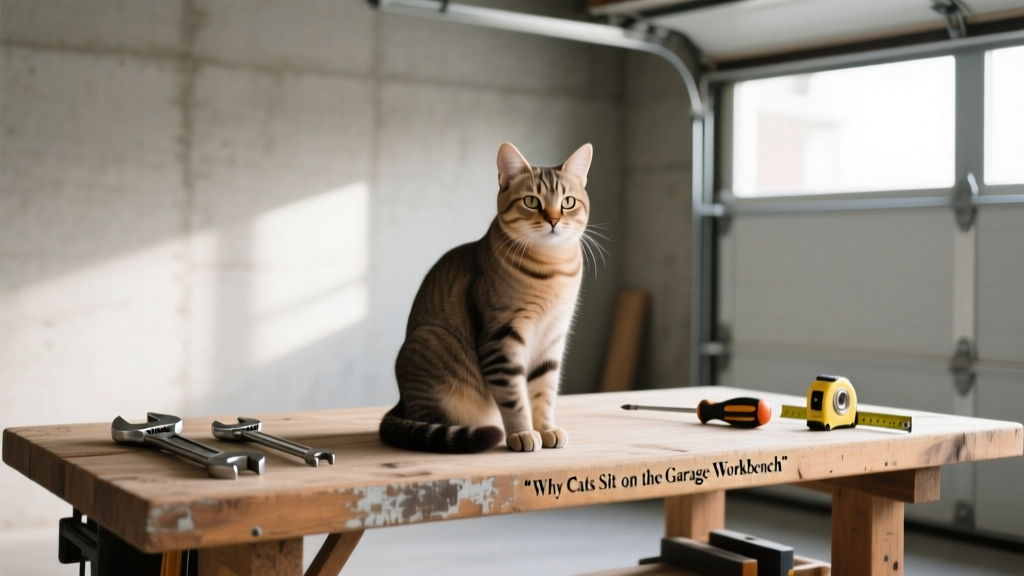
You step into the yard with a mission: grab the trowel, wrestle weeds into submission, maybe feel like a competent adult for ten minutes. But there’s your cat—parked like a tiny, furry bouncer—sitting squarely on the garden tool shed door. Not beside it. Not under the nearby shrub. Directly on the doorstep, staring at you as if you’ve interrupted an important meeting.
If you’ve ever had to negotiate access to your own shed (“Excuse me, ma’am, could I please just…”) you’re in good company. Cats pick the most inconvenient, noticeable spots for a reason. And the shed door—especially if it faces the yard like a little stage—happens to be a premium piece of feline real estate.
The Scientific (and Slightly Wild) Reason Cats Do This
To understand the shed-door sit, it helps to remember that your cat is both a predator and prey, built to monitor territory and stay safe. In the wild, a cat’s survival depends on three things:
- Vantage points to spot prey and potential threats
- Control of resources (food, shelter, safe pathways)
- Efficient communication about “who owns what” through scent and posture
A garden tool shed door checks multiple boxes at once. It’s usually a boundary point (yard-to-shed), a choke point (you and other animals pass through), and often slightly elevated or framed—giving your cat a comfortable lookout with a clear view of the yard. Many sheds also hold onto warmth, smells, and interesting “news” from the outdoors: other cats, rodents, birds, your gardening gloves, and whatever mysterious scent your fertilizer is trying to become.
From an evolutionary perspective, sitting on the shed door is a low-effort way for a cat to say, “This spot matters. I’m monitoring it.”
A Detailed Breakdown: Different Contexts, Different Motivations
Not all shed-door sits are created equal. The same behavior can mean different things depending on timing, body language, and what’s happening around the yard.
1) The Lookout Post (Bird TV + Neighborhood Watch)
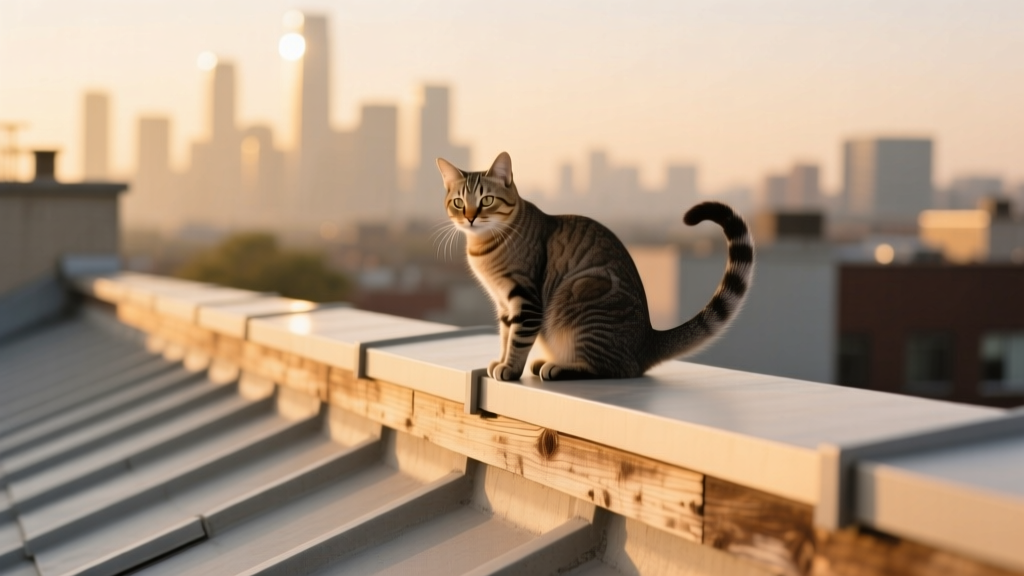
If your cat sits upright, ears swiveling, eyes bright, tail wrapped neatly around paws, they’re likely using the shed door as a watchtower. The yard is full of movement—birds, insects, rustling leaves, maybe the neighbor’s dog doing something suspicious like existing. The shed door offers a stable base with a wide viewing angle.
Typical scenario: You notice your cat parked there at dawn or dusk, the prime “wildlife shift change” hours. They may chatter at birds or do that slow, intense stare into the hedge as if a tiny drama is unfolding.
2) The Gatekeeper (Resource Control and Routine)
Shed doors are often part of a routine: you open it to get tools, you come out with a watering can, you drag a hose across the yard. Cats love patterns because patterns predict safety and rewards. If your cat sits on the shed door when you’re gardening, they may be “supervising” and also controlling access to a familiar activity.
Typical scenario: The moment you touch the shed handle, your cat appears as if summoned. They sit in the doorway like they’re checking your credentials.
3) The Comfort Spot (Warmth, Texture, and Shelter)
Some shed doors catch sun and hold heat, especially if they’re metal or painted a darker color. Even wooden thresholds can be warmer and drier than the surrounding ground. If your cat loafs (paws tucked, relaxed posture) or flops onto one hip, they may simply be enjoying the microclimate.
Typical scenario: On cooler mornings, your cat chooses the shed door over the grass, eyes half-closed, soaking up warmth like a solar panel with whiskers.
4) The Scent Bulletin Board (Marking and Information Gathering)
Cats gather information through scent the way we scroll headlines. The shed door is a high-traffic zone for smells: your shoes, gardening equipment, soil, compost, and the scent trails of other animals passing nearby.
Your cat may sit there after rubbing their cheeks along the frame, or they may pause and sniff the bottom edge. That can be part of “claiming” the area with friendly facial pheromones, or simply reading the latest neighborhood updates.
Typical scenario: Your cat rubs the door edge, sits, then watches the yard as if they’ve just posted a status update.
5) The “I Want In” (Or “I Want You Here”) Spot
Sometimes the shed is interesting. It smells like adventure. It contains spiders, moths, or that one shadow that moves when the wind hits the rake. If your cat sits by the shed door and vocalizes, paws at it, or looks back and forth between you and the door, they may be requesting access.
Or—plot twist—they may be requesting you. Cats often position themselves at doors and thresholds as a way to initiate interaction on their terms.
What This Behavior Says About Your Cat’s Mood and Feelings
Here are some common “shed door sit” moods, translated into human:
- Relaxed and content: Soft eyes, slow blinks, loaf posture, tail still or gently curled. “This is my peaceful outdoor office.”
- Curious and engaged: Ears forward or swiveling, head tracking movement, whiskers slightly forward. “Something interesting is happening and I am on it.”
- Protective or territorial: Stiff posture, intense stare, tail low and still, possible growling if another cat appears. “I’m guarding this zone.”
- Wary or uneasy: Ears angled sideways/back, crouched body, scanning quickly, ready-to-bolt posture. “I don’t fully trust what’s out here.”
- Social and affectionate (in a cat way): Sitting there when you’re outside, following you to the shed, rubbing on you or the frame. “I’m hanging out with you—also this place is important.”
The key is the whole picture: posture, eyes, tail, and what triggers the sit. A cat who sits calmly on the shed door while you garden is usually feeling secure and involved. A cat who freezes there and stares at the fence line may be tracking a rival cat or other stressor.
Related Quirky Behaviors You Might Also Notice
If your cat is a shed-door sitter, you may see these behaviors too:
- Threshold hovering: Sitting in doorways (house doors, garage doors, patio sliders) like a fuzzy traffic cone.
- Tool inspection: Sniffing rakes, rubbing on the watering can, sitting in the wheelbarrow like they’re the cargo.
- Garden “helping”: Flopping onto freshly turned soil, patrolling mulch piles, or pouncing on moving hoses.
- Perimeter patrols: Walking the fence line at consistent times, especially dawn/dusk.
- Scent-marking: Cheek rubs on the shed corners, scratching nearby posts, or rolling on the doormat.
These are all part of the same theme: territory mapping, comfort seeking, and bonding through shared space.
When Shed-Door Sitting Is Normal… and When It Might Be a Concern
Usually normal: Your cat sits there quietly, responds to you normally, eats/drinks well, and the behavior looks like relaxation or mild curiosity. Outdoor watch-post behavior is very typical, even for indoor cats who get supervised yard time.
Possible concern if you notice:
- Sudden obsession with the shed door paired with agitation (pacing, yowling, swatting at the air)
- Redirected aggression (your cat sees another cat outside, then lashes out at you or a housemate)
- Spraying or urine marking around the shed area (especially if new and frequent)
- Hiding, crouching, or hypervigilance that suggests fear rather than interest
- Physical discomfort signs: stiffness when jumping down, reluctance to move, excessive sleeping, or irritability when touched
If the shed-door sit comes with significant stress signals, consider what changed: a new neighborhood cat, wildlife activity, construction noise, or even a change in your schedule. If you suspect pain (especially in older cats), a vet check is worth prioritizing—cats are experts at hiding discomfort.
How to Respond (and How to Encourage the Sweet, Calm Version)
You don’t need to “fix” this behavior. In many cases, it’s your cat feeling confident and engaged with their environment. Here’s how to respond in a way that supports a healthy cat-brain:
1) Respect the lookout
If your cat is calmly posted up, let them be the yard supervisor. Avoid startling them by flinging the shed door open suddenly. Give a quick verbal cue (“Coming through!”) and move slowly. Yes, it feels silly. Your cat will still appreciate it.
2) Make the spot safer and more comfortable
- Add a non-slip mat or outdoor rug if the threshold is slick.
- Provide a nearby elevated alternative (a sturdy bench or cat-safe perch) so they’re not directly in the doorway.
- Offer shade and water during hot weather; shed doors can get surprisingly warm.
3) If it’s territorial stress, reduce the “cat vs. cat” drama
If your cat is sitting there to monitor a rival cat, block visual triggers when possible (privacy film on low windows, strategic planters, or temporarily limiting yard time during peak prowling hours). Increase indoor enrichment: play sessions, puzzle feeders, and cozy perches can help lower baseline stress.
4) Use it as a bonding moment
Sit nearby for a minute. Offer a slow blink. Talk softly. If your cat approaches, reward with gentle petting or a treat. You’re teaching them that “hanging out while the human does yard stuff” is a safe, social routine.
5) Keep shed access cat-safe
If your cat is begging to go inside, be cautious. Sheds can contain hazards: sharp tools, chemicals, poisons, rodent bait, and small gaps where a cat can get stuck. If you allow access, supervise and store toxins securely.
Fun Facts and Research-Flavored Nuggets
- Cats love edges and thresholds. These spots concentrate scent information and create natural “decision points” for movement—perfect for a cautious, observant animal.
- They’re big on predictability. Routine locations (like the shed door when you garden) become “appointment stations” where your cat expects certain outcomes—attention, outdoor time, or interesting smells.
- Outdoor stimulation is powerful. Even a small yard offers a rich sensory world: bird sounds, insect movement, wind shifts, and scent trails. Your cat’s brain treats it like a constantly updating puzzle.
- Posture is communication. A relaxed loaf says “safe.” A tall sit says “alert.” A crouch says “ready.” Your cat isn’t just sitting—they’re broadcasting.
FAQ: Common Questions About Cats Sitting on Shed Doors
1) Is my cat guarding the shed?
Sometimes, yes—especially if the shed door is a boundary point and other cats or animals pass nearby. But “guarding” often looks more like monitoring: watching, scent-marking, and choosing a strategic spot.
2) Why does my cat sit there only when I’m gardening?
Your presence makes the yard more interesting and predictable. Gardening creates movement, smells, and routine. Your cat may also be socially “joining” you while keeping a comfortable amount of personal space.
3) My cat blocks the door. Should I move them?
If you need access, yes—gently. Use a calm voice, offer a treat a few feet away, or lure them to a nearby perch. Avoid pushing with your foot or startling them with the door; that can create negative associations.
4) Does this mean my cat wants to go inside the shed?
Possibly. Look for clues: pawing at the door, sniffing cracks, vocalizing, or trying to slip in when you open it. If you do allow access, supervise closely and ensure all chemicals and sharp tools are secured.
5) Why does my cat stare at the shed door like something is behind it?
They may hear mice, insects, or small animals inside the shed or under the floor. Cats have excellent hearing and can detect tiny sounds we miss. If the staring becomes frantic or your cat starts tearing at the door, consider humane pest control and check for gaps.
6) Could this be anxiety?
It can be if the sitting is paired with tension, hypervigilance, spraying, or aggression—especially if another cat is involved. If you suspect stress, try reducing outdoor triggers and boosting enrichment, and consult your vet or a qualified behavior professional if it escalates.
Cats don’t pick shed doors by accident. They pick them because they’re practical: good views, good smells, good routines, good boundaries. And sometimes, because they know you’ll eventually come out, look at them, and say, “Really? Right there?”—which, from a cat’s perspective, is excellent entertainment.
Does your cat have a favorite “supervisor spot” outside—shed door, fence post, wheelbarrow, or directly in the path of your feet? Share your cat’s quirky garden habits with the Cat Lovers Base community on catloversbase.com—we’d love to hear your best (and most inconvenient) stories.