Why Cats Sit on the Garden Compost Bin Lid
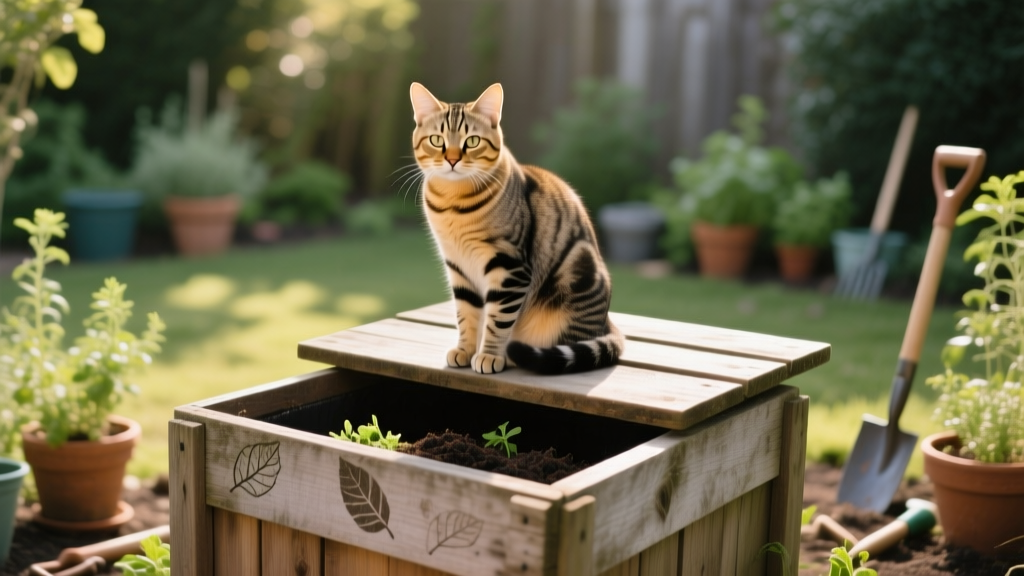
You step outside with a mug of coffee, planning a peaceful minute in the garden. The birds are doing their morning gossip. The compost bin is… occupied. Your cat is perched on the lid like a tiny, furry garden supervisor—tail tucked neatly, eyes half-lidded, as if they’ve been appointed Head of Decomposition Operations.
If you’ve ever wondered why your cat insists on sitting on the compost bin lid (of all places), you’re not alone. It’s one of those behaviors that feels random until you look at it through a cat’s eyes: warm surfaces, elevated viewpoints, fascinating smells, and a perfectly positioned “throne” where they can monitor their kingdom.
1) The scientific and evolutionary “why”
Cats are small predators with big opinions about safety. Even our well-fed house cats still carry the instincts of their wild ancestors: find a secure spot, watch for prey, watch for threats, and conserve energy while doing it.
A compost bin lid checks several primal boxes:
- Elevation and control: Being higher—even just a foot or two—gives a cat a tactical advantage. From that lid, they can scan for birds, squirrels, and neighborhood cats, and they can also see you coming (because of course they want to know what you’re doing).
- Warmth: Compost generates heat as microbes break down organic matter. Even with a lid between your cat and the compost, warmth can rise. On sunny days, plastic lids also absorb solar heat, creating a cat-approved warming plate.
- Scent information: Compost smells like “news.” Rotting plant matter, food scraps, soil organisms—this is an olfactory bulletin board. Cats experience the world through scent more than we realize, and a compost bin is an ever-changing scent story.
- Safety via solid footing: Lids are flat, stable, and typically a little removed from foot traffic. Cats love predictable surfaces they can rest on without being surprised from behind.
In evolutionary terms, your cat is doing what cats do best: choosing a vantage point that feels secure and strategically useful while meeting comfort needs (heat + rest) and satisfying curiosity (scent + movement in the garden).
2) A detailed breakdown: different contexts, different motivations
Not all compost-lid sitting is the same. The “why” often changes with time of day, season, and what else is happening in the yard.
Sun-warmed lid lounging
Scenario: It’s mid-morning. The lid has been soaking up sun. Your cat flops down with a slow blink and looks vaguely blissful.
Motivation: Comfort and thermoregulation. Cats prefer warm resting spots because warmth helps them conserve energy. A compost lid can be a perfect solar-heated nap platform.
Bird-watching command center
Scenario: Your cat sits upright, ears swiveling like satellite dishes. They’re intensely focused on the feeder, the hedge, or the fence line.
Motivation: Hunting practice and environmental monitoring. Even if they never catch anything, stalking and watching are deeply rewarding behaviors. The lid offers a stable stage for “watch mode.”
Neighborhood cat surveillance
Scenario: Your cat sits on the lid and stares into the distance. They’re very still. If another cat appears, you might hear a low grumble or see a tail flick.
Motivation: Territorial awareness. Outdoor sights and smells carry information about who’s been around. The compost area may be a social hotspot where other animals pass by.
“You’re gardening? I’m gardening.”
Scenario: The moment you step outside to weed or turn the compost, your cat appears and takes their position like a supervisor on a construction site.
Motivation: Social connection and routine. Cats often anchor themselves near your activities—not always to be petted, but to participate in parallel. Your presence increases the value of that spot.
Rainy-day shelter nearby
Scenario: The weather turns. Your cat chooses the compost lid and stays close to a wall, shrub, or overhang.
Motivation: Strategic positioning. The bin may be near cover, escape routes, or areas where wind is blocked. Cats are masters at finding microclimates that feel safe.
3) What it means about your cat’s mood and feelings
Your cat’s body language tells you whether the compost-lid sit is relaxed, curious, or tense. Here are common “translations”:
- Loose body, paws tucked, slow blinks: Content and secure. This is a classic “I trust this spot” signal.
- Upright posture, forward ears, still tail: Curious and focused. Your cat is gathering information—watching, listening, scenting.
- Tail flicking, ears turning sideways, intense stare: Mild agitation or alertness. Something in the environment is bugging them (another cat, a dog, a sudden noise).
- Low crouch, wide pupils, tense muscles: Stressed or ready to bolt. In that case, the lid is less a lounge and more a lookout post.
Most of the time, a cat choosing to sit somewhere out in the open—on a lid with a view—means they feel confident. A nervous cat tends to hide; a confident cat tends to perch.
4) Related behaviors you might also notice
If your cat loves the compost bin lid, you may see similar “high-value spot” behaviors around the home and garden:
- Sitting on warm, flat things: laptop lids, garden paving stones, car hoods (not recommended), sunny window sills.
- Perching on boundary lines: fence rails, retaining walls, the edge of raised beds—cats love patrolling borders.
- Rolling near “interesting smells”: fresh soil, mulch, or spots where other animals passed by. Sometimes it’s a scent-mask or scent-mixing behavior.
- Following you outdoors but not wanting to be touched: companionable monitoring. Some cats “hang out” rather than cuddle.
- Chattering or chirping: that classic predator excitement when watching birds or squirrels.
5) When compost-lid sitting is normal… and when it might be a concern
Usually normal: A cat sitting on the compost lid is typically harmless and pretty logical in cat terms. It’s a warm lookout post with great smells and a good view.
Potential concerns to watch for:
- Safety hazards: If the lid is unstable, can pinch, or could flip, it’s worth addressing. A startled cat can get injured or begin avoiding the yard.
- Sudden behavior change: If your cat suddenly becomes obsessed with the compost area, seems restless, or guards it aggressively, something may have changed (a new neighborhood cat, a rodent nest nearby, or anxiety).
- Overheating risk: On very hot days, plastic lids can get surprisingly warm. A cat who won’t leave a hot surface may be over-relaxing—keep an eye out for panting or lethargy.
- Ingestion risk: Compost can attract insects, mold, and food scraps that are unsafe for cats. If your cat is trying to lick or chew anything near the bin, that’s a red flag. Some compost contents (like onions, garlic, grapes/raisins, moldy food) can be toxic if ingested.
- Frequent vomiting or GI upset: If your cat sits there and later vomits, they may be sampling something they shouldn’t—time to secure the bin and check with your vet.
6) Tips for responding to (or encouraging) the behavior
If your cat’s compost-lid ritual is safe, you can treat it as a charming example of normal cat behavior. Here’s how to support it while keeping everyone out of trouble:
- Make the perch safe: Ensure the lid is stable and can’t slam shut. If it wobbles, consider repositioning the bin or adding a secure, cat-friendly platform nearby.
- Offer an even better alternative: Place a small outdoor bench, a sturdy table, or a weatherproof cat perch near the compost area. Many cats will choose the “best seat in the house” if you provide it.
- Reinforce calm outdoor time: If your cat relaxes outside, reward with a soft voice, a slow blink, or a treat after they come to you. You’re building positive associations without interrupting their watch duty.
- Keep compost contents pet-safe: Avoid adding toxic foods, and use a bin that closes securely. If wildlife gets in, your cat may be tempted to investigate.
- Manage neighborhood cat stress: If your cat is using the lid as a “border control post” and seems tense, block views to problem areas with garden screening, or increase indoor enrichment (play sessions, window perches) to reduce outdoor hypervigilance.
- Respect the “do not disturb” sign: When your cat is perched and focused, petting can feel intrusive. If they lean into you, great. If they stiffen or flick their tail, let them supervise in peace.
7) Fun facts and research-y tidbits (cat-nerd corner)
- Cats are heat seekers by design: Domestic cats prefer warmer ambient temperatures than humans do. That’s part of why “weird warm spots” are so appealing.
- Microbes make compost warm: Compost heat comes from microbial activity during decomposition. Depending on the compost system and conditions, temperatures inside can rise noticeably—your cat may be enjoying gentle radiant warmth through the lid.
- Scent is a cat’s social media: Cats gather an incredible amount of information through smell. Outdoor “smell hubs” (like compost areas, garden borders, and paths) can become regular check-in points.
- Perching is stress management: Elevated resting spots can help cats feel in control of their environment. In multi-cat households, vertical space is often a key ingredient in reducing tension.
8) FAQ: common questions about cats and compost bins
Is it safe for my cat to sit on the compost bin lid?
Usually, yes—if the lid is stable and your cat isn’t able to access the compost contents. The main risks are pinched paws from a slamming lid, wobbling surfaces, and the temptation to eat unsafe scraps.
Why does my cat sit there only in the morning?
Morning often combines peak bird activity with comfortable temperatures and early sun warming surfaces. It’s prime time for “watching the world” without getting too hot.
My cat seems to guard the compost bin. Are they being territorial?
They can be. The compost area may sit along a fence line or pathway used by other cats or wildlife. Watch for stiff posture, tail flicking, or staring. If it seems stress-driven, reduce outdoor triggers and provide more secure perches elsewhere.
Why does my cat rub their face on the compost bin?
Face rubbing is scent marking using friendly pheromones from glands around the cheeks. Your cat may be saying, “This is part of my space,” or simply mixing their scent with an interesting object in their environment.
Should I stop my cat from hanging around the compost?
If your compost bin is secure and your cat is just sitting on the lid, it’s usually fine. If they’re getting into the compost, licking, chewing, or bringing out scraps—or if you compost foods that could be harmful—then yes, it’s smart to block access and offer a safer perch nearby.
Could the compost smell attract my cat too much?
Absolutely. Compost can smell like food, soil, insects, and wildlife—very compelling to a curious cat. Interest is normal; eating from it is the part to prevent.
One last thought: your cat isn’t being weird—they’re being wonderfully cat
A compost bin lid is a surprisingly perfect cat spot: warm, elevated, stable, and full of fascinating scent updates. When you see your cat perched there like a garden statue with whiskers, you’re watching instincts in action—comfort-seeking, world-monitoring, and a little bit of “this is my yard too.”
Does your cat have an outdoor “throne” like the compost lid, the birdbath edge, or the top of the recycling bin? Share your funniest and most puzzling cat-perching stories with the Cat Lovers Base community at catloversbase.com—we love comparing notes on the tiny supervisors who run our homes and gardens.