Why Cats Sit on the Entryway Shoe Storage Bench
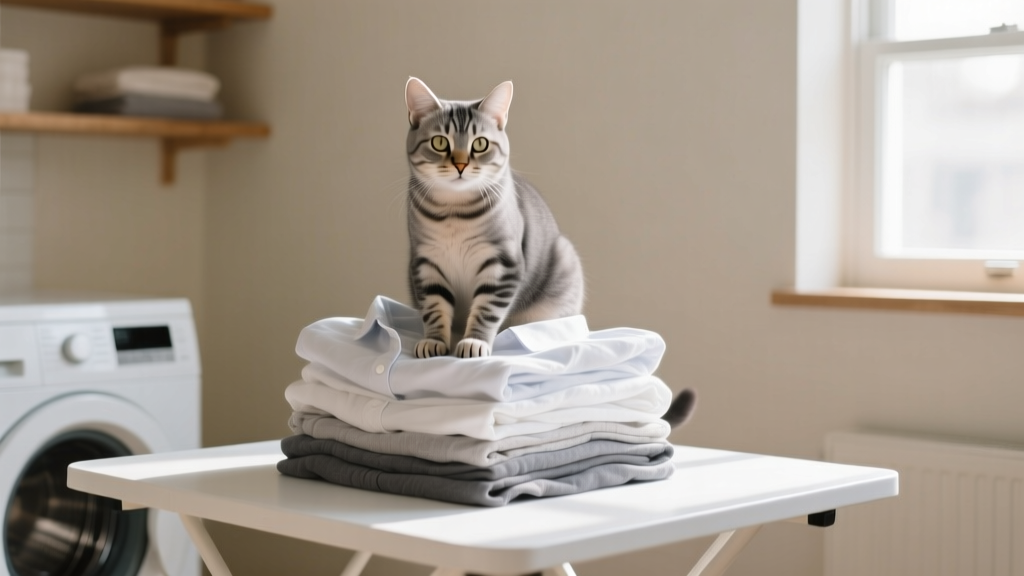
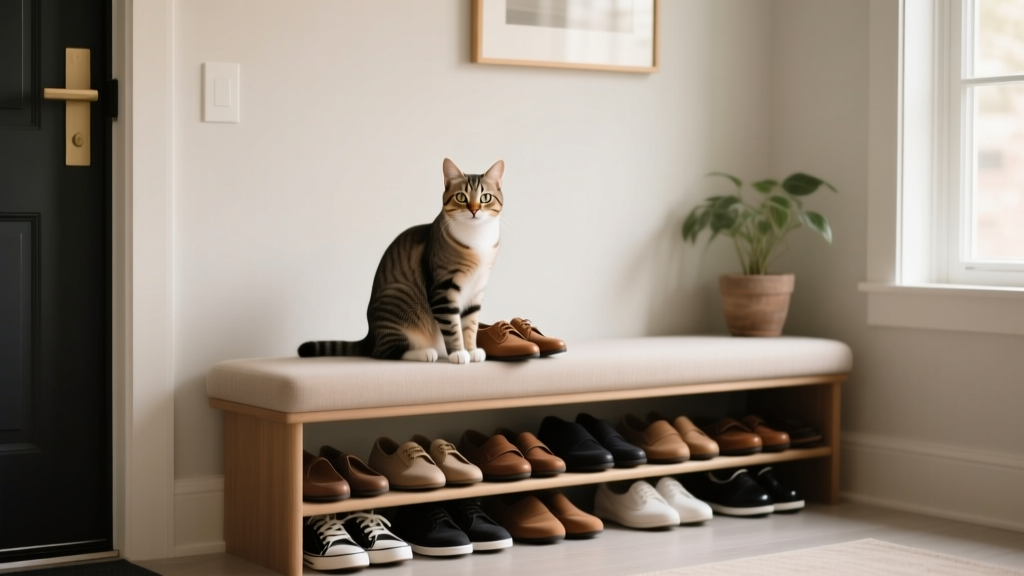
You’re heading out the door. Keys in hand, shoes half on, brain already in “don’t forget the groceries” mode. And there—like a fluffy speed bump with excellent timing—your cat is perched on the entryway shoe storage bench. Not the couch. Not the cat tree. The bench. The exact spot you need to access to leave the house… or the exact spot you’ll notice them most.
If your cat treats that little entryway perch like prime real estate, you’re not imagining things. From a behaviorist’s perspective, the shoe bench is basically a feline jackpot: it smells like you, it’s a traffic hub, it offers height without being isolating, and it’s strategically located for monitoring the comings and goings of the entire household. Your cat isn’t being “random.” They’re being very, very cat.
1) The Scientific (and Evolutionary) Reason This Spot Is So Appealing
Cats are both predators and prey in the evolutionary sense. That combination shapes a lot of their daily decisions—especially where they choose to sit. A good resting place checks several boxes:
- Safety and visibility: A raised spot offers a better view and a sense of control.
- Information access: Cats are natural “data collectors.” Busy areas contain the most scent and movement information.
- Resource guarding: Entry points are valuable in territory management—who comes in, who goes out, and what changes.
The entryway is one of the most scent-rich locations in your home. Shoes carry outdoor smells: other animals, plants, dust, rain, sidewalks, and the “signature” of everyone you passed that day. To us it’s “shoe smell.” To a cat, it’s a constantly updated bulletin board.
Add in that the bench is usually firm, stable, and slightly elevated, and you’ve got an ideal observation post. In multi-cat homes, it can also function like a subtle “checkpoint,” where one cat can monitor the movement of other cats and humans without having to confront anyone directly.
2) A Detailed Breakdown: Different Contexts, Different Motivations
Not every cat sits on the shoe bench for the same reason every time. Context is everything. Here are the most common “why”s, with real-life scenarios you’ll recognize.
The “Hello/Goodbye” Station
If your cat hops onto the bench the moment they hear you jingle keys, they’ve learned that this area predicts action: you leaving or returning. Many cats are routine-lovers. The entryway is where patterns happen.
What it looks like: Your cat sits upright, tail wrapped neatly, eyes alert. They may slow blink at you, chirp, or rub their face on the bench edge.
The Warm, Cozy Microclimate
Some entryways trap warm air, get a bit of sun through sidelights, or sit near a radiator or vent. The bench may also have a cushion that holds heat.
What it looks like: A loaf position. Paws tucked. Half-closed eyes. Minimal interest in your shoes—maximum interest in comfort.
The Scent-Soaked “You” Zone
Shoes and jackets smell intensely like you. For cats who are socially bonded, that scent can be soothing—especially when you’re away. Sitting on the bench can be the feline version of hugging your hoodie.
What it looks like: Sniffing, kneading a cushion, rubbing cheeks on corners, or even settling directly on top of your shoes (rude but heartfelt).
The Door Monitor (a.k.a. Security Detail)
Outdoor noise, hallway footsteps, delivery people, neighbors, and dogs passing by can trigger a cat’s “investigate” mode. The bench is a perfect spot to watch the door and listen.
What it looks like: Ears swiveling, eyes wide, body leaning forward. They may freeze when they hear sounds outside.
The “Please Notice Me” Spotlight
If your cat learns that sitting on the bench makes you talk to them, pet them, or delay leaving (even by 10 seconds), they may repeat it. Cats are excellent at training humans with tiny, consistent behaviors.
What it looks like: Direct eye contact, soft meows, weaving around your ankles when you approach, or flopping dramatically as if to say, “Oh no, I have fallen right where you need to walk.”
The Multi-Cat Strategy Spot
In homes with more than one cat, entryways can become “neutral zones” or “control zones.” A confident cat may sit there to manage space without chasing anyone—just by being present.
What it looks like: One cat perches while others take alternate routes, pause at a distance, or wait for “permission” to pass.
3) What Sitting There Says About Your Cat’s Mood and Feelings
Think of the shoe bench as a stage, and your cat’s body language as the script.
- Relaxed and content: Loafing, slow blinks, soft facial muscles, tail still or gently curled.
- Curious and engaged: Upright posture, ears forward, head tilts, sniffing shoes or the air.
- Mildly anxious or vigilant: Ears rotating quickly, tense shoulders, crouched posture, tail tucked close, frequent staring at the door.
- Affection-seeking: Rolling onto their side, rubbing cheeks (scent marking), kneading, purring when you approach.
- Possessive/territorial: Blocking the path, stiff posture, hard stare at another pet, swatting if approached.
One of the sweetest interpretations: if your cat chooses the entryway when you’re gone or about to leave, it can reflect social attachment. Cats don’t always show bonding like dogs do, but choosing a high-traffic, human-scented location is often a big clue that you matter to them.
4) Related Behaviors You Might Also Notice
Shoe-bench sitting rarely happens in isolation. If your cat has claimed the entryway, you may also see:
- Rubbing on shoes or the bench corners: Cheek rubbing deposits friendly pheromones (a “you belong here” message).
- Sleeping on coats, backpacks, or gym bags: Strong human scent + soft fabric = irresistible.
- “Escorting” you to the door: Cats often accompany bonded humans during transitions.
- Door dashing or door-stalking: Curiosity about the outside world, sometimes amplified by boredom.
- Vocalizing at departure times: Some cats develop a “leaving routine” protest—or a negotiation strategy.
5) When It’s Normal (and When It Might Be a Concern)
Most of the time, sitting on the shoe storage bench is completely normal. It’s enrichment, social monitoring, scent enjoyment, and habit-building all in one.
It may be worth a closer look if you notice:
- Sudden obsession with the entryway paired with hiding, jumpiness, or appetite changes (possible anxiety or stress).
- Growling, swatting, or blocking that escalates toward people or other pets (resource guarding or social tension).
- Frequent attempts to bolt outside that are new or frantic (boredom, hormones in unneutered cats, or environmental stress).
- Overgrooming or stress behaviors (hair loss, skin irritation) linked to heightened vigilance at the door.
- Inappropriate urination near the entryway (sometimes triggered by outdoor cats, neighborhood changes, or territorial insecurity).
If any of these show up, consider what changed recently: new pet, new schedule, construction noise, outdoor cats visible through a window, guests, or a move. A vet check is also wise if behavior shifts abruptly—pain and illness can make cats cling to “safe zones” or become unusually watchful.
6) How to Respond (or Encourage It) in a Cat-Friendly Way
If your cat loves the bench and it’s not causing problems, you can absolutely lean into it—while keeping your entryway functional.
Make It a “Yes” Spot
- Add a washable mat or small cat bed on one side of the bench so your cat has a dedicated perch.
- Use a towel that smells like you (worn T-shirt, old blanket) to make it extra comforting.
- Offer a treat for calm sitting when you’re leaving, especially for cats who get separation-related stress.
Protect Shoes (and Your Sanity)
- Store shoes in closed compartments if your cat chews laces or gets overstimulated by smells.
- Use a decoy item like a spare pair of shoes or a “safe” scented cloth if they’re obsessed with your best leather boots.
Reduce Doorway Stress
- Block outdoor cat visuals with frosted window film if your cat fixates on the door due to neighborhood animals.
- Provide alternative observation posts (cat tree near a window) to spread out “security duties.”
- Build a departure routine: a small treat puzzle or lick mat right before you leave can shift focus from “don’t go” to “I have a project.”
If Your Cat Is Underfoot
Some cats choose the bench and the floor directly in front of it—an obstacle course with whiskers. Instead of stepping around them repeatedly (which can accidentally reward the behavior), try:
- Call them onto the bench and reward the perch.
- Toss a treat onto their mat so they learn “bench equals good stuff.”
- Avoid scolding; it usually adds excitement or stress, not understanding.
7) Fun Facts and Research-Rooted Nuggets
- Cats use scent like social media. They gather information from odors and also “post” updates by rubbing and scratching. The entryway is a high-traffic feed.
- Cheek rubbing isn’t just affection—it’s communication. Cats have facial glands that release pheromones associated with familiarity and comfort. Marking the bench can help them feel more secure in a busy zone.
- Routine is a form of safety. Many cats show lower stress when daily patterns are predictable. The entryway is where predictable patterns (work, school, walks) happen.
- Height matters—even a little. A few inches of elevation can be meaningful for a cat’s sense of control, especially in small homes or multi-pet households.
FAQ: Common Questions About Cats and the Entryway Bench
Why does my cat sit on the shoe bench when I’m leaving?
It’s often a mix of routine and attachment. Your leaving is a major daily event, and the bench gives them a front-row seat. Some cats also learn that sitting there earns attention, pets, or a delay in your departure.
Is my cat guarding the door?
Sometimes, yes—especially if they’re alert, watchful, and react to noises outside. Guarding doesn’t always mean aggression; it can be simple monitoring. If they block others or act tense, it may be mild resource guarding or anxiety.
Why does my cat rub on my shoes?
Your shoes carry strong smells from the outside and also a lot of “you.” Rubbing mixes their scent with yours, which can be comforting and can also function as a friendly territorial marker: “This is part of my home and my people.”
My cat sleeps on the bench every day. Is that weird?
Not weird—consistent. Cats pick favorite resting stations based on comfort, warmth, and information value. If the bench is quiet enough to nap on but busy enough to watch life happen, it’s a perfect compromise.
How do I stop my cat from sitting there?
If you truly need the bench cat-free, give them an even better alternative nearby (a cat bed, shelf, or tree) and reward that location. Avoid punishment; it usually makes the entryway more emotionally charged. Environmental redesign works best.
Could sitting at the entryway mean my cat wants to go outside?
Possibly. Some cats are curious about outdoors, especially if they hear birds, smell other animals, or see movement under the door. If they’re trying to bolt, consider more indoor enrichment, leash training, or a secure catio (depending on your situation and your cat’s temperament).
Your cat on the entryway shoe storage bench isn’t a random quirk—it’s a little window into how cats think: scent-first, routine-loving, security-minded, and quietly social. Next time you see them perched there like a tiny doorman, you’ll know they’re gathering information, seeking comfort, and maybe even saying, “This is our home. I’m keeping an eye on things.”
Does your cat claim the bench, steal your shoes, or “supervise” every departure like it’s their job? Share your story (and the funniest details) with the Cat Lovers Base community at catloversbase.com—we’d love to hear about your household’s entryway guardian.