Why Cats Sit on the Bathtub Edge
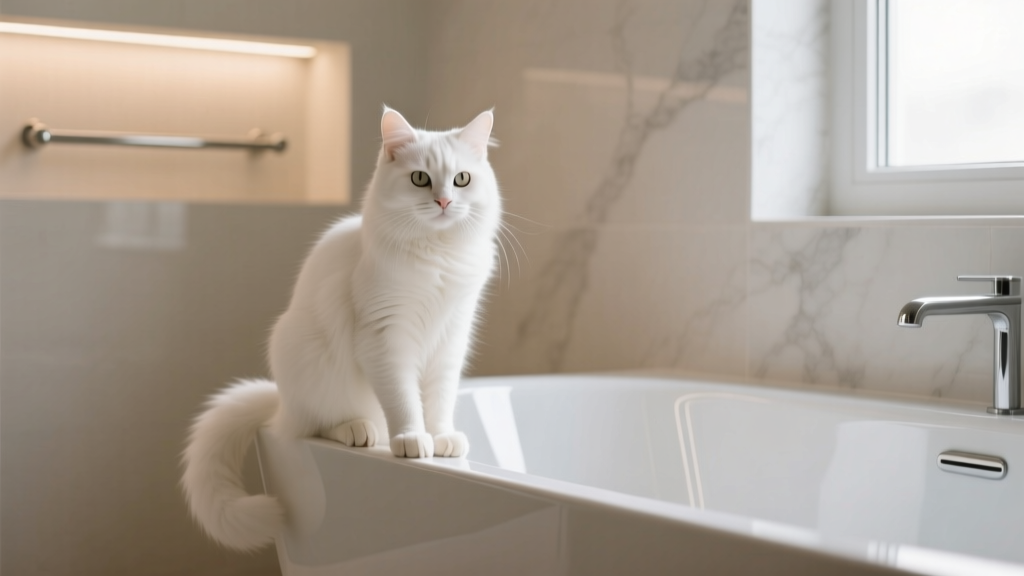
You’re heading to the bathroom for a quick shower, and there it is again: your cat perched on the narrow rim of the tub like a tiny, furry tightrope artist. Maybe they’re watching the faucet with laser focus. Maybe they’re politely supervising your bubble bath. Or maybe—if you’re unlucky—they’re teetering on the edge while you’re trying to pee, making intense eye contact like you’re the one being judged.
If you’ve ever wondered, “Why that spot? Why now? And how are they not falling in?” you’re in excellent company. The bathtub edge is one of those weirdly popular feline hangouts that makes perfect sense once you look at it through a cat’s eyes: a mix of safety, curiosity, control, and good old-fashioned entertainment.
The Science (and Evolution) Behind the Bathtub Edge Obsession
Cats are both predators and prey in the wild. That double role shaped a brain that constantly asks two questions: “What can I hunt?” and “What could hunt me?” Elevated perches help solve both.
The bathtub edge offers a lot of evolutionary “wins” packed into one small strip of porcelain:
- Vantage point: From the rim, your cat can scan the room and track movement (including yours) without being in the middle of the action.
- Control of approach: If anything feels off, it’s easy to hop down, jump away, or retreat behind the shower curtain like a dramatic stage exit.
- Curiosity magnet: Bathrooms are full of intriguing sensory information—echoing sounds, running water, steam, unfamiliar smells, and slippery textures.
- Small-space security: Many cats feel safer in contained areas. A tub is basically a big, smooth “nest” with walls.
And yes, the balance thing is real science, too. Cats have an exceptional sense of balance thanks to their vestibular system (inner ear) and their flexible spine. Add in their ability to spread their toes slightly for grip and make constant micro-adjustments, and suddenly that narrow rim isn’t so intimidating—at least not to them.
Different Contexts: What “Bathtub Edge Sitting” Can Look Like (and Why)
Not all bathtub-edge sits mean the same thing. Here are some common scenarios, along with what’s likely going on in your cat’s head.
1) The Water Watcher (Fascinated by the Faucet)
Your cat sits perfectly still, eyes following every drip. If you turn on the tap, they lean forward like they’re watching a nature documentary—except the wildlife is your plumbing.
Why: Moving water is unpredictable. It sparkles, it changes direction, it makes noise. Cats are hardwired to notice motion, and water movement triggers that “must investigate” system. Some cats also prefer running water because it can smell and taste fresher than still water.
2) The Steam Enthusiast (Hanging Out During Showers)
You step into the shower, and your cat takes their position on the rim or toilet lid like a lifeguard who is deeply concerned about your choices.
Why: Your cat may be checking on you (social monitoring), enjoying the warmth, or simply attracted by the novelty of the shower routine. Steam also carries scent particles differently, which can make the whole bathroom an information-rich environment.
3) The “This Is My Quiet Time” Sitter
Some cats use the bathroom as a retreat. They’ll perch on the tub edge when the rest of the home is noisy—kids, visitors, vacuuming, or another pet causing drama.
Why: Bathrooms are often low-traffic zones with predictable corners and fewer ambush points. A cat on the tub edge can relax while still maintaining a “security camera” view.
4) The Social Shadow (Following You Everywhere)
You go to brush your teeth, and your cat comes too. You sit on the edge of the tub to trim bangs, and suddenly there’s a cat there as well, acting like your stylist.
Why: Many cats bond through proximity rather than constant touching. Sitting near you—especially at your level—can be your cat’s version of companionship. The bathroom is also full of daily routines, and cats love predictable patterns.
5) The Hunter-in-Practice (Chasing the Curtain, Bugs, or “Invisible” Prey)
Your cat sits on the edge, tail tip twitching, then pounces into the tub, bats at the drain, and launches at the shower curtain like it owes them money.
Why: Play behavior often looks like hunting practice. Bathrooms amplify sounds (great for “is something moving?”), and small movements—like a curtain swaying—can be irresistible.
What It Says About Your Cat’s Mood and Feelings
The bathtub edge can be a “mood ring” if you learn to read the body language that goes with it:
- Relaxed and content: Loosely tucked paws, slow blinking, soft face, tail resting or gently draped. This is a comfortable perch.
- Curious and engaged: Ears forward, whiskers slightly forward, focused eyes, leaning toward the faucet or tub. They’re gathering information.
- Slightly anxious but coping: Body low, paws gripping, ears swiveling, frequent scanning. The perch may be a “safe observation deck.”
- Playful and amped up: Tail tip flicks, crouch-and-spring posture, darting gaze, quick head movements. Expect antics.
- Affectionate and socially motivated: Sitting close to you, soft meows, rubbing on your legs when you step out, or head-butting your hand. This is “together time.”
A helpful rule: the bathtub edge is often about control—control of space, control of sightlines, control of distance. When your cat feels in control, they feel safer and more confident.
Related Behaviors You Might Notice
If your cat loves the bathtub edge, you might also see these classic “bathroom cat” habits:
- Drinking from the faucet (even with a full water bowl elsewhere)
- Sitting in the empty tub like it’s a deluxe lounge chair
- Chasing water droplets on the shower wall after you’re done
- Inspecting the drain as if it’s a portal to another realm
- Rolling on bath mats for scent-marking and comfort
- Following you into the bathroom and waiting just outside the door if you close it
These are all variations on the same themes: curiosity, scent, routine, warmth, and the cat need to know what’s happening in their territory.
When It’s Normal (and When It Might Be a Concern)
Most bathtub-edge sitting is completely normal, even charming. Still, a few situations deserve a closer look.
Normal, quirky cat stuff:
- They perch there occasionally, especially during your bathroom routines.
- They’re playful, curious, or relaxed while doing it.
- They hop down easily and move normally afterward.
Potential concerns to watch for:
- Sudden new obsession with water alongside increased thirst or urination (could signal a medical issue—talk to your vet).
- Wobbliness or falling from the rim when your cat previously had great balance (possible vestibular issues, pain, or neurologic concerns).
- Hiding in the bathroom more than usual and avoiding family members (stress, illness, or conflict with another pet).
- Vocalizing or agitation when in the bathroom, as if they’re on alert rather than curious.
If the bathtub-edge habit comes with changes in appetite, litter box behavior, mobility, or personality, it’s worth calling your veterinarian. Cats are masters at being subtle about discomfort, and behavior shifts are often their first clue.
How to Respond (and When to Encourage It)
If you’d like to support this behavior safely—and maybe enjoy your bathroom time with fewer surprises—here are practical, cat-friendly tips.
Make the perch safer
- Add traction: A non-slip bath mat inside the tub or a textured mat near the edge can prevent slips if your cat missteps.
- Keep the rim clear: Shampoo bottles and razors are not ideal obstacles for a cat doing balance gymnastics.
- Consider a “better perch” nearby: A stool, lidded hamper, or small cat shelf near the bathroom can provide a safer elevated option.
Turn it into enrichment
- Offer a water alternative: A pet fountain can satisfy the love of moving water without teaching “faucet = entertainment 24/7.”
- Provide approved play: Toss a soft toy into the empty tub for a few minutes of supervised play (the tub can be a fun “arena”).
- Reward calm companionship: If your cat sits quietly while you shower, a post-shower treat or gentle praise can reinforce calm behavior.
Set boundaries without drama
- If you don’t want them there: Redirect rather than punish. Place a cozy bed or perch just outside the bathroom and reward them for using it.
- Close the door only if needed: Some cats get stressed when suddenly blocked from a routine. If you change access, do it consistently so it’s predictable.
Fun Facts and Research-Backed Nuggets
- Cats love vertical space: Behavioral research and shelter enrichment programs consistently show that providing perches and vertical territory helps many cats feel more secure and reduces stress-related behaviors.
- Running water can be more appealing: Some behaviorists believe cats may be drawn to running water because, in nature, moving water is often fresher than stagnant sources.
- Whiskers are information tools: When your cat leans over the tub edge, their whiskers help map distance and airflow—like built-in sensors for exploring a weird, echoey cave (your bathtub).
- The bathroom smells like you: Towels, laundry, and your daily routine concentrate your scent there. For bonded cats, that can be comforting—and for curious cats, it’s simply fascinating.
FAQ: Common Questions About Cats and Bathtub Edges
Why does my cat sit on the bathtub edge when I shower?
Usually it’s a mix of curiosity, warmth, routine, and social monitoring. Your cat may be keeping you company, watching the water, or enjoying the steamy environment. If their body language is relaxed, it’s typically a friendly “I’m hanging out with you” behavior.
Is it safe for my cat to sit on the edge?
For many cats, yes—but slips can happen, especially on smooth tubs. Add a non-slip mat inside the tub, keep the rim clear, and consider offering a nearby perch if your cat is older, clumsy, or prone to sudden zoomies.
Why does my cat want to drink from the faucet?
Some cats prefer moving water because it seems fresher or more exciting. A water fountain can satisfy that preference and may encourage better hydration. If your cat’s thirst increases suddenly, check in with your vet.
My cat sits there and yowls. What does that mean?
It depends on context. They may be asking you to turn on the water, looking for attention, or reacting to a sound they hear through pipes and walls. If the yowling is new, intense, or paired with other behavior changes, consider stress triggers or a medical checkup.
Why does my cat sit on the bathtub edge at night?
Nighttime can make the house feel different—quieter, darker, and full of subtle sounds. Bathrooms also echo and carry plumbing noises, which can attract a curious cat. For some cats, it’s simply a calm perch during their natural evening activity period.
Should I stop my cat from doing this?
If your cat seems happy and safe, there’s no need to stop it. If it’s becoming disruptive (demanding faucet time constantly) or risky (slipping, falling, or getting underfoot), redirect them to a safer perch and reward the new habit.
Cats don’t choose the bathtub edge because they’re trying to be weird (though they’re very talented at it). They choose it because it’s a prime observation post in a fascinating little room full of water, warmth, and your scent—basically, a tiny cat theme park.
Does your cat perch on the tub like a bathroom supervisor, a faucet scientist, or a fearless acrobat? Share your funniest (or most baffling) bathtub-edge stories with the Cat Lovers Base community on catloversbase.com.