Why Cats Sit on the Basement Stairs Top
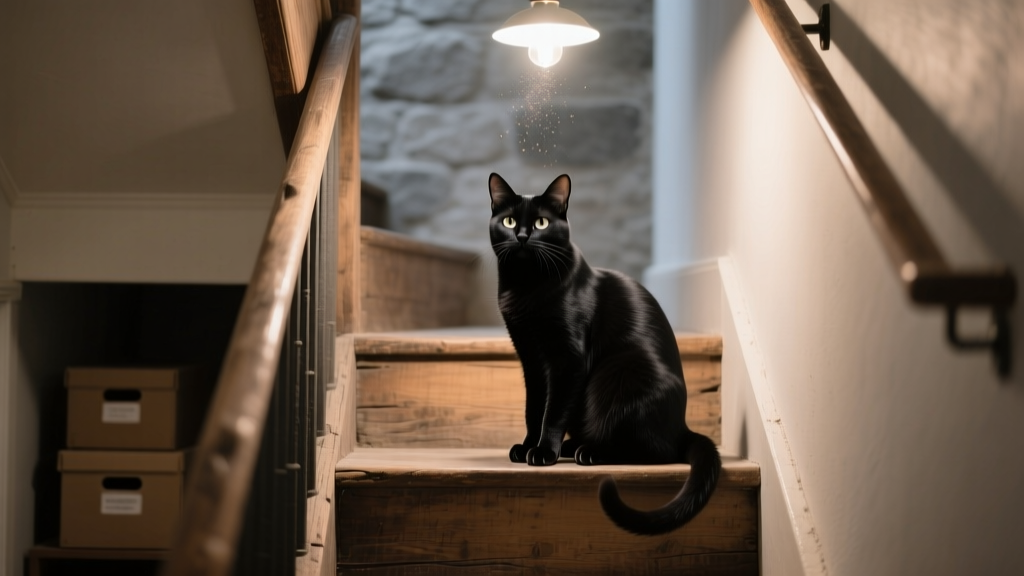
You’re carrying a laundry basket, trying not to trip, and there—like a tiny, furry bouncer—your cat is parked on the top step of the basement stairs. Not beside the stairs. Not in the sunny window. Right at the edge, perfectly placed to make you slow down and negotiate passage like you’re entering a very exclusive club.
If you’ve ever wondered, “Why that spot? Why always there?” you’re not imagining things. The top of the basement stairs is a uniquely cat-approved location, and it checks several boxes in the feline brain: safety, strategy, scent, and social control. Here’s what your cat is really doing up there—and what it can tell you about how they’re feeling.
1) The Science (and Cat Evolution) Behind the Stair-Top Hangout
Cats are both predators and prey. That single fact explains a lot of their “quirky” behavior. They want to hunt, observe, and control space like a predator—while also staying protected and having an escape route like prey.
The top of the basement stairs is basically a natural observation post:
- High ground advantage: Even a small elevation shift gives a cat better sightlines. In the wild, higher ground helps spot movement and potential threats.
- Single choke point: Stair tops function like a doorway without a door. Everything heading up or down passes through one narrow zone. Cats love predictable traffic patterns.
- Easy escape routes: From the top step, a cat can retreat into the main floor or zip downstairs. Two exits beats one.
- Information hub: Smells and sounds travel. Basements often carry interesting scents—laundry, storage items, cool damp air, old cardboard, maybe a hint of mouse.
From an evolutionary perspective, this is prime real estate: safe, strategic, and full of updates about what’s going on in the household “territory.”
2) Why This Spot Is So Appealing: A Detailed Behavior Breakdown
Not all stair-sitting is the same. Context matters. Here are the most common “types” of basement-stair-top cats, with the everyday scenarios you’ll recognize.
The Lookout
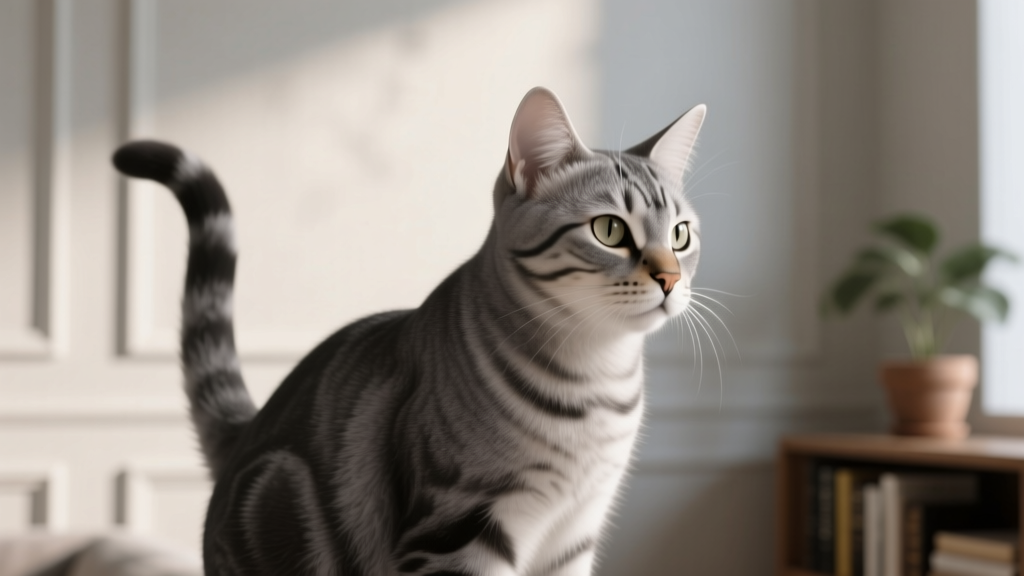
Your cat sits upright, ears swiveling, eyes half-focused like they’re watching a nature documentary only they can see. You’ll notice this more when the house is busy—kids running, guests arriving, vacuum coming out.
What’s happening: Your cat is monitoring territory from a position that feels protected. The stair top gives them control without forcing them to be “in the middle” of the action.
The Gatekeeper
This is the cat who positions themselves so you have to step around them. Sometimes they even stretch out just a little too far, like a furry speed bump with whiskers.
What’s happening: This can be mild social control: “Notice me.” It can also be resource/space management: “This pathway is part of my territory.” It’s rarely sinister—more like a cat version of standing in the hallway during a conversation.
The Ambush Artist
You walk past, and suddenly a paw shoots out. No claws (usually). Just a quick tap, or a playful swat, or a full-body pounce that makes you yelp and your cat sprint away like they’ve committed a crime.
What’s happening: Stair tops are ideal ambush points. The cat can hide their body on the landing, leaving just enough visibility to time the “attack.” This is play predation—practice hunting behavior—especially common in younger cats or high-energy adults.
The Temperature Connoisseur
Basements are cooler. Stairwells can trap drafts. In warm months, your cat may choose that spot because it’s a little chilly and comfortable, like finding the “cold side” of the pillow.
What’s happening: Thermoregulation. Cats seek microclimates that match how they feel. Cool spot today, sunbeam tomorrow.
The Sound Listener
Sometimes your cat isn’t looking at anything—they’re listening. Basements often contain subtle noises: water heaters clicking, pipes pinging, a dehumidifier humming, distant footsteps, even critters moving in walls.
What’s happening: Cats have exquisite hearing, and they investigate patterns. The stair top is a safe “auditorium seat” where they can collect data without committing to going down.
The Scent Sentinel
If your cat rubs their cheeks on the stair edge, rolls on the landing, or scratches nearby, they’re doing more than lounging.
What’s happening: They’re scent-marking. Cats have facial glands that deposit pheromones, and scratching leaves both visual marks and scent from paw glands. Stairways are high-traffic zones—excellent places to post “I live here” notes.
3) What Sitting at the Top of the Basement Stairs Says About Your Cat’s Mood
Body language turns “weird habit” into “clear message.” Here’s what to look for.
- Relaxed loaf, slow blinks, tail tucked loosely: Comfortable and calm. This is their secure spot.
- Upright sit, ears forward, whiskers slightly forward: Curious and alert. They’re monitoring something interesting.
- Tail flicking, ears rotating fast, tense shoulders: On edge—maybe noise downstairs, unfamiliar scent, or household chaos.
- Blocking you intentionally, then flopping for belly rubs (or not): Social attention-seeking. Your cat has learned “stairs = humans must notice me.”
- Hunched posture, low head, wide pupils, reluctant to move: Uncertain or fearful. If this is new, investigate possible stressors.
Most of the time, stair sitting is a sign your cat feels in control of their space. That’s a good thing—cats who feel secure tend to be more affectionate and less reactive.
4) Related Behaviors You Might Also Notice
If your cat loves the stair top, you may see similar “strategic lounging” elsewhere:
- Sitting in hallways or doorways (classic “I own the traffic flow”).
- Perching on the back of the couch to oversee the room.
- Resting on stair landings mid-level like a lookout tower.
- Following you to the basement door but not going down—curious, cautious, collecting information.
- Zoomies triggered by stairs because stairs are fun chase terrain and amplify the thrill of speed.
These all come from the same feline priorities: observe, predict movement, and keep escape routes open.
5) When Stair-Top Sitting Is Normal… and When It Might Be a Concern
Normal: Your cat chooses the stair top regularly, alternates with other favorite spots, and shows relaxed or playful body language. They eat, groom, sleep normally, and aren’t hiding.
Potential concern: The behavior changes suddenly or comes with other red flags. Watch for:
- Sudden fixation on the basement with agitation (yowling, intense staring, puffed tail). Could indicate a critter or unfamiliar scent downstairs.
- New reluctance to go downstairs or panic near the stairs. Consider a slip/fall, pain, or a scary noise event.
- Stair guarding that escalates into true aggression (hissing, swatting with claws, lunging). This can be stress-related or territorial conflict.
- Resting there because it’s the only cool place and your cat seems overheated or lethargic—especially in hot weather. Monitor hydration and comfort.
- Older cats spending more time on stairs but moving stiffly. Arthritis can change where cats choose to rest and how they navigate steps.
If you see limping, vocalizing when moving, changes in litter box habits, appetite changes, or sudden behavior shifts, a vet check is wise. Pain can make cats pick “safe” spots and avoid full rooms.
6) How to Respond (and How to Encourage It Safely)
You don’t have to “fix” this habit—unless it’s putting someone at risk of tripping or your cat is using the spot to ambush ankles a bit too enthusiastically.
Make the stair-top spot safer
- Add a non-slip mat on the landing so your cat has traction and you have stability stepping around them.
- Improve lighting so you don’t miss a dark-furred cat at dusk.
- Avoid carrying tall loads that block your view on stairs—common-sense, but cats love to pick the least convenient moment.
Offer an alternative “lookout”
If the stair top is causing traffic jams, give your cat an equally strategic option:
- A cat tree near the stair area (height plus safety).
- A wall shelf perch if you’re catifying the space.
- A cozy bed on a nearby table so they can supervise without blocking.
Channel the ambush instinct into play
- Schedule two short play sessions daily using a wand toy to mimic hunt-chase-pounce.
- Toss treats down the hallway to redirect “ankle hunting” into a fun game.
- Never punish stair swats—it can increase anxiety and make the location feel more emotionally charged. Redirect instead.
Support confidence if your cat seems wary of the basement
- Pair the basement area with good things: treats, calm praise, or feeding a few feet away (not on the stairs themselves).
- Check for spooky triggers: loud appliances, flickering lights, strong chemical smells, or slippery steps.
7) Fun Facts and Research-Adjacent Nuggets (Because Cat Brains Are Cool)
- Cats map your home like a 3D territory. Stairs aren’t just “steps”—they’re vertical pathways that connect zones. Many cats treat the top and bottom like separate “checkpoints.”
- They prefer predictability. A stairway is a place where movement is easy to anticipate. Predictable movement is easier to monitor—and easier to pounce on, if the mood strikes.
- Doorways and narrow passages matter. Animal behavior research across species shows that bottlenecks and boundaries are high-value locations for monitoring. Your basement stairs are a built-in boundary line.
- Scent marks are social comfort. Facial rubbing deposits “friendly” pheromones that can help a cat feel more secure in a frequently used area—like a hallway or stair landing.
8) FAQ: Common Questions About Cats Sitting on the Top Step
Is my cat guarding the basement?
Usually they’re not “guarding” in an aggressive sense—they’re monitoring a key pathway. If they’re calm or mildly playful, it’s normal. If they growl, block, or attack consistently, look for stress triggers (other pets, changes in the home, scary basement sounds) and consider a behavior consult.
Why does my cat sit there and stare down the stairs?
They may be listening to subtle sounds, watching dust or light patterns, or tracking a scent. If it’s intense and new, it could also mean a critter is present. If you suspect mice or insects, it’s worth checking.
My cat trips me on the stairs—how do I stop it?
Prioritize safety: add lighting, move slower, and train a simple alternative. Toss a treat to a designated mat nearby before you use the stairs, or lure them to a perch. Reward them for choosing the “approved” spot. Consistency matters more than scolding.
Does this mean my cat is bored?
Sometimes. Stair lounging can be enrichment—watching, listening, and engaging with the environment. But if stair ambushes increase, zoomies are constant, or your cat seems restless, add more structured play and puzzle feeding.
Why does my cat only do this at night?
Cats are naturally crepuscular (most active at dawn and dusk). Nighttime also amplifies sounds and shadows from the basement. A cat posted at the stair top after dark may simply be in “patrol mode.”
Should I let my cat go into the basement?
If your basement is safe (no exposed insulation, toxic chemicals, open sump pits, tight crawl spaces, or unstable storage stacks), supervised exploration can be enriching. If it’s risky, block access and give them alternative perches and sniffing opportunities upstairs.
Understanding the Stair-Top Cat (and Enjoying the Quirk)
The top of the basement stairs is more than a random hangout. To your cat, it’s a lookout tower, a scent-marking station, a temperature sweet spot, and occasionally a comedy stage for sneak attacks. When you read the body language and the context, that “annoying” stair-sit becomes a pretty sweet clue: your cat is engaged with their world and invested in the shared territory you call home.
Does your cat act like the official stair manager—blocking the route, staring into the basement void, or launching surprise paw taps at passing ankles? Share your stories (and your funniest stair encounters) with the Cat Lovers Base community at catloversbase.com. Your cat’s weird little ritual might be more relatable than you think.