Why Cats Prefer Sitting on the Armrest Edge
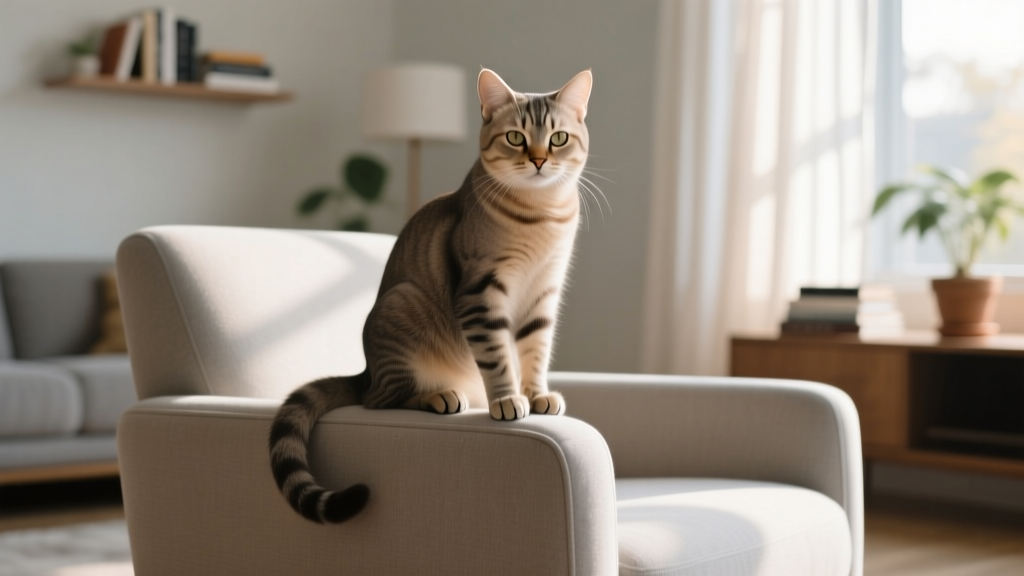
You sit down with a cup of tea, finally ready to relax. Your cat hops up beside you… and instead of claiming the wide, cushy seat like a sensible creature, they choose the narrowest, most precarious spot available: the armrest edge. One paw tucked under, tail draped like a scarf, eyes half-closed in pure satisfaction—while you hold your breath because surely they’re about to slide off.
If you’ve ever wondered, “Why would you choose that?” you’re in excellent company. From a cat’s point of view, that armrest edge isn’t a bad seat. It’s a strategic lookout, a social hub, a temperature zone, and sometimes a tiny throne of control—all in one.
1) The science and evolution behind the armrest obsession
Cats are both predators and (historically) potential prey. That dual identity shaped an animal that loves comfort, yes—but loves information even more. The armrest edge delivers information efficiently.
Height and vantage point: a small “safe hill” indoors
In nature, a slightly elevated perch helps a cat monitor movement, locate prey, and spot threats early. Your couch armrest is basically an indoor version of a low branch or rock: higher than the floor, close to the action, and perfect for scanning the room with minimal effort.
Security through predictability and quick escape routes
Cats relax best when they can control their environment. The armrest edge often provides two escape routes—forward onto the couch or backward to the floor—plus a clear view of who’s approaching. That’s a very “cat-safe” setup.
Scent and territory: the armrest is a message board
Cats communicate heavily through scent. Armrests and furniture edges are high-traffic “rub zones” where humans brush past, hands rest, and cats often cheek-rub. Sitting there lets your cat soak in familiar smells (yours and theirs) and subtly reinforce ownership: This is our spot.
Thermal comfort: edges can be warmer than you think
Heat rises, and the top edges of furniture can be slightly warmer—especially near sunny windows, warm bodies, or electronics. Some cats choose the armrest edge the way you choose the sunny side of the couch: it’s the coziest microclimate available.
2) A detailed breakdown: different “armrest edge” contexts
Not all armrest perching is created equal. The same behavior can mean different things depending on the situation.
When you’re on the couch: the “social satellite” position
Many cats want to be near you without being on you. The armrest edge is the perfect compromise. Your cat can share space, monitor your mood, and accept occasional pets—while keeping their body autonomy intact.
Classic scenario: You shift slightly, your cat’s eyes open, they adjust their paws, then return to their dignified loaf—without ever leaving their “post.” They’re present and connected, but still in charge.
When guests arrive: the “quiet supervisor” perch
If your cat sits on the armrest edge during social gatherings, it can be a way to observe unfamiliar humans from a safe distance. They’re curious, cautious, and collecting data: voices, footsteps, scents, sudden laughter.
Classic scenario: Your cat perches behind you on the armrest, staring at your friend like they’re running a background check. That’s not necessarily aggression—it’s assessment.
When the room is busy: the “traffic control tower”
Kids running, dogs pacing, you moving around—cats often choose narrow perches during chaos because it gives them a stable, predictable position away from foot traffic. Being slightly elevated helps them avoid accidental bumps and feel less vulnerable.
When they’re staring at a hallway: the “patrol shift” posture
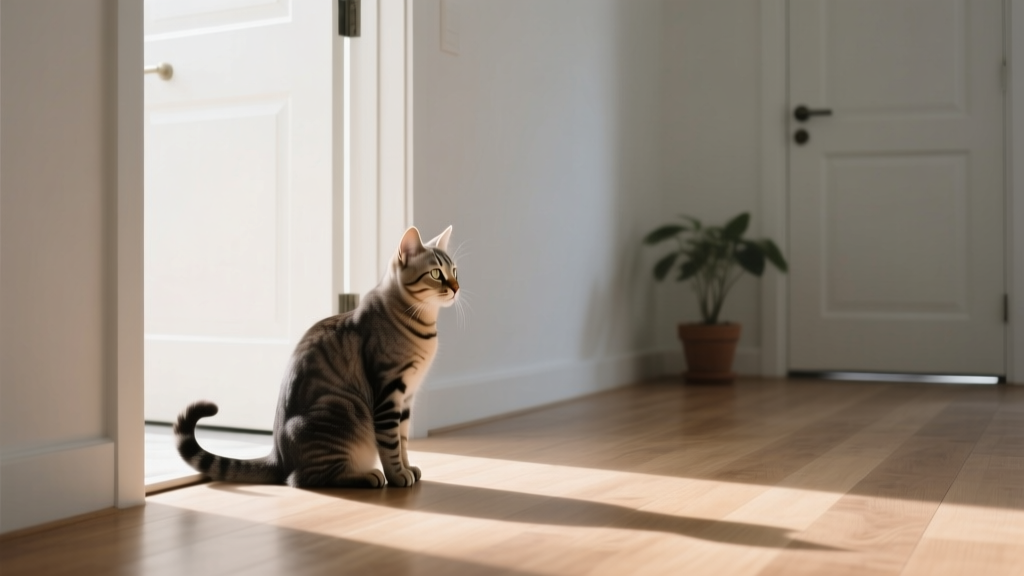
If your cat sits on the armrest edge and fixes their gaze on a doorway, they may be listening for subtle sounds (pipes clicking, neighbors outside, another pet moving). Cats have excellent hearing and are naturally drawn to monitoring entry points.
When they choose the armrest even though the couch is empty
This often points to habit, scent preference, or a favored view (window, hallway, kitchen). Cats are creatures of routine; a chosen perch can become part of their daily “map” of the home.
3) What it says about your cat’s mood and feelings
Armrest sitting is usually a sign of comfort, confidence, and interest—but body language matters. Here’s how to read the vibe.
- Relaxed and content: Soft eyes, slow blinks, loosely wrapped tail, paws tucked, ears neutral. Your cat feels safe and socially connected.
- Curious and engaged: Upright posture, ears rotating like little radar dishes, tail gently flicking at the tip. They’re interested in what you’re doing.
- Guarding or mildly tense: Stiff body, wide eyes, tail swishing with more force, ears angled sideways. They may be uneasy about a person, pet, or sound.
- Seeking interaction: Leaning toward you, head-butting, placing a paw on your arm, purring when you look at them. This is often a polite request for attention.
- Overstimulated or protective of space: Suddenly twitchy skin, fast tail thumps, turning to watch your hand closely. In this mode, petting may lead to a quick “no thanks” swat or bite.
In many homes, the armrest edge is where a cat can feel included without feeling trapped. That’s a big emotional win for a species that values control over their personal space.
4) Related behaviors you might also notice
If your cat loves the armrest edge, you may see these “cousin behaviors” too:
- Perching on the back of the couch like a furry gargoyle, especially if it gives a view of the whole room.
- Sitting on door thresholds to monitor multiple rooms at once.
- Choosing the highest point of a cat tree even if lower platforms look comfier.
- Following you from room to room but stopping just short of full cuddling distance (the classic “I’m not clingy, I’m supervising”).
- Claiming narrow surfaces like window ledges, banisters, and the top of folded blankets—cats often enjoy balancing challenges.
5) When it’s normal vs when it might be a concern
Most of the time, armrest edge sitting is perfectly normal—just a cat doing cat things. But a few situations deserve a closer look.
Normal (and often adorable)
- Your cat has always enjoyed perches and edges.
- They look relaxed and move normally.
- They alternate between armrest sitting and other resting spots.
- They can jump up and down confidently.
Potential concerns
- Sudden change in preferred resting spot: If your cuddly lap cat abruptly starts choosing the armrest and avoiding contact, consider pain, stress, or a change in routine.
- Balance issues: Wobbling, slipping, head tilt, or misjudging jumps could point to ear problems, neurological issues, or vision changes. This warrants a vet check.
- Increased hiding/perching with tension: If armrest sitting comes with wide eyes, constant vigilance, or aggression, your cat may be feeling unsafe—new pet, neighborhood cat outside, loud construction, etc.
- Senior cats: Older cats may choose armrests if it’s easier than jumping onto deeper cushions—or they may avoid jumps if arthritis hurts. Look for stiffness, reluctance to climb, or changes in grooming.
If you’re seeing a big behavioral shift, pairing your observations with a vet visit can help rule out medical causes. Cats are masters of quietly coping with discomfort.
6) How to respond (and encourage it in a cat-friendly way)
You don’t need to “fix” armrest edge sitting—but you can make it safer, more enriching, and more communicative.
Make the perch stable and safe
- Add a non-slip cover: A textured throw or a grippy fabric can help your cat feel secure and reduce slips.
- Provide a nearby alternative: Place a cat bed or small perch table beside the couch. Some cats will rotate between the armrest and the designated spot.
- Keep nails maintained: Regular trimming (or scratcher access) improves traction and comfort.
Use it as a relationship-building moment
- Practice consent-based petting: Offer a finger for a sniff. If your cat leans in or head-bunts, gentle cheek rubs are often welcome. If they stiffen or look away, pause.
- Reward calm proximity: If your cat is learning to be near guests or a new pet, quietly tossing a treat when they sit calmly on the armrest can build positive associations.
- Respect the “no-cuddle cuddle”: Some cats show affection by simply choosing to be near you. The armrest is their way of saying, “We’re together,” without feeling restrained.
Reduce stress triggers if the perch looks like “guard duty”
- Block window views if outdoor cats cause tension: Frosted film or closing curtains at peak times can help.
- Create more vertical territory: Cat trees, shelves, or perches can reduce the need to guard a single spot.
- Increase predictable routines: Regular play, meals, and quiet time can lower baseline stress.
7) Fun facts and research-friendly insights
- Cats love edges for information: The perimeter of a space often provides the best “data” with the least exposure—cats can observe without standing in the center of activity.
- Whiskers help with spatial judgment: A cat’s whiskers are sensitive touch receptors that help them measure gaps and navigate tight spaces—useful when balancing on narrow surfaces.
- Perching can be emotionally regulating: Many behaviorists observe that access to vertical or semi-elevated spaces reduces stress in multi-pet homes because it gives cats choice and control.
- Your scent is genuinely comforting: Cats form strong associations between familiar scents and safety. Furniture where you rest your arms and hands tends to be richly “you-scented,” which can make it especially appealing.
8) FAQ: common questions about armrest edge sitting
Is my cat trying to dominate me by sitting on the armrest?
Usually, no. It’s more about comfort, vantage point, and social proximity. Cats don’t typically think in “dominance hierarchy” terms with humans the way people imagine. They do, however, love spots that give them control over distance and observation.
Why does my cat choose the armrest instead of sitting next to me?
The armrest offers closeness without full-body contact. Some cats enjoy companionship but get overstimulated by prolonged touching or feeling “boxed in” on a cushion. The armrest is the perfect middle ground.
My cat sits on the armrest and then swats when I pet them—why?
That’s often a consent issue or overstimulation. The armrest is a narrow spot; your cat may feel less able to move away, so they communicate “too much” more quickly. Try shorter petting sessions, focus on cheeks/head rather than belly or back, and pause at the first sign of tail flicks or skin twitching.
Why does my cat sit on the armrest when guests come over?
It’s a safe observation post. Your cat can watch unfamiliar people while staying close to you (their trusted anchor). If they seem tense, give them space and avoid encouraging guests to reach for them.
Should I stop my cat from sitting there?
If it’s safe and your cat isn’t knocking things over or getting stressed, there’s no need. If slipping is an issue, add traction or provide a nearby perch. If the armrest perch leads to conflict (with another pet or a baby/toddler), manage access and offer alternative elevated spots.
Why does my cat balance on the narrowest edge like a circus performer?
Cats often enjoy the challenge. Balancing uses core muscles and provides a sense of control. Also, that narrow edge may have the best view, the best scent, or the best temperature—cats are excellent at finding the “prime real estate” in any room.
That armrest edge may look like an awkward seat to us, but to your cat it can be the ideal blend of safety, closeness, control, and entertainment. Next time you see your cat perched there like a tiny living room guardian, you’ll know: they’re not being weird. They’re being wonderfully, strategically feline.
Does your cat have a favorite “impossible” perch? Share your stories (and the most dramatic armrest photos) with the Cat Lovers Base community at catloversbase.com—we’d love to hear what your little supervisor gets up to.