Why Cats Prefer Sitting on Open Books
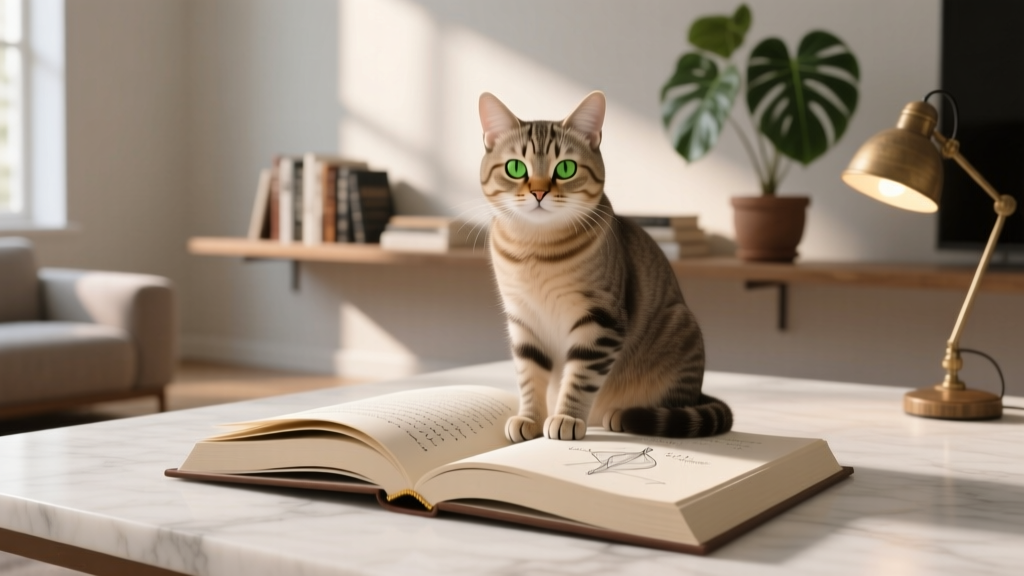
You finally have a quiet moment. Tea? Check. Cozy blanket? Check. Book open to the exact page you’ve been waiting for all day? Check. Then—soft thump. A furry body lands right on the center crease like it’s been reserved seating. Your cat settles in, purrs, and blinks at you as if to say, “Perfect. Now we can begin.”
If you’ve ever found yourself reading around a cat-shaped obstacle (or negotiating for page access like a hostage situation), you’re in excellent company. Cats and open books are a classic pairing—and it’s not just because they enjoy ruining your plot twists. There are solid behavior reasons behind this strangely specific choice of seat.
The Scientific (and Slightly Sneaky) Reasons Cats Do This
Cats are masters of choosing spots that meet multiple needs at once: warmth, security, information, and—most importantly—your attention. An open book checks all of those boxes in one neat rectangle.
1) Heat and comfort: books are surprisingly cozy
Paper holds warmth. An open book also creates a slight “dip” at the spine and a subtle ridge at the edges, which can feel like a tiny nest. If your book was on your lap, it’s even better: it’s already warmed by your body. Cats are drawn to warm, stable surfaces because conserving heat was a survival advantage for their desert-dwelling ancestors.
2) Scent mixing: “This smells like you… and now it smells like us”
Cats experience the world through scent the way we experience it through sight. Your hands have been touching that book. It smells like you, your home, your lotion, your coffee—your whole routine. When your cat sits on it, they’re adding their own scent via skin glands and fur. It’s a low-key way of marking, bonding, and claiming a shared space.
3) Attention economics: the book is a proven attention magnet
Cats are excellent observers. They learn what consistently absorbs your focus. Phones, laptops, and books all create the same problem (from your cat’s perspective): you’re staring at something that isn’t them. Sitting on the object isn’t always “jealousy” in the human sense—it’s a smart, efficient way to re-enter your attention field.
4) Safe vantage point: a flat platform in the middle of “the action”
Cats prefer areas that provide stability and predictable movement. An open book is stationary and often placed in prime territory: your lap, your chest, your desk—right where the social activity is happening. Your cat gets closeness without chaos, and can monitor everything while appearing adorably uninvolved.
A Closer Look: Different Contexts, Different Motivations
Not all “cat on book” moments mean the same thing. Here’s how to read the situation (without having to read around a tail).
When your cat sits on a book in your lap
This is often about proximity and bonding. Your lap is warm and safe; the book is simply part of the furniture. Many cats will choose the exact spot where your hands are moving most—because moving hands mean petting potential.
Common scenario: You’re holding a paperback, elbows tucked in. Your cat climbs up, turns twice, and drops right onto the pages. If you stop reading and start scratching their cheeks, you’ll usually get a satisfied slow blink or purr—confirmation that the “plan” worked.
When your cat sits on a book on the desk or table
This often has a “include me” vibe. Your cat may be seeking interaction, stimulation, or simply a better view of what you’re doing. If you’ve been studying for a long time, it can also be a gentle protest against being ignored.
Watch for: Your cat staring at your face, tapping the page, nudging your hand, or flopping dramatically on the text. That’s a social request, not a random seating choice.
When your cat chooses the open book over a nearby bed
Now we’re in “high-value territory” territory. The bed is comfortable, sure—but the book is connected to you. Cats are often more attached to your routine than we realize. If reading is your wind-down habit, your cat may be syncing with that pattern: “When the book opens, it’s calm time together.”
When your cat targets new books or certain materials
Some cats love the smell of paper, ink, and adhesives. New book scent is intense to a cat’s nose. Others prefer textured pages (think older paperbacks) because they’re slightly rough and hold scent well. If your cat rubs their face on the pages or bites the corners, the book is functioning like a scent object and tactile toy.
What This Behavior Says About Your Cat’s Mood
Book-sitting can reveal a lot about how your cat is feeling in the moment. Here are a few common “translations.”
- Relaxed and connected: Soft body posture, paws tucked, slow blinks, gentle purring. Your cat is comfortable and enjoying shared time.
- Seeking attention: Frequent eye contact, pawing at the page, head-butting the book, nudging your hands. Your cat wants interaction—petting, play, or conversation.
- Comfort-seeking or mildly stressed: Settling heavily, kneading the pages, clinging to your lap, choosing the book during noisy moments (guests, vacuum, thunderstorms). The book is part of “safe you.”
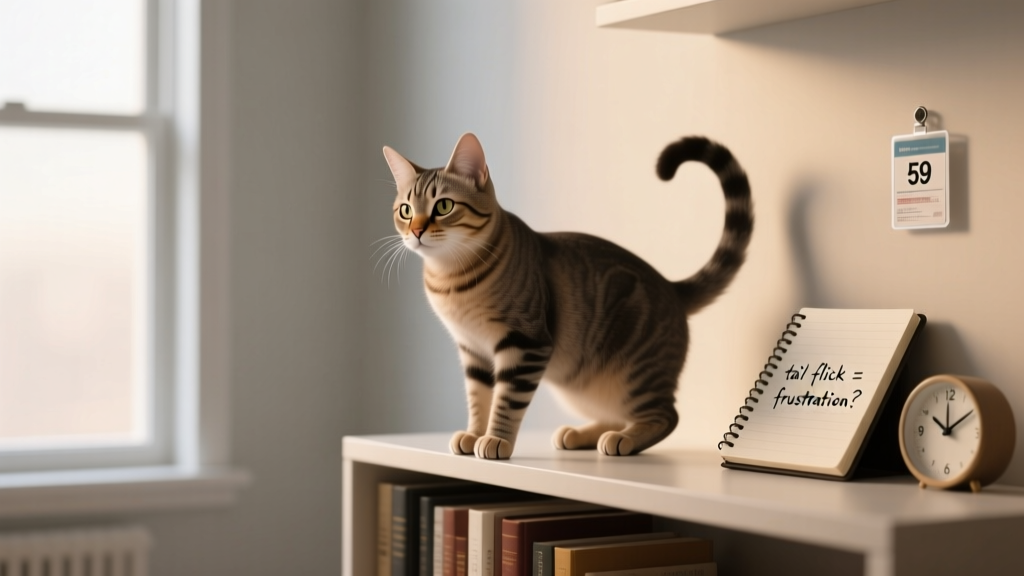
- Overstimulated or impatient: Tail flicking, ears swiveling back, quick movements, sudden nibbling. This can mean your cat wants a change in activity, or they’re not enjoying being brushed aside.
A helpful rule: the calmer the body, the calmer the emotion. The more frantic the nudging, the more likely this is a request rather than a cuddle.
Related Behaviors You Might Notice
Cats who sit on open books often have a greatest-hits list of similar “helpful” habits:
- Walking across keyboards (the classic “assist” behavior—your hands are there, so they go there).
- Sitting on paperwork (paper holds scent and warmth; also, it reliably gets a reaction).
- Flopping on your notebook while you write (movement + attention + soft surface = irresistible).
- Head-butting your phone (your gaze is captured; your cat is re-routing it).
- Sleeping on laundry (peak “you smell like home” comfort item).
- Claiming the exact spot you were just sitting (warmth and scent, plus a little social mirroring).
All of these behaviors share a theme: your cat is drawn to objects that represent you and your attention.
When Sitting on Books Is Normal… and When It Might Be a Concern
Most of the time, this is perfectly normal feline social behavior—cute, mildly inconvenient, and flattering in a cat-ish way.
Normal, everyday book-sitting
- Your cat settles calmly and stays put.
- The behavior happens during predictable routines (evening reading, weekend lounging).
- Your cat can be gently redirected without stress.
Potential concerns to watch for
- Sudden clinginess or attention-seeking escalation: If your cat suddenly can’t tolerate you reading at all, and this is new, consider recent changes—schedule shifts, a new pet, construction noise, or less playtime.
- Compulsive chewing or eating paper: Some cats chew paper occasionally; persistent paper-eating can be a sign of stress, boredom, dental discomfort, or (rarely) pica. If your cat is ingesting paper, talk to your vet.
- Aggression when moved: If your cat swats, growls, or bites when you slide the book out, it may indicate pain, resource guarding, or overstimulation. A vet check and behavior plan can help.
- Hiding and then book-claiming: If your cat is hiding more but also clinging to you when you’re still, they may be anxious or unwell. Changes in appetite, litter box habits, or grooming alongside clinginess warrant a vet visit.
The key is change. If it’s always been part of your cat’s quirky routine, it’s likely just personality. If it’s new, intense, or paired with other behavior shifts, investigate.
How to Respond (Without Starting a Daily Battle for Page Space)
You don’t need to “train it out” unless it’s unsafe or disruptive. Instead, you can meet the underlying need—warmth, closeness, attention—while keeping your book readable.
Create an approved “reading buddy” spot
- Place a cozy blanket or small cat bed next to you on the couch or desk.
- Add a warm item (a freshly used throw, or a pet-safe warming pad on low under supervision).
- Reward your cat for choosing that spot with a few pets or a treat.
Use the “decoy book” trick
Some cats are specifically drawn to the shape and texture of an open book. Try placing an old magazine or a notebook open beside your real book. Many cats will happily choose the decoy—especially if it’s closer to your hands.
Schedule micro-attention breaks
If your cat climbs onto the pages every time you read, they may be asking for interaction. Offer a 2–3 minute cuddle or a quick play session (wand toy, chase game) before you settle in. You’ll often get a longer uninterrupted reading stretch afterward.
Redirect gently and consistently
If you move your cat, do it calmly: slide the book away, place your cat on the alternative spot, then reward. Avoid pushing or startling—cats remember “rude hands,” and it can make them more determined next time.
Protect your books if your cat is a chewer
- Store books upright or behind closed doors if chewing is frequent.
- Provide chew-appropriate alternatives (dental toys, silvervine sticks, food puzzles).
- Increase enrichment: climbing spaces, window perches, and short daily play sessions.
Fun Facts and Research-Linked Tidbits
- Cats are drawn to rectangles. Informal studies and plenty of real-life experiments show cats will sit in boxes, squares taped on the floor, and laundry baskets—anything that creates a defined boundary. An open book is basically a portable rectangle that smells like you.
- Your cat’s face has scent glands designed for “friendly tagging.” When cats rub their cheeks or forehead on objects, they’re depositing pheromones associated with familiarity and comfort. Books and notebooks often become “safe” objects in the home scent-map.
- Cats learn routines with impressive precision. If you consistently read at night, your cat may treat the opening of a book like a cue: quiet voice, soft lighting, and predictable cuddle access.
- Attention isn’t just petting. For many cats, your stillness is a gift. Reading puts you in one place, hands nearby, body warm—prime cat real estate.
FAQ: Common Questions Cat Owners Ask
Is my cat jealous of my book?
Not usually in the human sense. It’s more accurate to say your cat prefers the book because it reliably leads to closeness and attention. Cats repeat what works.
Why does my cat sit on the exact page I’m reading?
Your hands and gaze are concentrated there, so that spot becomes the “center” of your attention. Cats gravitate to the hottest social zone in the room—wherever you’re most engaged.
Why does my cat knead on my open book?
Kneading is a comfort behavior linked to kittenhood nursing. If your cat kneads the pages, they’re likely feeling safe, cozy, and affectionate. (They may also be trying to make the world’s flattest bed slightly fluffier.)
My cat bites or chews pages—what does that mean?
Occasional nibbling can be play or sensory exploration. Frequent chewing can signal boredom, stress relief, dental discomfort, or a habit that’s become self-rewarding. If your cat is ingesting paper or chewing intensely, talk to your vet and increase enrichment.
Should I let my cat sit on my book or stop it?
If it’s gentle and safe, it’s a normal bonding behavior and often worth accommodating. If it damages books, causes conflict, or involves chewing/swallowing, redirect to a designated spot and address the underlying need (attention, play, comfort).
Why does my cat do this to me and not to other people?
You may be your cat’s favorite person, the one who reads most often, or the person whose lap equals warmth and predictable affection. Cats form strong preferences based on history: who feeds them, plays with them, and feels safest.
One Last Page (That Your Cat Will Probably Sit On)
Cats sitting on open books isn’t random sabotage—it’s a sweet mashup of feline instincts: seeking warmth, claiming familiar scent, choosing stable “territory,” and inserting themselves into your attention like the clever little social strategists they are. With a decoy book, a cozy alternate perch, and a few planned cuddle breaks, you can keep your reading life intact while still honoring what your cat is really asking for: time with you.
Does your cat have a favorite book genre (mystery laps? romance paperbacks? tax paperwork?) or a signature move—like the dramatic flop across chapter five? Share your funniest “cat vs. book” stories with the Cat Lovers Base community at catloversbase.com.