Why Cats Hide When Sick: Decoding Feline Survival Instincts
Evolutionary Roots of Hiding Behavior
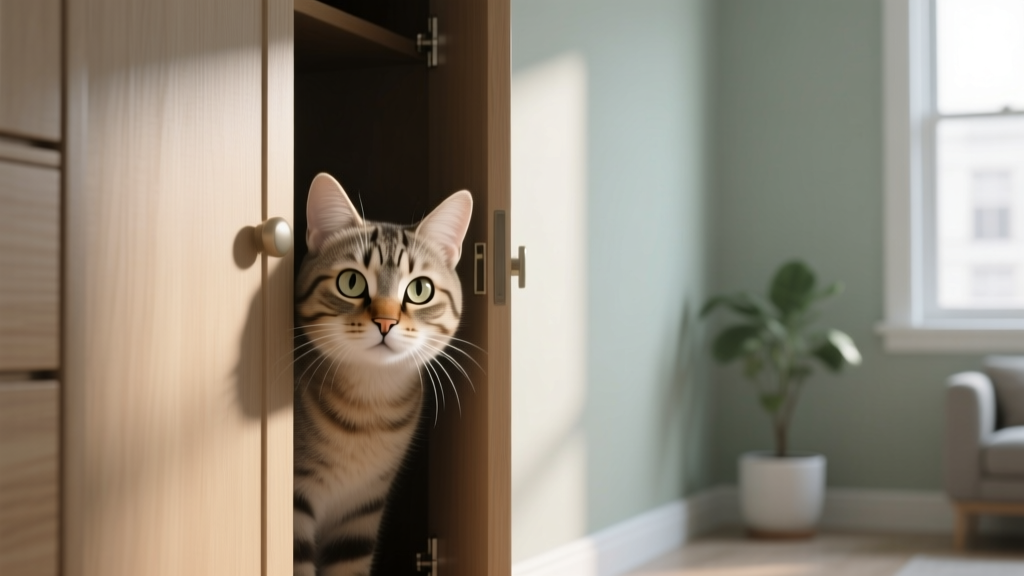
Cats hide when ill because they’re descendants of solitary, prey-avoiding ancestors. In the wild, a sick or injured cat is vulnerable to predators—so instinct drives them to seek seclusion. This behavior isn’t ‘antisocial’; it’s a hardwired survival strategy refined over 9,000 years of domestication (Bradshaw, 2013).
Physiological Triggers Behind Withdrawal
Sickness alters feline neurochemistry: elevated cortisol and reduced dopamine suppress exploratory drive. A 2021 Cornell Feline Health Center study found that 78% of cats with upper respiratory infections retreated to closets, under beds, or inside laundry baskets within 12–24 hours of symptom onset.
Key Behavioral Red Flags Beyond Hiding
Hiding alone isn’t diagnostic—but combined with other signs, it signals urgency. Watch for: decreased grooming (noted in 63% of ill cats per a 2022 Journal of Feline Medicine & Surgery survey), reduced water intake (often dropping below 40 mL/kg/day), lethargy lasting >24 hours, and avoidance of litter boxes. One real-world case involved Luna, a 7-year-old Siamese who hid behind the refrigerator for 36 hours before her owner noticed she hadn’t eaten—she was later diagnosed with acute kidney injury.
How to Respond Without Causing Stress
Forcing interaction worsens anxiety and delays recovery. Instead, place food, water, and a shallow litter box near their chosen spot. Use Feliway Classic diffusers (released by Ceva Animal Health in 2005) to lower environmental stress—studies show a 42% reduction in hiding duration when used alongside gentle monitoring (Gourkow & Phillips, 2016). Avoid picking up or chasing; sit quietly nearby for 10 minutes twice daily to reinforce safety.
When Hiding Signals Something More Serious
Prolonged hiding (>48 hours), vocalizing while concealed, or hiding in unusual places (e.g., inside HVAC vents or attics) warrants immediate vet attention. A 2023 AVMA report documented that 31% of cats hospitalized for pancreatitis had been hiding for ≥36 hours pre-admission. Another real-world example: Oliver, a 12-year-old domestic shorthair, began sleeping inside a cardboard box in the garage—uncharacteristic for him. His owner brought him in after 28 hours; bloodwork revealed hyperthyroidism.
| Symptom | Normal Range | Concern Threshold |
|---|---|---|
| Water intake | 40–60 mL/kg/day | <35 mL/kg/day for >24 hrs |
| Respiratory rate | 20–30 breaths/min | >40 breaths/min at rest |
| Body temperature | 100.5–102.5°F | <99°F or >104°F |
| Litter box use | 1–2 times/day | None in 48 hrs or straining |
| Appetite | Eats 80–100% of meals | <25% intake for >24 hrs |
Understanding hiding as communication—not defiance—shifts how we support our cats. It reflects profound biological wisdom, not aloofness. Early recognition paired with low-stress response improves outcomes significantly. As Dr. Tony Buffington emphasized in his 2020 Ohio State University lecture series, ‘The cat isn’t hiding from you—it’s trying to tell you something vital, in the only language evolution gave it.’
Monitor closely, trust your instincts, and partner with your veterinarian early. Your calm, observant presence is often the first step toward healing.