Why Cats Choose the Dirtiest Clothes Pile
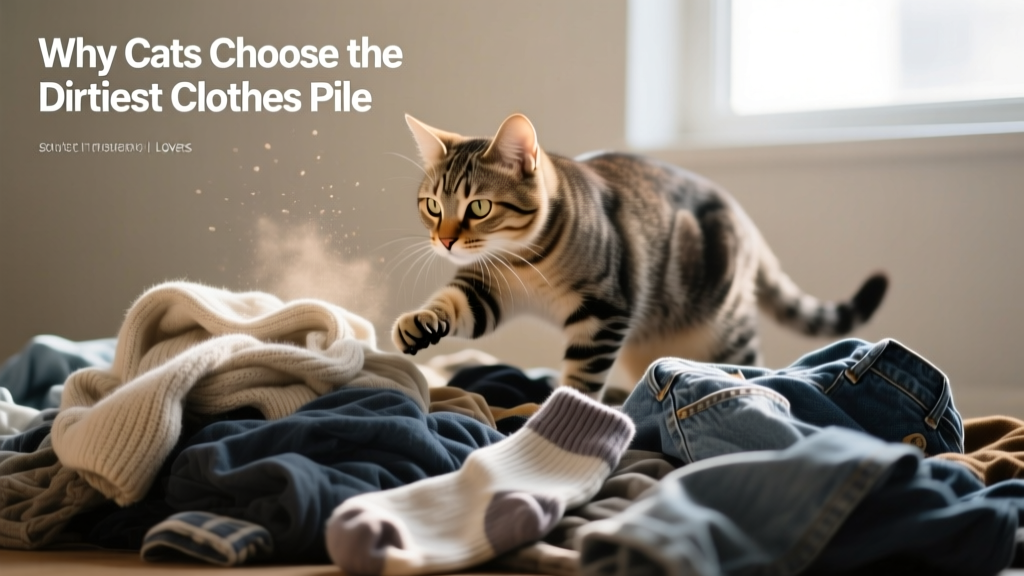
You just folded laundry—well, half folded. The rest is in a “temporary” heap on the chair. You turn your back for one minute, and there’s your cat: curled like a cinnamon roll on top of the sweatiest gym shirt you own, purring as if you’ve prepared a luxury suite. Meanwhile, the plush cat bed you bought (the one with the memory foam and the suspiciously high price tag) sits untouched, looking personally offended.
If you’ve ever wondered why your cat seems magnetically drawn to the dirtiest clothes pile in the house, you’re not alone. This isn’t your cat being gross on purpose or trying to ruin your outfit. It’s actually a very cat-like combo of biology, comfort, and emotional bookkeeping—wrapped in fur.
1) The Scientific (and Evolutionary) Reason Clothes Piles Are Cat Heaven
Cats experience the world through scent in a big way. Their noses are far more sensitive than ours, and their brains are wired to treat smell as information: Who was here? Is it safe? Do I belong here?
A dirty clothes pile is basically a “scent billboard” that screams trusted human lives here. Worn clothing carries concentrated skin oils, sweat, and your personal odor profile—stronger than what’s lingering on your clean sheets or the couch. To a cat, that can be reassuring, grounding, and deeply comforting.
From an evolutionary angle, cats are both predators and prey. That means they’re always scanning for safety. Resting near the scent of a trusted social partner (you) can lower their vigilance and help them relax. In multi-cat colonies, scent-sharing helps keep the peace. In your home, your cat may treat your smell like a social anchor—something that says “this is my group.”
Also: piles are excellent. Cats love enclosed, nest-like spots that protect their sides and back. A heap of clothes creates soft contours that hold body heat and feel like a secure little crater.
2) A Detailed Breakdown: Different “Dirty Laundry” Contexts and What’s Going On
The Post-Work Pounce
You kick off your jeans and hoodie. Within minutes, your cat arrives and settles in like they’ve been waiting for you to “set the table.” This is often social comfort: your cat is drawn to the freshest, strongest “you scent.” It can also be a way of reconnecting after you’ve been gone—especially in cats that are people-oriented but not necessarily clingy.
The Gym Gear Obsession
Some cats go crazy for workout clothes. This usually isn’t because your cat has questionable taste; it’s because sweat increases odor intensity. Sweat also contains salts and other compounds that may be intriguing or soothing. A cat who chooses gym clothes over everything else is often choosing the strongest signal of familiarity available.
The Bedroom Laundry Basket Takeover
A basket of worn clothes is a prime nesting site: elevated, contained, and lined with soft fabric. Your cat may also feel especially safe in the bedroom, since it tends to be quieter and rich in your scent already. Add a basket “wall,” and you’ve created a tiny fortress.
The “Clean Laundry? Still Mine.” Situation
If your cat also lies on clean laundry, it’s less about dirt and more about texture and warmth—plus the fact that laundry is often placed in neat stacks that make excellent beds. Sometimes clean clothes still carry a faint trace of you (especially if they’ve been sitting in your room), and cats will happily take even the “low-scent” version.
The “They Ignore My Clothes but Love My Partner’s” Plot Twist
Cats can have scent preferences. Your partner might use a different soap, deodorant, or fabric softener that your cat finds more appealing. Or your partner might be the person who feeds the cat more often, plays in a certain way, or has a calmer energy—meaning their scent is paired with good experiences.
3) What This Behavior Can Say About Your Cat’s Mood and Feelings
Most of the time, choosing your dirty clothes pile is a positive sign. It often means:
- They feel safe with you. Your scent is comforting, not threatening.
- They’re seeking connection. This can be a subtle “I like you” from cats who aren’t lap-sitters.
- They’re self-soothing. If they’re mildly stressed (new schedule, visitors, noise), familiar smell can help them settle.
- They want warmth and softness. Clothes trap heat and mold to the body.
Pay attention to the body language that comes with it. A cat who’s relaxed—loose posture, slow blinks, tucked paws, gentle purring—likely feels secure. A cat who’s tense—ears angled back, rapid tail flicks, darting eyes—may be using the clothes pile as a coping strategy while staying on alert.
4) Related Behaviors You Might Notice (and Why They’re Connected)
Dirty laundry love often travels with a few other classic scent-and-security behaviors:
- Sleeping on your side of the bed. Strong “you scent,” plus the warmth you leave behind.
- Face-rubbing on your shoes or bag. Cats deposit facial pheromones to mark safe objects and mingle scents.
- Kneading blankets or clothing. Self-soothing behavior, often linked to comfort and relaxation.
- Sitting on your laptop/keyboard. Warmth, attention, and a desire to be where your focus is.
- Rolling in stinky spots. Sometimes cats enjoy strong odors (including yours) as sensory enrichment—odd, but normal.
All of these behaviors share one theme: your cat is managing their environment with scent, comfort, and proximity to the “safe human.”
5) Normal vs. Concerning: When the Clothes Pile Choice Might Be a Clue
Usually, this is completely normal. But it can be worth a closer look if you notice any of the following:
- Sudden clinginess or a new fixation on your scent paired with hiding, decreased appetite, or unusual vocalizing. This can indicate stress or illness.
- Compulsive licking of fabric (especially wool) or chewing clothing. Some cats develop pica-like behaviors that require veterinary guidance.
- Urine marking on laundry. This is not “revenge.” It’s communication—often stress, territory insecurity, or a litter box issue. Also: urinary problems can mimic behavior problems, so a vet check matters.
- Avoiding all other resting spots and only sleeping in one place. Any major behavior change deserves attention.
If your cat is simply napping on the clothes pile and acting normal otherwise, you can file this under “harmless cat weirdness.” If there’s a behavior change, physical symptoms, or elimination issues, bring in your vet and consider a cat behavior professional.
6) Tips for Responding (Without Fighting a Tiny, Determined Roommate)
You can work with this behavior instead of waging a daily laundry war.
Create a “Legal” Clothes Pile
Put a soft blanket or towel in a cat bed or box and rub it on your worn T-shirt (or place a recently worn shirt on top). This gives your cat the comfort they’re seeking without turning your wardrobe into a fur storage facility.
Use a Basket Strategy
Offer two baskets: one with a washable blanket for your cat, and one with a lid for your laundry. Many cats will happily choose the open, cozy basket if it’s in a good location (quiet corner, near you, or by a window).
Make the Preferred Spot Even Better
If your cat always chooses the chair pile, put a cozy bed on that chair. Cats are location loyal. Change the “furniture” of the spot, and your cat may switch to the bed without complaint.
Don’t Punish or Scare Them Off
Chasing your cat away can turn a comfort behavior into a stress trigger—and may make the clothes pile even more desirable (because now it’s emotionally “charged”). Quietly relocate them and reward them for settling where you want them.
If Laundry Chewing or Licking Is an Issue
Increase enrichment: more play (especially wand-toy “hunt” sessions), food puzzles, and safe chewing alternatives. If it’s persistent, talk to your vet—compulsive behaviors can be tied to stress, diet, or medical issues.
7) Fun Facts and Research-Flavored Tidbits
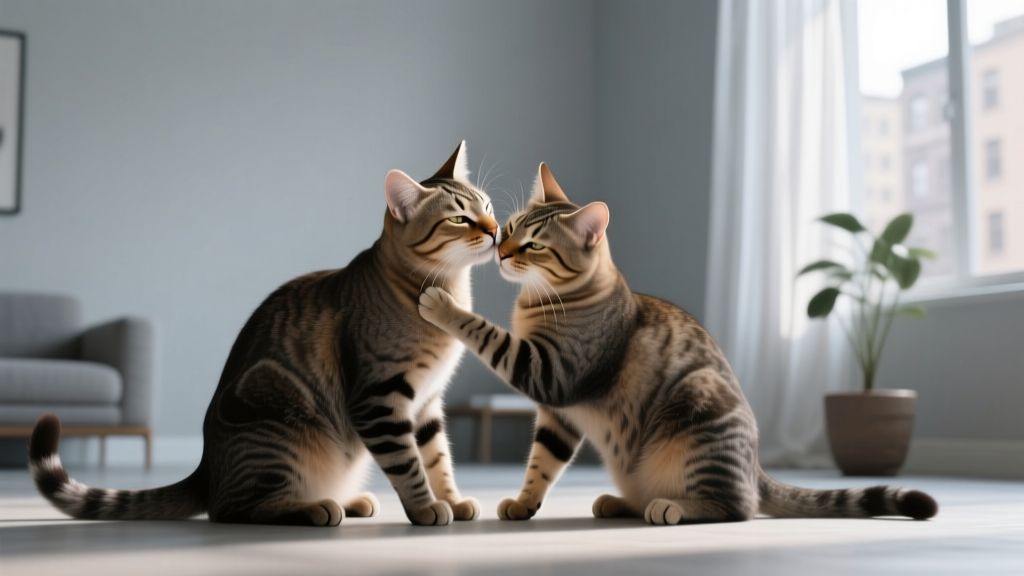
- Cats use scent like social glue. Friendly cats often rub faces and bodies on each other (and on you) to create a shared “group scent.” Your laundry pile is basically a concentrated group-scent station.
- They have a special scent organ. Cats can analyze odors with the vomeronasal organ (you may see the “flehmen response,” a funny open-mouth face). While your laundry isn’t always flehmen-worthy, it’s absolutely scent-rich.
- Warmth is a big deal. Cats prefer warmer resting spots than humans do. Fabric piles trap heat and reduce drafts—especially appealing to older cats or lean cats.
- Scent can reduce stress. Familiar odors can help animals feel secure in changing environments. That’s one reason a “scented” blanket from home can help cats adjust to travel or new spaces.
8) FAQ: Common Questions Cat Owners Ask
Is my cat choosing my dirty clothes because they miss me?
Sometimes, yes—especially if the behavior ramps up when you’ve been away or busy. More generally, it’s about comfort and familiarity. Your scent signals safety, and your cat is using that to relax.
Why does my cat prefer dirty clothes over my lap?
Not all cats enjoy restraint or the unpredictability of a moving human. A clothes pile offers your scent without the pressure of physical contact. It can be a cat’s version of “I adore you… from over here.”
Can this mean my cat is anxious?
It can, but it’s not automatically a red flag. Look for other signs: hiding more, appetite changes, litter box issues, overgrooming, or increased irritability. If the laundry habit appears alongside those, it may be comfort-seeking due to stress.
My cat drools or kneads on my clothes—normal?
Kneading is common and often comforting. Some cats drool when they’re extremely relaxed or emotionally “soft,” especially during kneading. If drooling is new or excessive, check with your vet to rule out dental issues.
How do I stop my cat from getting fur on my work clothes?
Give them a better alternative in the same location: a dedicated blanket, bed, or open basket with a worn (but designated) T-shirt. Then keep your work clothes in a closed hamper or behind a closet door. Managing access is usually easier than trying to convince a cat to stop liking what they like.
Why does my cat sometimes pee on the laundry pile?
This is a different behavior than sleeping on it. Laundry peeing often relates to stress, territorial insecurity, litter box aversion, or a medical issue like a urinary tract problem. Treat it as a vet-and-behavior issue, not a discipline issue.
What This Quirk Can Teach Us About Cats (and Us)
The dirty clothes pile isn’t a betrayal of your expensive cat bed—it’s your cat choosing a place that smells like their safe person, feels warm, and cradles them like a little nest. It’s scent-based bonding in action, the cat version of saving you a seat.
If you lean into what the behavior is really about—comfort, security, and connection—you can meet your cat halfway with smarter setups, fewer laundry battles, and a home that feels even more cat-friendly.
Does your cat have a favorite “forbidden” laundry item—gym socks, hoodies, yesterday’s jeans? Share your funniest clothes-pile stories (and your best solutions) with other cat people at catloversbase.com.