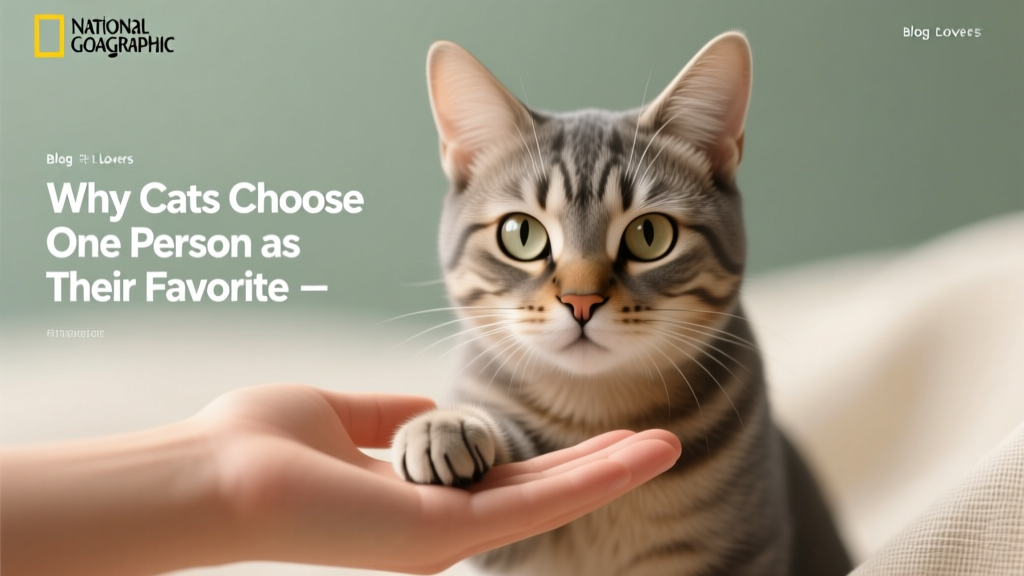
Why Cats Choose One Person as Their Favorite
You live in the same house. You buy the same food. You both adore the cat. And yet—somehow—your cat has appointed a Chosen One.
Maybe it’s your partner who can’t sit down without instantly becoming a purring lap throne. Or your teenager who “doesn’t even like cats” but gets slow blinks and headbutts on demand. Meanwhile, you’re standing there with a wand toy like an underappreciated stage performer, wondering what you did wrong.
If you’ve ever asked, “Why does my cat like them more?” you’re not alone. Cats often form especially strong bonds with one person in the household—and it isn’t always the person who scoops the litter. The good news: it usually makes perfect sense in cat logic. The even better news: you can absolutely improve your own relationship with your cat without turning it into a competition.
The evolutionary and scientific “why” behind feline favorites
Cats are social… but not in the same way dogs are. Domestic cats descended from largely solitary wildcats that lived near human settlements. Their survival strategy wasn’t “stick with the pack,” it was “secure reliable resources and stay safe.” That background still shows up in modern cat behavior.
When a cat chooses a favorite person, they’re often choosing the individual who best matches their core needs:
- Safety: Who makes the cat feel calm, unpressured, and secure?
- Predictability: Who moves in ways the cat understands and can anticipate?
- Reward history: Who has consistently provided good things—food, play, warm laps, gentle petting?
- Low conflict: Who respects boundaries and doesn’t accidentally “push it”?
There’s also a learning component. Cats are excellent at forming associations: this person = treats and quiet voice, that person = sudden hugs and loud laughter. Over time, the cat’s nervous system starts to relax more quickly around the “safe” person, and affection becomes easier and more frequent.
And yes—some of it is simple compatibility. Just like humans, cats have individual temperaments. A shy cat may bond to the calmest person in the home. A confident, playful cat may pick the person who plays the best games (or walks the most reliably to the treat cupboard).
How the “favorite person” behavior shows up in different contexts
Cats don’t always announce favoritism with dramatic devotion. Sometimes it’s subtle. Here are common ways it plays out, plus what may be driving it.
1) The lap magnet
Your cat ignores every open lap… except one. This often points to a “perfect storm” of comfort: the person sits still, has a warm body temperature, and doesn’t pet too aggressively. Cats love heat and stability. If your favorite-person candidate is the one who reads quietly for an hour, it’s basically a heated mattress with a heartbeat.
2) The bedtime shadow
Some cats pick the person they sleep near (or on). Sleeping is a vulnerable state, so this is a big compliment in cat language. It usually means your cat feels safest with that person—either because of the person’s calm energy or because that side of the bed has the best escape routes, quietest environment, or coziest blanket situation.
3) The “I follow you everywhere” phase
If your cat trails one person from room to room, they may be seeking:
- Access to resources: That person’s routine predicts meals, treats, or play.
- Security: The person functions like a mobile safe zone.
- Social contact: Some cats are genuinely social and enjoy being near their favorite human.
4) The greeter at the door
Cats can learn schedules and associate sounds with specific people. If your cat runs to greet one person and not the others, it’s often because that person’s arrival reliably predicts something pleasant—like dinner, playtime, or a calm reunion ritual. (Cats love rituals. Tiny ceremonies of affection are their comfort food.)
5) The “I only purr for them” mystery
Purring is often contentment, but it can also be self-soothing. If the cat purrs most around one person, that person may be the easiest to relax with, or the best at reading signals—petting in the right spots, stopping at the right time, and not overstimulating the cat.
6) The avoider who still has a favorite
Even cats who seem aloof may show preference by choosing who they tolerate closest, who they sit near, or who they slow-blink at. For more independent cats, “favorite person” might mean “the one who doesn’t insist on affection.”
What favoritism says about your cat’s mood and feelings
When your cat chooses one person, it’s usually a blend of affection, trust, and emotional regulation.
- Trust: Your cat expects this person to respect boundaries and keep them safe.
- Comfort: The person’s voice, scent, and movements feel familiar and soothing.
- Positive anticipation: Good things tend to happen around this person (even small ones, like gentle greetings or a consistent feeding routine).
- Secure attachment (cat style): Cats can form attachment bonds. A favorite person is often the “secure base” in the home.
It can also reflect your cat’s current needs. After a stressful event (guests, renovations, a new pet), a cat may temporarily cling to the person they feel safest with. During a confident, playful period, the “favorite” might shift to whoever plays best.
Related behaviors you might notice
Once you spot favoritism, you’ll often see a constellation of other behaviors:
- Slow blinking: A feline version of “I’m comfortable with you.”
- Bunting (headbutts): Scent-marking and affiliative behavior—your cat is labeling you as “my person.”
- Allogrooming: Licking your hair or hand (sometimes followed by a gentle nibble if overstimulated).
- Chirps and trills: Friendly vocalizations often used as greetings or “follow me.”
- Showing the belly: Not always an invitation to touch; often a trust display.
- “Helpfulness”: Sitting on the laptop, supervising cooking, or inserting themselves into your book—attention-seeking from a preferred human.
When a favorite person is normal… and when it might be a concern
In most households, having a preferred human is completely normal. It becomes worth a closer look if there’s a sudden, intense change or signs of stress.
Normal favoritism looks like:
- Choosing one lap more often but still relaxed around others
- Seeking one person at night but engaging with the family during the day
- Occasional “snubs” that match the cat’s mood (cats have social batteries)
Potential concern signs include:
- Sudden clinginess (especially in an older cat) paired with vocalizing, restlessness, or changes in appetite
- Hiding more than usual and only coming out for one person
- Aggression toward others who approach the favorite person (resource guarding the human)
- New avoidance of a previously liked person (could be pain, fear, or a negative experience)
- Changes in litter box habits or grooming (stress or medical issues)
If favoritism comes with behavior changes—especially appetite, litter box use, mobility, or increased irritability—checking in with a veterinarian is smart. Pain and illness can make cats seek one “safe” caretaker or avoid touch altogether.
Tips for responding to (and gently encouraging) bonding without jealousy
If your cat has a favorite, you don’t have to accept permanent second-class status. You can become more appealing in cat terms—calm, predictable, and rewarding.
1) Let the cat do the approaching
Instead of reaching for your cat, try sitting nearby and turning your body slightly sideways (less confrontational). Offer a slow blink. Cats often approach when they feel in control of distance.
2) Become the “treat fairy” (strategically)
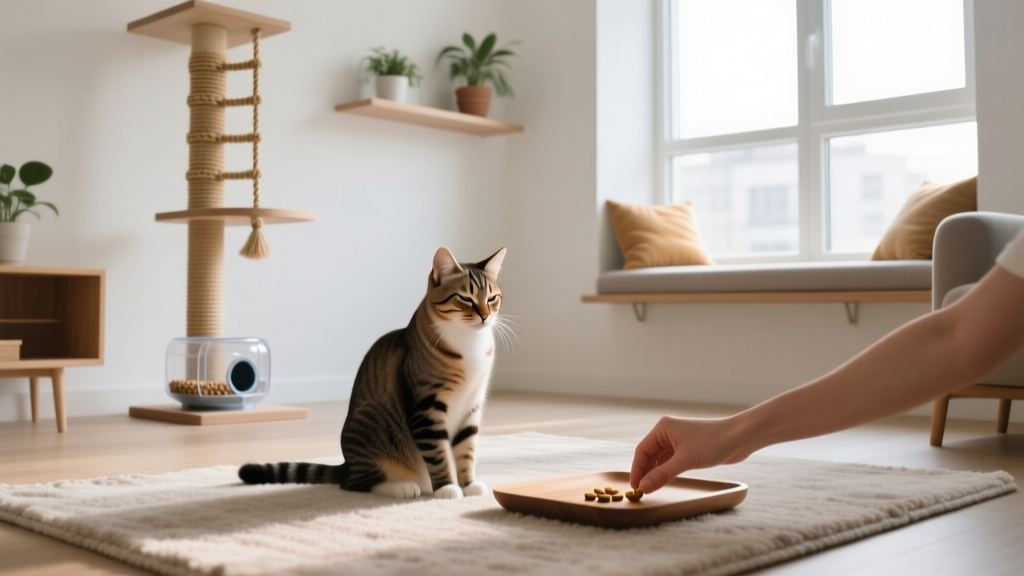
Pair your presence with good things. A small treat when the cat comes near you, or a treat tossed gently past you so the cat can approach without pressure. Consistency matters more than quantity.
3) Learn your cat’s petting sweet spot
Many cats prefer petting around the cheeks, under the chin, and along the head/neck area. Full-body strokes and belly rub attempts can be too much for some. Watch for early signs of overstimulation: tail flicking, skin twitching, ears rotating back, sudden head turns toward your hand.
4) Play like a cat, not like a human
Use wand toys to mimic prey: small movements, hiding behind furniture, occasional pauses, then a burst of action. Let your cat “win” sometimes. A short, satisfying hunt sequence followed by a snack is bonding magic.
5) Respect “no” with grace
Nothing builds trust faster than honoring boundaries. If your cat walks away, let them. The cat learns: This person listens. And that’s incredibly attractive in feline social terms.
6) Share the routine
If one person does everything (feeding, treats, play, grooming), the cat will naturally form a stronger association with that person. Spread the good stuff around—especially the parts your cat values most.
Fun facts and research-flavored nuggets about feline favorites
- Cats are sensitive to human behavior cues. Many cats respond strongly to gentle voice, slow movements, and consistent routines—tiny signals that indicate safety.
- Attachment is real. Studies on cat-human bonding have found that cats can form attachment styles with their caregivers, showing secure-base behaviors in unfamiliar situations.
- Scent is a social glue. When your cat rubs their face on someone, they’re depositing scent from facial glands—essentially adding that person to the “trusted network.”
- Favoritism can shift over time. Changes in schedule, stress levels, household members, or who provides play/food can influence who the cat gravitates toward.
- The “cat whisperer” is often just the quiet person. Cats frequently prefer people who don’t stare, don’t loom, and don’t force interaction—especially shy cats.
FAQ: Common questions about cats choosing a favorite person
Why does my cat prefer my partner even though I feed them?
Food matters, but it’s not the only currency. Your partner may be calmer, move more predictably, pet in a way your cat prefers, or simply be less “try-hard” (cats often like low-pressure attention). Feeding helps, but comfort and consent are huge.
Can a cat have more than one favorite person?
Absolutely. Many cats have a small inner circle. They may choose one person for play, another for naps, and another for treats. Some cats rotate favorites depending on mood and season (winter lap preferences are very real).
Does my cat’s favorite person mean they love everyone else less?
Not necessarily. Cats often show affection differently to different people. Your cat might enjoy being near you rather than on you, or prefer brief interactions. Think of it as preferences, not rankings—unless your cat is being comically obvious, in which case… yes, they’re making it a little dramatic.
My cat suddenly became attached to one person. Should I worry?
If it’s paired with changes like hiding, appetite shifts, litter box issues, new vocalizing, or irritability, it’s worth checking for stressors and considering a vet visit. Sudden behavior changes can signal discomfort, pain, or anxiety.
How can I become my cat’s favorite?
Focus on being predictable, respectful, and rewarding: short play sessions, treats for voluntary approaches, gentle petting in preferred areas, and stopping before overstimulation. Let the bond build at your cat’s pace.
Why does my cat like guests who ignore them?
Because ignoring a cat can feel polite in cat language. Less direct eye contact, fewer reaching hands, and no pressure to interact can make shy or cautious cats feel safe enough to approach.
Cats choosing a favorite person isn’t a verdict on your worth—it’s a window into what your cat finds comforting, safe, and rewarding. Once you start seeing the world through that lens, “favoritism” becomes less of a mystery and more of a roadmap for building trust.
Has your cat appointed a household favorite in a hilariously obvious way—stealing one person’s chair, escorting them to the bathroom, or snubbing everyone else until bedtime? Share your stories (and your best “why won’t my cat love me?” moments) with the Cat Lovers Base community at catloversbase.com.