What Is Typical Cat Behavior at Home? 12 Surprising Signs...
Why Understanding What Is Typical Cat Behavior at Home Changes Everything
\nIf you’ve ever stared at your cat mid-stare-back, wondered why they knead your sweater at 3 a.m., or panicked when they suddenly stopped using their litter box for three days—what is typical cat behavior at home isn’t just curiosity. It’s the foundational literacy every cat guardian needs to prevent avoidable vet visits, reduce household tension, and deepen trust. Cats don’t speak our language—but they broadcast constantly: through tail flicks, ear rotations, sleep cycles, and even how they blink. Yet 68% of first-time cat owners misinterpret at least three common signals within their first six months (2023 ASPCA Behavioral Survey). Worse, veterinarians report that nearly half of all ‘behavioral problems’ brought to clinics—including aggression, inappropriate elimination, and chronic hiding—are rooted not in pathology, but in unmet environmental needs masked as ‘weird’ or ‘moody’ behavior. This guide cuts through myth and ambiguity with real-world observations, veterinary insights, and actionable frameworks—so you don’t just watch your cat. You understand them.
\n\nThe 4 Pillars of Healthy, Typical Cat Behavior at Home
\nCats evolved as solitary hunters who value control, predictability, and low-stress territory management. Their ‘typical’ behavior isn’t random—it clusters around four biological imperatives: safety, resource security, social signaling, and stimulation regulation. When these pillars are supported, you’ll see consistent patterns—not chaos.
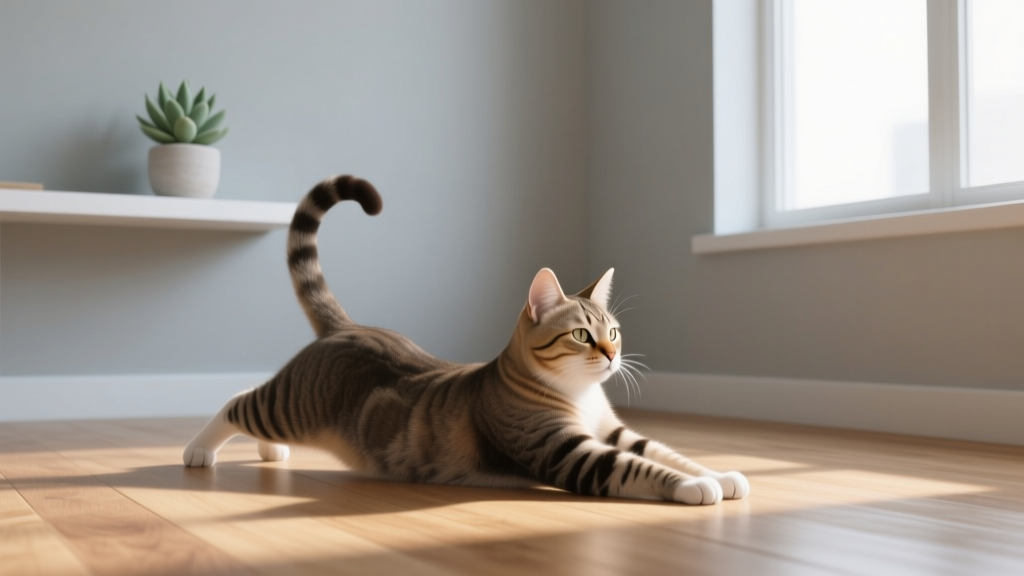
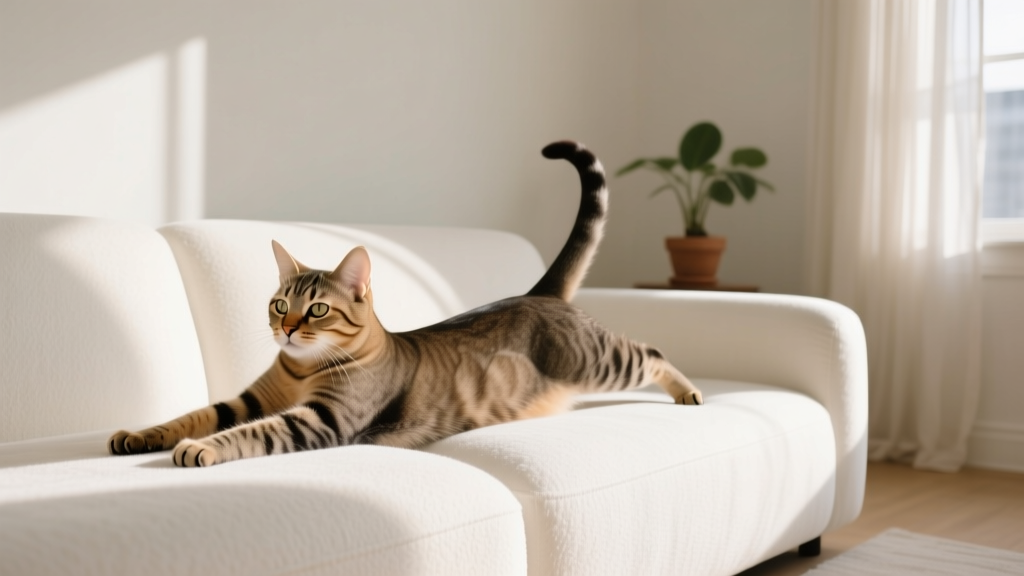
\n\nSafety Expression: A truly secure cat exhibits ‘relaxed vigilance’—they nap in open spaces (not just under beds), stretch fully on sunlit floors, and sleep with paws tucked *or* belly exposed (a high-trust posture). Dr. Sarah Lin, DVM and feline behavior specialist at Cornell Feline Health Center, confirms: “A cat sleeping belly-up in the middle of the living room isn’t ‘brave’—it’s signaling profound environmental safety. If that never happens in your home, something in their perception of threat is unresolved.”
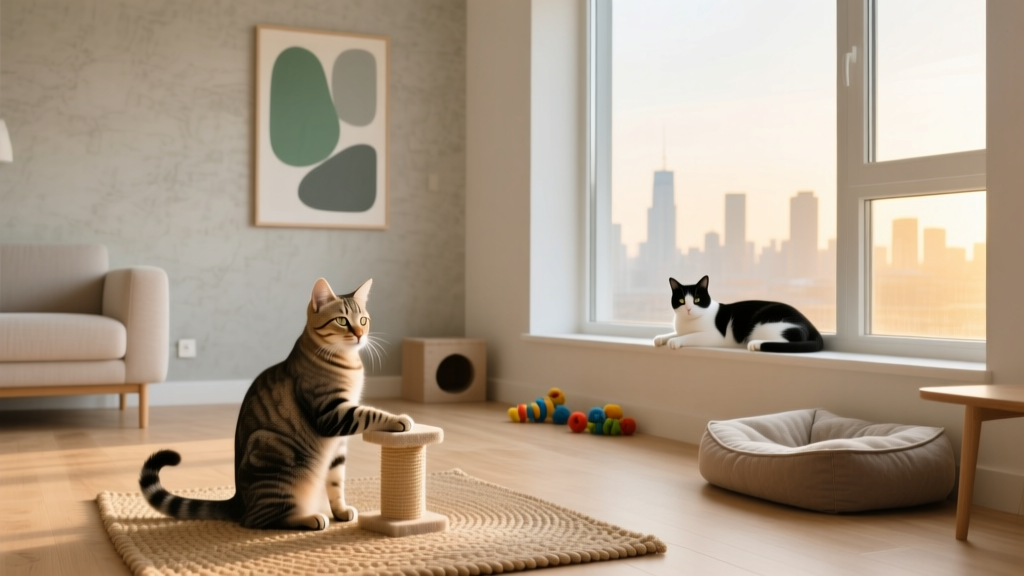
\n\nResource Security: Typical behavior includes deliberate ‘resource mapping’: checking food bowls multiple times daily (even if full), spending 3–5 minutes inspecting water freshness before drinking, and guarding preferred napping zones—not out of dominance, but because cats instinctively avoid resource competition. In multi-cat homes, this shows up as staggered feeding times and spatial partitioning (e.g., one cat owns the windowsill, another claims the bookshelf).
\n\nSocial Signaling: Contrary to the ‘aloof’ stereotype, cats use nuanced, low-intensity communication: slow blinks (‘cat kisses’), head-butting (bunting) to deposit facial pheromones, and gentle tail wraps around ankles—not as affection displays per se, but as territorial co-signing. A 2022 University of Lincoln study found cats initiate slow-blink sequences with humans 73% more often when spoken to softly and given space—proof that their ‘social’ behavior is highly context-dependent and consent-based.
\n\nStimulation Regulation: Typical cats alternate between high-focus activity (10–15 minute hunting sequences with toys or insects) and deep rest (16–20 hours/day, including 3–4 REM-rich naps). Crucially, they self-regulate intensity: after play, they’ll groom intensely (a calming ritual), then retreat to observe from elevation. If your cat crashes into exhaustion post-play or hides for hours, stimulation isn’t matched to their threshold.
\n\nDecoding the Top 7 ‘Weird’ Behaviors—And Why They’re Usually Perfectly Normal
\nLet’s demystify the behaviors that send owners scrambling to Google at midnight:
\n\n- \n
- Kneading with Paws (“Making Biscuits”): A neonatal carryover from nursing—stimulates milk flow. In adults, it signals deep comfort and contentment. Red flag only if accompanied by vocal distress or bleeding nails. \n
- Bringing You ‘Gifts’ (dead bugs, socks, etc.): Not guilt offerings or training attempts—it’s an inclusive hunting ritual. Your cat perceives you as an inept but beloved clan member and is ‘teaching’ or provisioning. Reward with calm praise—not punishment. \n
- Sudden Zoomies (Frenetic Running): Built-up energy release, especially after long naps or in dim light (mimicking dawn/dusk hunting windows). Common in young cats but persists in seniors with enriched environments. Concern arises only if zoomies happen mid-sleep, involve disorientation, or coincide with litter box avoidance. \n
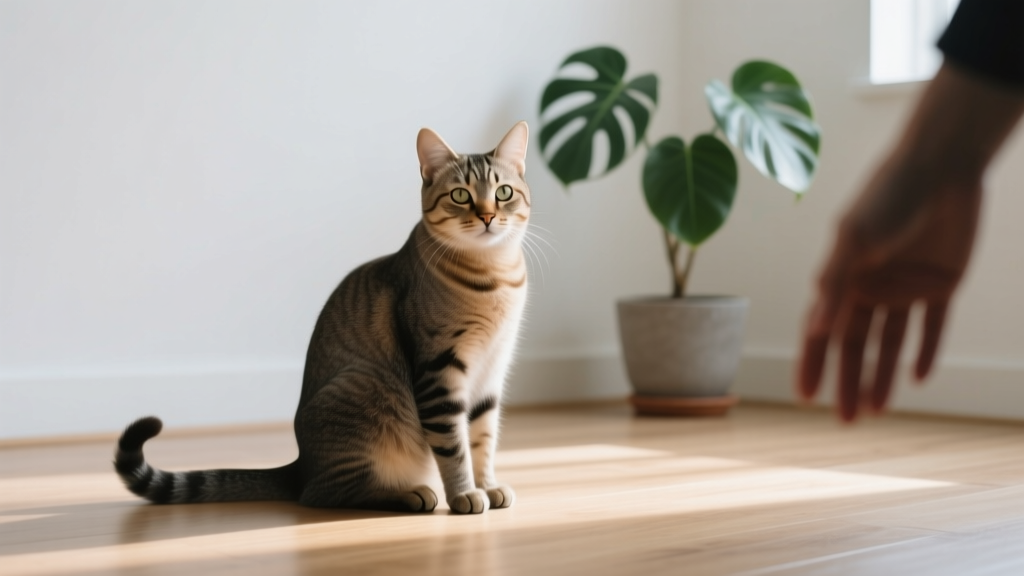
- Staring Intently (Without Blinking): A low-stakes attention signal—not aggression. Cats use prolonged gaze to request food, door access, or petting. Respond with a slow blink back to de-escalate and affirm connection. \n
- Chattering at Windows: A motor pattern linked to jaw muscle activation during prey capture. Neurologically, it’s excitement—not frustration. Enrichment tip: Add bird feeders *outside* windows (not inside) and rotate window perches weekly to sustain interest without overstimulation. \n
- Scratching Furniture (Not Just Scratching Posts): Cats scratch to mark territory (scent glands in paws), shed nail sheaths, and stretch shoulder muscles. If they ignore posts, it’s usually due to texture mismatch (sisal > carpet), height (must allow full vertical stretch), or placement (near sleeping/resting zones, not hidden corners). \n
- Nibbling/Grooming Your Hair or Arm: A high-trust allogrooming behavior—equivalent to mutual licking in cat colonies. It’s bonding, not hunger. Gently redirect to a soft toy if it becomes painful; never punish. \n
When ‘Typical’ Crosses Into ‘Troubling’: The 5 Silent Red Flags Most Owners Miss
\nBecause cats mask illness and stress so effectively, behavioral shifts are often the *first* and *only* warning sign. These five changes warrant veterinary consultation—even without obvious physical symptoms:
\n\n- \n
- Subtle Litter Box Shifts: Not just ‘outside the box’—but consistently choosing cold, hard surfaces (tile, bathtub), digging excessively *after* elimination (indicating discomfort), or avoiding the box for >24 hours despite clean conditions. UTIs, arthritis, and anxiety all present identically here. \n
- Reduced Vertical Exploration: A cat that stops jumping onto favorite shelves, window sills, or cat trees—especially if previously agile—may be experiencing early joint pain, dental issues (chewing hurts), or vision decline. Observe landing mechanics: do they hesitate, ‘plop’ instead of land lightly, or avoid descending altogether? \n
- Over-Grooming Specific Zones: Bald patches on inner thighs, belly, or forelegs—particularly if skin is red or irritated—signal stress-induced dermatitis or underlying allergies. Rule out fleas first (use flea comb under bright light), then assess environmental triggers. \n
- Changes in Vocalization Pattern: Increased yowling at night (especially in seniors) can indicate cognitive dysfunction, hypertension, or hyperthyroidism. Conversely, sudden silence in a formerly chatty cat may reflect pain or depression. \n
- Altered Social Threshold: A cat that used to greet you at the door now hides when guests arrive *and* avoids family members during routine interactions (e.g., won’t sit on laps, flees during grooming) is likely experiencing chronic low-grade stress—not ‘shyness.’ \n
Real-World Case Study: How One Family Turned ‘Problem Behavior’ Into Proof of Trust
\nMaya, a 3-year-old domestic shorthair, began urinating on her owner’s laundry pile—a classic ‘inappropriate elimination’ complaint. Initial assumptions pointed to urinary infection. But her vet (Dr. Aris Thorne, boarded feline practitioner) conducted a full behavioral history: Maya’s litter box was in a noisy basement near the furnace; her brother, Leo, had recently started using the same box; and she’d stopped napping on the couch, opting instead for a cardboard box in the closet. No medical issues were found. The solution wasn’t medication—it was environmental triage: two new boxes (one per cat, both on quiet main-floor locations with unscented clumping litter), a designated ‘safe zone’ couch with her favorite blanket, and scheduled interactive play sessions using wand toys to rebuild confidence. Within 11 days, Maya reclaimed the couch—and the laundry pile remained dry. Her ‘problem behavior’ wasn’t defiance. It was a precise, species-appropriate distress call.
\n\n| Behavior | \nTypical Frequency/Duration | \nHealthy Variation Range | \nWhen to Investigate Further | \n
|---|---|---|---|
| Sleep | \n16–20 hours/day, in 15–30 min naps | \n±2 hours; seniors may sleep 22+ hrs | \nSudden increase >24 hrs/day OR fragmented sleep with pacing/yowling | \n
| Grooming | \n15–50 minutes/day, focused on face, paws, flanks | \nSeasonal increases during shedding; brief post-play sessions | \nBald patches, skin lesions, or grooming >2 hrs/day | \n
| Vocalization | \nMeows primarily for human interaction (feeding, doors) | \nSome breeds (Siamese, Bengals) naturally more vocal | \nNew onset yowling, especially at night; or complete silence in vocal cat | \n
| Litter Box Use | \n2–4x/day, buried neatly | \nVaries by diet/hydration; occasional uncovered deposits | \nConsistent avoidance >24 hrs, straining, blood, or outside-box preference | \n
| Play/Hunting | \n2–3 short (5–15 min) focused sessions/day | \nYoung cats may play 5–6x; seniors may prefer ‘stalking’ over pouncing | \nNo interest in toys for >3 days; or obsessive fixation on string/threads | \n
Frequently Asked Questions
\nWhy does my cat stare at me and then slowly blink?
\nThis is one of the clearest signs of trust and affection in cat language. Slow blinking lowers vulnerability—by doing it back, you’re returning the ‘I am safe with you’ signal. It’s not submission; it’s mutual recognition. Veterinarian Dr. Mika Chen notes: “If your cat slow-blinks *after* you speak gently and pause, that’s active consent—not passive tolerance.”
\nIs it normal for my cat to sleep on my chest or head?
\nYes—and it’s biologically significant. Your chest/head provide warmth, rhythmic breathing (calming), and scent security. It also places them in a high vantage point while feeling physically anchored. However, if they only sleep on you and refuse other resting spots, assess whether they feel unsafe elsewhere (e.g., loud HVAC, other pets, foot traffic).
\nMy cat knocks things off tables—is this spite?
\nNo. Cats lack the cognitive capacity for spite. This is almost always redirected hunting behavior, attention-seeking (if rewarded with reaction), or environmental boredom. Provide vertical space, puzzle feeders, and scheduled 10-minute play sessions *before* typical knock-off hours. Track timing—if it happens right after you sit down to work, it’s likely demand for engagement.
\nWhy does my cat lick plastic bags or wool sweaters?
\nThis is often linked to early weaning or nutritional gaps (rarely) but most commonly to wool-sucking syndrome, a compulsive behavior stemming from stress or genetic predisposition (common in Siamese and related breeds). It’s typically harmless unless ingestion occurs. Redirect with food-safe chew toys and increase tactile enrichment (crinkle balls, faux-fur mats).
\nShould I be worried if my cat doesn’t purr?
\nNot necessarily. Purring requires specific laryngeal muscle control and isn’t universal. Some cats communicate contentment through kneading, slow blinks, or rubbing. However, if a previously purring cat stops *and* shows other withdrawal signs (reduced appetite, hiding), consult your vet—purring cessation can accompany pain or respiratory issues.
\nCommon Myths About Cat Behavior—Debunked
\nMyth #1: “Cats are solitary animals and don’t need companionship.”
\nReality: While cats aren’t pack-dependent like dogs, they form complex, fluid social bonds—especially with trusted humans and familiar cats. Feral colonies show cooperative kitten-rearing and shared territory defense. Loneliness manifests as over-grooming, vocalization, or destructive behavior—not indifference.
Myth #2: “If my cat eats well and uses the litter box, they must be fine.”
\nReality: Up to 80% of cats with early kidney disease, arthritis, or dental pain maintain normal appetite and elimination—until symptoms escalate severely. Behavior is a far more sensitive early-warning system than appetite alone. As Dr. Lin emphasizes: “Your cat’s body language is their primary diagnostic tool. Learn to read it—or risk missing the window for intervention.”
Related Topics (Internal Link Suggestions)
\n- \n
- How to Read Cat Body Language — suggested anchor text: "cat body language guide" \n
- Creating a Cat-Friendly Home Environment — suggested anchor text: "cat-friendly home setup" \n
- Signs of Stress in Cats and How to Relieve It — suggested anchor text: "cat stress relief tips" \n
- Interactive Play Ideas for Indoor Cats — suggested anchor text: "best indoor cat toys" \n
- When to Take Your Cat to the Vet for Behavioral Changes — suggested anchor text: "cat behavior vet visit checklist" \n
Your Next Step: Build a 7-Day Behavior Baseline
\nYou don’t need to become a feline ethologist overnight. Start with a simple, powerful practice: For the next 7 days, spend 90 seconds, twice daily, observing your cat *without interacting*. Note: Where are they? What are they doing? How relaxed is their posture? Any repeated gestures? Jot down patterns—not judgments. By day 7, you’ll have your own personalized benchmark for what is typical cat behavior at home—for your cat. That baseline transforms vague worry into confident, responsive care. Ready to begin? Download our free printable 7-Day Cat Behavior Tracker (PDF) to document your observations—and spot meaningful shifts before they become crises.