How to Interpret Cat Behavior Versus Human Assumptions
Why Misreading Your Cat’s Behavior Isn’t Just Confusing — It’s Stressful for Both of You
\nIf you’ve ever wondered how to interpret cat behavior versus what you assume it means — like thinking purring always equals happiness or tail flicking is just ‘playful energy’ — you’re not alone. In fact, a 2023 Cornell Feline Health Center survey found that over 68% of first-time cat guardians misread at least three core signals within their first six months of ownership. And those misinterpretations don’t just lead to confusion: they trigger avoidable stress, erode trust, and can even escalate into redirected aggression or chronic anxiety in cats. Unlike dogs, who evolved to broadcast emotions clearly for human collaboration, cats retained subtle, context-dependent communication rooted in survival — meaning every blink, ear angle, and tail posture carries layered meaning. Getting it right isn’t about ‘training’ your cat; it’s about becoming fluent in their native language.
\n\nDecoding the Big Three: Posture, Vocalization, and Touch-Based Signals
\nCats communicate through a triad of integrated channels: body posture (especially ears, tail, eyes, and spine), vocalizations (which are largely *learned* for human interaction), and tactile signals (like kneading, head-butting, or biting). But here’s the critical nuance: no single cue tells the full story. A low tail could mean confidence in one context — say, during confident exploration — or fear in another, like when paired with flattened ears and dilated pupils. That’s why contextual triangulation is essential.
\n\nTake slow blinking: often called the ‘cat kiss,’ it’s widely interpreted as affection. And yes — when your cat blinks slowly *at you*, while relaxed and in a safe environment, it’s a genuine sign of trust. But if that same slow blink happens mid-stranger visit, with tense shoulders and tucked paws? It’s likely a displacement behavior — a stress-coping mechanism, not love. Dr. Sarah Hargrove, DVM and certified feline behavior specialist with the American College of Veterinary Behaviorists, emphasizes: ‘We must resist the temptation to assign human emotional labels without checking the full physical and environmental picture. A purr isn’t joy — it’s a self-soothing tool used during labor, injury recovery, and vet visits.’
\n\nHere’s how to build your real-time interpretation framework:
\n- \n
- Step 1: Scan the baseline. Observe your cat’s neutral state — how they hold their tail at rest, where their ears naturally sit, how they carry their weight. This becomes your personal reference point. \n
- Step 2: Map the shift. Note what changed *immediately before* the behavior — did the doorbell ring? Did another pet enter the room? Was there a sudden noise? \n
- Step 3: Cross-check three cues. Ask: What are the ears doing? Is the tail moving or still? Are the pupils constricted or dilated? If two out of three suggest tension (e.g., flattened ears + twitching tail + wide pupils), trust that reading — even if the vocalization sounds ‘friendly.’ \n
The ‘Versus’ Trap: Human Bias vs. Feline Reality
\nThe phrase how to interpret cat behavior versus isn’t just grammatical — it points to a fundamental cognitive mismatch. We instinctively filter feline actions through our own social lens: we equate direct eye contact with honesty, tail wagging with excitement, and loud meowing with demand. But for cats, these signals evolved under entirely different evolutionary pressures — primarily predator avoidance, resource defense, and maternal care. Let’s dismantle three pervasive human projections:
\n\n“My cat stares at me silently — I think they’re judging me.”\n\n
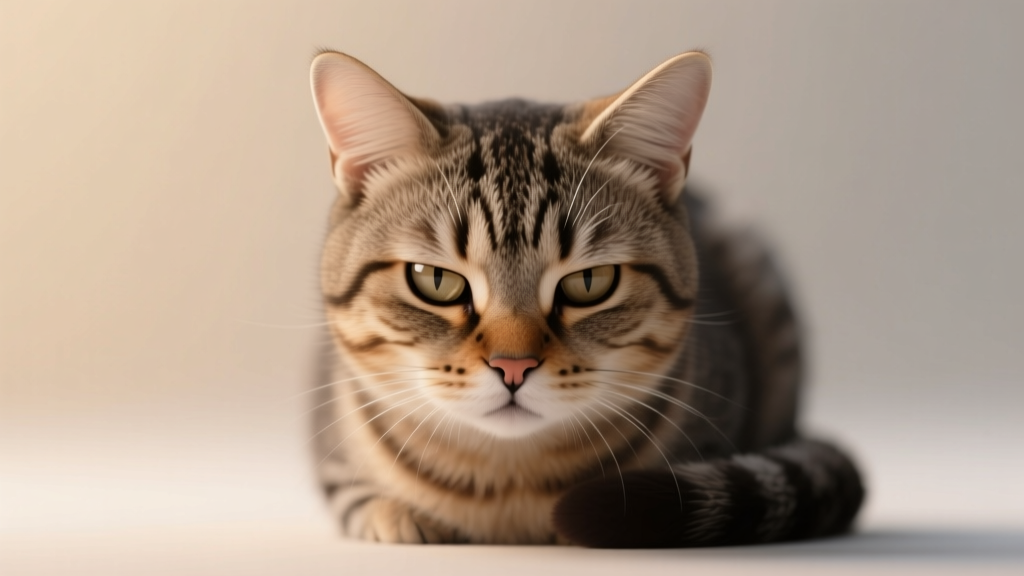
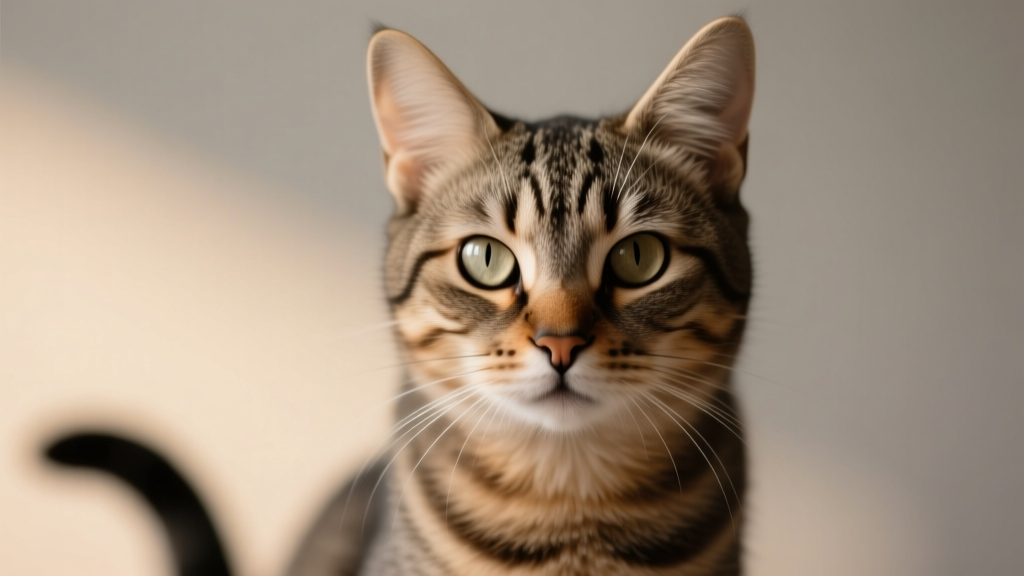
Reality: Sustained, unblinking eye contact from a cat is a threat signal — equivalent to a human staring down an adversary. What you likely want is the *slow blink sequence*: gentle closing and reopening of both eyes, often accompanied by a soft gaze. That’s their version of saying, “I see you, and I feel safe.”
A powerful real-world example comes from a 2022 case study published in Journal of Veterinary Behavior, tracking a 4-year-old rescue cat named Mochi who developed urine marking after his owner began ‘staring contests’ as a bonding ritual. Once the owner switched to slow-blink exchanges and turned away calmly during prolonged eye contact, marking ceased within 11 days — no medication, no pheromone diffusers, just accurate signal interpretation.
\n\nVocalizations are especially vulnerable to projection. While adult cats rarely meow to other cats (they reserve it almost exclusively for humans), we’ve trained ourselves to respond only to volume and frequency — not pitch contour or repetition pattern. Research from the University of Sussex found that humans correctly identify distress meows only 42% of the time — but accuracy jumps to 79% when listeners also observe accompanying body language. That’s why ‘versus’ matters: it’s not meow *versus* silence — it’s meow *plus* tail position *plus* ear orientation *versus* our assumptions.
\n\nContext Is King: Environment, History, and Individual Temperament
\nTwo cats may display identical tail flicks — yet mean opposite things. Why? Because interpretation must account for three layers: environmental triggers, life history, and individual neurotype. A formerly stray cat may flick her tail rapidly when approached — not out of irritation, but as a hyper-vigilant ‘scan-and-assess’ reflex. Meanwhile, a confident indoor-only cat might flick the very tip of her tail while watching birds — a focused, low-arousal ‘hunting rehearsal.’
\n\nDr. Tony Buffington, Professor Emeritus of Veterinary Clinical Sciences at Ohio State, stresses this in his landmark ‘Stress-Cat’ framework: ‘A behavior isn’t inherently “good” or “bad.” It’s adaptive — until the environment changes faster than the cat can recalibrate. What looks like “aggression” toward a new baby may actually be redirected fear from unaddressed litter box stress.’
\n\nTo calibrate your interpretation, keep a simple 7-day ‘Behavior Log’ (digital or paper): record time, location, trigger (if identifiable), observed behaviors (3+ cues), your cat’s immediate response to your action, and outcome. Patterns emerge fast. One client discovered her ‘grumpy’ morning cat wasn’t angry — she was experiencing early-stage arthritis pain triggered by cold tile floors. After adding heated mats and adjusting feeding timing, the ‘hissing at sunrise’ vanished.
\n\nWhen Interpretation Fails: Red Flags That Demand Professional Insight
\nAccurate interpretation builds connection — but it’s not a substitute for veterinary or behavioral expertise. Certain shifts warrant urgent consultation, regardless of your decoding skill:
\n- \n
- Sudden cessation of purring or vocalizing in a previously expressive cat \n
- Excessive licking leading to bald patches *without* visible skin lesions \n
- Aggression directed specifically at one family member or species (e.g., only at children or dogs) \n
- ‘Vacant’ staring — eyes open but unfocused, with no blink response to movement \n
- Elimination outside the box *with posturing* (e.g., squatting and straining but producing little or no urine) \n
Note: These aren’t ‘bad behaviors’ — they’re physiological or neurological distress signals. A 2021 study in Veterinary Record showed that 83% of cats presenting with ‘behavior problems’ had at least one underlying medical condition — most commonly dental disease, hyperthyroidism, or osteoarthritis. Always rule out pain first.
\n\n| Human-Assumed Meaning | \nWhat the Signal *Actually* Communicates (Feline Context) | \nKey Context Clues to Confirm | \nRisk of Misinterpretation | \n
|---|---|---|---|
| Purring = contentment | \nSelf-soothing mechanism activated during stress, pain, or healing | \nPupils dilated, ears back, body rigid or hunched; occurs during vet exam or after injury | \nIgnoring pain or illness; delaying treatment | \n
| Tail held high = confidence | \nYes — but only if vertical *and* relaxed. A stiff, quivering high tail = intense arousal (could be excitement OR fear) | \nQuiver + flattened ears + sideways stance = fear; quiver + forward ears + relaxed body = greeting excitement | \nMisreading fear as friendliness, escalating exposure | \n
| Slow blink = affection | \nTrue — but only when initiated by cat *in relaxed setting*. If you force it (staring until they blink), it’s submission, not bonding | \nOccurs spontaneously while cat is resting, not when you’re looming or reaching | \nCreating anxiety instead of connection; reinforcing learned helplessness | \n
| Kneading = kitten-like comfort | \nOften tied to scent-marking (paw glands release pheromones) and territory reinforcement — not just nostalgia | \nPaired with cheek-rubbing on same surface; occurs on new furniture or after visitors leave | \nMissing territorial insecurity or stress triggers | \n
| Play biting = fun | \nPractice hunting sequence — but escalation indicates overstimulation or lack of appropriate outlets | \nBites increase in intensity after 2–3 minutes; accompanied by flattened ears, tail lashing, skin twitching | \nReinforcing aggressive play; damaging trust | \n
Frequently Asked Questions
\nWhy does my cat stare at me silently — and should I stare back?
\nNo — never stare back. Unbroken eye contact is a challenge or threat in cat language. Instead, soften your gaze, slowly blink 2–3 times, then look gently away. This signals non-threat and invites reciprocal trust. If your cat blinks back, you’ve just had a conversation.
\nIs it true that cats ‘don’t feel love’ — or is that just a myth?
\nIt’s a harmful myth rooted in outdated ethology. Cats form secure attachments to caregivers — proven via ‘secure base’ experiments (similar to human infant studies). They show preference, seek proximity when stressed, and display separation-related distress. They express love differently — through subtle, low-intensity signals like sitting nearby, grooming you, or bringing ‘gifts’ — not grand gestures.
\nMy cat used to be affectionate, but now avoids me. Did I do something wrong?
\nAlmost certainly not — and that’s crucial to hear. Sudden withdrawal is rarely about blame. It’s most often a response to undetected pain (dental issues are #1 culprit), environmental stressors (new appliance noise, neighbor’s dog barking), or subtle shifts in routine. Start with a full veterinary exam — including bloodwork and orthopedic assessment — before assuming behavioral causes.
\nHow long does it take to get better at interpreting cat behavior?
\nMost owners report noticeable improvement within 2–3 weeks of consistent observation and journaling. Mastery takes 3–6 months of daily practice — but the payoff is profound: fewer conflicts, earlier intervention for health issues, and deeper mutual understanding. Think of it like learning a dialect: fluency grows with exposure and intentionality.
\nDo multi-cat households make interpretation harder — or easier?
\nHarder initially — because you’re observing complex social dynamics — but ultimately *easier* long-term. Watching how cats interact with each other provides a gold-standard reference for ‘normal’ feline communication. You’ll quickly learn that a tail flick between cats means ‘back off,’ while the same flick toward you may mean ‘I’m done being petted.’
\nCommon Myths About Cat Communication
\n- \n
- Myth #1: “Cats are aloof and don’t care about people.” — False. Neuroimaging studies show cats process human voices in the same brain regions as dogs and infants. They simply express attachment through quieter, more autonomous behaviors — like choosing to nap near you rather than demanding lap time. \n
- Myth #2: “If a cat rubs against you, they’re marking you as property.” — Oversimplified. While facial gland rubbing *does* deposit calming pheromones, it’s primarily a bonding and co-regulation behavior — akin to shared scent in wolf packs. It signals, “You’re part of my safe group,” not “You’re mine.” \n
Related Topics (Internal Link Suggestions)
\n- \n
- Understanding cat body language signals — suggested anchor text: "what does it mean when a cat's ears are flat" \n
- How to reduce cat stress at home — suggested anchor text: "cat stress signs and solutions" \n
- Building trust with a fearful cat — suggested anchor text: "how to gain a scared cat's trust" \n
- Why cats scratch furniture (and how to redirect) — suggested anchor text: "cat scratching behavior explained" \n
- Interpreting cat vocalizations: meows, chirps, and growls — suggested anchor text: "what different cat sounds mean" \n
Conclusion & Next Step: Your First 5-Minute Fluency Boost
\nYou now understand that how to interpret cat behavior versus human intuition isn’t about memorizing a dictionary — it’s about cultivating awareness, honoring feline evolutionary logic, and committing to contextual curiosity. The biggest leap isn’t knowledge — it’s shifting from asking ‘What’s wrong with my cat?’ to ‘What is my cat trying to tell me in their language?’
\nYour immediate next step? Grab your phone and film a 60-second clip of your cat in a calm, everyday moment — eating, stretching, or gazing out a window. Watch it back *three times*: first focusing only on the tail, second only on ear position, third only on eye movement. Note one thing you’d never noticed before. That tiny observation is your first real step toward fluency — and the beginning of a far richer, safer, and more joyful relationship.