Normal Cat Play Behavior: Signs & Red Flags
Why Understanding What Is Normal Cat Play Behavior Matters More Than Ever
If you’ve ever watched your cat stalk a dust bunny like it’s prey, bite your hand mid-petting session, or suddenly sprint across the living room at 3 a.m., you’re not alone — and you’re probably wondering: what is normal cat play behavior? It’s one of the top behavioral questions veterinarians and feline behaviorists hear from new and experienced cat guardians alike. Misinterpreting play can lead to unintentional punishment of natural instincts, premature rehoming due to ‘aggression,’ or missed early warnings of pain or anxiety. In fact, a 2023 study in the Journal of Feline Medicine and Surgery found that 68% of cats surrendered to shelters for ‘biting’ or ‘attacking’ had undiagnosed play-related frustration — not true aggression. Getting this right isn’t just about peace of mind; it’s foundational to your cat’s mental health, your safety, and your bond.
Decoding the Language of Play: Instinct, Age, and Individuality
Cats don’t play for fun alone — they play to survive. Every pounce, bat, and chase is a rehearsal for hunting: ambushing, capturing, killing, and dismembering prey. That’s why even well-fed indoor cats retain these hardwired sequences. But ‘normal’ isn’t one-size-fits-all. A 12-week-old kitten’s play looks wildly different from a 7-year-old senior’s — and temperament, early socialization, and environment shape expression dramatically.
According to Dr. Mikel Delgado, certified cat behavior consultant and researcher at UC Davis, “Play is the primary way kittens learn bite inhibition, body language reading, and social boundaries — but adult cats use it to relieve stress, maintain neuromuscular fitness, and express environmental enrichment.” She emphasizes that play must be voluntary, reversible, and reciprocal — meaning both parties can pause or walk away without escalation.
Here’s how to read the signals:
- Ears forward or slightly sideways (not flattened), eyes wide with focused dilation — not narrow slits of threat.
- Tail held low and gently swaying, not thrashing or puffed up (a sign of fear or overstimulation).
- Mouth closed or softly nibbling — not growling, hissing, or biting with full jaw pressure and intent to break skin.
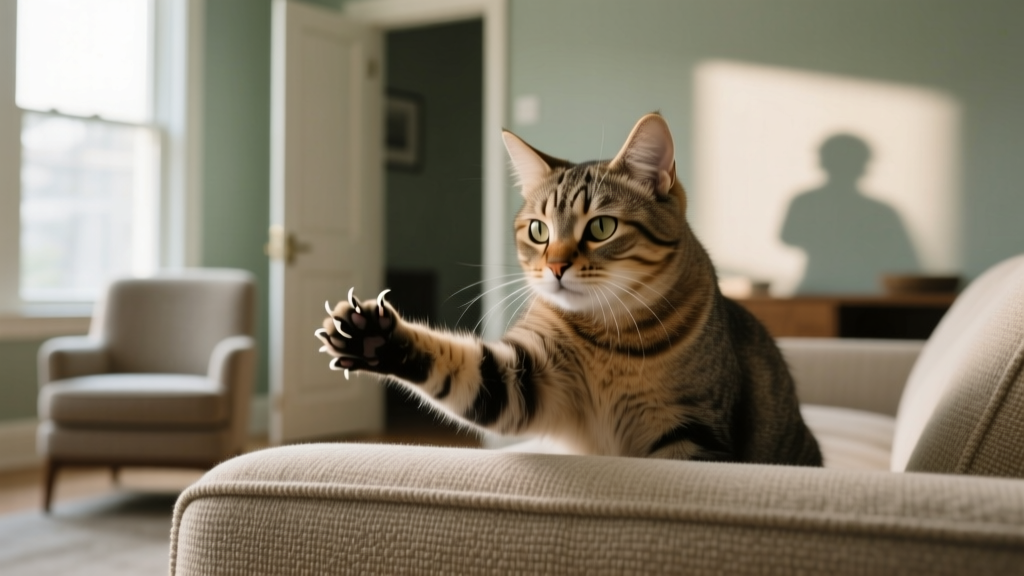
- Paws sheathed — claws may extend briefly during pounces but retract when contact is made (watch for ‘kneading’ vs. ‘raking’).
- Body loose and bouncy, not stiff, crouched low with weight forward (a predatory posture) — unless transitioning into a controlled pounce.
A real-world example: Luna, a 5-month-old rescue tabby, would leap onto her owner’s back while they were cooking — teeth gently grasping fabric, claws carefully tucked. Her owner initially thought it was aggression until a certified feline behaviorist observed her play sequence: she’d stalk the shadow under the cabinet, freeze, wiggle her hindquarters, then launch — always targeting moving objects, never still ones. Once redirected to wand toys *before* the kitchen routine began, the ‘back attacks’ vanished in 4 days.
The 4-Stage Play Sequence: What Healthy Play Looks Like From Start to Finish
Normal cat play follows a predictable, repeatable arc — and deviations often signal trouble. Ethologists call this the ‘predatory sequence,’ and recognizing each stage helps distinguish healthy engagement from stress or pathology.
- Search & Orient: Cat freezes, pupils dilate, head tilts, ears pivot toward stimulus. May track movement with slow blinks or head turns. No vocalization.
- Stalk & Chase: Low crouch, rear end wiggles, tail tip flicks. Movement is fluid and silent — no panting, no frantic scrambling. May pause and reset multiple times.
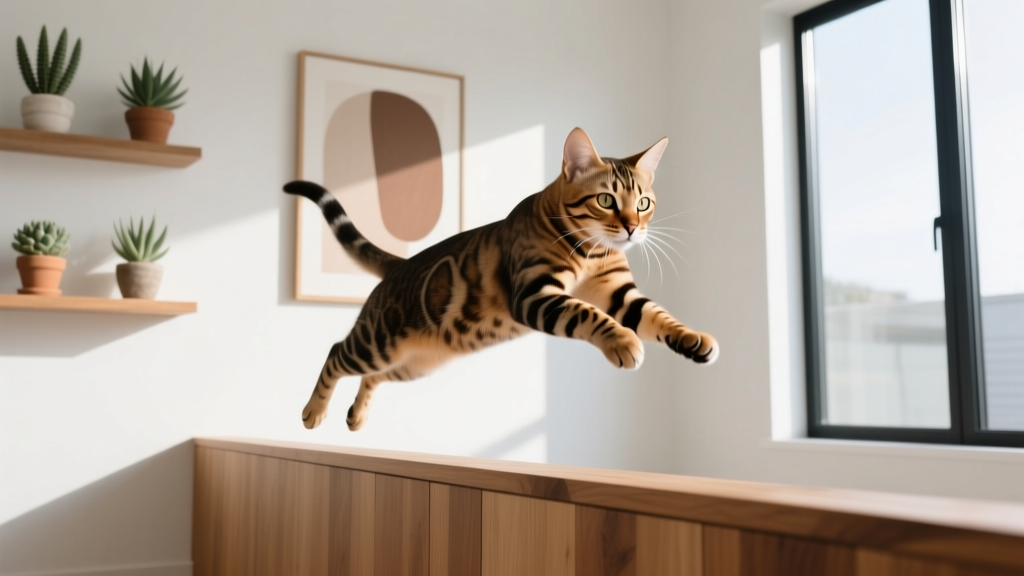
- Pounce & Capture: Explosive burst lasting under 2 seconds. Mouth closes around toy (or hand) with light pressure — no shaking, no growling, no sustained grip.
- ‘Kill’ & Disengage: Brief bite or bat, then immediate release and self-grooming, stretching, or flopping on side. May bring toy to ‘safe zone’ (e.g., under couch) and ignore it.
When this sequence breaks down — say, your cat skips stalking and lunges unpredictably, or holds onto your wrist for >5 seconds while growling — it’s time to pause and assess. Dr. Tony Buffington, professor emeritus of veterinary clinical sciences at Ohio State, notes: “A cat that cannot complete the sequence — especially the disengagement phase — is often in pain, overstimulated, or has learned that aggression gets attention or food.”
Red Flags vs. Green Lights: When to Celebrate — and When to Call the Vet
Not all intense-looking play is problematic — but some behaviors masquerade as play while signaling deeper issues. Here’s how to tell the difference using objective, observable criteria:
| Behavior | ✅ Green Light (Normal Play) | ⚠️ Yellow Flag (Monitor Closely) | ❌ Red Flag (Consult Vet/Behaviorist) |
|---|---|---|---|
| Biting hands/feet | Gentle nibbles with closed mouth; stops immediately when you yelp or withdraw | Bites harder after repeated warnings; targets same spot daily | Bites break skin regularly; draws blood; occurs during petting or rest |
| Vocalization | Silent or soft chirps/mews during chase | Occasional short meow or hiss mid-play, then resumes calmly | Prolonged yowling, shrieking, or guttural growls — especially if eyes are wide and fixed |
| Body tension | Loose shoulders, relaxed jaw, tail tip twitches rhythmically | Occasional stiffening during high-arousal moments, then resets | Rigid posture, flattened ears, dilated pupils that don’t constrict when lights change |
| Recovery time | Calms within 30–60 seconds post-play; grooms or naps | Takes 2–5 minutes to settle; hides or avoids interaction briefly | Remains hyper-vigilant >10 mins; hides, trembles, or overgrooms obsessively |
Case in point: Oliver, a 3-year-old neutered male, began ‘attacking’ ankles at dusk. His owner assumed it was ‘zoomies.’ But video analysis revealed he wasn’t initiating play — he was reacting defensively to shadows moving near baseboards. A vet exam uncovered early-stage dental pain that made chewing uncomfortable, increasing his overall irritability. After a dental cleaning, the ankle attacks ceased entirely.
How to Nurture Healthy Play — And Redirect When Needed
Play isn’t passive — it’s co-created. You’re not just a spectator; you’re a partner in your cat’s neurological development and emotional regulation. The goal isn’t to eliminate ‘wild’ behavior, but to channel it appropriately.
Start with enrichment mapping: Observe your cat for 3 days — note peak activity windows (most cats are crepuscular: dawn/dusk), preferred surfaces (vertical? ground-level?), and go-to toys. Then match stimuli: feather wands for aerial hunters, crinkle balls for auditory seekers, tunnels for ambushers.
Use the 3-2-1 Rule for Interactive Sessions:
- 3 minutes of high-intensity play (fast wand movement, unpredictable direction)
- 2 minutes of ‘capture’ — let cat ‘win’ by landing bites on a toy, then drop it for them to ‘kill’
- 1 minute of calm-down — offer treats, gentle brushing, or quiet proximity
This mimics natural predation and prevents overarousal. A 2022 RSPCA-led trial showed cats receiving structured 3-2-1 sessions had 41% fewer redirected aggression incidents over 6 weeks versus control groups.
When redirection is needed (e.g., biting during lap time), avoid punishment — which teaches fear, not boundaries. Instead, use ‘positive interruption’: blow a gentle puff of air (not at face), tap a cardboard tube near — not on — their shoulder, or toss a treat *away* to reset focus. Then immediately offer an appropriate outlet: “You want to bite? Here’s a frozen fish-shaped toy.” Consistency matters more than perfection — aim for 80% accuracy over time.
Frequently Asked Questions
Is it normal for my cat to bite me during play — and how do I stop it without hurting our bond?
Yes — gentle mouthing is part of normal play, especially in kittens learning bite inhibition. But biting that breaks skin is never acceptable. The key is consistency and timing: yelp *the instant* teeth touch skin (mimicking littermate feedback), then immediately walk away for 20 seconds — no eye contact, no talking. Return only when calm, and redirect to a toy. Never use hands as toys. Over 2–3 weeks, most cats learn the boundary. If biting persists past 6 months or escalates, consult a veterinary behaviorist — it may indicate pain or anxiety.
My cat plays more at night — is this abnormal? How can I shift their schedule?
No — it’s biologically normal. Cats evolved as crepuscular hunters, and artificial lighting + human schedules haven’t fully overridden this. To gently shift timing: feed their largest meal *right before your bedtime*, start 10-minute interactive play sessions 30 mins before you wind down, and provide puzzle feeders or timed treat dispensers for 4–5 a.m. Avoid reinforcing midnight play (e.g., feeding or petting when they wake you). Most cats adapt within 2–3 weeks.
Do indoor cats need playtime every day — and what happens if they don’t get enough?
Absolutely — daily play is non-negotiable for indoor cats. Without it, they develop ‘behavioral starvation’: chronic stress manifests as overgrooming, urine marking, aggression, or lethargy. A landmark 2021 study in Applied Animal Behaviour Science tracked 127 indoor cats and found those receiving <10 mins of active play daily had 3.2x higher rates of stereotypic behaviors (e.g., tail-chasing, fabric sucking) than those with ≥15 mins. Think of play as mental and physical physiotherapy — not optional entertainment.
Why does my cat bring me dead mice or toys and drop them at my feet?
This is a profound gesture of trust and teaching — not ‘gift-giving’ in the human sense. In the wild, mother cats bring prey to kittens to teach hunting skills. Your cat sees you as part of their family unit and is attempting to share knowledge (and sometimes, ‘help’ you hunt). Don’t punish it — instead, praise calmly and offer a toy version immediately. If live prey is involved, secure windows and doors, and consider supervised outdoor time in a catio.
Can older cats still play — and should I encourage it?
Yes — and you absolutely should. Senior cats (7+ years) experience cognitive decline and muscle loss faster without stimulation. Play keeps neural pathways active and maintains joint mobility. Adapt intensity: slower wand movements, floor-based toys, scent games (hide treats in cardboard boxes), or gentle ‘fishing’ with strings. Even 5 minutes twice daily reduces dementia-like symptoms by 29% (Cornell Feline Health Center, 2020). Watch for signs of fatigue — panting, excessive grooming mid-session, or lying down abruptly — and stop immediately.
Common Myths About Cat Play
Myth #1: “If my cat plays rough, they’re dominant or trying to ‘rule the house.’”
False. Cats don’t operate on dominance hierarchies like dogs or wolves. Rough play stems from unmet predatory needs, poor socialization, or lack of appropriate outlets — not power-seeking. Punishing ‘dominance’ reinforces fear and damages trust.
Myth #2: “Kittens will grow out of biting — no need to train it.”
Also false. Kittens who aren’t taught bite inhibition by 14 weeks often retain painful mouthiness into adulthood. Early intervention — using yelps, withdrawal, and redirection — is critical. Waiting ‘for them to mature’ misses the neuroplastic window.
Related Topics (Internal Link Suggestions)
- Kitten socialization timeline — suggested anchor text: "how to socialize a kitten properly"
- Cat stress signs and solutions — suggested anchor text: "subtle signs your cat is stressed"
- Best interactive cat toys for indoor cats — suggested anchor text: "top vet-recommended cat toys"
- Why does my cat bite when I pet them? — suggested anchor text: "petting-induced aggression in cats"
- Cat zoomies explained — suggested anchor text: "what causes cat midnight crazies"
Your Next Step Starts With One Observation
You now know what is normal cat play behavior — not as a vague concept, but as a measurable, observable sequence rooted in biology and shaped by care. But knowledge becomes impact only when applied. So tonight, before bed, set a 90-second timer and simply watch your cat. Note: Where do they look first? How do their ears move? Does their tail sway or twitch? Jot down one thing you saw that surprised you — and one thing you’ll try differently tomorrow. Small, consistent observations build deep understanding far faster than any app or gadget. And if something still feels off — if play feels frantic, fearful, or painful — reach out to a certified feline behaviorist or your veterinarian. Your cat’s play isn’t just cute — it’s their voice. Learn to listen.