Why Cats Knead Only Certain People
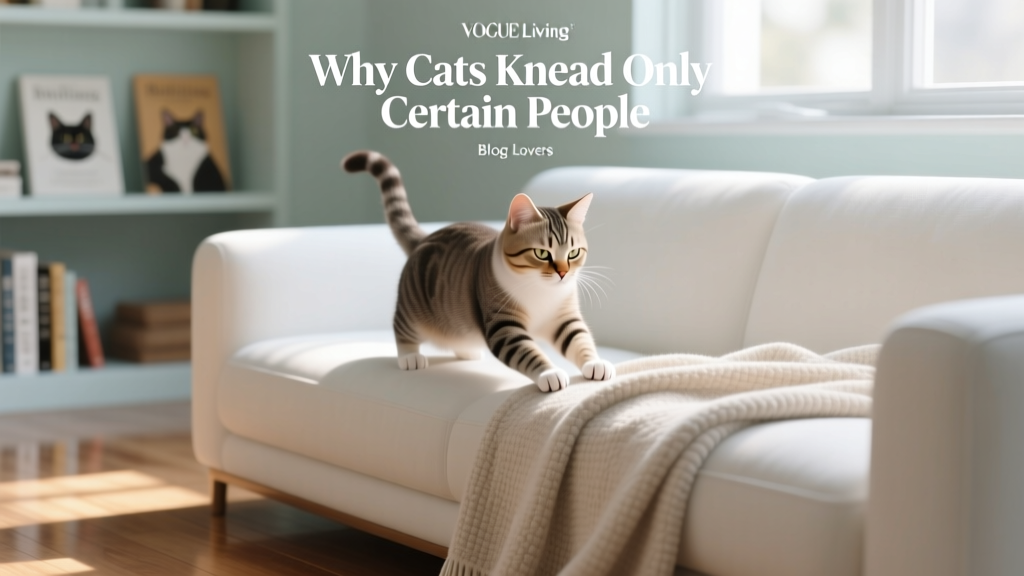
You’re on the couch, minding your own business, when your cat hops up, circles twice like they’re testing the mattress at a five-star hotel, and starts rhythmically pressing their paws into your lap. Their eyes half-close. Their purr motor kicks in. It’s adorable… until you realize they never do this to your partner. Or your kids. Or your best friend who insists, “Cats love me!”
If you’ve ever wondered why your cat kneads only certain people—sometimes with laser-focused loyalty—you’re not imagining it. Kneading is a real, meaningful behavior with deep roots in kittenhood, comfort, scent, and social preference. And yes, you may have earned a very specific kind of feline “favorite” status.
The science (and evolution) behind kneading
Kneading is one of those classic cat behaviors that looks quirky to humans but makes perfect sense in cat language.
It starts in kittenhood
Kittens knead their mother’s belly while nursing. The motion stimulates milk letdown and helps them latch and feed more efficiently. But the bigger story is emotional: kneading becomes tied to warmth, safety, and satisfaction. Think of it as a built-in comfort reflex.
As cats grow up, many keep kneading as a “self-soothing” behavior. Adult kneading often shows up when a cat feels calm, bonded, or in need of reassurance.
It may have helped wild cats survive
There’s also an evolutionary angle. Wild felines likely kneaded grass or leaves to create a comfortable sleeping spot—flattening bedding, checking for prickly bits, and making a nest-like area. If you’ve seen your cat knead a blanket like they’re preparing a tiny loaf-shaped campsite, you’ve witnessed the modern version of that instinct.
Paws have scent glands (your cat is “signing” you)
Cats have scent glands in their paw pads. Kneading can deposit scent, turning a person or blanket into something that smells more like “mine” or “safe.” This doesn’t mean your cat thinks they own you in a legal sense… but in the cat sense? You may be part of their home territory.
Why only certain people? The “favorite kneading target” mystery
If kneading is comfort plus bonding, the next question is obvious: why do some people get kneaded and others get ignored?
1) Your body language feels safe
Cats are extremely sensitive to subtle cues. The person who sits still, breathes slowly, doesn’t grab, and doesn’t squeal is often the person who gets kneaded.
Example: Your cat jumps onto your lap and starts kneading because you’re relaxed and scrolling quietly. Meanwhile, your partner tries to pet mid-knead, leans in close, and talks in an enthusiastic voice. Your cat pauses, ears swivel, and they hop off like, “This vibe is… too much.”
2) Your scent is reassuring
Cats bond through smell. If your scent is familiar, consistent, and associated with good experiences (feeding, gentle petting, calm evenings), your cat may seek you out as their comfort person.
This is one reason cats often knead the person who spends the most quiet time at home—even if someone else is the “playtime” human.
3) Texture and warmth matter more than you think
Some cats knead based on sensory preferences. A fuzzy robe, a soft hoodie, or a plush blanket on your lap can be the deciding factor.
Also: warmth. Cats love heat. If you run warm, use a heated throw, or tend to sit still long enough to become a human heating pad, you may be the chosen kneading station.
4) Your cat’s history shapes their “people preferences”
Cats build strong associations. If your cat had a scary experience with someone (even unintentional—like being stepped on or startled), they may reserve vulnerable behaviors like kneading for the person who feels safest.
On the flip side, if you were the one who helped them through stressful transitions—new home, vet recovery, loud renovations—your cat may have coded you as their emotional safe zone.
5) Some cats bond more intensely with one person
Not every cat is a social butterfly. Many cats form a primary attachment, similar to having a “secure base.” That doesn’t mean they dislike everyone else; it means one person feels like home base.
Different kneading contexts (and what they can look like)
Kneading isn’t one-size-fits-all. The context can change the meaning.
Lap kneading with purring
This is the classic “I’m happy and safe” kneading. Your cat may drool a little, purr loudly, or sink into a trance-like calm.
Kneading before sleep
Many cats knead to settle themselves down, much like fluffing a pillow. If they knead the same spot on your bed every night, it’s part bedtime routine, part comfort ritual.
Kneading with gentle nibbling or licking
This can be affectionate grooming behavior mixed with comfort seeking. Some cats will knead and lightly mouth a blanket or your shirt. It’s often soothing, but it can also slide into overstimulation if it intensifies.
Some cats flex their paws without pressing into anything—tiny little “making biscuits” motions while relaxed. It’s still the same emotional pattern: comfort, calm, contentment.
Focused kneading on one person, not others
If your cat kneads only you, that can mean you’re the strongest comfort association, you’re the safest body language, or you’re the best texture/temperature combo. Sometimes it’s all three.
What kneading says about your cat’s mood and feelings
- Contentment: Slow kneading, half-closed eyes, purring, relaxed ears.
- Seeking comfort: Kneading during storms, after visitors leave, or following a stressful event.
- Bonding and affection: Choosing you as the kneading target is a social compliment in cat terms.
- Marking and claiming: Paw-pad scent + routine = “You’re part of my safe territory.”
- Mild arousal/overstimulation: Faster kneading, tail flicking, skin rippling, sudden bite afterward can mean your cat’s emotions are escalating.
One subtle point: kneading doesn’t always mean “I love you” in a simple way. Sometimes it means “I feel safest with you when I’m emotionally soft.” That’s arguably an even deeper kind of trust.
Related behaviors you might also notice
Kneading often comes bundled with other cozy-cat signals:
- Purring: Usually contentment, but can also be self-soothing.
- Drooling: Some cats drool when extremely relaxed (common in kneaders).
- Head bunting (bunting): Rubbing cheeks/forehead on you to deposit facial pheromones.
- Slow blinking: The classic “cat smile” that signals trust.
- Making a “nest”: Circling, pawing, or bunching up blankets before settling.
- Love bites or nibbling: Affectionate mouthiness that can become too intense if overstimulated.
When kneading is normal vs. when it might be a concern
Most kneading is perfectly normal and healthy. It’s a comfort behavior—like a child with a favorite blanket.
Normal kneading looks like:
- Relaxed body posture
- Gentle to moderate paw pressure
- Calm facial expression, soft eyes
- Occurs during rest times (evenings, naps, quiet moments)
Check in with your vet or a behavior professional if:
- Kneading suddenly becomes intense or obsessive (especially paired with restlessness).
- Your cat seems painful (limping, sensitivity to touch, changes in jumping).
- Kneading is paired with compulsive sucking or fabric eating (some cats chew/swallow cloth, which can be dangerous).
- It’s accompanied by aggression that’s new or escalating (biting hard, growling).
- There’s a big behavior shift after a move, loss, or schedule change—stress can amplify self-soothing behaviors.
Also consider claws: if kneading is normal but causing scratches, that’s a human comfort issue, not a cat “problem.” Luckily, you can manage it.
How to respond (and how to encourage it without suffering for it)
If you like being your cat’s chosen kneading person, here’s how to make it enjoyable for both of you.
Create a kneading-friendly setup
- Use a thick blanket buffer: Keep a folded fleece or quilt on your lap to protect your skin.
- Offer a designated kneading blanket: Some cats prefer one specific texture. Put it where your cat usually kneads.
- Keep nails trimmed: Regular trims reduce accidental “needle paw” moments.
Reinforce calm kneading
- Stay still and relaxed: Sudden movements can interrupt and make your cat jumpy.
- Use gentle petting: Many cats prefer head/cheek strokes during kneading, not full-body rubs.
- Soft praise: A calm voice can help maintain that safe, cozy mood.
Redirect if it hurts (without “punishing”)
If claws come out or kneading gets too intense, avoid yelling or pushing your cat off abruptly. Instead:
- Slide a thicker blanket under their paws.
- Gently place a pillow between your lap and their paws.
- Shift them to a nearby soft spot (like a bed or cat blanket) and reward with calm attention.
The goal is to keep kneading associated with comfort—just not on your bare skin.
Fun facts and interesting findings about kneading
- Not all cats knead: Some grow out of it; some never do it much. Lack of kneading doesn’t mean lack of affection.
- Kneading can be a “comfort loop”: The combination of rhythmic movement, soft surface, and familiar scent can lower arousal and help a cat settle.
- Paw-pad scent is part of the story: Cats communicate heavily through scent. Kneading can function like leaving a comforting signature on favorite places—and favorite people.
- Some cats drool during kneading: This is commonly linked with deep relaxation and early kittenhood associations.
- Your reaction can shape the habit: If kneading reliably results in warmth, gentle attention, and a cozy lap, the behavior becomes even more likely.
FAQ: Why cats knead only certain people
1) Does kneading mean my cat has chosen me as their favorite?
Often, yes—at least as a primary comfort person. Kneading is a vulnerable, relaxed behavior. If your cat kneads you consistently, you’re strongly associated with safety and contentment.
2) Why does my cat knead me but not my spouse/partner?
Usually it’s about comfort cues: who sits still, who has the preferred blanket texture, who smells “right,” and who has the strongest calm-time routine with the cat. It’s not a moral judgment—more like a sensory and emotional preference.
3) Why does my cat knead and then bite me?
This can happen when your cat becomes overstimulated or shifts from calm comfort to excited arousal. Watch for faster kneading, tail flicking, or tense muscles. If you see those signs, pause petting and give your cat space or a blanket buffer.
4) Should I stop my cat from kneading?
Not unless it’s causing injury or your cat is eating fabric. Kneading is normal and often beneficial for stress relief. Manage it with a thick lap blanket, nail trims, and gentle redirection when needed.
5) Why does my cat knead blankets more than people?
Blankets offer consistent texture, smell, and “nest-building” potential. Some cats prefer kneading surfaces they can fully control. It can still be a happy, secure behavior even if it’s not aimed at a human.
6) Can kneading be a sign of anxiety?
It can be a self-soothing response to stress, especially if it increases during changes (new home, new pet, schedule shifts). If kneading becomes frantic, constant, or paired with other stress signs (hiding, overgrooming, litter box issues), it’s worth getting guidance.
If your cat kneads only you, enjoy your VIP status—just keep a cozy blanket handy and take it as the sweet, wordless compliment it is. Cats don’t hand out their softest behaviors casually.
Does your cat knead one specific person, or do they “make biscuits” on anyone who sits still long enough? Share your funniest, sweetest kneading stories with the Cat Lovers Base community at catloversbase.com.