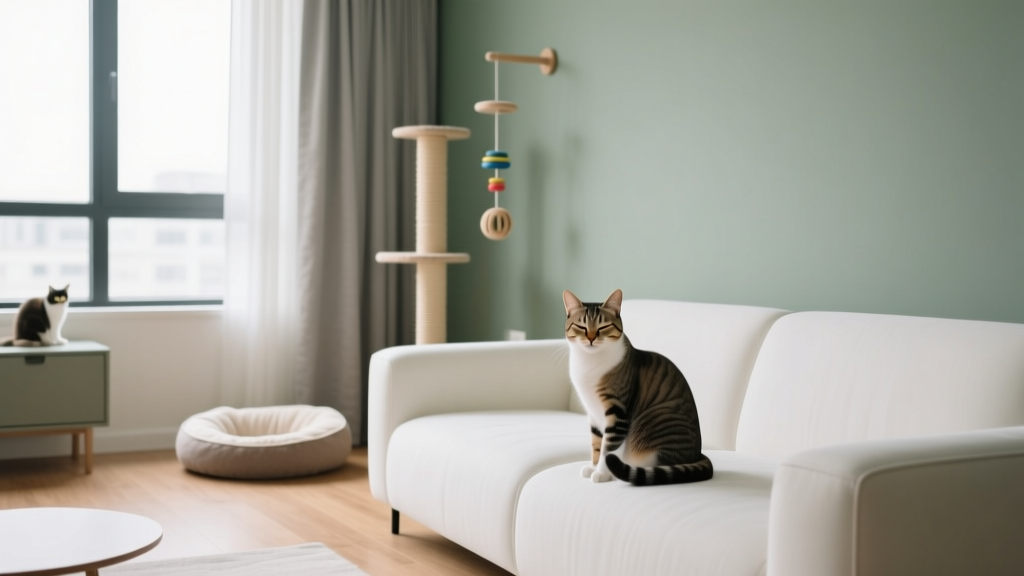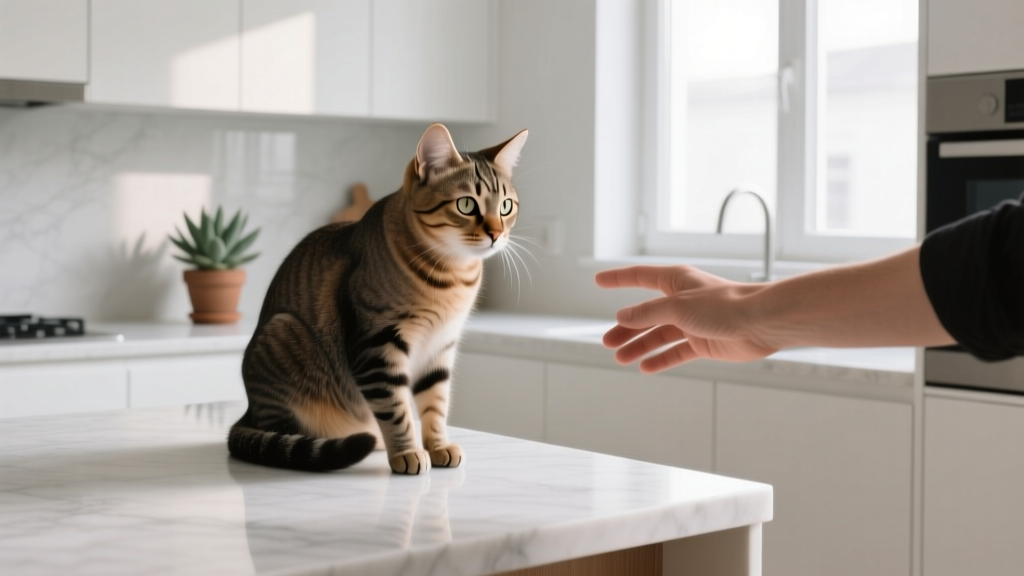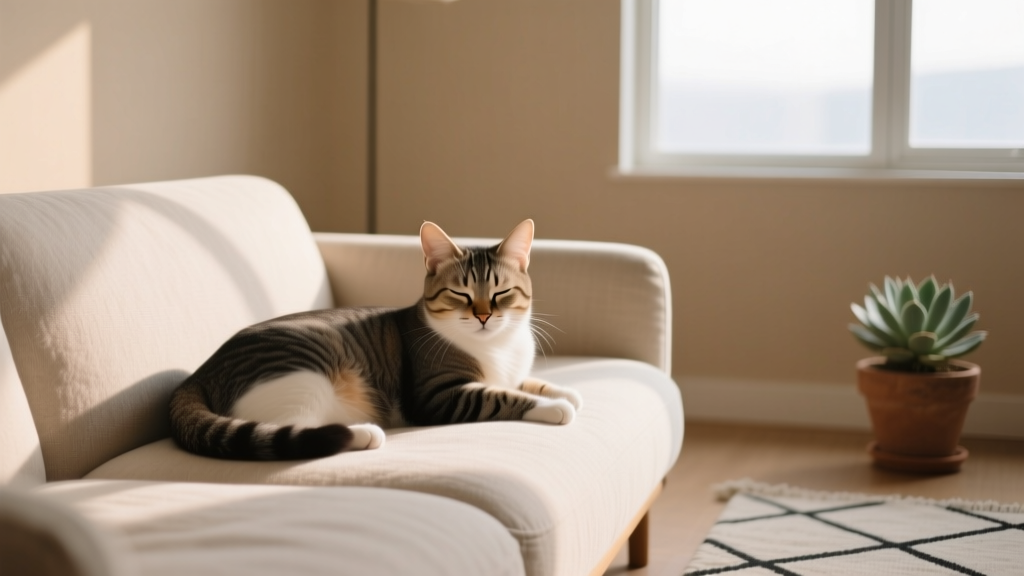
What Is Normal Behavior for Cats? 12 Subtle Signs You’re...
Why Understanding What Is Normal Behavior for Cats Changes Everything
\nIf you’ve ever stared at your cat mid-stare, wondered why they knead your sweater at 3 a.m., or panicked when they stopped greeting you at the door—what is normal behavior for cats isn’t just curiosity—it’s the foundation of trust, safety, and lifelong well-being. Misinterpreting natural feline instincts as 'weird,' 'aggressive,' or 'broken' leads to unnecessary stress, misdiagnosed anxiety, inappropriate punishment, and even premature rehoming. In fact, a 2023 study published in Frontiers in Veterinary Science found that 68% of cats surrendered to shelters were labeled 'unpredictable' or 'too shy'—yet 92% displayed only species-typical behaviors when assessed by certified feline behaviorists. This guide cuts through myth with veterinary science, field observation, and real-world nuance—so you don’t just know what’s normal—you recognize it in real time, in your own home.
\n\n1. The 5 Pillars of Species-Typical Feline Behavior
\nCats aren’t small dogs—and they’re not failed humans. Their behavior evolved over 9,000 years of semi-solitary, crepuscular hunting. According to Dr. Mikel Delgado, Certified Cat Behavior Consultant and researcher at UC Davis, 'Normal cat behavior rests on five non-negotiable pillars: environmental control, predictable routine, resource security, sensory enrichment, and consensual social interaction.' When any pillar wobbles, behavior shifts—but often still stays within the normal range. Let’s break them down:
\n- \n
- Environmental Control: Cats feel safe when they can observe, retreat, and choose their vantage points. A cat perched on a bookshelf for 4 hours isn’t 'bored'—they’re monitoring territory. Hiding under the bed after guests leave? Not fear-based shutdown—it’s strategic recalibration. \n
- Predictable Routine: While less rigid than dogs, cats thrive on consistency. Feeding, play, and quiet times act as internal clocks. A sudden schedule shift (e.g., new work hours) may trigger increased vocalization or nighttime activity—not 'demanding' behavior, but a recalibration attempt. \n
- Resource Security: Food, water, litter, resting spots, and escape routes must be reliably accessible—and never clustered. A cat eliminating outside the box near the washer? Likely not 'spite.' It’s signaling that the litter box feels unsafe (too close to noise, shared with another cat, or poorly maintained). \n
- Sensory Enrichment: Normal cats self-stimulate constantly: bird-watching, chasing dust motes, investigating new scents. Deprivation doesn’t cause ‘laziness’—it causes redirected grooming, overgrooming, or subtle avoidance of certain rooms. \n
- Consensual Social Interaction: Cats initiate contact on their terms. Slow blinking, head-butting (bunting), and tail-up greetings are invitations—not obligations. Forcing pets, picking up without consent, or restraining for photos violates this pillar and erodes trust long-term. \n
2. Decoding the 'Big 7' Behaviors: From Confusing to Completely Clear
\nMost owners Google 'why does my cat…' dozens of times a year. Here’s what the data—and decades of ethological observation—say about seven frequent head-scratchers:
\n- \n
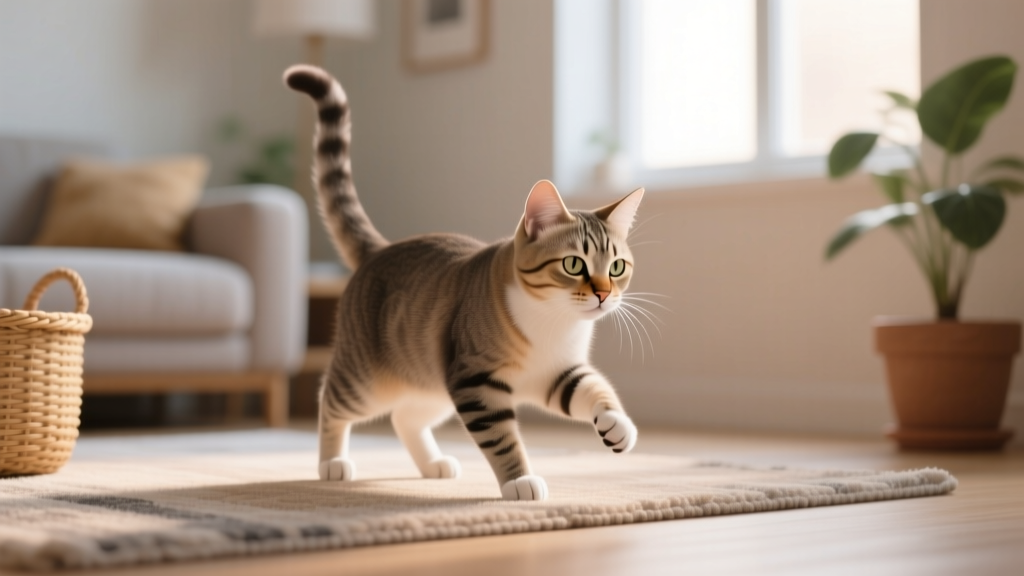
- Midnight Zoomies (Frenetic Activity Periods): Not 'hyperactivity disorder'—it’s evolutionary wiring. Wild cats hunt most actively at dawn/dusk; indoor cats compress that energy into bursts. If your cat sprints at 2 a.m., it likely means their daytime enrichment isn’t meeting predatory drive needs—not that something’s wrong. \n
- Kneading & 'Making Biscuits': A neonatal reflex tied to nursing—triggered by comfort, warmth, or contentment. Even spayed/neutered adults do it. Bonus insight: If kneading includes purring + half-closed eyes + gentle paw pressure, it’s a high-confidence sign of deep relaxation—not 'territorial marking.' \n
- Bringing You 'Gifts' (Dead or Toy Prey): This is social bonding—not a cry for help or misplaced hunting instinct. In multi-cat households, cats bring prey to kittens or lower-status peers. When your cat drops a mouse at your feet, they’re saying, 'You’re part of my family—I want you to eat safely.' \n
- Staring Without Blinking: Often misread as aggression. In reality, sustained eye contact *without* slow blinks signals mild vigilance or uncertainty. The absence of slow blinking—not the stare itself—is the clue. Try returning a soft, slow blink: if they mirror it, tension dissolves instantly. \n
- Chattering at Windows: A motor pattern linked to the jaw movement used to dispatch small prey. It’s frustration, yes—but biologically appropriate. Video analysis (University of Lincoln, 2022) shows chattering increases only when birds are visible *and* unreachable—not when squirrels or cars pass by. \n
- Licking Your Hair or Face: A high-trust allogrooming behavior reserved for bonded individuals. It’s not 'dominance'—it’s kinship language. One caveat: If licking escalates to nibbling or hair-pulling, it may indicate overstimulation or oral fixation needing gentle redirection. \n
- Sudden Tail Twitching (Tip-Only): Often mistaken for anger. But tip-only flicks during petting signal mild overstimulation—not imminent aggression. Full-tail lashing = stop now. Tip-flick = 'I’m nearing my limit—pause in 10 seconds.' A 2021 Cornell Feline Health Center survey found 73% of owners misread this cue, leading to avoidable scratches. \n
3. When 'Normal' Crosses Into 'Needs Attention': The 4-Point Threshold System
\nBehavior isn’t binary (normal vs. abnormal). It exists on spectrums—and context is everything. Veterinarian Dr. Tony Buffington, Professor Emeritus at Ohio State’s College of Veterinary Medicine, developed the 4-Point Threshold System to help owners assess urgency without panic:
\n- \n
- Duration: Has the behavior persisted >3 weeks *without fluctuation*? Brief changes (e.g., hiding for 2 days after moving) are adaptive. Chronic withdrawal warrants vet check. \n
- Intensity: Is it escalating? A cat who occasionally meows at night becomes concerning when volume, frequency, and pitch increase nightly for 10+ days. \n
- Context Loss: Does it happen anywhere, anytime—even during favorite activities? A cat who grooms obsessively *only* before storms is coping. One who grooms raw patches while eating treats is signaling distress. \n
- Function Loss: Is the cat avoiding core life functions? Skipping meals for >24 hrs, refusing litter box *despite clean options*, or no longer sleeping in usual spots are functional red flags—even if 'the behavior looks familiar.' \n
Two or more thresholds crossed = consult your veterinarian *first* (rule out pain, thyroid issues, or neurological causes), then a certified feline behaviorist.
\n\n4. Real Owner Case Study: Maya’s 'Aggressive' Kitten
\nMaya adopted Luna, a 12-week-old tabby, from a shelter. Within days, Luna would ambush Maya’s ankles, hiss when picked up, and swipe at hands reaching into her carrier. Maya searched 'is my cat aggressive?' daily—and nearly returned her. But after tracking Luna’s behavior using the 4-Point Threshold System, she noticed: duration was <1 week, intensity decreased with consistent play sessions, context was always around handling or restraint, and function remained intact (eating, using litter, sleeping). With guidance from a Fear Free Certified Professional, Maya shifted tactics: she replaced picking up with treat-led step-ups, introduced 3x daily 5-minute wand-play sessions timed to match Luna’s natural energy peaks, and added vertical space (wall-mounted shelves). By Week 3, ambushes dropped 90%. By Week 6, Luna initiated head-butts. Luna wasn’t 'abnormal'—she was communicating unmet developmental needs. As Dr. Delgado notes: 'Kittens aren’t born knowing how to coexist with humans. They learn trust through predictable, low-pressure interactions—not dominance training.'
\n\n| Behavior | \nTypical Frequency (Healthy Adult) | \nRed Flag Threshold | \nVet-Recommended Next Step | \n
|---|---|---|---|
| Scratching furniture | \nDaily, 2–5 min/session, focused on textured surfaces | \nScratching skin, walls, or electronics; blood on claws | \nAssess claw health + introduce 3+ scratching posts (vertical/horizontal/cardboard/sisal); rule out dermatitis | \n
| Vocalizing (meowing/yowling) | \n1–4x/day, usually around feeding/play times | \nConstant vocalization >2 hrs/day, especially at night, with pacing | \nThyroid panel + cognitive function screen (especially in cats >10 yrs) | \n
| Grooming | \n15–50 min/day, evenly distributed across body | \nBald patches, broken skin, or grooming only one area (e.g., belly) for >1 hr/day | \nRule out allergies, parasites, or pain; consider environmental stressors | \n
| Play aggression (pouncing/biting) | \nShort bursts (<2 min), ends with mutual disengagement | \nBites break skin regularly; no 'play bow' or tail-tip flick before attack | \nRedirect to toys *before* escalation; avoid hands/feet entirely; consult behaviorist if persistent | \n
| Elimination outside box | \nNegligible (0–1x/month, linked to acute stressor) | \n≥2x/week for >2 weeks, especially on fabric or cool surfaces | \nUrinalysis + ultrasound first; then litter box audit (location, type, number) | \n
Frequently Asked Questions
\nIs it normal for my cat to ignore me sometimes?
\nYes—profoundly normal. Cats are facultatively social, meaning they choose connection based on need, mood, and environment. Ignoring you after a long day isn’t rejection; it’s self-regulation. What matters more is whether they initiate contact (slow blinks, bunting, sitting nearby) at other times. If affection has vanished *entirely* for >2 weeks, investigate health or environmental stressors.
\nWhy does my cat bite me gently during petting?
\nThis is called 'petting-induced aggression'—but it’s rarely aggression. It’s overstimulation. Cats have sensitive nerve endings along their spine and tail base. Gentle biting (no skin breakage) is their polite 'off switch.' Watch for early cues: tail twitching, flattened ears, skin rippling, or sudden stillness. Stop petting *before* the bite—and reward calm tolerance with treats.
\nIs it normal for cats to sleep 16–20 hours a day?
\nAbsolutely. Cats conserve energy for short, intense bursts of activity. Sleep cycles include light dozing (easily awakened) and deep REM (twitching paws, whisker movement). However, monitor *quality*: if your cat sleeps deeply but seems disoriented upon waking, avoids sunlit spots, or naps in unusual places (e.g., cold tile instead of warm blankets), consult your vet—lethargy can signal kidney disease or anemia.
\nMy cat used to cuddle—now they don’t. Did I do something wrong?
\nAlmost certainly not. Affection levels fluctuate with age, season, health, and household dynamics. Senior cats often seek less lap time but more proximity (sleeping beside you, not on you). Kittens mature into more independent adults. A sudden drop *with no other changes* is usually benign. But pair it with weight loss, coat dullness, or reduced appetite? That’s your cue for wellness bloodwork.
\nDo cats really 'hold grudges' after I scold them?
\nNo—they don’t process blame or grudges like humans. Scolding (yelling, spraying water, staring) confuses them and damages trust. What looks like 'revenge' (e.g., peeing on your bed) is stress-signaling. Cats associate punishment with *you*, not the action—so they may avoid you, hide more, or develop anxiety-related behaviors. Positive reinforcement builds bonds; punishment erodes them.
\nCommon Myths About Cat Behavior
\n- \n
- Myth #1: 'Cats are aloof because they’re not affectionate.' Reality: Cats express love differently—through proximity, scent-rubbing, grooming, and bringing gifts. A 2020 study in Animal Cognition showed cats form secure attachments to caregivers comparable to dogs and infants—but show it through subtle, low-arousal behaviors. \n
- Myth #2: 'If my cat purrs, they must be happy.' Reality: Purring occurs during pain, labor, injury, and fear. It’s a self-soothing mechanism and potential healing vibration (frequency 25–150 Hz promotes bone/tissue repair). Always assess body language—relaxed posture + purring = content. Tense muscles + purring + flattened ears = distress. \n
Related Topics (Internal Link Suggestions)
\n- \n
- How to read cat body language — suggested anchor text: "cat body language decoder" \n
- Signs of stress in cats — suggested anchor text: "subtle signs your cat is stressed" \n
- Best toys for indoor cats — suggested anchor text: "indoor cat enrichment essentials" \n
- Introducing a new cat to your home — suggested anchor text: "stress-free cat introduction guide" \n
- When to see a feline behaviorist — suggested anchor text: "certified cat behaviorist near me" \n
Your Next Step Starts With Observation—Not Assumption
\nYou now know what is normal behavior for cats isn’t a static checklist—it’s a dynamic, individualized language shaped by genetics, early experience, health, and environment. The most powerful tool you have isn’t a gadget or supplement: it’s your attention. Start tonight: spend 10 minutes quietly observing your cat *without interacting*. Note where they rest, how they move between spaces, when they pause to watch, and how they transition between activities. Jot down one thing you’ve never noticed before—maybe how they sniff the air before jumping, or the exact spot they choose to nap in afternoon light. That tiny act of witnessing builds the empathy and literacy that transforms confusion into connection. And if something still feels off? Download our free Feline Behavior Tracker (PDF)—a vet-designed log to spot patterns, benchmark changes, and prepare for informed conversations with your care team.