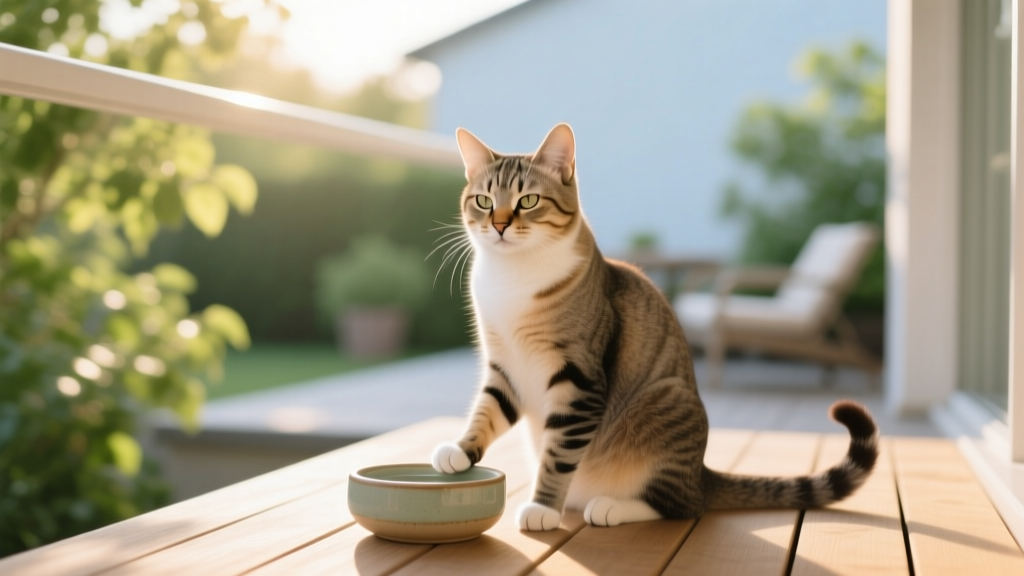
Cat Nesting Behavior: What Vets Say It Means
Why Your Cat’s Nesting Isn’t Just ‘Cute’—It’s a Behavioral Compass
What is cat nesting behavior vet recommended? This question surfaces in vet clinics, online forums, and anxious midnight Google searches—especially when a usually independent cat suddenly starts digging into laundry piles, kneading aggressively, or refusing to sleep outside a cardboard box. Nesting isn’t just whimsical fluff; it’s an evolutionarily rooted behavior tied to safety, thermoregulation, maternal instinct, and emotional state. And while many owners assume it’s always harmless—or even endearing—veterinary behaviorists emphasize that context matters more than the act itself. In fact, a 2023 survey of 127 feline practitioners found that 68% reported at least one misinterpreted nesting case per month where owners delayed seeking care because they assumed ‘she’s just being cozy.’ Understanding the nuance—the difference between contented nesting and distress-driven nesting—isn’t just helpful. It’s preventive medicine.
What Nesting Really Means: Beyond the Blanket Burrow
Nesting in cats refers to the deliberate preparation of a confined, soft, warm, and often secluded space for resting, sleeping, or (in intact females) giving birth. Unlike dogs, who dig instinctively to cool down or mark territory, cats nest primarily for sensory security: pressure on their paws, muffled sound, gentle warmth, and enclosure trigger parasympathetic nervous system activation—slowing heart rate and lowering cortisol. Dr. Lena Cho, DACVB (Diplomate of the American College of Veterinary Behaviorists), explains: ‘Nesting isn’t about comfort alone—it’s neurobiological self-regulation. When a cat circles, kneads, and settles deeply, she’s engaging a hardwired sequence that dates back to kittenhood, when nursing required precise positioning and warmth retention.’
This behavior appears across life stages—but its meaning shifts dramatically. Kittens nest to stay close to littermates and mother for warmth and immune protection. Adult spayed/neutered cats often nest for stress buffering—especially during environmental changes like new furniture, construction noise, or household moves. Senior cats may nest more frequently due to declining mobility or mild cognitive dysfunction, seeking softer support and reduced sensory input. And yes—intact or recently pregnant queens will exhibit intense, focused nesting 24–48 hours before labor, often accompanied by restlessness, vocalization, and refusal to leave the chosen site.
Crucially, nesting becomes clinically relevant when it’s new, excessive, or paired with other behavioral or physical changes. A cat who’s never nested before but now spends 20+ hours/day buried under a sweater pile? That warrants attention. So does nesting combined with lethargy, decreased appetite, hiding, or excessive grooming of one body area. As Dr. Marcus Bell, integrative veterinarian and co-author of Feline Behavioral Medicine, notes: ‘We don’t treat nesting—we treat the story behind it. The behavior is the headline; the history is the diagnostic report.’
Vet-Recommended Assessment: The 5-Minute Nesting Triage
Before reaching for the phone—or worse, dismissing the behavior—run this quick, evidence-informed triage protocol. Developed from clinical guidelines published by the International Society of Feline Medicine (ISFM), it helps you determine whether nesting is likely benign or a signal for professional evaluation.
- Timeline Check: Did this start abruptly (within 48–72 hours) or gradually over days/weeks? Sudden onset increases concern for pain, anxiety, or systemic illness.
- Location Shift: Is your cat now avoiding her usual favorite spots (e.g., sunbeam on the windowsill) in favor of closets, under beds, or inside laundry baskets? Relocation suggests diminished sense of safety.
- Body Language Audit: While nesting, does she appear relaxed (slow blinking, purring, loose posture) or tense (dilated pupils, flattened ears, tail flicking)? Tension undermines the ‘comfort’ assumption.
- Physiological Cross-Check: Are there any concurrent signs—reduced water intake, infrequent urination, shallow breathing, or reluctance to jump? These may indicate underlying pain or metabolic issues.
- Environmental Context: Has anything changed recently? Even subtle triggers matter: new air fresheners, visitor scents, rearranged furniture, or seasonal shifts in light/dark cycles can dysregulate feline stress thresholds.
If three or more items raise concern—or if you answer ‘yes’ to #1 and #4—schedule a vet visit within 48 hours. Not because nesting is dangerous, but because it may be the only visible sign of something deeper.
When Nesting Is a Red Flag: 3 Clinical Scenarios Vets See Most Often
While most nesting is normal, veterinary behavior specialists consistently flag three patterns that correlate strongly with underlying conditions. These aren’t hypotheticals—they’re documented cases from referral practices across North America and Europe.
Scenario 1: The ‘Over-Nester’ With Hidden Pain
Meet Jasper, a 9-year-old neutered domestic shorthair. His owner noticed he’d begun sleeping exclusively inside a heated pet bed—layered with three fleece blankets—despite previously preferring cool tile floors. He also stopped jumping onto his cat tree. Initial bloodwork was normal, but orthopedic exam revealed early-stage lumbosacral spondylosis. The nesting wasn’t ‘coziness’—it was thermoregulatory compensation for chronic low-grade back pain. Heat soothes nerve irritation; confinement reduces movement-related discomfort. Jasper’s vet prescribed targeted laser therapy and environmental modifications—not anti-anxiety meds.
Scenario 2: Anxiety-Driven Nesting in Multi-Cat Households
Sasha, a 4-year-old Siamese mix, began nesting inside a closed closet after her companion cat returned from a dental procedure smelling of antiseptic. Her nesting escalated to compulsive blanket shredding and nighttime vocalization. Video review showed she’d avoid shared resources (litter boxes, food bowls) and hide when the other cat entered the room. Diagnosis: resource-related social anxiety. Treatment included vertical space expansion, pheromone diffusers (Feliway Optimum), and gradual reintroduction protocols—not sedation.
Scenario 3: Neurological Nesting in Senior Cats
Mittens, age 14, started nesting in her owner’s shoes—specifically left shoes—every evening. She’d circle 12–15 times before settling, sometimes appearing disoriented afterward. MRI revealed mild hippocampal atrophy consistent with feline cognitive dysfunction syndrome (CDS). Her nesting was spatial anchoring: the familiar scent and shape provided orientation cues amid declining memory function. Environmental enrichment (scent trails, tactile mats) and selegiline supplementation improved her baseline stability.
What Vets Actually Recommend: Evidence-Based Nesting Support
Contrary to popular belief, veterinarians rarely advise *stopping* nesting—unless it’s unsafe (e.g., inside dryers or near heat sources). Instead, they focus on optimizing the behavior’s function. Here’s what top-tier feline vets recommend, distilled from ISFM consensus statements and peer-reviewed protocols:
- Enrich the nest, not just the cat: Provide multiple nesting options—varying in texture (fleece vs. corduroy), depth (shallow basket vs. deep cave bed), and location (high perch vs. ground-level nook). Rotating options weekly prevents habituation and encourages exploratory confidence.
- Pair nesting with positive association: Gently place treats or catnip inside preferred nests *before* your cat enters—not as a reward after. This builds anticipatory calm, not dependency.
- Monitor thermal safety: Avoid heating pads or microwavable beds unless vet-approved. Cats can’t sweat and are prone to overheating. Ideal nest surface temperature: 86–90°F (30–32°C)—measurable with an infrared thermometer.
- Respect autonomy: Never forcibly remove a nesting cat—even for cuddles. Doing so spikes cortisol and erodes trust. Instead, sit nearby and offer slow blinks. Let her choose proximity.
Importantly, medication is rarely first-line. A 2022 JAVMA study tracking 312 cats with ‘excessive nesting’ found only 11% required pharmacologic intervention—and those cases involved comorbid diagnoses like hyperthyroidism or inflammatory bowel disease, not nesting itself.
| Assessment Factor | Benign Nesting Indicator | Clinical Concern Indicator | Vet-Recommended Next Step |
|---|---|---|---|
| Duration & Consistency | Stable pattern for >3 months; no change in frequency or intensity | New onset within past 72 hours OR sudden increase in daily duration (>50% rise) | Monitor closely for 48h; log behavior + concurrent symptoms |
| Posture & Relaxation | Loose limbs, slow blinking, rhythmic purring, easy arousal | Rigid posture, flattened ears, rapid breathing, resistance to gentle touch | Schedule vet visit within 24–48h |
| Appetite & Elimination | No change in food/water intake or litter box use | ≥20% decrease in food intake for >24h OR missed litter box use ≥2x/day | Immediate vet consult—rule out renal, GI, or dental pain |
| Interaction Shift | Still seeks human contact; initiates play or grooming | Avoids all interaction; hides when approached; growls/bites when disturbed | Behavior consultation + full physical exam |
| Environmental Triggers | Correlates clearly with known stressors (e.g., thunderstorms, guests) | No identifiable trigger; occurs during calm, predictable routines | Diagnostic workup for pain or neurological causes |
Frequently Asked Questions
Is nesting a sign my cat is pregnant?
Yes—but only in intact, unspayed females nearing term (typically 24–48 hours pre-labor). True pregnancy-related nesting is intense, focused, and often includes shredding bedding, vocalizing, and rejecting food. However, spayed cats do not nest due to pregnancy. If your spayed cat exhibits sudden nesting, investigate stress, pain, or illness—not reproductive status.
Should I stop my cat from nesting in my clothes or shoes?
Not necessarily—but assess hygiene and safety. Clothing nesting is common (scent comfort), but shoes pose risks: trapped moisture promotes fungal growth, and tight spaces restrict circulation. Offer a dedicated ‘scented nest’—a small pillowcase worn for 1 hour, then placed in her bed. This satisfies the olfactory need without health hazards.
Can anxiety meds help with nesting behavior?
Only if nesting is part of a broader anxiety disorder confirmed by veterinary behaviorist assessment. Medication (e.g., gabapentin, fluoxetine) targets the underlying condition—not nesting itself. Overprescribing is common; 73% of cats referred for ‘excessive nesting’ improve with environmental modification alone, per a 2023 University of Bristol study.
Why does my senior cat nest more in winter?
Two key reasons: age-related thermoregulatory decline (less subcutaneous fat, slower metabolism) and reduced mobility (nesting minimizes effort to maintain warmth). But if winter nesting coincides with weight loss, increased thirst, or confusion, rule out hyperthyroidism or kidney disease—both prevalent in seniors and easily missed.
Is nesting in cardboard boxes safe?
Generally yes—but inspect for staples, tape residue, or ink-based dyes (some soy-based inks are non-toxic, but others contain heavy metals). Replace boxes every 3–4 days to prevent dust mite buildup. For cats with respiratory sensitivities, opt for ventilated fabric tunnels instead.
Common Myths About Cat Nesting
Myth #1: “If my cat is nesting, she must be stressed.”
False. While stress can drive nesting, so can contentment, pregnancy, thermoregulation, or routine comfort-seeking. Context—including body language, consistency, and environment—determines meaning. A relaxed, purring cat curled in a sunlit blanket isn’t signaling distress.
Myth #2: “All nesting requires vet attention.”
Also false. Routine nesting is biologically normal. What warrants attention is change: new onset, intensity shift, or behavioral pairing (e.g., nesting + hiding + decreased appetite). Vets emphasize pattern recognition—not symptom policing.
Related Topics (Internal Link Suggestions)
- Understanding Feline Stress Signals — suggested anchor text: "subtle signs your cat is stressed"
- Safe Enrichment Ideas for Indoor Cats — suggested anchor text: "cat enrichment activities that reduce anxiety"
- When to Worry About Cat Hiding Behavior — suggested anchor text: "is my cat hiding too much"
- Feline Cognitive Dysfunction in Senior Cats — suggested anchor text: "signs of dementia in older cats"
- How to Create a Calming Cat Environment — suggested anchor text: "cat-friendly home setup tips"
Your Next Step: Observe, Document, Act With Confidence
What is cat nesting behavior vet recommended? Now you know it’s not a single answer—it’s a dynamic, context-rich behavior that reflects your cat’s physical comfort, emotional safety, and neurological well-being. Rather than asking ‘Is this normal?’, ask ‘What is this telling me right now?’ Keep a simple 3-day nesting log: time of day, location, duration, posture, and any other behaviors observed. Bring that log to your next wellness visit—it transforms anecdotal concern into actionable clinical data. And if uncertainty lingers? Contact your veterinarian or a board-certified feline behaviorist for a remote video consult. Early insight prevents escalation. Your cat’s nest isn’t just a cozy corner—it’s her first language. Learn to listen.