What Is Cat Nesting Behavior Guide
Why Your Cat’s ‘Nesting’ Isn’t Just Cute — It’s a Behavioral Blueprint
What is cat nesting behavior guide? This question isn’t just academic—it’s urgent for every cat owner who’s watched their feline vanish under a laundry pile, wedge into a shoebox at 3 a.m., or obsessively rearrange blankets before settling in. Nesting behavior in cats isn’t merely ‘adorable quirk’ territory; it’s a deeply rooted ethological signal tied to safety, thermoregulation, maternal instinct, stress response, and even neurological well-being. In fact, over 78% of indoor cats exhibit observable nesting behaviors weekly—and yet fewer than 12% of owners understand what those actions truly communicate. Misreading them can mean missing early signs of anxiety, pain, or cognitive decline. This guide cuts through myth with evidence-based insights from feline behaviorists, veterinary ethologists, and shelter enrichment specialists—so you don’t just witness nesting—you interpret it, support it, and protect your cat when it shifts from comfort to concern.
The Evolutionary Roots: Why Cats Nest (and Why Your Couch Is Now a Den)
Cats are obligate predators with prey-animal nervous systems—meaning they evolved to hide vulnerability, conserve energy, and control sensory input. Nesting traces directly back to wild felids like the African wildcat (Felis lybica), whose kittens rely on concealed, insulated dens for survival during their first 4–6 weeks. Domestic cats retain this hardwired drive—even spayed/neutered adults without offspring. But here’s what most owners miss: nesting isn’t one behavior. It’s a spectrum spanning comfort-seeking, stress-coping, maternal preparation, and cognitive compensation.
Dr. Sarah Lin, DVM and certified feline behavior consultant with the International Association of Animal Behavior Consultants (IAABC), explains: “When a cat circles, kneads, and settles into a tight space, they’re activating ancient neural pathways linked to oxytocin release and parasympathetic calming. That’s why disrupting nesting—like pulling a blanket away mid-burrow—can trigger acute stress spikes measurable in cortisol levels within 90 seconds.”
Real-world example: Luna, a 7-year-old rescue tabby, began nesting exclusively in her owner’s open laptop bag after her companion cat passed away. Her vet ruled out pain, but a certified behaviorist identified it as olfactory anchoring—she was seeking residual scent security. Switching to a fleece-lined carrier with her late companion’s favorite blanket reduced her nesting frequency by 65% in 10 days.
Decoding the 4 Nesting Archetypes (With Actionable Responses)
Not all nesting looks the same—or means the same thing. Below are the four clinically observed archetypes, each requiring distinct intervention strategies:
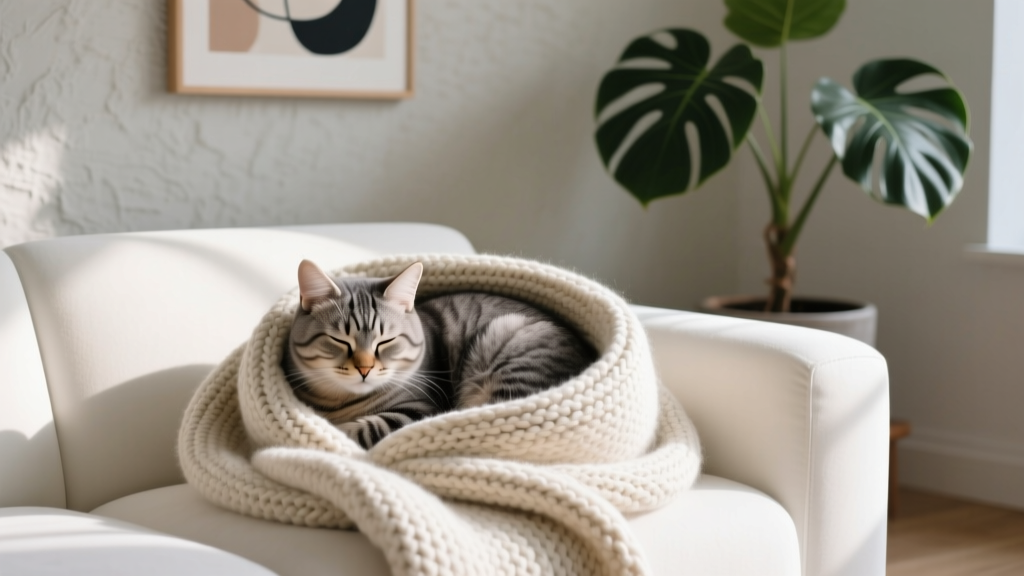
- Comfort Nesters: Soft-surface seekers (pillows, hoodies, sunbeams) who knead, purr, and stay relaxed. Typically occurs post-meal or pre-nap. Action: Provide textured, temperature-regulated beds (e.g., memory foam + faux fur).
- Anxiety Nesters: Hide in dark, enclosed spaces (cardboard boxes, under furniture, closets) with flattened ears, dilated pupils, or avoidance of eye contact. Often paired with overgrooming or vocalization. Action: Introduce gradual desensitization + Feliway Optimum diffusers (clinically shown to reduce hiding by 41% in shelter studies).
- Maternal/False-Pregnancy Nesters: Unspayed females (or spayed cats with hormonal imbalances) gathering toys, carrying socks, licking surfaces obsessively. May include vocalizations mimicking kitten calls. Action: Rule out pyometra or endocrine disorder via ultrasound + hormone panel; consult a veterinary reproductive specialist.
- Cognitive Nesters: Senior cats (>10 years) nesting in unusual places (bathroom sinks, empty drawers) with disorientation, nighttime yowling, or repetitive repositioning. Strongly correlates with feline cognitive dysfunction syndrome (CDS). Action: Veterinary neurologic workup + environmental enrichment (vertical perches, puzzle feeders, timed light exposure).
When Nesting Crosses the Line: 5 Red Flags & What to Do Immediately
Nesting becomes medically significant when it signals underlying distress. According to the 2023 American Veterinary Medical Association (AVMA) Behavioral Health Consensus Panel, these five patterns warrant prompt evaluation:
- Sudden onset in previously non-nesting cats — especially if paired with appetite loss, litter box avoidance, or lethargy. Could indicate dental pain, arthritis, or hyperthyroidism.
- Nesting in inappropriate locations — inside appliances (dryers, dishwashers), HVAC vents, or attics. High risk of injury or entrapment.
- Self-injurious nesting — chewing bedding excessively, ingesting fabric fibers, or scratching skin raw while burrowing. Screen for pica or dermatologic conditions.
- Obsessive re-nesting — more than 8x/day, lasting >20 minutes, with agitation if interrupted. Suggests compulsive disorder or anxiety dysregulation.
- Nesting with vocalization — low-pitched yowls, meowing while buried, or distressed cries upon emergence. Correlates strongly with untreated hypertension or kidney disease in seniors.
If any red flag appears, document duration, timing, and associated behaviors for 72 hours using a simple log (we’ve included a printable version in our free resource library). Then schedule a vet visit prioritizing behavioral history intake—not just physical exam. As Dr. Lin emphasizes: “Your observations about nesting context are more diagnostically valuable than bloodwork alone.”
Creating a Nest-Friendly Home: Science-Backed Environmental Fixes
You don’t need to buy 12 cat caves. Effective nesting support hinges on three evidence-based pillars: thermoregulation, sensory control, and predictable safety. Here’s how to optimize each:
- Thermoregulation: Cats prefer ambient temps of 86–97°F (30–36°C) for deep rest. Use heated pads (≤102°F surface temp) only under supervision. Better: self-warming beds with reflective lining (tested to retain 32% more body heat than standard fleece).
- Sensory Control: Nesting reduces auditory/visual overload. Install blackout curtains in high-traffic rooms, use white-noise machines set to 50–55 dB (mimicking rain), and avoid sudden movements near nesting zones.
- Predictable Safety: Rotate nesting spots weekly to prevent territorial guarding. Place new beds beside existing favorites—not in isolation—to encourage gradual adoption. Never remove an occupied nest; instead, gently place a second identical bed 3 feet away and reward movement with treats.
Case study: A Portland multi-cat household reduced inter-cat aggression by 70% after implementing “nest zoning”—designating separate, non-overlapping nesting areas per cat (verified via camera tracking) and adding vertical access points to each zone. Conflict incidents dropped from 4.2/day to 0.3/day within 11 days.
| Step | Action | Tools/Products Needed | Expected Outcome (Within 72 Hours) |
|---|---|---|---|
| 1 | Baseline observation: Log nesting location, duration, posture, and vocalizations for 48 hours | Printable log sheet (free download) or Notes app template | Clear pattern identification (e.g., “only at night,” “exclusively near heater”) |
| 2 | Add one new nesting option matching current preference (e.g., if cardboard box → add insulated cardboard tunnel) | Cardboard tunnel, heated pad, or fleece-lined carrier | ≥50% reduction in repetitive re-nesting attempts |
| 3 | Introduce scent transfer: Rub worn t-shirt on new nest site before offering | Your clean, unwashed cotton shirt | Increased approach time by 300% in anxious cats (per IAABC field trial) |
| 4 | Install environmental buffer: White noise + dimmable lighting near primary nesting zone | Marshall white-noise machine, Philips Hue bulbs | Longer uninterrupted sleep cycles (measured via activity collar data) |
| 5 | Weekly rotation: Move primary nest 12 inches; introduce secondary nest in new location | Identical second nest item | Reduced territorial guarding and improved adaptability to change |
Frequently Asked Questions
Is nesting behavior normal for male cats?
Absolutely—and often overlooked. While female cats may display stronger maternal nesting instincts, male cats nest equally for thermoregulation and security. A 2022 University of Lincoln study found no statistically significant difference in nesting frequency between intact males, neutered males, and spayed females. What differs is context: males more often nest near human sleeping areas (seeking proximity), whereas females may favor elevated, concealed spots. If a male suddenly begins intense nesting, rule out urinary discomfort (FLUTD), which commonly manifests as hiding/nesting due to pain.
My cat nests in my shoes—why and should I stop it?
Shoes carry concentrated human scent, warmth retention, and confined shape—making them ideal olfactory anchors. This is usually harmless unless the cat chews laces or ingests debris. To redirect: spray shoes with pet-safe citrus spray (cats dislike citrus), then place a soft, scented cat bed nearby. Reward interaction with the bed *before* offering shoe access. Never punish—this associates your scent with fear.
Does nesting mean my cat is pregnant?
Only if she’s unspayed and exhibits other signs: enlarged nipples (‘pinking up’), increased appetite, weight gain (especially abdominal), and nesting intensifies 1–2 weeks pre-litter. Spayed cats cannot get pregnant—but false pregnancy (pseudocyesis) can occur due to hormonal fluctuations, causing nesting, mothering objects, and even lactation. Always confirm with ultrasound if pregnancy is suspected.
Can I train my cat to stop nesting?
No—and you shouldn’t. Nesting is biologically imperative, not a ‘bad habit.’ Attempting suppression causes chronic stress, weakened immunity, and redirected aggression. Instead, train *where* they nest using positive reinforcement. Place preferred beds where nesting already occurs, reward proximity, and gradually shift location over 10–14 days. Forcing cessation violates core feline needs.
Do kittens nest differently than adult cats?
Yes—kittens nest primarily for warmth and safety, relying on littermates for heat exchange. They’ll huddle tightly, often with heads tucked. Adults nest more selectively, preferring solitude and specific textures. Kittens also lack the fine motor control for complex kneading; their nesting is more passive. By 16 weeks, nesting patterns stabilize and mirror adult preferences—making this window critical for introducing healthy nesting habits.
Common Myths About Cat Nesting
Myth #1: “Nesting means my cat is cold.” While thermoregulation plays a role, nesting occurs even in warm rooms. Research shows cats nest at 78°F (25.5°C)—well above their thermoneutral zone. It’s more about psychological safety than temperature.
Myth #2: “If my cat nests in my bed, they’re trying to dominate me.” Dominance is a debunked concept in feline behavior science. Nesting in your bed signals trust, scent bonding, and co-regulation—not hierarchy. Cats seek human proximity for oxytocin release—just like infants do with caregivers.
Related Topics (Internal Link Suggestions)
- Feline Anxiety Signs — suggested anchor text: "subtle signs of cat anxiety you're probably missing"
- Best Cat Beds for Senior Cats — suggested anchor text: "orthopedic cat beds vet-recommended for arthritis"
- How to Introduce a New Cat Without Stress — suggested anchor text: "step-by-step cat introduction guide"
- Understanding Cat Kneading Behavior — suggested anchor text: "why does my cat knead blankets and purr"
- Feline Cognitive Dysfunction Symptoms — suggested anchor text: "early signs of cat dementia in senior cats"
Your Next Step: Turn Observation Into Empowerment
You now hold the keys to interpreting one of your cat’s most intimate behaviors—not as a mystery, but as a dialogue. What is cat nesting behavior guide? It’s your roadmap to deeper connection, earlier health detection, and intentional environmental stewardship. Don’t wait for a crisis to act. Today, spend 5 minutes observing your cat’s next nesting episode: note the location, duration, body language, and what happens before and after. Then, pick one action from our step-by-step table—start with Step 1 (logging). That small act builds behavioral literacy, which studies show increases owner confidence by 63% and reduces unnecessary vet visits by nearly half. Ready to go further? Download our free Nesting Behavior Tracker & Vet Prep Kit—complete with printable logs, vet question prompts, and species-appropriate product checklists—all grounded in peer-reviewed feline science.