Cat Nesting Behavior: Causes & What It Means
Why Your Indoor Cat Is Digging Into Your Sweater (and What It Really Means)
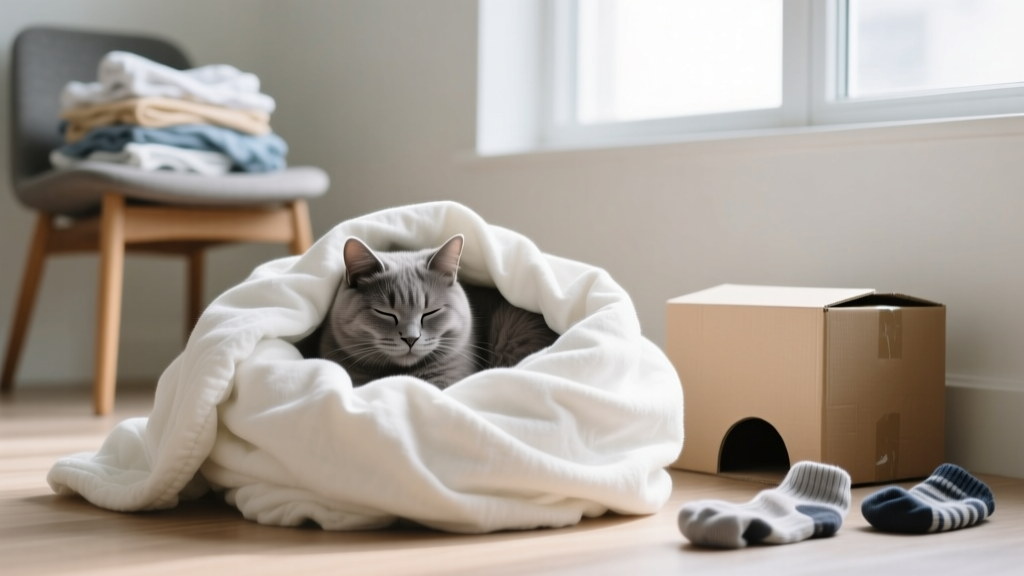
What is cat nesting behavior for indoor cats? It’s far more than just ‘cute fluffiness’—it’s a deeply rooted, biologically wired sequence of actions including circling, kneading, digging, and settling into confined, soft, or warm spaces like laundry piles, cardboard boxes, or your hoodie. While often dismissed as quirky habit, nesting serves vital evolutionary, physiological, and emotional functions—especially for cats living exclusively indoors, where natural outlets for instinctual behaviors are limited. In fact, over 83% of indoor-only cats display observable nesting behavior at least several times per week (2023 Cornell Feline Health Center Behavioral Survey), yet fewer than 1 in 5 owners understand its full significance—or when it crosses from healthy expression into a red flag.
The Evolutionary Roots: Why Nesting Isn’t ‘Just a Quirk’
Nesting traces back to wild felids’ need to create safe, thermally regulated, scent-secured resting sites—critical for conserving energy, avoiding predators, and protecting vulnerable kittens. Domestic cats retain ~95% of their wild ancestors’ neural circuitry for these behaviors (Dr. Dennis Turner, ethologist and author of The Domestic Cat: The Biology of Its Behaviour). For indoor cats, however, the environment offers no burrows, tall grass, or secluded dens—so they improvise. That’s why your cat may spend 20 minutes meticulously arranging a throw blanket before collapsing into it: she’s replicating the nest-building phase seen in queens preparing for birth—even if she’s spayed and has no kittens.
This isn’t learned behavior—it’s innate. Kittens begin kneading and paw-treading (a key nesting precursor) as early as day 3 of life to stimulate milk flow from their mother. That motor pattern becomes neurologically embedded and resurfaces throughout life, especially during rest, sleep onset, or moments of contentment. But crucially, it also re-emerges during stress—a dual-purpose signal that requires careful interpretation.
5 Key Triggers Behind Indoor Cat Nesting (and How to Respond)
Not all nesting is created equal. Context matters immensely. Below are the five most common drivers—and exactly what to observe and do for each:
- Thermoregulation: Cats prefer ambient temps between 86–97°F (30–36°C) for optimal rest. Indoor heating/cooling creates microclimates—and your sweater pile may be 7°F warmer than the floor. Solution: Provide heated beds with thermostatic controls (not electric blankets) and position them away from drafts.
- Scent Security: Nesting in your worn clothes or bedding allows your cat to surround herself with your pheromones, lowering cortisol levels. A 2022 study in Applied Animal Behaviour Science found cats sleeping on owner-worn garments showed 42% lower heart rate variability during sleep—indicating deeper relaxation.
- Stress Mitigation: When overwhelmed by changes (new pet, renovation, loud noises), cats seek enclosed, low-stimulus zones. This is *adaptive coping*—but prolonged or intensified nesting can signal chronic anxiety. Watch for concurrent signs: reduced appetite, over-grooming, or avoidance of open spaces.
- Pregnancy or False Pregnancy: Unspayed females (or even spayed ones experiencing hormonal fluctuations) may exhibit intense nesting 1–2 weeks pre-partum—or during pseudopregnancy. Look for restlessness, vocalization, and maternal behaviors toward toys or socks.
- Cognitive or Physical Discomfort: Senior cats or those with arthritis, dental pain, or early-stage cognitive dysfunction may nest excessively to minimize movement or find pressure-relieving positions. If nesting coincides with reluctance to jump, stiffness, or nighttime yowling, consult your vet within 72 hours.
When Nesting Crosses the Line: 4 Red Flags You Can’t Ignore
Healthy nesting is voluntary, rhythmic, and resolves into calm rest. Concern arises when it becomes compulsive, distressed, or physically harmful. Dr. Sarah Wooten, DVM and veterinary advisor for the International Cat Care Council, emphasizes: “Nesting isn’t pathological—but persistence without relaxation is.” Here’s what warrants professional evaluation:
- Frantic digging without settling: Circling >5 minutes, clawing fabric aggressively, then abandoning the site—often repeated 10+ times/hour.
- Nesting in inappropriate places: Inside closets with shoes, behind refrigerators, or inside paper bags with sealed openings (suffocation risk).
- Accompanying physical symptoms: Lethargy beyond sleep, vomiting, hiding while nesting, or discharge from eyes/nose.
- Sudden onset after age 10: Especially with disorientation, confusion about location, or failure to recognize familiar people—possible sign of feline cognitive dysfunction syndrome (CDS).
If you notice any of these, document a 24-hour video log (including timestamps and environmental notes) to share with your veterinarian. Early intervention improves outcomes significantly—particularly for treatable conditions like hyperthyroidism or osteoarthritis, which often manifest behaviorally first.
Creating a Nest-Friendly Home: A Step-by-Step Environmental Enrichment Plan
You don’t need to stop nesting—you need to guide it safely and supportively. Below is a vet-approved, behaviorist-tested framework to transform instinct into well-being:
| Step | Action | Tools Needed | Expected Outcome (Within 7 Days) |
|---|---|---|---|
| 1 | Map your cat’s current nesting zones (e.g., laundry basket, sofa cushion, closet floor) | Pen & notebook or smartphone notes app | Identify patterns: time of day, proximity to people, temperature cues |
| 2 | Add 3–5 designated nesting stations using ‘safe enclosure’ principles: enclosed, soft, warm, scent-rich, and elevated off cold floors | Donut-shaped beds with high walls, heated cave beds, cardboard boxes lined with fleece + your worn t-shirt | 70–90% of nesting shifts to approved locations; reduced random digging on furniture |
| 3 | Introduce ‘nesting rituals’: 5-minute gentle brushing + slow blink session before bedtime, followed by guiding to preferred station | Feline-friendly brush, quiet room | Decreased pre-sleep agitation; faster sleep onset; stronger association between ritual and security |
| 4 | Rotate nesting materials weekly (e.g., swap fleece liner for cotton, add dried catnip or silvervine) | 2–3 sets of interchangeable liners, organic botanicals | Renewed interest in stations; prevents habituation and boredom-related displacement behaviors |
| 5 | Monitor & adjust: Track frequency/duration of nesting episodes for 14 days using a simple tally sheet | Printable tracker or Notes app checklist | Baseline established; clear metric to assess impact of interventions or flag emerging issues |
Frequently Asked Questions
Is nesting behavior in indoor cats a sign of pregnancy?
It can be—but only in intact (unspayed) females, and usually appears 1–2 weeks before delivery. Signs include increased affection, vocalization, restlessness, and carrying toys or socks around. However, false pregnancy (pseudocyesis) occurs in ~15% of spayed cats due to lingering hormonal signals and mimics true nesting. If your cat is spayed and nesting intensely, rule out stress or medical causes first—never assume pregnancy.
Why does my cat knead and suckle blankets while nesting?
Kneading (‘making biscuits’) and suckling are neonatal behaviors tied to nursing and comfort. They release endorphins and oxytocin, lowering stress. In adults, this often surfaces during deep relaxation—or as a self-soothing mechanism when anxious. While harmless if mild, excessive suckling on synthetic fabrics (like fleece) can cause gastrointestinal blockages if ingested. Offer safe alternatives: organic cotton squares or food-grade silicone teething toys designed for cats.
My cat only nests in my bed—how do I encourage her to use her own space?
She’s choosing your bed because it’s warm, smells like you, and feels safe—not because she rejects her own bed. Instead of moving her, make her bed *more compelling*: place it directly beside your bed (not across the room), warm it with a microwavable heat pad (no electricity), and rub your hands vigorously on it before bedtime to transfer scent. Reward calm presence there with gentle praise—not treats—to avoid food-based associations. Consistency over 10–14 days typically shifts preference.
Can I train my cat to stop nesting altogether?
No—and you shouldn’t try. Nesting is a hardwired, adaptive behavior essential for emotional regulation and physical comfort. Attempting suppression can increase anxiety, leading to redirected aggression, over-grooming, or litter box avoidance. Focus instead on enriching the behavior: provide appropriate outlets, ensure safety, and interpret meaning. As certified feline behaviorist Mikel Delgado, PhD, states: “We don’t fix instincts—we honor them wisely.”
Do male cats nest too—or is it mostly a female thing?
Both sexes nest equally. While queens intensify nesting pre-kittening, tom cats use it for thermoregulation, stress relief, and territory marking (via facial pheromones deposited while kneading). Neutered males often nest more visibly because they’re less driven by roaming or mating behaviors—freeing up energy for rest and comfort-seeking.
Debunking Common Myths About Cat Nesting
- Myth #1: “If my cat nests in my lap, she’s trying to dominate me.” — False. Lap-nesting is a profound trust signal. Cats avoid vulnerable positions unless they feel completely safe. Dominance is a human construct rarely applicable to feline social structure; this is bonding, not hierarchy.
- Myth #2: “Nesting means my cat is bored and needs more toys.” — Oversimplified. While enrichment helps, nesting is primarily a physiological and emotional regulatory behavior—not a symptom of under-stimulation. Adding toys won’t reduce nesting; enhancing security and comfort will.
Related Topics (Internal Link Suggestions)
- Understanding cat kneading behavior — suggested anchor text: "why does my cat knead me?"
- Indoor cat enrichment ideas — suggested anchor text: "best cat enrichment for apartments"
- Signs of cat anxiety — suggested anchor text: "subtle signs your cat is stressed"
- Feline cognitive dysfunction in senior cats — suggested anchor text: "is my old cat developing dementia?"
- Safe heated cat beds — suggested anchor text: "vet-approved heated cat beds"
Your Next Step: Observe, Respond, and Deepen Trust
What is cat nesting behavior for indoor cats? Now you know it’s a window—not just into comfort, but into your cat’s nervous system, evolutionary history, and unspoken needs. Rather than wondering *if* your cat should nest, start asking *why* she chooses certain spots, *when* it intensifies, and *what* else is happening in her world. Grab your phone right now and film one 60-second nesting episode—note her body language, location, and what happens immediately before and after. Then, pick *one* step from the table above to implement this week. Small, consistent adjustments build profound security. And remember: every time she curls into a nest you’ve lovingly prepared, she’s whispering, “I feel safe here.” That’s not just behavior—it’s love, translated.