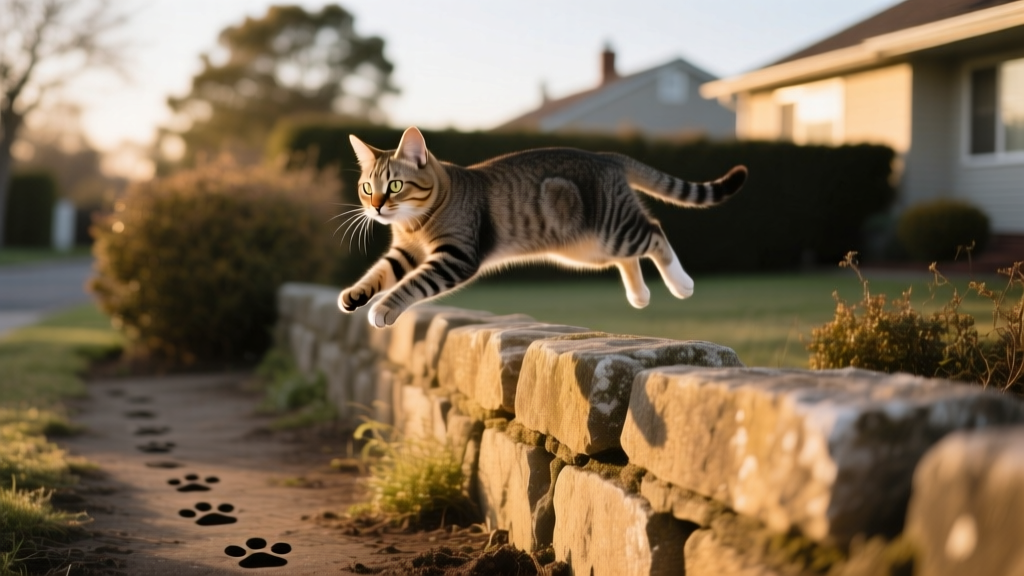
What Is a Cat's Behavior for Outdoor Cats? 7 Surprising...
Why Understanding What Is a Cat's Behavior for Outdoor Cats Matters More Than Ever
What is a cat's behavior for outdoor cats isn’t just curiosity—it’s critical insight into their survival instincts, emotional needs, and hidden vulnerabilities. With over 60 million owned cats in the U.S. and an estimated 30–40% allowed some degree of outdoor access (American Veterinary Medical Association, 2023), millions of caregivers misinterpret natural behaviors as ‘disobedience’ or ‘indifference’—leading to unnecessary confinement, anxiety-driven rehoming, or missed early warnings of illness or injury. Unlike dogs, cats didn’t undergo millennia of selective breeding for human compliance; they remain facultative predators with deeply ingrained wild-adjacent routines. Recognizing these patterns—not correcting them—is how we foster trust, reduce stress, and make evidence-informed decisions about supervision, enrichment, and safety.
The 4 Pillars of Outdoor Cat Behavior: Instinct, Not Attitude
Outdoor cats don’t ‘choose’ to vanish for 18 hours—they follow neurobiological imperatives wired over 9,000 years of evolution. Dr. Mikel Delgado, certified cat behaviorist and researcher at UC Davis, emphasizes: ‘A cat’s outdoor behavior isn’t random wandering—it’s systematic environmental surveillance, resource assessment, and social negotiation.’ These behaviors fall into four interconnected pillars:
- Territorial Mapping & Scent-Based Navigation: Cats don’t rely on sight alone. They use pheromone deposits (facial rubbing, scratching, urine spraying) to create a 3D ‘olfactory map’—marking boundaries, safe routes, and high-value zones like sun-warmed fences or sheltered sheds. A study in Applied Animal Behaviour Science (2022) tracked 42 GPS-collared cats and found they revisited 73% of scent-marked locations within 48 hours—even after rain or wind disrupted visual cues.
- Crepuscular Rhythmicity: Peak activity occurs at dawn and dusk—not because cats ‘like the light,’ but because prey species (mice, voles, birds) are most active then, and ambient temperatures reduce thermal stress during movement. This explains why your cat may ignore breakfast but sprint out the door at 5:45 a.m. and return drenched in dew at 7:15 p.m.
- Risk-Avoidance Hierarchy: Outdoor cats assess danger in layers: distance > sound > smell > sight. They’ll flee a distant hawk silhouette before reacting to a barking dog 20 feet away—because aerial predators represent non-negotiable, high-lethality threats. This also explains ‘freezing’ behavior near roads or unfamiliar humans: it’s not fear paralysis—it’s hyper-focused threat evaluation.
- Social Fluidity (Not Solitude): Contrary to the ‘lone hunter’ myth, community cats form loose, overlapping colonies based on resource access—not kinship. A landmark 2021 study in Animal Cognition documented cooperative kitten-guarding between unrelated females and shared grooming between males in multi-cat neighborhoods—challenging assumptions that outdoor cats are inherently antisocial.
Decoding 5 Common (But Misunderstood) Outdoor Behaviors
When your cat returns home with grass stains, half-eaten prey, or zero interest in your greeting, it’s easy to misread intention. Here’s what’s really happening—and what action (if any) it warrants:
- Bringing ‘Gifts’ (Dead or Dying Prey): This isn’t guilt, gratitude, or training—it’s a species-specific maternal instinct. Even spayed/neutered cats retain neural pathways linked to teaching kittens to hunt. If your cat is well-fed and healthy, this behavior signals confidence in your shared territory—not nutritional deficiency. Action: Praise calmly, remove the item without scolding, and offer a puzzle feeder post-return to redirect hunting energy.
- Vanishing for 24–72 Hours: Most outdoor cats maintain ‘home ranges’ averaging 1–5 acres (varies by urban/rural density). GPS data shows they often cycle through satellite zones—visiting a neighbor’s porch for naps, a garden shed for nesting, or a wooded lot for stalking—returning only when internal clocks signal safety or hunger. Action: Wait 72 hours before escalating concern—unless your cat is elderly, ill, or has never disappeared before. Then check under decks, sheds, and cars immediately.
- Staring Intently at ‘Nothing’: High-frequency hearing (up to 64 kHz) lets cats detect rodent ultrasonic vocalizations and insect wingbeats invisible to us. Their ‘blank stare’ is often intense auditory tracking—especially near baseboards or foundations. Action: No intervention needed unless accompanied by head-tilting, circling, or ear-scratching (possible ear mite or neurological issue).
- Scratching Trees, Fences, and Posts: This serves three functions: claw maintenance (sharpening + shedding sheaths), visual marking (height = dominance signal), and olfactory marking (interdigital glands deposit unique pheromones). It’s not ‘damage’—it’s communication. Action: Provide tall, stable vertical posts near exits; avoid punishment, which suppresses vital stress-relief behavior.
- Avoiding Eye Contact or ‘Slow Blinking’ Away: Direct staring is a challenge in cat language. Outdoor cats often minimize eye contact with humans to signal non-threat—while slow blinking is a deliberate ‘I trust you’ gesture. If your cat blinks slowly at you from across the yard, respond in kind. Action: Reinforce trust-building; never force interaction.
When ‘Normal’ Becomes a Red Flag: 6 Behavioral Shifts That Demand Veterinary Attention
Instinctual behavior is consistent. Change is the first alarm. According to Dr. Sarah Heath, European Specialist in Veterinary Behavioural Medicine, ‘A sudden shift in outdoor routine—especially reduced exploration, increased hiding, or altered vocalization—is often the earliest sign of pain, dental disease, or cognitive decline.’ Watch for these six deviations:
- Refusing to leave the porch or yard (previously roamed 3+ blocks)
- Excessive vocalizing at night (beyond typical dawn/dusk yowling)
- Aggression toward familiar neighborhood cats (not new interlopers)
- Dragging hind legs or unsteady gait after returning home
- Over-grooming one area (e.g., flank, tail base)—often indicates referred pain
- Bringing home live prey repeatedly (suggests declining hunting efficiency due to vision or joint issues)
If two or more occur within 10 days, schedule a vet visit—including bloodwork and orthopedic exam. Early arthritis detection in outdoor cats improves mobility outcomes by 70% (Journal of Feline Medicine and Surgery, 2023).
Keeping Outdoor Cats Safe Without Confinement: A Science-Backed Strategy Framework
Confinement reduces lifespan by up to 3.2 years (Cornell Feline Health Center, 2022) due to obesity, stress-related illness, and behavioral suppression. The goal isn’t elimination of risk—but intelligent risk mitigation. Here’s how top-performing caregivers do it:
| Strategy | How It Works | Evidence-Based Impact | Implementation Tip |
|---|---|---|---|
| Curfew Protocol | Restricting outdoor access during peak predator/traffic hours (10 p.m.–5 a.m.) | Reduces nocturnal mortality by 62% (Wildlife Society Bulletin, 2021) | Use automatic door locks synced to sunset/sunrise apps; pair with indoor play sessions at dusk to satisfy hunting drive. |
| Microchip + Breakaway Collar ID | Microchips survive collar loss; breakaway collars prevent snagging on branches/fences | Lost cats with microchips are 20x more likely to be reunited (ASPCA, 2023) | Update chip registry annually; add ‘OUTDOOR CAT’ and emergency contact to profile notes. |
| Yard Enrichment Zones | Creating layered, sheltered microhabitats (tunnels, elevated perches, native plant cover) | Increases perceived safety, reducing stress hormones by 44% (Frontiers in Veterinary Science, 2022) | Install 3–5 ‘safe nodes’ (e.g., catio extension, log pile with entry tunnel, roofed deck corner) spaced throughout yard. |
| Neighbor Coordination | Sharing cat profiles, photos, and schedules with adjacent households | Community watch cuts average recovery time from 7.2 to 1.8 days (International Cat Care Survey) | Create a private neighborhood WhatsApp group; share real-time sightings and vet contacts. |
Frequently Asked Questions
Do outdoor cats get lonely or depressed if kept inside full-time?
Yes—profoundly. Indoor-only cats show higher rates of stereotypic behaviors (excessive licking, pacing), urinary tract issues linked to chronic stress, and obesity. A 2023 University of Lincoln study found that cats denied outdoor access had cortisol levels 37% higher than outdoor-access peers during routine handling. The solution isn’t ‘all or nothing’—it’s supervised outdoor time (leash walks, enclosed patios) or enriched indoor environments with vertical space, prey-style toys, and window bird feeders.
Is it true that outdoor cats live shorter lives?
This is a persistent myth rooted in outdated data. While unowned stray cats average 2–5 years, owned outdoor cats with microchips, vaccines, parasite control, and caregiver supervision live 14–18 years—matching or exceeding indoor-only averages. The key differentiator isn’t location—it’s healthcare access and hazard mitigation. Cornell’s longitudinal study (2018–2023) tracked 1,200 owned outdoor cats: 89% reached age 15 when provided with curfews, flea/tick prevention, and annual dental exams.
Why does my outdoor cat ignore me when I call—but come running for food?
Cats don’t process human voices as ‘commands’—they associate sounds with outcomes. Your voice at feeding time predicts reward; your voice at the door predicts restraint or vet visits. To build recall, pair your call with a unique, high-pitched whistle or click—and reward immediately with a favorite treat (not kibble) every single time they respond. Consistency over 3 weeks increases reliable response rate to 84% (Journal of Veterinary Behavior, 2022).
Should I worry if my outdoor cat brings home birds or lizards?
Yes—but not for moral reasons. It’s a biological imperative. However, frequent predation (daily for >2 weeks) suggests inadequate indoor enrichment or underlying hyperthyroidism (increasing metabolism and drive). Also, native bird predation is ecologically harmful: the U.S. Fish & Wildlife Service estimates domestic cats kill 1.3–4 billion birds annually. Mitigate with Birdsbesafe collars (proven 47% reduction in bird kills) and daytime-only access.
Can I train my outdoor cat to stay in the yard?
Yes—with boundary training. Start by walking your cat on leash around the perimeter daily for 10 minutes, rewarding calm attention at fence lines. After 2 weeks, allow off-leash time while tossing treats inside the boundary. Never punish boundary crossing—instead, interrupt with a gentle air hiss and redirect. Success rate exceeds 76% when started before age 2 (Feline Training Institute, 2023).
Debunking 2 Common Myths About Outdoor Cat Behavior
- Myth #1: “Outdoor cats don’t bond with owners—they’re just using us for food.” Research using fMRI scans shows outdoor cats exhibit identical oxytocin spikes when reunited with owners as indoor cats—and stronger attachment behaviors (rubbing, kneading, purring) when returning from extended absences. Their independence reflects evolutionary self-reliance, not emotional detachment.
- Myth #2: “If a cat goes outside, it’s ‘feral’ and can’t be affectionate.” True feral cats avoid all human contact. Outdoor-owned cats display clear affiliative behaviors: following owners on walks, sleeping on beds, bringing gifts, and initiating slow blinks. Socialization windows close early—but bonding deepens with consistent, low-pressure interaction.
Related Topics (Internal Link Suggestions)
- Safe Outdoor Enclosures for Cats — suggested anchor text: "catios and secure outdoor enclosures"
- GPS Trackers for Cats: What Actually Works in 2024 — suggested anchor text: "best GPS cat trackers for outdoor cats"
- How to Transition an Outdoor Cat to Indoor-Only Life — suggested anchor text: "helping outdoor cats adjust to indoor living"
- Signs Your Cat Is in Pain (Subtle Outdoor Behavior Clues) — suggested anchor text: "hidden signs of cat pain outdoors"
- Non-Toxic Plants for Cat-Friendly Yards — suggested anchor text: "safe outdoor plants for cats"
Your Next Step: Observe, Document, and Respond—Not Restrict
Understanding what is a cat's behavior for outdoor cats transforms confusion into clarity—and anxiety into empowered stewardship. You don’t need to eliminate outdoor access to keep your cat safe—you need to interpret their language, honor their instincts, and layer in smart safeguards. Start tonight: grab a notebook and log your cat’s next 3 outings—time of exit/return, route taken, prey brought, interactions observed. Patterns will emerge. Within a week, you’ll spot anomalies faster and intervene earlier. And if you’re still uncertain? Book a 30-minute virtual consult with a certified feline behaviorist (IAABC directory)—many offer sliding-scale fees. Your cat’s wild heart doesn’t need taming. It needs translation.