What Is a Cat's Behavior at Home? 7 Subtle Signs You’re...
Why Understanding What Is a Cat's Behavior at Home Changes Everything
If you’ve ever wondered, what is a cat's behavior at home—why your usually aloof tabby suddenly kneads your lap at midnight, why your rescue cat freezes mid-step when the dishwasher hums, or why your kitten attacks your ankles like a tiny ninja—you’re not observing random quirks. You’re witnessing a rich, layered communication system shaped by 9,000 years of domestication, evolutionary instinct, and individual neurobiology. And misreading it isn’t just confusing—it can lead to chronic stress, litter box avoidance, redirected aggression, or even preventable vet visits. In fact, a 2023 study published in Applied Animal Behaviour Science found that 68% of cats exhibiting 'problem behaviors' (like scratching furniture or nighttime yowling) were responding to unmet environmental needs—not 'bad habits.' This isn’t about training a cat to act like a dog. It’s about becoming fluent in feline: learning their grammar of tail flicks, ear rotations, and scent-marking rituals so you can build a home where they don’t just survive—but thrive.
The 4 Core Behavioral Domains Every Indoor Cat Navigates Daily
Cats aren’t ‘low-maintenance’—they’re high-context. Their behavior at home falls into four biologically rooted domains: territory management, social signaling, predatory rhythm, and sensory regulation. Ignoring any one domain creates invisible pressure points. Let’s break them down with actionable insight—not theory.
Territory: It’s Not About Space—It’s About Safety Architecture
Your living room isn’t neutral ground to your cat. It’s a dynamic map of safe zones, escape routes, observation posts, and scent boundaries. Unlike dogs—who read hierarchy through interaction—cats assess security through spatial control. Dr. Sarah Heath, a European Veterinary Specialist in Behavioural Medicine, emphasizes: “A cat doesn’t feel safe because you love them. They feel safe because their environment reliably meets three needs: vertical access, hiding options, and predictable resource placement.”
Real-world example: When Maya adopted Luna, a formerly feral kitten, she placed food, water, and litter box in one open corner. Luna refused to eat there for weeks. Only after Maya installed a covered cat bed on a bookshelf (vertical), added a cardboard tunnel beside the litter box (hiding), and moved food to a quiet hallway (predictable separation) did Luna begin eating consistently—and her chronic overgrooming stopped within 10 days.
Action step: Audit your home using the 3-2-1 Territory Rule:
• 3 elevated perches (cat tree, shelf, windowsill) at varying heights
• 2 enclosed hideouts (covered beds, boxes with blankets, under-bed tunnels)
• 1 dedicated resource zone per cat—no shared food/water/litter boxes unless spaced >6 feet apart and visually separated.
Social Signaling: The Silent Language Behind Every Blink, Tail, and Rub
Cats communicate socially with astonishing nuance—but most humans only recognize the extremes: purring = happy, hissing = angry. The truth is far richer. A slow blink isn’t just ‘love’—it’s a deliberate de-escalation signal borrowed from kitten-mother interactions. A tail held high with a slight quiver? That’s the feline equivalent of a joyful hug. But a tail held low and stiff? That’s tension—not submission.
Here’s what veterinary behaviorists actually track:
- Ears forward & relaxed: Calm awareness (not always 'friendly'—could mean 'assessing')
- Ears rotated sideways ('airplane ears'): Early stress—often precedes hiding or freezing
- Half-closed eyes + slow blink sequence: Active trust-building; reciprocate with same to strengthen bond
- Chin or cheek rubbing on objects (or you): Scent-marking as affiliation—not dominance
- Paw-kneading on soft surfaces: A neonatal comfort behavior—indicates deep safety, not just 'cuteness'
Crucially: Context overrides isolated signals. A purr during a vet exam may indicate pain-induced self-soothing—not contentment. Always pair body language with environment, history, and vocalization.
Predatory Rhythm: Why Your Cat Hunts at 3 a.m. (and How to Redirect It)
Contrary to myth, indoor cats don’t ‘outgrow’ hunting instincts—they redirect them. Their natural activity cycle is crepuscular (dawn/dusk), but without outdoor stimuli, energy builds and erupts unpredictably. This isn’t ‘naughtiness.’ It’s evolutionary biology demanding outlet.
A landmark 2022 University of Lincoln study tracked 42 indoor cats via GPS collars and motion sensors. Key findings:
• Average daily predatory drive: 12–15 short bursts (not one long chase)
• Peak activity windows: 4:30–6:00 a.m. and 5:00–7:00 p.m.
• Cats given 3+ interactive play sessions/day showed 73% fewer destructive behaviors
• Play that mimics prey sequence (stalking → chasing → pouncing → ‘killing’ with bite/hold) reduced anxiety markers by 58%
Try this 5-minute protocol before bedtime (critical for resetting circadian rhythm):
1. Use a wand toy to simulate erratic prey movement—never drag it across floor (triggers frustration)
2. Let cat ‘catch’ it 3x, then end with a treat or meal (completes reward loop)
3. Follow with gentle brushing—mimics social grooming and signals ‘rest phase’
Sensory Regulation: The Hidden Overload That Triggers ‘Odd’ Behavior
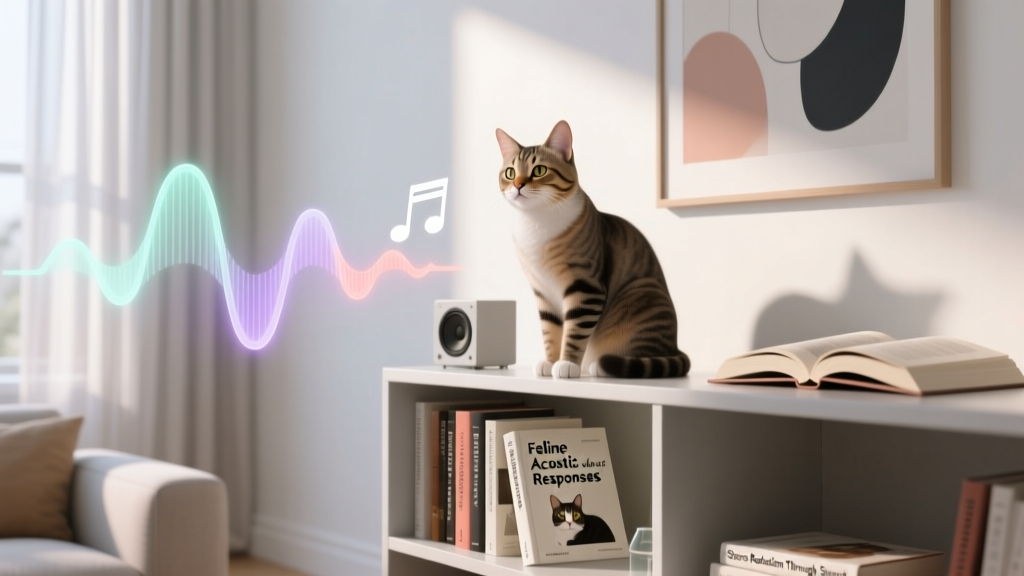
Humans filter ~70% of sensory input unconsciously. Cats? They process nearly all of it—and their hearing range extends to 64 kHz (vs. human 20 kHz). That ‘silent’ ultrasonic pest repeller? To your cat, it’s a constant shriek. The flicker of LED lights? A strobe effect. Even your perfume’s synthetic musk can mimic predator pheromones.
Signs of sensory overload include:
• Sudden darting or ‘zoomies’ with no apparent trigger
• Overgrooming focused on one area (e.g., belly baldness)
• Avoiding rooms with certain flooring (tile echoes), appliances (fridge hum), or people (strong cologne)
• Increased startle response to normal sounds (paper rustling, keyboard clicks)
Solution: Conduct a ‘Sensory Audit’ weekly. Walk barefoot through your home at cat-height (crouch down). Note:
• Auditory: Humming electronics, dripping faucets, HVAC cycles
• Olfactory: Air fresheners, laundry detergents, scented candles
• Visual: Reflective surfaces, moving shadows from ceiling fans, flickering lights
• Tactile: Carpet textures, slippery floors, cold tiles
Replace harsh stimuli gradually: Swap plug-in air fresheners for pet-safe essential oil diffusers (lavender or chamomile—never tea tree or citrus), use felt pads under chairs to muffle noise, and add non-slip mats on hardwood.
| Behavior Observed | Likely Trigger Domain | Immediate Action (First 24 Hours) | Vet-Recommended Next Step |
|---|---|---|---|
| Urinating outside litter box (on fabric, cool surfaces) | Territory + Sensory | Rule out urinary infection (collect urine sample); clean area with enzymatic cleaner; add second litter box in quiet location | Consult board-certified veterinary behaviorist if persistent—85% of cases resolve with environmental modification alone (AVSAB 2023) |
| Aggression toward owner’s hands/feet during petting | Social Signaling + Sensory | Stop petting at first tail-tip twitch or skin ripple; offer treat instead; never punish | Introduce ‘consent-based handling’ training: teach cat to initiate contact via nose-touch for treats |
| Excessive vocalization at night | Predatory Rhythm + Social | Pre-dawn feeding (use timed feeder); 10-min interactive play pre-bedtime; blackout curtains to reduce dawn light cues | Rule out hyperthyroidism or hypertension (common in cats >10 yrs)—bloodwork essential before assuming behavioral cause |
| Chewing non-food items (plastic, cords, plants) | Sensory + Predatory | Remove access; provide safe alternatives (freeze-dried chicken tendon chews, cat grass, crinkle balls) | Assess for pica—may indicate nutritional deficiency (iron, fiber) or compulsive disorder requiring SSRI + enrichment plan |
Frequently Asked Questions
Why does my cat stare at me silently—and should I stare back?
No—don’t stare back. Prolonged direct eye contact is perceived as a threat in feline communication. A silent, unblinking stare often indicates mild anxiety, curiosity, or assessment—not affection. The loving version is the slow blink: half-close eyes, pause, then reopen slowly. Try returning that. If your cat blinks back, you’ve just exchanged a ‘I trust you’ message. Bonus tip: Record your cat’s staring behavior—if it’s paired with dilated pupils, flattened ears, or tense posture, consult a vet: it could signal pain (e.g., dental disease or hypertension).
Is it normal for my cat to sleep 16–20 hours a day?
Yes—biologically normal, but context matters. Wild felids conserve energy for hunting; domestic cats retain that pattern. However, quality of sleep matters more than quantity. Deep REM sleep requires safety: if your cat sleeps in exposed, open areas (center of floor), that’s confidence. If they only nap in closets, under beds, or high shelves—assess territorial security. Also monitor for changes: sudden increase in sleep, lethargy upon waking, or difficulty rousing warrants bloodwork. Senior cats especially need annual thyroid and kidney panels.
My cat brings me dead mice—or toys—and drops them at my feet. Is this a gift?
It’s closer to mentorship. In multi-cat colonies, mothers bring prey to kittens to teach hunting skills. When your cat deposits a mouse (or plush mouse) near you, they’re treating you as an inept clan member needing instruction—not offering tribute. Don’t punish or over-praise. Instead, calmly say ‘Good job!’ and redirect with a toy they can ‘kill’ safely. For outdoor cats, consider a bell collar (reduces bird kills by 40% per Cornell Lab study) or keep them indoors during peak rodent activity (dawn/dusk).
Why does my cat scratch the wall next to the litter box?
This is almost always a territorial marking behavior, not litter box aversion. Scratching deposits scent from foot pads and visual cues. It says, ‘This zone is mine—and it’s safe.’ If the box is clean and accessible, don’t discourage it. Instead, place a legal scratching post (sisal-wrapped, vertical, stable) directly beside the box. Reward use with treats. If scratching shifts to doors or furniture, it may signal overcrowding—add a second box immediately.
Do cats miss their owners when left alone?
Yes—but differently than dogs. Cats form secure attachments, proven by ‘secure base’ behavior in Strange Situation Tests (University of Lincoln, 2019). When reunited, bonded cats show increased purring, head-butting, and following—not frantic greeting. Absence stress manifests subtly: decreased appetite, overgrooming, or litter box changes. For trips >24 hrs, hire a cat-sitter who stays overnight (not drop-ins)—cats detect scent continuity. Leave worn t-shirts with your smell near their bed.
Common Myths About Cat Behavior at Home
Myth #1: “Cats are solitary animals who don’t need companionship.”
Reality: While cats aren’t pack-dependent like dogs, they’re facultatively social. In the wild, related females form cooperative colonies. Domestic cats bond deeply with trusted humans and compatible feline housemates—when introductions are gradual and resources abundant. Forced isolation causes measurable cortisol spikes.
Myth #2: “If a cat purrs, it’s always happy.”
Reality: Purring occurs during labor, injury recovery, and veterinary exams. It’s a self-soothing mechanism triggered by vibrations at 25–150 Hz—frequencies shown to promote bone density and tissue repair (Journal of the Acoustical Society of America, 2021). Always interpret purring alongside body language and context.
Related Topics (Internal Link Suggestions)
- How to Introduce a New Cat to Your Home — suggested anchor text: "stress-free cat introduction guide"
- Best Enrichment Toys for Indoor Cats — suggested anchor text: "vet-recommended cat enrichment toys"
- Signs of Anxiety in Cats — suggested anchor text: "hidden signs your cat is stressed"
- Why Does My Cat Bite Me Gently? — suggested anchor text: "love bites vs. overstimulation bites"
- Cat Litter Box Training Troubleshooting — suggested anchor text: "litter box problems solved"
Your Next Step: Build a Behavior Baseline in 7 Days
You now know what is a cat's behavior at home isn’t random—it’s responsive, intelligent, and deeply communicative. But knowledge becomes power only when applied. Your immediate next step? Start a 7-Day Behavior Journal. Each evening, record just three things: (1) One observed behavior (e.g., ‘Luna rubbed chin on sofa armrest’), (2) The environmental context (e.g., ‘after I returned from work’), and (3) Your cat’s body language (e.g., ‘tail high, ears forward, slow blink’). No interpretation needed—just data. By Day 7, patterns will emerge: you’ll spot triggers, predict stress windows, and identify your cat’s unique ‘language dialect.’ Download our free printable journal template here—designed with input from veterinary behaviorists at the American College of Veterinary Behaviorists. Because understanding your cat isn’t about control. It’s about co-creating a home where every whisker twitch tells a story you finally understand.