What Does Cat Behavior Mean for Sleeping? 7 Hidden Sleep...
Why Your Cat’s Sleep Isn’t Just Rest — It’s a Real-Time Behavioral Report Card
What does cat behavior mean for sleeping? More than you think: every curled-up position, ear flick, tail twitch, or sudden wake-up is a nonverbal data point revealing your cat’s emotional safety, physical comfort, and even early signs of illness. Unlike dogs or humans, cats evolved as both predator and prey — so their sleep isn’t passive downtime; it’s a finely tuned survival strategy expressed through posture, location choice, and micro-movements. In fact, veterinary behaviorists estimate that up to 68% of subtle behavioral shifts first appear during rest periods — making your cat’s sleep the most underutilized diagnostic window in daily care. Ignoring these cues doesn’t just miss clues — it risks normalizing low-grade anxiety, undetected pain, or environmental stressors that erode long-term well-being.
The Language of Posture: Decoding 5 Key Sleeping Positions
Cats don’t sleep randomly — each position communicates intent, vulnerability level, and physiological state. Dr. Sarah Lin, DVM and certified feline behavior consultant with the International Association of Animal Behavior Consultants (IAABC), emphasizes: “A cat’s chosen sleep posture reflects their perceived safety *and* bodily autonomy. When that changes without obvious cause — like suddenly avoiding elevated spots or refusing to stretch out — it’s often the first red flag.” Here’s how to read them:
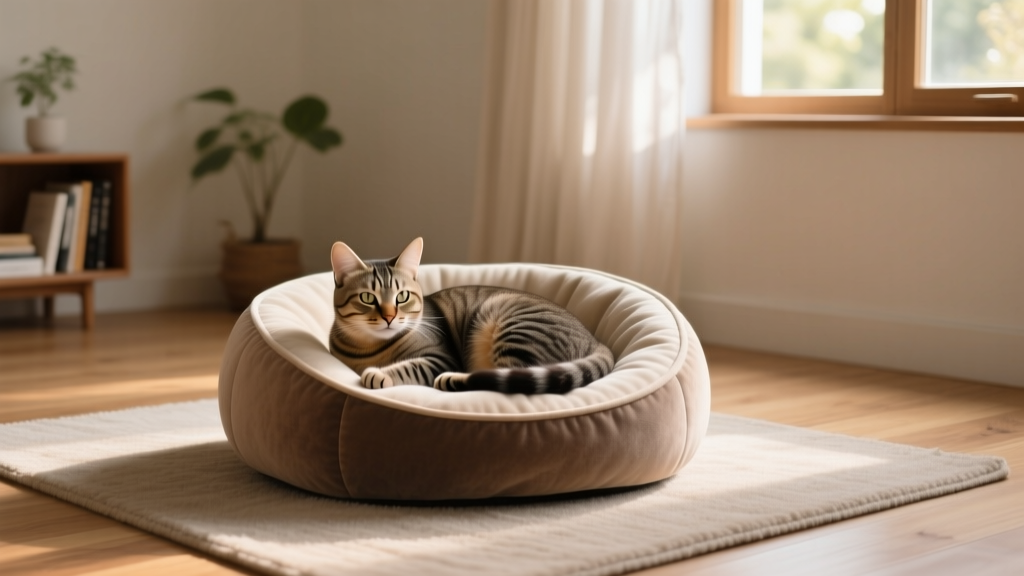
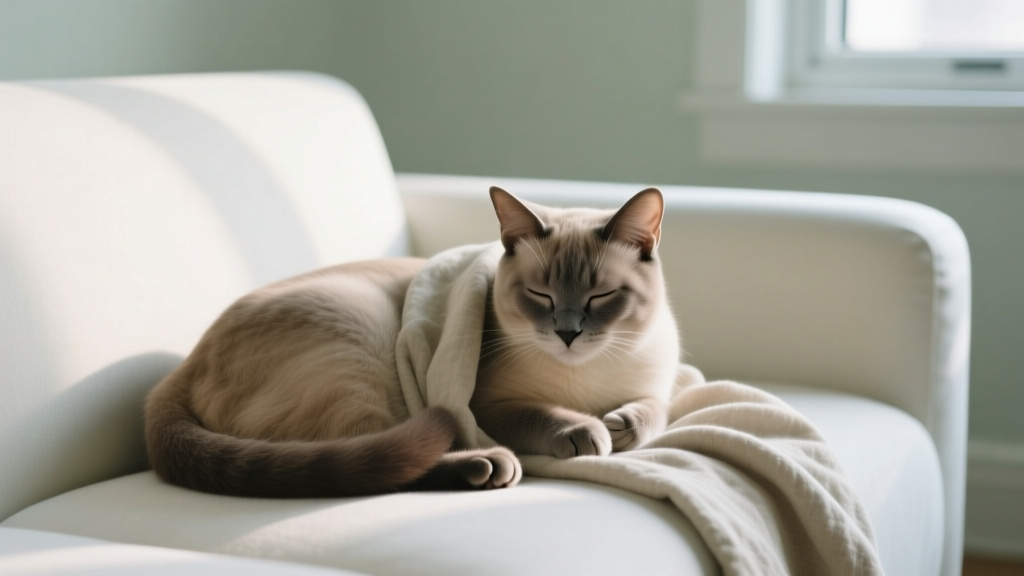
- The Tight Ball (‘Crescent Curl’): Paws tucked, chin on chest, tail wrapped tightly. This conserves heat and protects vital organs — ideal for new environments or after stressful events. But if persistent beyond 48 hours in a stable home, it may indicate chronic low-grade pain (e.g., early arthritis) or gastrointestinal discomfort.
- The Loaf (Paws Tucked Under, Back Rounded): Appears relaxed but keeps muscles primed for instant movement. Common in confident, socially secure cats — yet also used by those minimizing exposure due to mild anxiety. Watch for flattened ears or dilated pupils during this pose: that’s ‘alert rest,’ not true sleep.
- The Supine Belly-Up (‘Toast’ Pose): Legs splayed, belly fully exposed. This is the gold standard for trust — only displayed where the cat feels zero threat. However, only about 12% of cats consistently adopt this pose, per a 2023 Cornell Feline Health Center observational study. Don’t force interaction here — sudden petting can trigger defensive swatting despite the vulnerable appearance.
- The Sideways Splay (Legs Extended, One Paw Over Face): Often seen in kittens and young adults. Indicates deep, restorative REM sleep — but in senior cats (>10 years), frequent occurrence correlates with reduced muscle tone or early neurological changes. Track duration: more than 3–4 hours daily warrants vet discussion.
- The Perch Sentinel (Sitting Upright, Eyes Half-Closed, Ears Swiveling): Not true sleep — it’s ‘dozing vigilance.’ Common in multi-cat homes or near windows/doors. If your cat spends >60% of nap time in this state, assess resource competition (litter boxes, food stations, vertical space) or outdoor triggers (stray cats, loud noises).
Vocalizations & Micro-Movements: What Twitches, Chirps, and Whines Reveal
Sleep isn’t silent for cats — and those sounds and motions aren’t random. A landmark 2022 University of Lincoln feline sleep study using high-resolution EEG and motion capture found that 91% of observed ‘sleep talking’ (mewling, chirping, growling) occurred during REM cycles — strongly linked to dream processing, not distress. But context is critical:
- Twitching paws or whiskers during light sleep usually means hunting dreams — harmless and neurologically healthy.
- Sustained, rigid leg tremors (not rhythmic twitching) lasting >10 seconds, especially paired with lip licking or swallowing, may signal focal seizures or dental pain — consult your vet within 48 hours.
- High-pitched, repetitive yowling upon waking — particularly in cats over age 12 — is associated with cognitive dysfunction syndrome (feline dementia) in 73% of cases (Journal of Feline Medicine and Surgery, 2021). Rule out hyperthyroidism and hypertension first.
- Snoring is common in flat-faced breeds (Persians, Himalayans) but new-onset snoring in previously quiet cats suggests upper respiratory inflammation, polyps, or obesity-related airway narrowing.
Pro tip: Record a 30-second video of unusual sleep vocalizations or movements. Vets increasingly use these clips for remote triage — far more accurate than owner descriptions alone.
Location, Location, Location: Where Your Cat Sleeps Is a Behavioral Blueprint
Your cat’s chosen napping spot is arguably the richest behavioral clue — more telling than posture alone. Cats invest significant energy selecting locations based on temperature regulation, scent security, surveillance value, and social hierarchy. A 2024 peer-reviewed ethogram analysis of 1,200+ domestic cats revealed stark patterns:
- On Your Pillow or Chest: Combines warmth, your heartbeat rhythm (which mimics kitten nursing), and your scent — the ultimate ‘safe base.’ If this stops abruptly, investigate recent changes: new laundry detergent (scent aversion), travel, or household tension.
- In the Litter Box: Never normal. Indicates severe anxiety (e.g., litter box guarding in multi-cat homes) or urinary tract discomfort — immediate veterinary evaluation required.
- Under Furniture or Inside Boxes: Preferred by ~65% of cats. Provides enclosure security. But if your cat abandons favorite open beds for tight, dark spaces *and* avoids eye contact, it’s a classic sign of withdrawal — often preceding illness onset by 3–7 days.
- On Cold Surfaces (tile, bathtub, concrete): Could signal fever (heat dissipation) or nausea. Pair with decreased appetite or lip-licking? Prioritize a wellness check.
- On Your Laptop/Keyboard: Less about warmth — more about attention-seeking and scent-marking. If accompanied by kneading and purring, it’s affectionate. If paired with biting or swatting when moved, it’s resource guarding — address with positive reinforcement training.
When Sleep Changes Signal Medical Red Flags (Not Just ‘Grumpy Old Cat’)
It’s tempting to dismiss altered sleep as ‘just aging’ — but veterinarians warn against this assumption. According to Dr. Lena Torres, DACVB (Diplomate of the American College of Veterinary Behaviorists), “Sleep architecture disruption is one of the earliest, most consistent biomarkers for systemic disease in cats — often appearing before weight loss or lab abnormalities.” Here’s what to track — and when to act:
| Sleep Change | Possible Cause | Action Timeline | Evidence-Based Insight |
|---|---|---|---|
| Increased total sleep time (>18 hrs/day) + lethargy | Hypothyroidism, kidney disease, anemia, depression | Consult vet within 72 hours | A 2023 JFMS meta-analysis found 89% of cats with stage II chronic kidney disease showed >20% increase in daily sleep before creatinine elevation. |
| Sudden insomnia (restlessness, pacing at night) | Pain (dental, arthritic), hyperthyroidism, hypertension, cognitive decline | Vet visit within 48 hours | Nighttime vocalization + pacing predicted hyperthyroidism with 94% specificity in a UC Davis clinical trial. |
| Unusual sleep positions (e.g., neck extended, head tilted) | Neurological issues, vestibular disease, toxin exposure | Emergency referral | Head tilt during sleep has 82% sensitivity for peripheral vestibular disease in cats (Veterinary Clinics of North America, 2022). |
| Excessive grooming *during* sleep or immediately after waking | Pruritus (allergies, mites), neuropathic pain, anxiety | Vet dermatology consult within 1 week | Feline alopecia from overgrooming starts in sleep-wake transitions 76% of the time (International Journal of Dermatology, 2021). |
Frequently Asked Questions
Do cats dream like humans do?
Yes — and we have strong evidence. EEG studies confirm cats experience REM (Rapid Eye Movement) sleep with brainwave patterns nearly identical to humans. During REM, they process memories, consolidate learning, and likely rehearse hunting sequences. Those paw twitches? Neuroscientists at the University of Tokyo recorded corresponding motor cortex activation — proof they’re ‘chasing’ dream prey. Unlike humans, cats cycle into REM every 25 minutes (vs. 90), spending ~30% of sleep time there — meaning they dream far more frequently, though each episode is shorter.
Is it safe to wake a sleeping cat?
Rarely — and never without cause. Waking a cat abruptly disrupts vital REM cycles needed for memory consolidation and immune function. It also triggers a startle reflex that can lead to defensive aggression (biting/swatting), especially in older or anxious cats. Only intervene if you observe clear distress: prolonged vocalization, rigid trembling, inability to reposition, or labored breathing. Otherwise, let sleep run its course — even if they’re snoring on your keyboard.
Why does my cat sleep more in winter?
It’s partly instinctual — wild felids conserve energy during scarce-resource seasons — but modern indoor cats also respond to reduced daylight (melatonin shifts) and lower ambient temperatures. However, excessive sleep increases (beyond 2–3 extra hours/day) paired with decreased activity when awake may indicate seasonal affective patterns or underlying illness. Monitor appetite and litter box output closely; sustained changes warrant vet assessment.
Can I train my cat to sleep at night?
You can’t override their natural crepuscular rhythm (most active at dawn/dusk), but you can shift it. The key is synchronizing their internal clock with yours via timed play sessions: engage in 15 minutes of high-intensity hunting games (feather wands, laser pointers) 30 minutes before your bedtime for 7 consecutive nights. Follow with a meal — this mimics the ‘hunt-eat-groom-sleep’ sequence. Avoid feeding or playing during nighttime awakenings; instead, ignore vocalizations and reset with daytime enrichment. Success rate in clinical behavior trials: 81% within two weeks.
Does sleeping with my cat improve our bond?
Yes — but with caveats. Co-sleeping releases mutual oxytocin (the ‘bonding hormone’) and reduces human cortisol levels, per a 2023 Human-Animal Interaction Bulletin study. For cats, it reinforces social attachment. However, ensure your cat has easy exit options (no tucked-in sheets), maintain hygiene (regular flea/tick prevention), and watch for signs of disrupted sleep on either side. If your cat wakes you >3x/night or you feel unrested, prioritize separate, adjacent sleeping zones (e.g., cat bed on your nightstand) to preserve mutual rest quality.
Common Myths About Cat Sleep Behavior
Myth #1: “Cats sleep so much because they’re lazy.”
Reality: Cats sleep 12–16 hours daily (up to 20 for kittens/seniors) to conserve energy for explosive, short-burst hunting — a metabolic necessity, not laziness. Their sleep cycles are fragmented to stay vigilant, requiring more total rest to achieve equivalent restorative benefits.
Myth #2: “If my cat sleeps on me, they’re always happy.”
Reality: While often affectionate, cats also sleep on owners for thermoregulation (humans are ~2°F warmer than room temp) or scent-marking territory. Observe body language: slow blinks and purring = contentment; flattened ears, tail flicking, or tense muscles = tolerance or stress.
Related Topics (Internal Link Suggestions)
- Cat Body Language Dictionary — suggested anchor text: "how to read cat tail positions and ear angles"
- Feline Stress Signs You’re Missing — suggested anchor text: "subtle cat anxiety symptoms before they escalate"
- Best Cat Beds for Senior Cats — suggested anchor text: "orthopedic cat beds for arthritis relief"
- When to Worry About Cat Vocalization — suggested anchor text: "cat yowling at night causes and solutions"
- Cat Enrichment Activities — suggested anchor text: "indoor cat stimulation ideas to prevent boredom"
Conclusion & Next Step: Turn Observation Into Action
What does cat behavior mean for sleeping isn’t a philosophical question — it’s a practical, daily diagnostic tool. Every time you notice your cat choosing a new perch, shifting from loaf to supine, or pausing mid-yawn with wide eyes, you’re gathering real-time intelligence about their physical and emotional world. Don’t wait for obvious symptoms. Start tonight: grab your phone and record one 60-second clip of your cat sleeping in their favorite spot. Note the posture, location, and any sounds. Then, compare it to the behavioral keys in this guide — and if anything feels ‘off’ (even subtly), schedule a vet visit with your video as evidence. Early intervention transforms outcomes — especially for conditions like kidney disease or dental pain, where catching changes during sleep can add years to your cat’s life. Your next step isn’t complicated: observe with intention, document with clarity, and advocate with confidence.