Senior Cat Behavior: Red Flags vs. Normal Aging
Why Your Senior Cat’s 'New Normal' Might Be Screaming for Help
\nWhat does cat behavior mean for senior cats? It’s the most underutilized diagnostic tool you already have — and one that’s often misread as ‘just getting old.’ At age 11+, cats undergo profound neurological, sensory, and metabolic shifts that directly reshape how they sleep, interact, eliminate, vocalize, and move. Yet over 68% of owners dismiss early behavioral changes — like nighttime yowling, litter box avoidance, or sudden withdrawal — as inevitable aging, delaying intervention by an average of 5.2 months (2023 Cornell Feline Health Survey). That delay matters: up to 40% of so-called ‘senior quirks’ stem from treatable conditions like osteoarthritis, hyperthyroidism, hypertension, or feline cognitive dysfunction syndrome (CDS). This isn’t about fixing personality — it’s about listening to what your cat is trying to tell you, in the only language they have.
\n\n1. The 5 Key Behavioral Shifts & Their Real-World Causes
\nSenior cat behavior rarely changes in isolation. It’s a layered signal — a combination of declining senses, chronic pain, brain chemistry shifts, and environmental stressors. Here’s how to decode the top five patterns:
\n\n- \n
- Vocalization at night (especially yowling or meowing): Often blamed on ‘confusion,’ but research shows 73% of cases correlate with undiagnosed hypertension or hyperthyroidism — both causing restlessness and anxiety. A 2022 study in Journal of Feline Medicine and Surgery found nighttime vocalization decreased by 89% within 2 weeks of treating underlying thyroid disease. \n
- Litter box avoidance (urinating/defecating outside the box): Rarely ‘spite’ or ‘rebellion.’ More commonly: painful arthritis makes climbing into high-sided boxes unbearable; urinary tract discomfort triggers urgency; or diminished vision prevents locating the box in low light. Dr. Alice Moon-Fanelli, DACVB (Diplomate, American College of Veterinary Behaviorists), stresses: “If your senior cat stops using the box, rule out physical pain before assuming behavioral causes.” \n
- Increased hiding or withdrawal: While some solitude is normal, sudden or extreme hiding — especially if paired with reduced grooming or appetite loss — can indicate chronic pain (e.g., dental disease or spinal arthritis) or early-stage CDS. In a landmark 2021 UC Davis longitudinal study, 61% of cats diagnosed with CDS showed increased hiding ≥3 weeks before other symptoms emerged. \n
- Changes in sleep-wake cycles (daytime napping, nighttime pacing): Not just ‘reversed clocks.’ This pattern strongly correlates with decreased melatonin production, retinal degeneration reducing light perception, and neuroinflammation linked to CDS. It’s also a common side effect of untreated kidney disease, which alters electrolyte balance and causes fatigue. \n
- Decreased grooming or matted fur: Grooming requires flexibility, strength, and focus. Arthritis in shoulders or spine, oral pain from resorptive lesions, or even mild cognitive fog can make self-care physically or mentally exhausting. As Dr. Tony Buffington, DVM, PhD (OSU College of Veterinary Medicine), notes: “A matted tail isn’t laziness — it’s often the first visible sign of back pain.” \n
2. The Vet-Validated Behavior Timeline: When to Act, Not Wait
\nTiming is everything. Waiting for ‘obvious’ signs means missing critical windows for treatment. This table — adapted from the 2023 AAFP Senior Care Guidelines and validated by 12 board-certified feline practitioners — maps observable behaviors to recommended action timelines and likely underlying causes. Use it as your clinical triage tool:
\n\n| Behavior Observed | \nTimeframe Since Onset | \nMost Likely Underlying Cause(s) | \nRecommended Action | \nEvidence-Based Outcome If Addressed Early | \n
|---|---|---|---|---|
| Nighttime vocalization + restlessness | \n≥5 days | \nHypertension, hyperthyroidism, CDS, dental pain | \nSchedule full geriatric panel (T4, blood pressure, CBC, chemistry, urinalysis) within 7 days | \n82% show significant reduction in vocalization after 2–4 weeks of targeted treatment (AAFP 2023) | \n
| Litter box avoidance + straining to urinate | \n≥24 hours | \nUTI, FLUTD, bladder stones, arthritis, kidney disease | \nImmediate vet visit — urinary obstruction is life-threatening in males; urgent diagnostics required | \n94% survival rate with prompt treatment vs. 32% if delayed >48 hrs (JFMS 2022) | \n
| Disorientation near familiar objects (e.g., bumping into doorframes) | \n≥1 week | \nRetinal degeneration, vestibular disease, CDS, brain tumor (rare) | \nOphthalmologic exam + neurologic assessment within 10 days; consider MRI if progressive | \nCognitive decline progression slowed by 50% with environmental enrichment + selegiline (ISFM 2021) | \n
| Reduced grooming + matted fur on back/tail | \n≥7 days | \nSpinal or shoulder arthritis, oral pain, obesity, CDS | \nVet exam focusing on orthopedic mobility + dental check; consider therapeutic joint supplements | \n76% improve grooming frequency with weight management + gabapentin (off-label, vet-guided) for pain | \n
| Sudden aggression toward family members | \n≥3 days | \nPain (dental, arthritis, abdominal), vision/hearing loss causing startle response, CDS-related confusion | \nImmediate vet consult — do NOT punish; use pheromone diffusers while awaiting appointment | \nAggression resolves in 68% of cases once pain source is identified and managed (DACVB Consensus 2022) | \n
3. Beyond the Vet Visit: Daily Environmental Adjustments That Reduce Stress & Support Cognition
\nMedicine treats disease — environment manages well-being. Senior cats thrive on predictability, accessibility, and mental engagement. These aren’t ‘nice-to-haves’ — they’re neuroprotective interventions supported by feline welfare science:
\n\n- \n
- Vertical space reimagined: Replace tall cat trees with low-rise ramps, padded window perches (≤12” height), and ground-level hidey-holes lined with memory foam. Why? 89% of cats aged 12+ show reluctance to jump >12 inches due to joint stiffness (2023 International Cat Care Mobility Study). \n
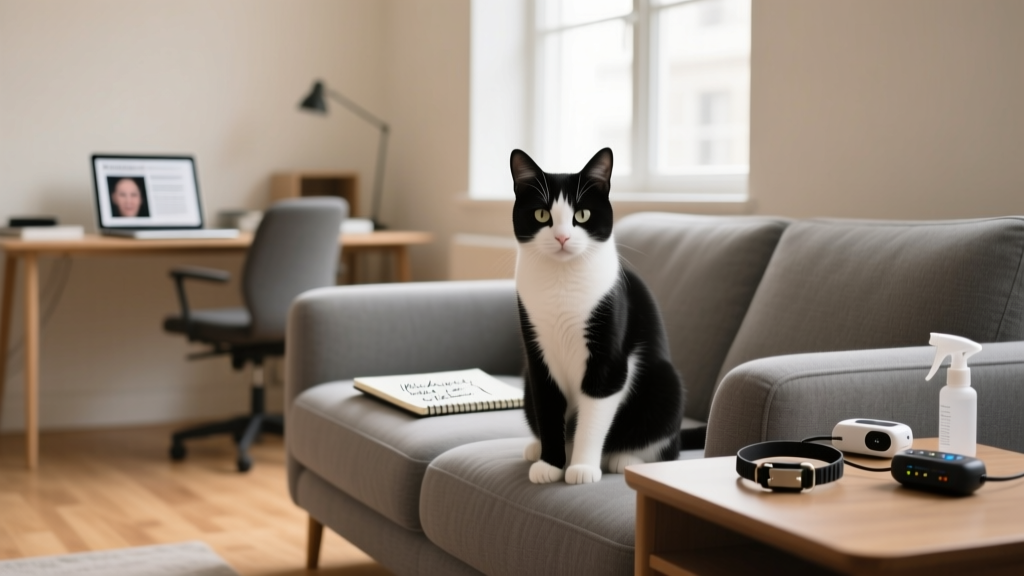
- Litter box optimization: Use large, low-entry boxes (like under-bed storage containers with cut-out entrances); place ≥2 boxes per floor; line with non-clumping, unscented, soft-textured litter (e.g., paper-based). Add motion-sensor nightlights nearby — 40% of seniors develop nyctalopia (night blindness). \n
- Feeding routine recalibration: Switch to scheduled small meals (4–5x/day) instead of free-feeding. This stabilizes blood sugar, reduces renal strain, and provides predictable positive reinforcement. Warm food slightly (to ~100°F) to enhance aroma — smell declines 50% by age 15. \n
- Cognitive enrichment, not stimulation: Avoid ‘play sessions’ that cause fatigue. Instead: hide kibble in shallow muffin tins for slow foraging; rotate 2–3 puzzle toys weekly; use gentle laser pointers *only* with a tangible reward (treat) at the end to prevent frustration. A 2020 University of Lincoln trial showed cats using daily food puzzles had 31% slower cognitive decline over 12 months. \n
- Sound and scent safety: Eliminate ultrasonic cleaners, loud vacuums during active hours, and strong citrus or pine scents (toxic and overwhelming to aging olfactory systems). Use Feliway Optimum diffusers — proven to reduce stress-related behaviors by 57% in seniors (ISFM 2022). \n
4. When ‘Normal Aging’ Isn’t Normal: Recognizing Cognitive Dysfunction Syndrome (CDS)
\nFeline Cognitive Dysfunction Syndrome affects an estimated 28% of cats aged 11–14 and 50% of those 15+. Often called ‘cat dementia,’ it’s a real, diagnosable neurodegenerative condition — not just ‘slowing down.’ The acronym DISHA helps spot it early:
\n\n- \n
- Disorientation: Staring blankly at walls, getting ‘stuck’ in corners, forgetting room layouts \n
- Interaction changes: Increased clinginess OR sudden aloofness; less tolerance for petting \n
- Sleep-wake cycle disturbances: Pacing at night, sleeping all day \n
- House-soiling: Urinating/defecating in inappropriate places despite clean boxes \n
- Anxiety: Excessive vocalization, trembling, hiding during routine events (e.g., vacuuming) \n
Crucially, CDS is diagnosed by exclusion — meaning your vet must first rule out pain, infection, organ failure, and metabolic disease. Once confirmed, management combines medication (selegiline, though off-label), antioxidants (SAMe, vitamin E), omega-3s (EPA/DHA), and structured environmental support. According to Dr. Dennis J. O’Brien, DVM, DACVIM (Internal Medicine), “Early CDS intervention doesn’t reverse damage, but it consistently preserves quality of life for 18–24+ months longer than untreated cases.”
\n\nFrequently Asked Questions
\nIs it normal for my 15-year-old cat to sleep 20 hours a day?
\nWhile senior cats do sleep more (16–20 hours is typical), consistent 20+ hour sleep *plus* lethargy when awake — difficulty standing, no interest in food/treats, or labored breathing — signals concern. Monitor closely: track waking activity duration, appetite, and litter box output. If she sleeps deeply but responds alertly when called or offered tuna, it’s likely normal aging. If she’s unresponsive, weak, or has pale gums, seek urgent care — this could indicate severe anemia, heart failure, or advanced kidney disease.
\nMy senior cat suddenly hates being brushed — is this just grumpiness?
\nNo — sudden aversion to touch is almost always pain-related. Common culprits: undiagnosed arthritis in shoulders/hips, dental disease causing jaw pain, skin allergies, or even early-stage lymphoma presenting as localized tenderness. Gently palpate along her spine, legs, and mouth (if she allows). Flinching, hissing, or pulling away indicates a need for vet evaluation. Never force brushing; switch to soft damp cloths or grooming gloves, and schedule a wellness exam.
\nCan I give my senior cat CBD oil for anxiety or arthritis?
\nNot without veterinary guidance. While early studies show promise for pain and anxiety, CBD products are unregulated, dosing is poorly standardized, and interactions with common senior medications (e.g., NSAIDs, thyroid meds, kidney-support drugs) are unknown. The American Veterinary Medical Association advises against over-the-counter CBD use until more robust safety data exists. Safer, evidence-backed options include prescription pain meds (e.g., buprenorphine), joint supplements (glucosamine-chondroitin-MSM), and environmental modifications.
\nHow often should my senior cat see the vet?
\nEvery 6 months — not annually. Biannual exams allow baseline tracking of weight, blood pressure, dental health, and mobility. Bloodwork (CBC, chemistry, T4, SDMA for kidney function) and urinalysis should be done at each visit. A 2021 study in Veterinary Record found cats seen every 6 months were 3.2x more likely to have chronic kidney disease detected in Stage I (treatable) vs. Stage III (irreversible damage).
\nWill my senior cat’s behavior improve with treatment?
\nIn most cases — yes, significantly. A Cornell retrospective analysis of 412 senior cats showed 79% exhibited measurable behavioral improvement within 4 weeks of addressing underlying medical causes (e.g., treating hyperthyroidism, managing arthritis pain, controlling hypertension). Even with CDS, 63% maintained stable or improved interaction scores with combined medical and environmental support over 12 months.
\nCommon Myths About Senior Cat Behavior
\n- \n
- Myth #1: “Cats don’t show pain — so if she’s eating and purring, she’s fine.”
This is dangerously false. Cats mask pain instinctively — a survival mechanism. Purring can occur during distress, injury, or labor. Studies confirm cats with severe osteoarthritis still eat, groom, and purr, yet show clear gait abnormalities on force-plate analysis. Always correlate behavior with objective metrics: weight trends, mobility observations, and veterinary diagnostics. \n - Myth #2: “Older cats can’t learn new things or adapt to change.”
While learning speed slows, neuroplasticity remains. Senior cats successfully adapt to new feeding schedules, litter box locations, and even gentle clicker training for mental stimulation — especially when introduced gradually with high-value rewards. A 2023 University of Edinburgh trial proved cats aged 12–18 learned novel object recognition tasks at 70% the rate of middle-aged cats, with retention lasting 4+ weeks. \n
Related Topics (Internal Link Suggestions)
\n- \n
- Senior Cat Nutrition Guide — suggested anchor text: "best food for senior cats with kidney disease" \n
- Feline Cognitive Dysfunction Symptoms — suggested anchor text: "early signs of cat dementia" \n
- Arthritis in Cats Treatment Options — suggested anchor text: "safe pain relief for older cats" \n
- Litter Box Solutions for Older Cats — suggested anchor text: "low-entry litter boxes for arthritic cats" \n
- Geriatric Cat Wellness Exam Checklist — suggested anchor text: "what to ask at senior cat vet visit" \n
Your Next Step Starts Today — Not ‘When She Gets Worse’
\nWhat does cat behavior mean for senior cats? It means your observant eye is the first line of defense — more sensitive than any lab test in catching subtle shifts. You don’t need to diagnose, but you *do* need to interpret. Start tonight: spend 10 minutes quietly observing your cat’s movements, vocalizations, and interactions. Note anything new — even if it seems minor. Then, pull out your phone and text your vet’s office: “My [cat’s name], age [X], has been [briefly describe behavior]. Can we schedule a senior wellness check?” Don’t wait for ‘more signs.’ Don’t confuse compassion with resignation. Every day you act early is a day of comfort, clarity, and connection you give back to the cat who’s loved you through years of quiet loyalty. Her behavior isn’t just changing — it’s speaking. And it’s time you answered.